Artwork
Untitled
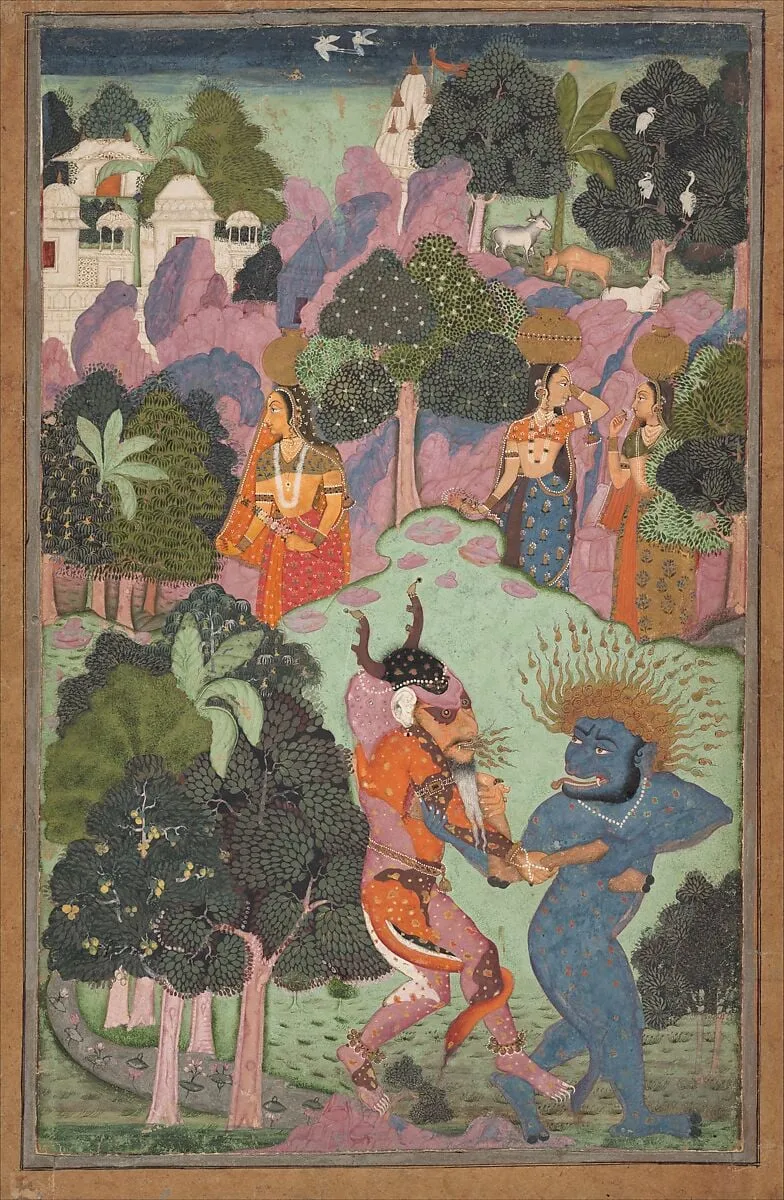
Untitled is a watercolor painting. It dates from 1683 and is held in the collection of the Metropolitan Museum of Art.
About this work
Subject & Meaning
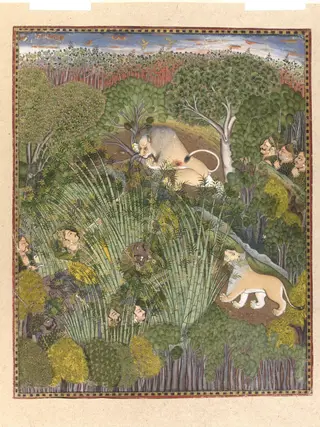
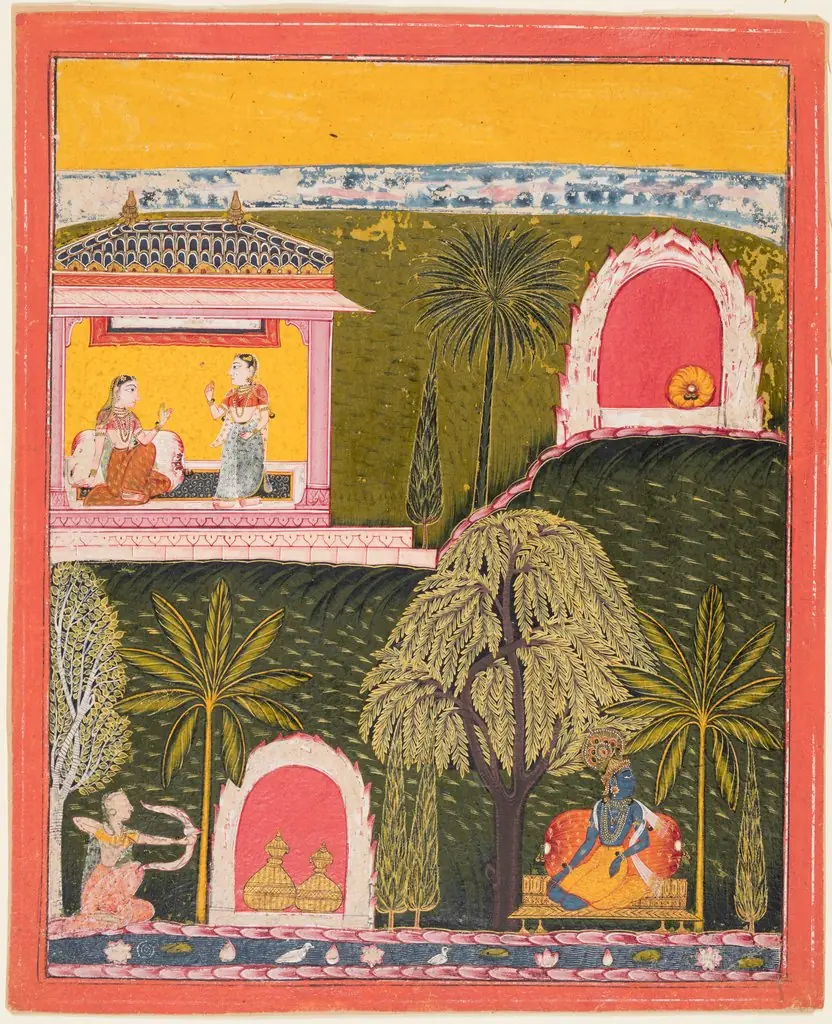
The painting depicts a rural landscape populated by a woman, cattle, a demon, and a bird, all set within a domestic setting marked by a house.
The painting depicts a rural landscape populated by a woman, cattle, a demon, and a bird, all set within a domestic setting marked by a house. The demon appears in a menacing posture, suggesting a narrative of supernatural intervention or protection, while the woman’s presence alongside the cattle emphasizes themes of labor and fertility. The bird, perched on a branch or structure, may symbolize freedom or an omen.
The combination of these figures within a cultivated landscape suggests a moral or allegorical reading, possibly reflecting tensions between human activity and unseen forces. The stylistic and thematic elements align with contemporaneous Indian miniature traditions that often used such iconography to convey broader philosophical or didactic meanings.
History & Provenance
The artwork, titled Untitled, was created in 1683 by an anonymous artist in India. Executed in ink, opaque watercolor, and gold on paper, the piece is classified as a landscape painting. While the specific commission details and the original ownership chain prior to its acquisition are not detailed in the available records, the work is currently held in the collection of the Metropolitan Museum of Art.
The painting depicts a scene featuring a demon, a house, birds, cattle, and a woman within a landscape setting. Its physical dimensions are recorded as 29.4 cm in height and 18.6 cm in width. The date of inception is specified as January 1, 1683, marking its creation in the late seventeenth century.
The work is held in the collection of the Metropolitan Museum of Art, where it is also located. While specific inventory or accession numbers are not provided in the available records, the institution maintains the piece as part of its holdings. The sources do not list any specific exhibitions in which this painting has been displayed, focusing instead on its physical attributes and subject matter. The museum attributes the creation of the landscape to an anonymous painter from India, dated to 1683.
Legacy
The painting commonly referred to as Untitled, dated 1683 and attributed to an anonymous Indian artist, entered the Metropolitan Museum of Art's collection, where it is catalogued as a landscape painting depicting a demon, house, bird, woman, and cattle. Its inclusion in the museum's holdings has made it a reference point for scholars studying 17th‑century Indian visual culture, particularly in analyses of anonymous workshop production and the use of gold and opaque watercolor techniques. The work's provenance and physical dimensions (29.4 × 18.6 cm) are documented in the Met's records, contributing to ongoing discussions about the attribution of unsigned pieces within the broader corpus of Indian miniature painting.
Overview
This untitled painting, executed with ink, opaque watercolor, and gold on paper, presents a series of vignettes from daily life. Though the artist remains unknown, the work captures a range of scenes, from domestic activities to natural landscapes, all rendered on a small paper scroll. Its delicate execution and choice of materials suggest a particular aesthetic sensibility from its period.
Technique & Style
Created using ink, opaque watercolor, and gold on paper, the artwork demonstrates a refined approach to miniature painting. The application of gold leaf, rather than serving purely decorative purposes, functioned as an indicator of affluence, conveying a sense of prestige during its creation approximately three centuries ago. The detailed ink drawings and vibrant watercolors contribute to its intricate visual texture.
Context
This untitled work can be viewed within a broader tradition of depicting quiet, observational moments. Similar portrayals of daily life and natural settings can be found in other collections, such as those at The Metropolitan Museum of Art. The scroll's intimate scale and blend of ordinary subjects with luxurious materials imply it may have served as a private visual record or contemplative piece for a wealthy individual.
Artist & collection

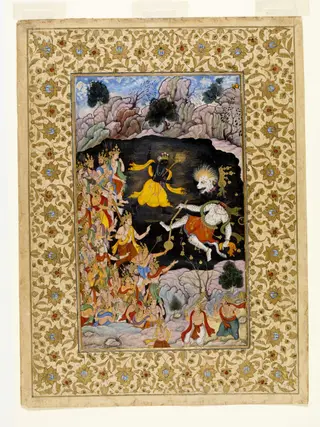
- Krishna and Nikumba
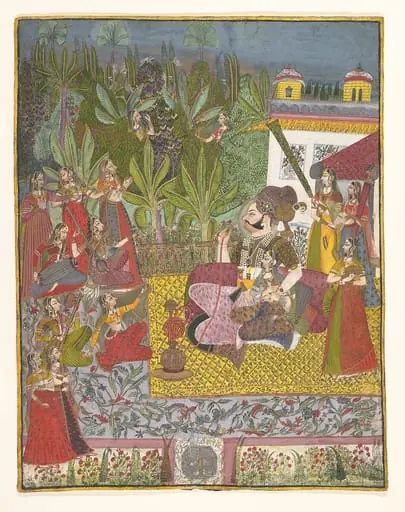 Untitled
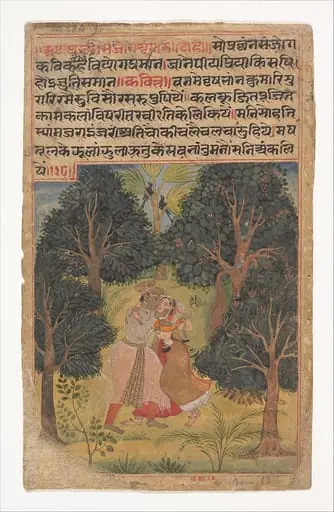 Untitled
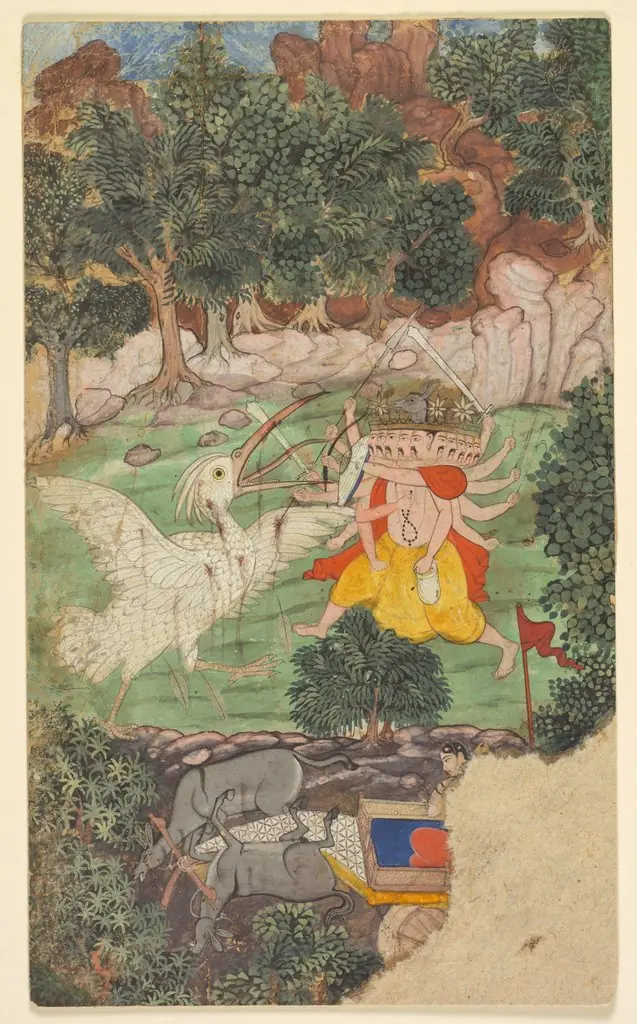 Battle of Ravana and Jatayu, from Chapters 50 and 51 of the Aranya Kanda (Book of the Forest) of Valmiki's Ramayana (Rama’s Journey); folio from the "Burnt" Ramayana
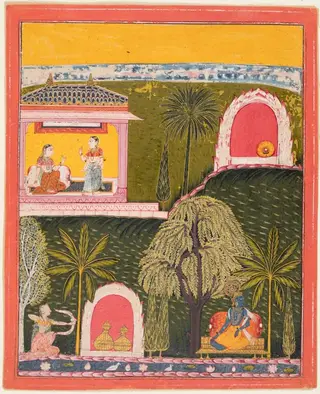 Rati, the Goddess of Erotic Love, Takes Aim at Krishna, from a Rasikapriya
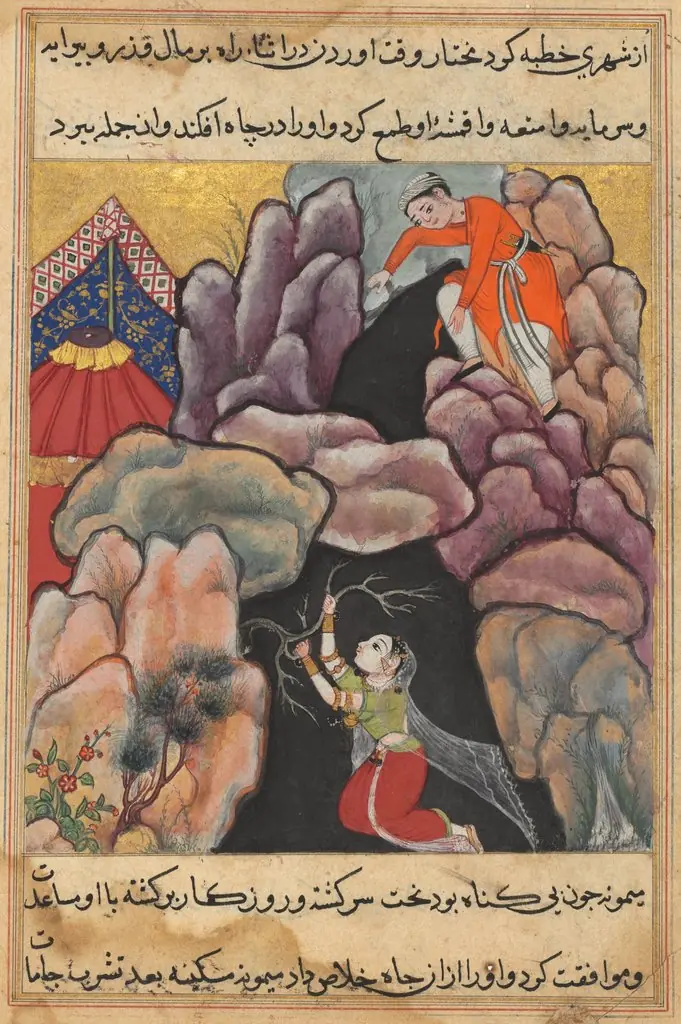 Mukhtar throws his wife Maimuna into the pit, but she saves herself, from a Tuti-nama (Tales of a Parrot): Twenty-fifth Night
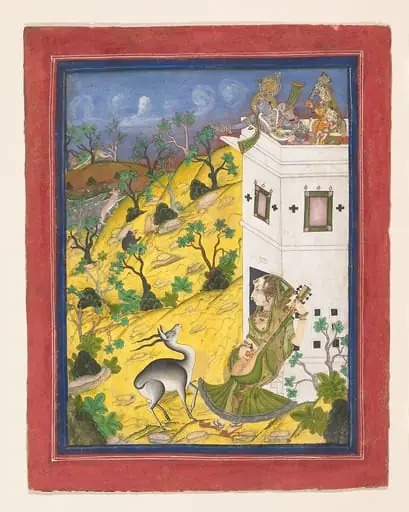 Untitled
 Raja Durjan Sal of Kota
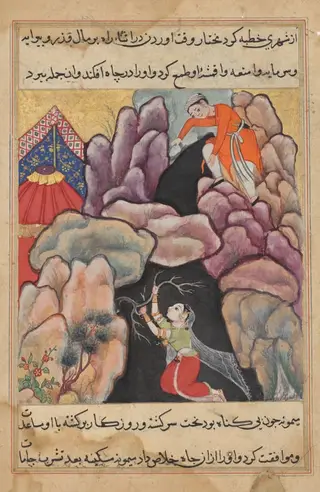 Mukhtar throws his wife Maimuna into the pit, but she saves herself, from a Tuti-nama (Tales of a Parrot): Twenty-fifth Night
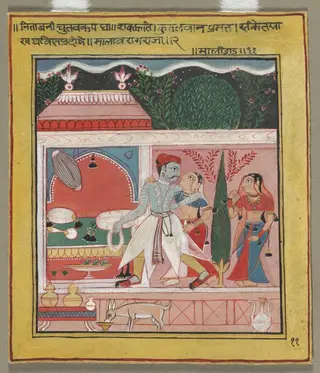 Ragini
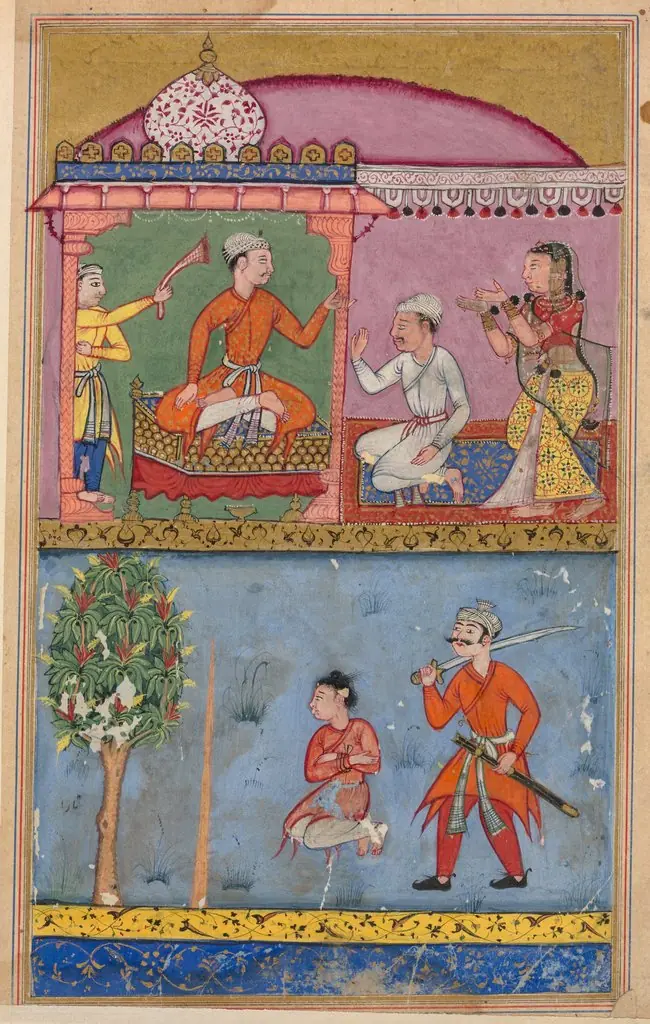 Page from Tales of a Parrot (Tuti-nama): text page
 Rati, the Goddess of Erotic Love, Takes Aim at Krishna, from a Rasikapriya