Artwork
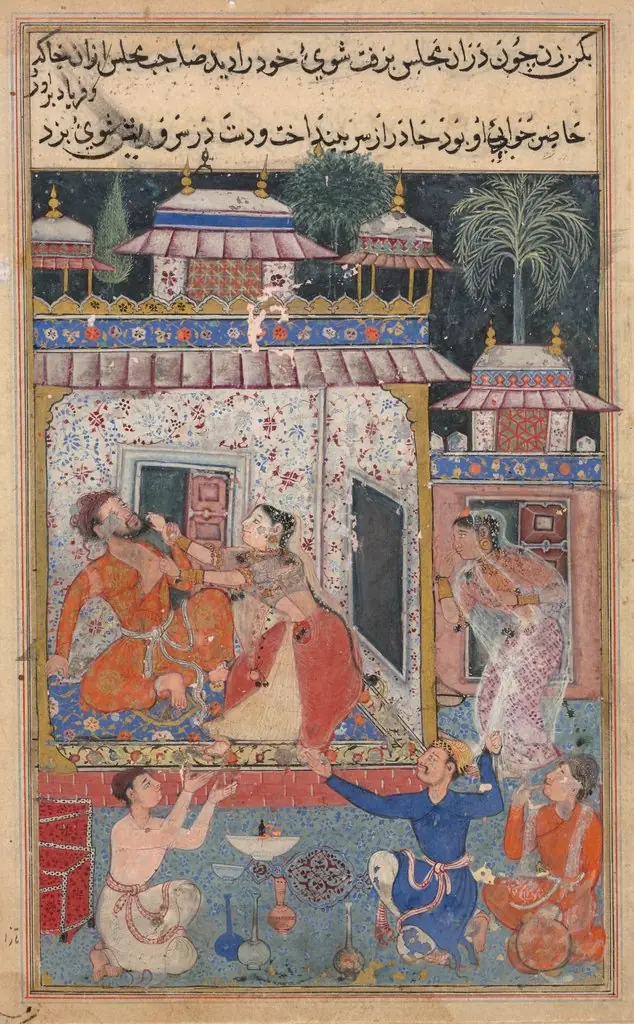
Page from Tales of a Parrot (Tuti-nama): text page
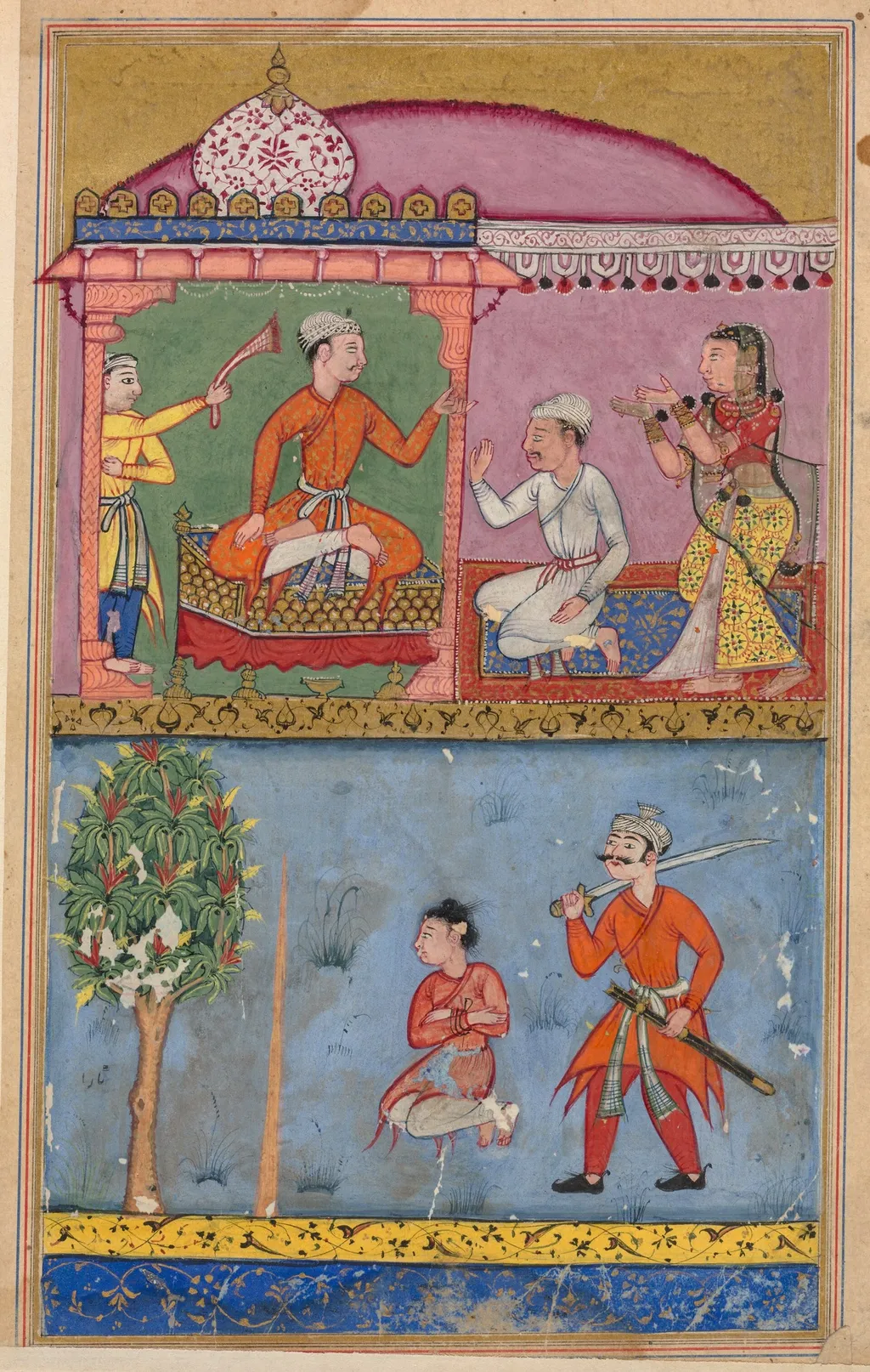
Page from Tales of a Parrot (Tuti-nama): text page is an unspecified painting. It dates from 1560 and is held in the collection of the Cleveland Museum of Art. The work is a painted page from the illustrated manuscript known as Tales of a Parrot (Tuti‑nama).
About this work
Subject & Meaning
The page depicts a narrative scene drawn from the Persian poetic and moral tales known as the Tuti-nama, illustrating a parrot's moral lesson within a Mughal courtly context. The iconography features a talking parrot delivering didactic verses to a listening prince, a motif symbolizing wisdom, counsel, and the transmission of ethical teachings across generations. This visual storytelling reflects the Mughal fascination with Persianate literary traditions and the integration of didactic poetry into miniature painting programs.
The work thus represents both a literary adaptation and a courtly exercise in moral instruction, embodying the intercultural artistic exchange that defined the empire's visual culture.
History & Provenance
The manuscript page eventually entered the collection of the Cleveland Museum of Art, where it is currently held under the accession number 1962.
Created in 1560 within the Mughal Empire, this text page originates from the Tuti-nama (Tales of a Parrot). The work was produced by an unknown artist during the height of Mughal manuscript illumination. While the specific commission details are not recorded in the available data, the piece is definitively dated to the year 1560.
The manuscript page eventually entered the collection of the Cleveland Museum of Art, where it is currently held under the accession number 1962.279.63.a.
Overview
The work is a painted page from the illustrated manuscript known as Tales of a Parrot (Tuti‑nama). It is divided into two distinct registers: an upper scene set inside a richly decorated pavilion and a lower scene outdoors beneath a tree. The composition is populated by figures in vivid costume, rendered with intricate patterning and a palette of bright reds, yellows, oranges, and whites.
Technique & Style
The page employs a flat, decorative style typical of Persian miniature painting, emphasizing bold outlines and saturated colors. Detailed textile patterns and architectural motifs are rendered with fine brushwork, while the figures are stylized rather than naturalistic, reflecting the manuscript’s narrative function.
Context
Tales of a Parrot is a collection of moral and romantic stories that were popular in Persian literary culture. Illustrated pages like this one served both decorative and didactic purposes, providing visual accompaniment to the text and reinforcing themes of courtly behavior and heroic action.
Artist & collection

- Page from Tales of a Parrot (Tuti-nama): text page
 Page from Tales of a Parrot (Tuti-nama): text page
 Page from Tales of a Parrot (Tuti-nama): text page
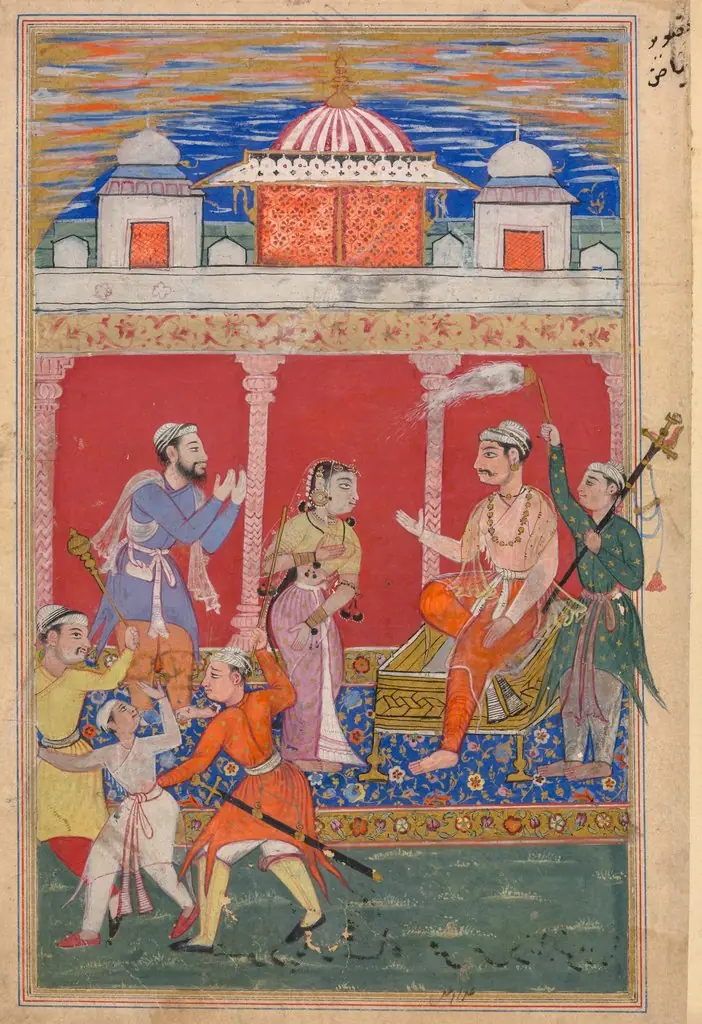
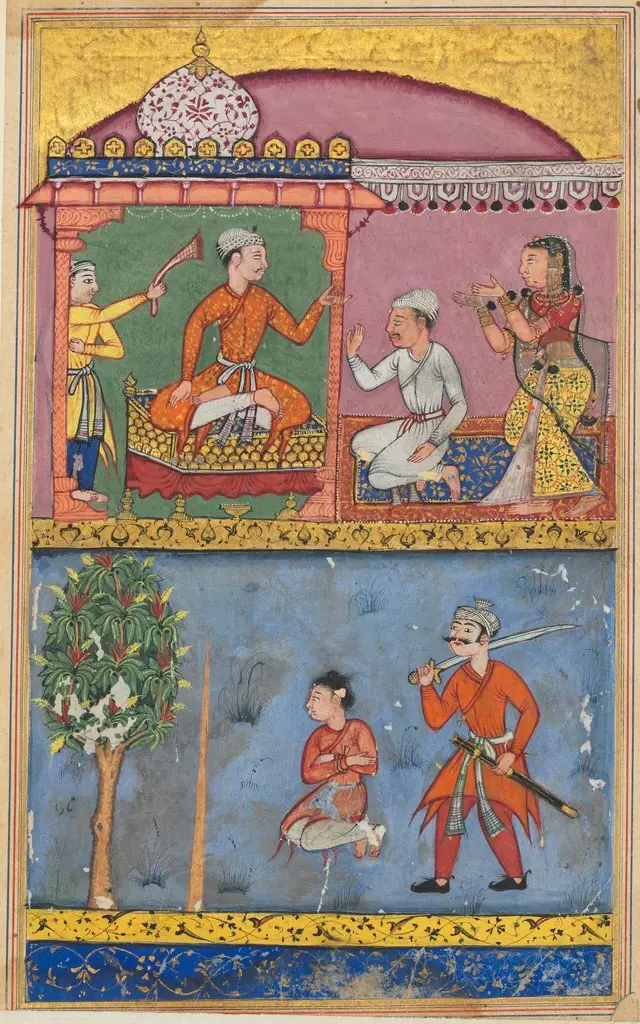 The handmaiden appeals for justice and the prince is taken to the execution site for the fourth time, from a Tuti-nama (Tales of a Parrot): Eighth Night
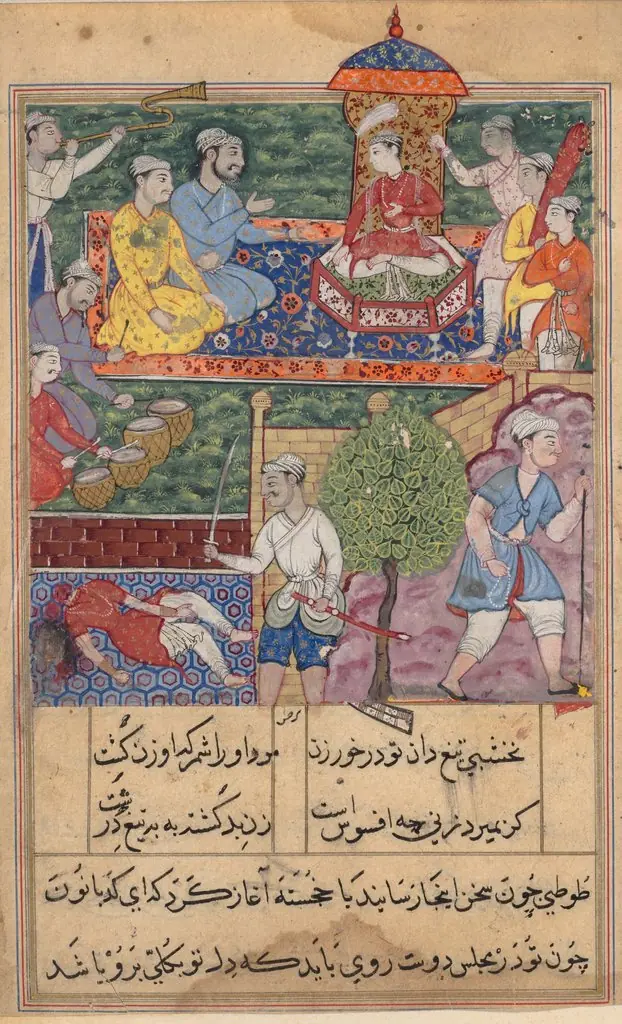
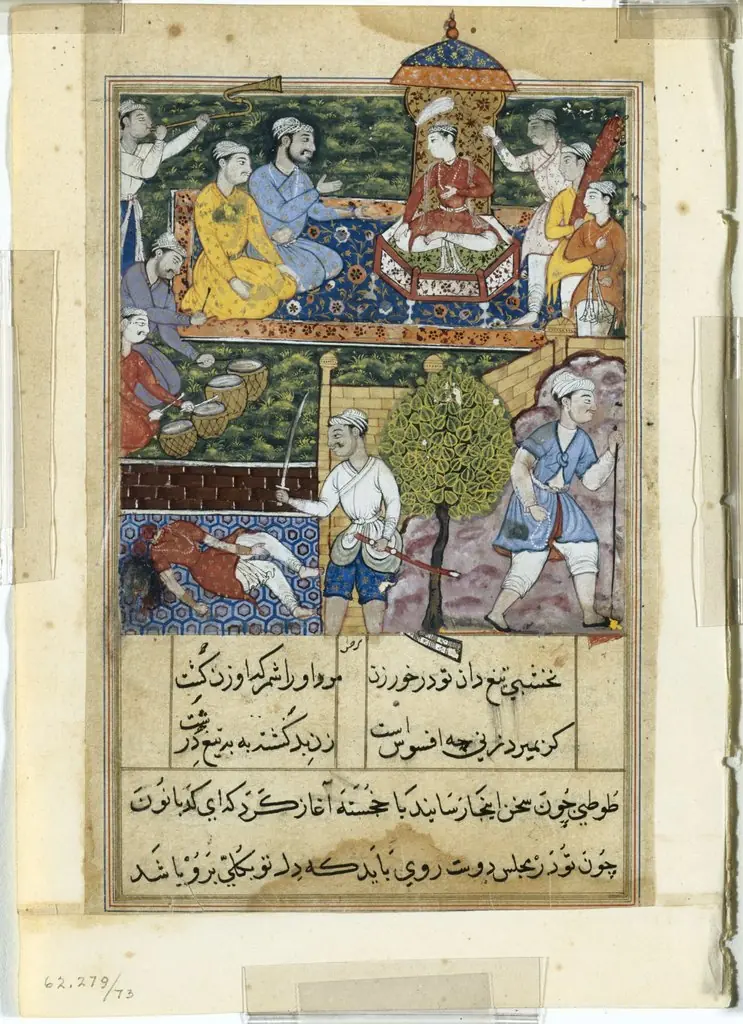 The young prince is crowned and the wicked handmaiden is executed, from a Tuti-nama (Tales of a Parrot): Eighth Night
 The handmaiden appeals for justice and the prince is taken to the execution site for the fourth time, from a Tuti-nama (Tales of a Parrot): Eighth Night
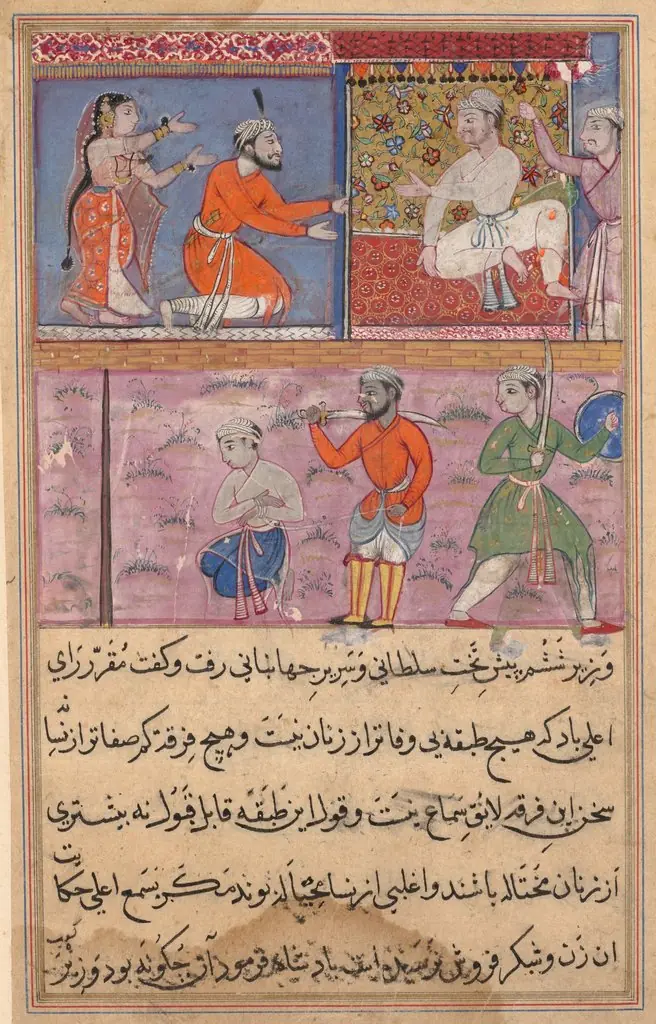
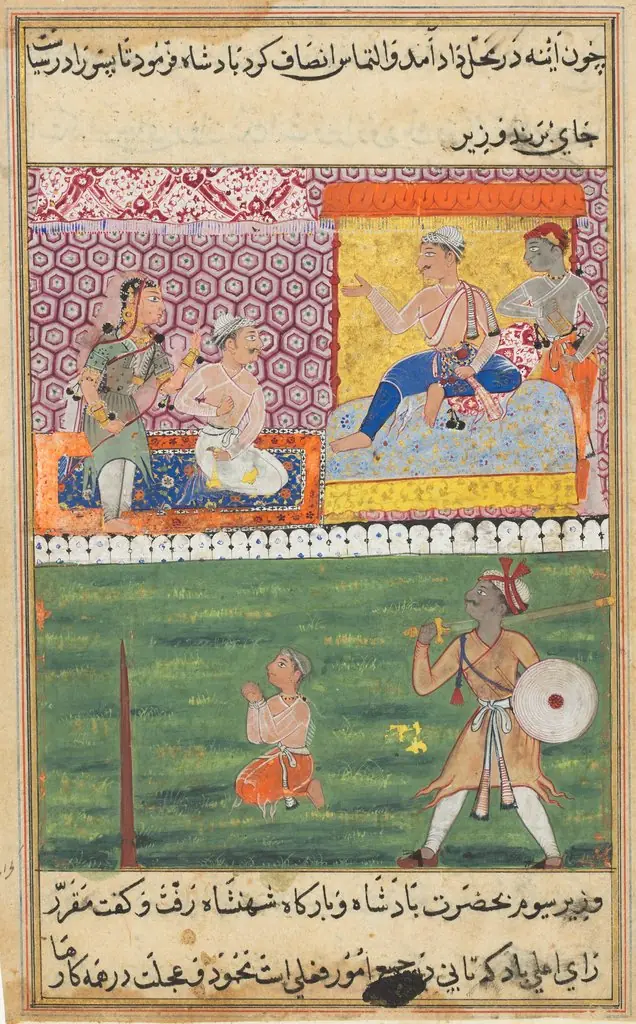 The handmaiden again appeals for justice and the prince is led to the place of execution for the third time, from a Tuti-nama (Tales of a Parrot): Eighth Night
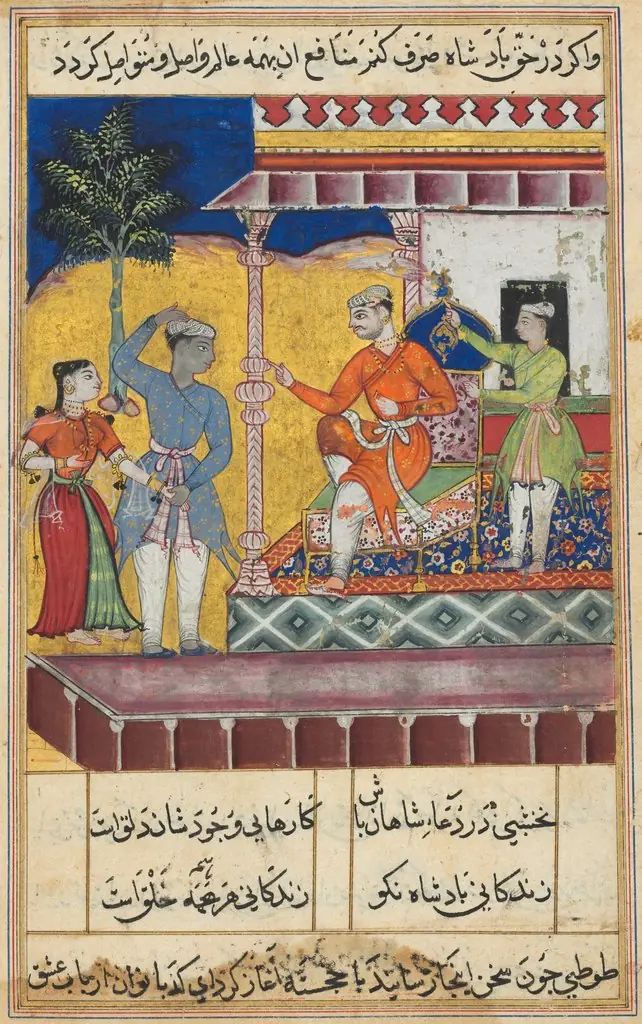 The rejuvenated old man and the daughter of the king of the jinns take leave of the King of Kings, from a Tuti-nama (Tales of a Parrot): Seventh Night
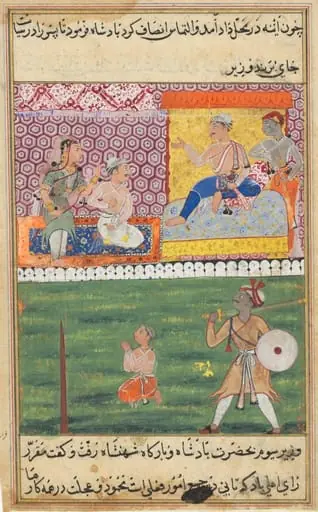 The handmaiden again appeals for justice and the prince is led to the place of execution for the third time, from a Tuti-nama (Tales of a Parrot): Eighth Night
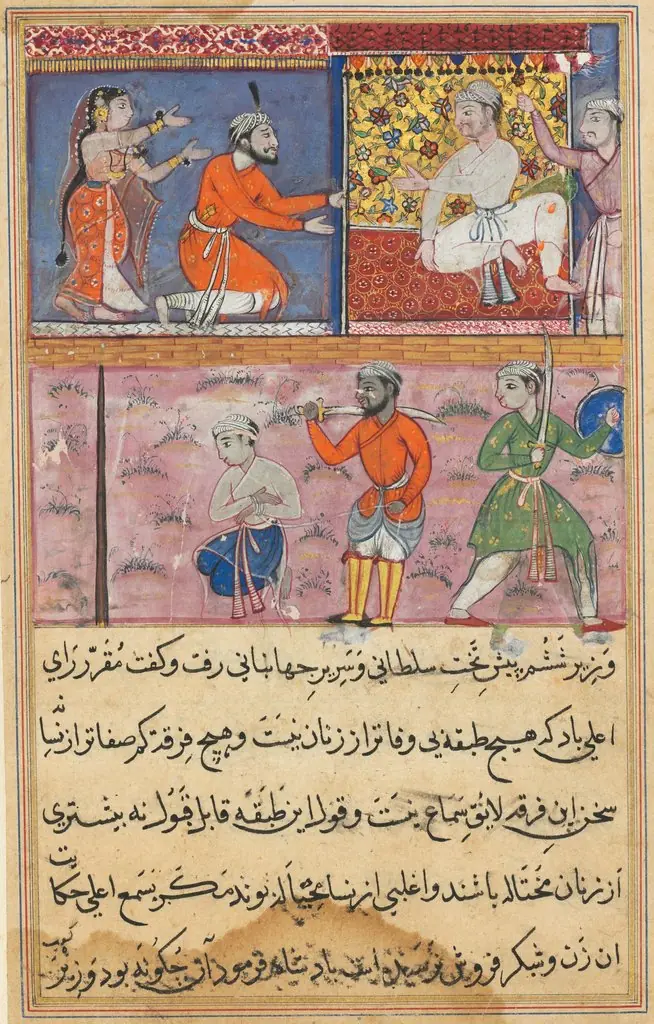 The prince sent back to the place of execution for the sixth time, from a Tuti-nama (Tales of a Parrot): Eighth Night
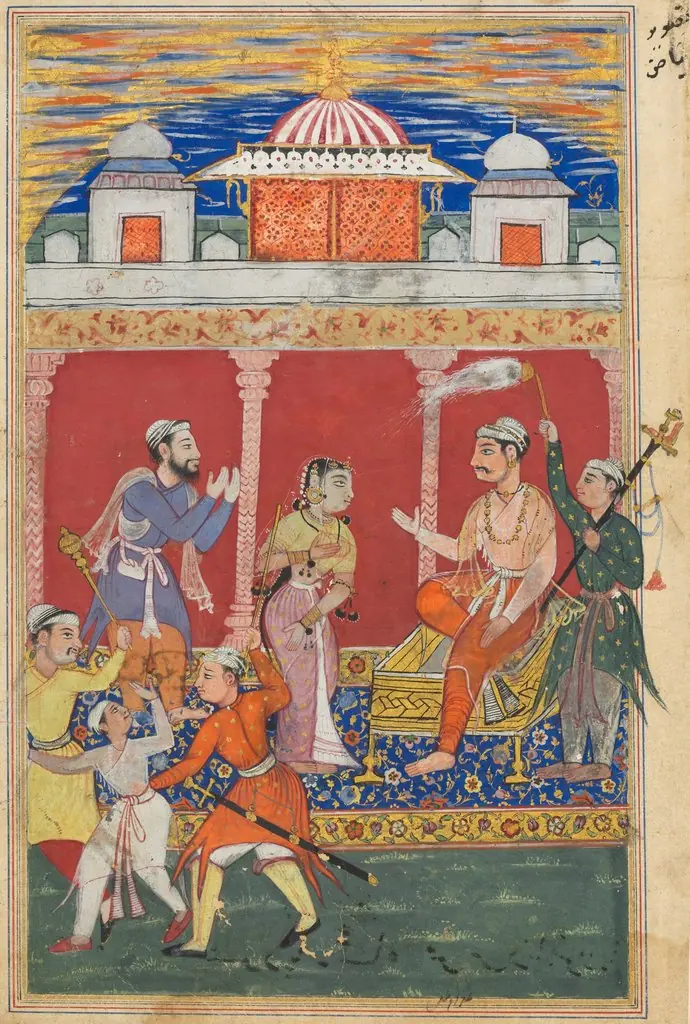 The prince’s ordeal continues, he is ordered away to be executed for the fifth time, from a Tuti-nama (Tales of a Parrot): Eighth Night
 Page from Tales of a Parrot (Tuti-nama): text page