Artwork
Untitled
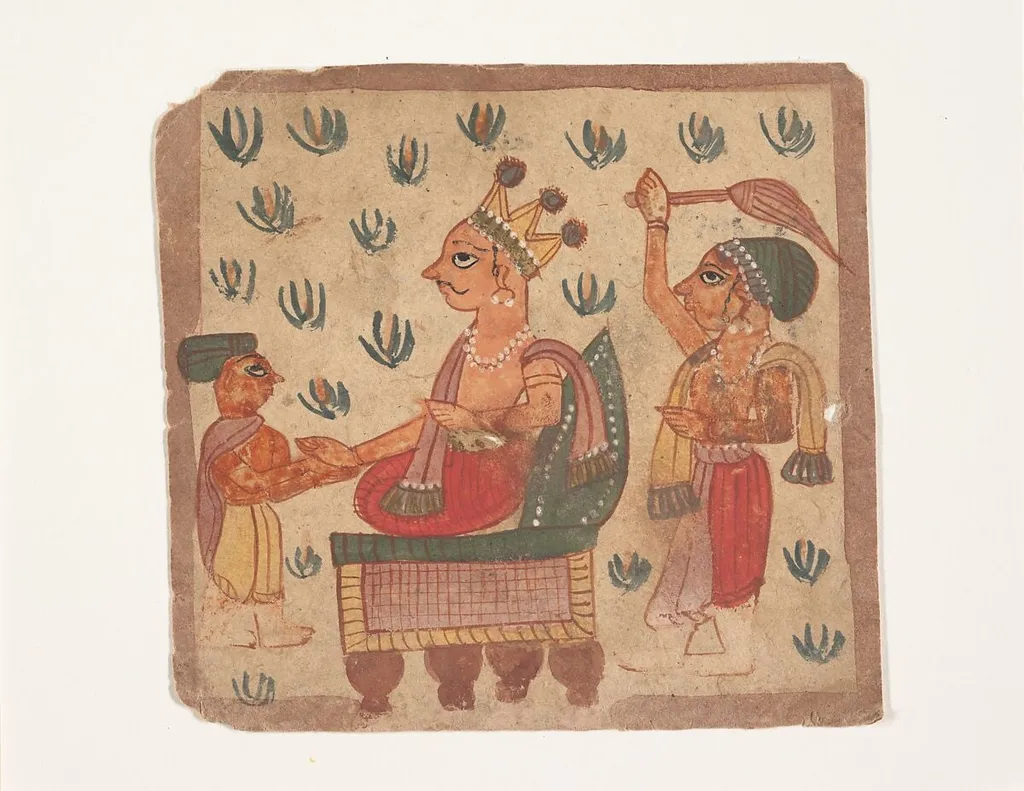
Untitled is a watercolor painting. It dates from 1725 and is held in the collection of the Metropolitan Museum of Art.
About this work
Subject & Meaning
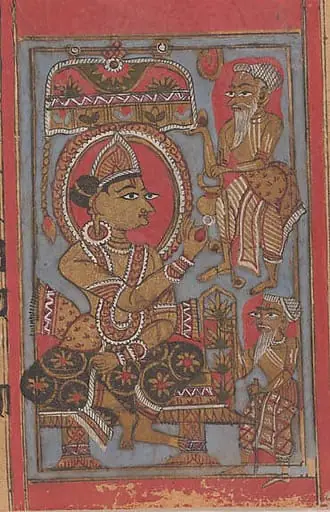
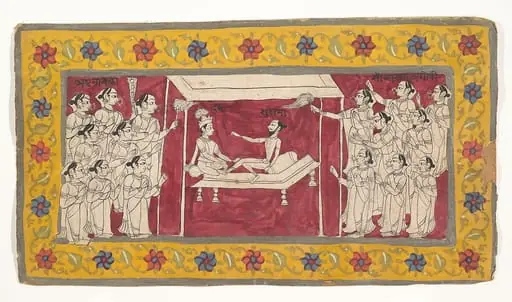
The subject is shown seated upon a throne, a central iconographic element that visually establishes his royal status and authority.
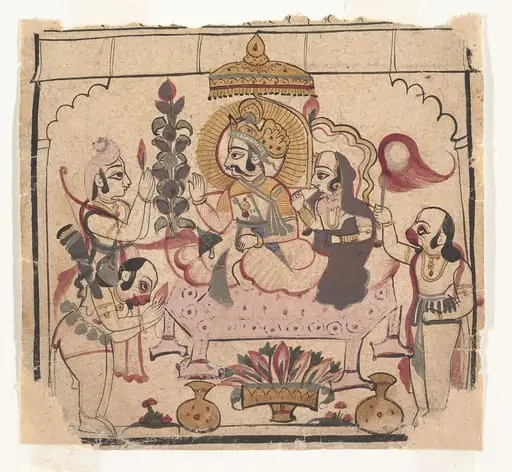
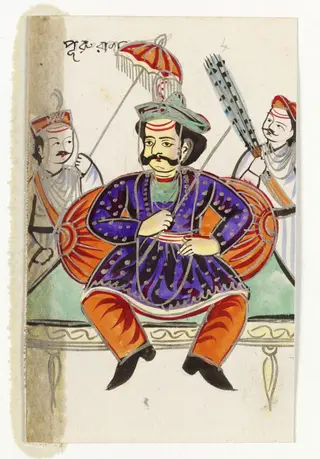
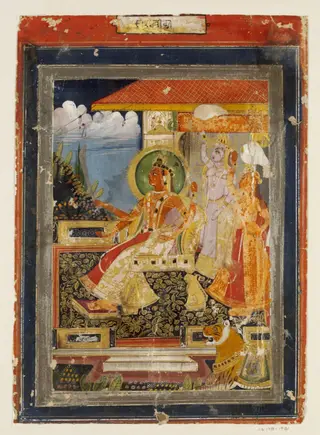
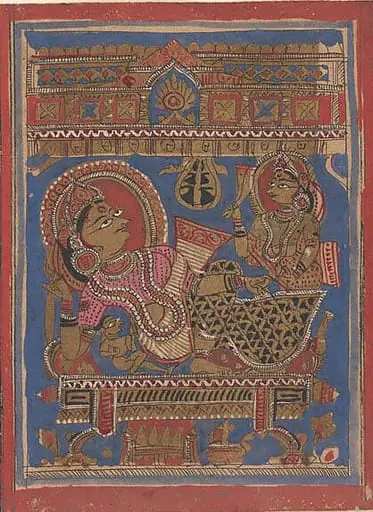
Created in India in 1725, this ink and opaque watercolor portrait depicts a male figure identified as a king. The subject is shown seated upon a throne, a central iconographic element that visually establishes his royal status and authority. As a work within the portrait genre, the painting focuses on representing the specific identity and rank of the ruler rather than illustrating a complex narrative or allegorical scene.
The imagery relies on the direct association between the enthroned man and the concept of kingship to convey its meaning, serving as a formal representation of power and leadership within its cultural context.
Technique & Style
The work is executed in ink heightened with opaque watercolor on paper, a technique characteristic of early eighteenth-century Indian portrait miniatures. Handling is precise, with fine, controlled brushwork delineating facial features and costume details, and the application of flat, saturated color in the king’s garments and throne. The support is thin, cream-colored paper, and the composition is tightly framed around the enthroned figure, emphasizing hierarchical scale and frontal presentation.
Stylistic features include the use of gold outlining, subtle modeling in flesh tones, and a restrained palette dominated by deep indigo and crimson, with minimal background detail.
History & Provenance
The work titled Untitled was executed in 1725 in India by an anonymous painter using ink and opaque watercolor on paper. Its creation is documented in the Metropolitan Museum of Art’s collection records, which list the piece’s inception date as 1725-01-01 and note its dimensions of 11.8 × 12.7 cm. The painting, classified as a portrait depicting a king, a man and a throne, entered the museum’s holdings as part of its permanent collection, establishing the museum as its current owner. No documentary evidence of a commission or subsequent ownership changes prior to museum acquisition is recorded.
The work is held in the collection of the Metropolitan Museum of Art, as identified in its Wikidata record. No specific inventory or accession number is documented in the available sources. Likewise, no exhibition history is recorded, with the available documentation limited to its current institutional location and its 1725 date of creation.
Overview
This untitled painting from early 18th-century Gujarat, India, depicts a regal figure seated on a low throne. Executed with ink and opaque watercolor on paper, the work portrays a king in a gold and red robe, his hand raised in a gesture of benediction. He is attended by figures holding traditional symbols of royalty, such as fly whisks and a parasol, emphasizing his elevated status.
Context
This artwork is representative of painting traditions in Gujarat, India, during the early 18th century. The region's artistic output often focused on depicting royal courts and figures of power, utilizing specific visual language to convey status and wealth. Its stylistic characteristics, including the use of bright colors and precise draftsmanship, align with broader trends in Gujarati art of the period.
Artist & collection