Artwork
Untitled
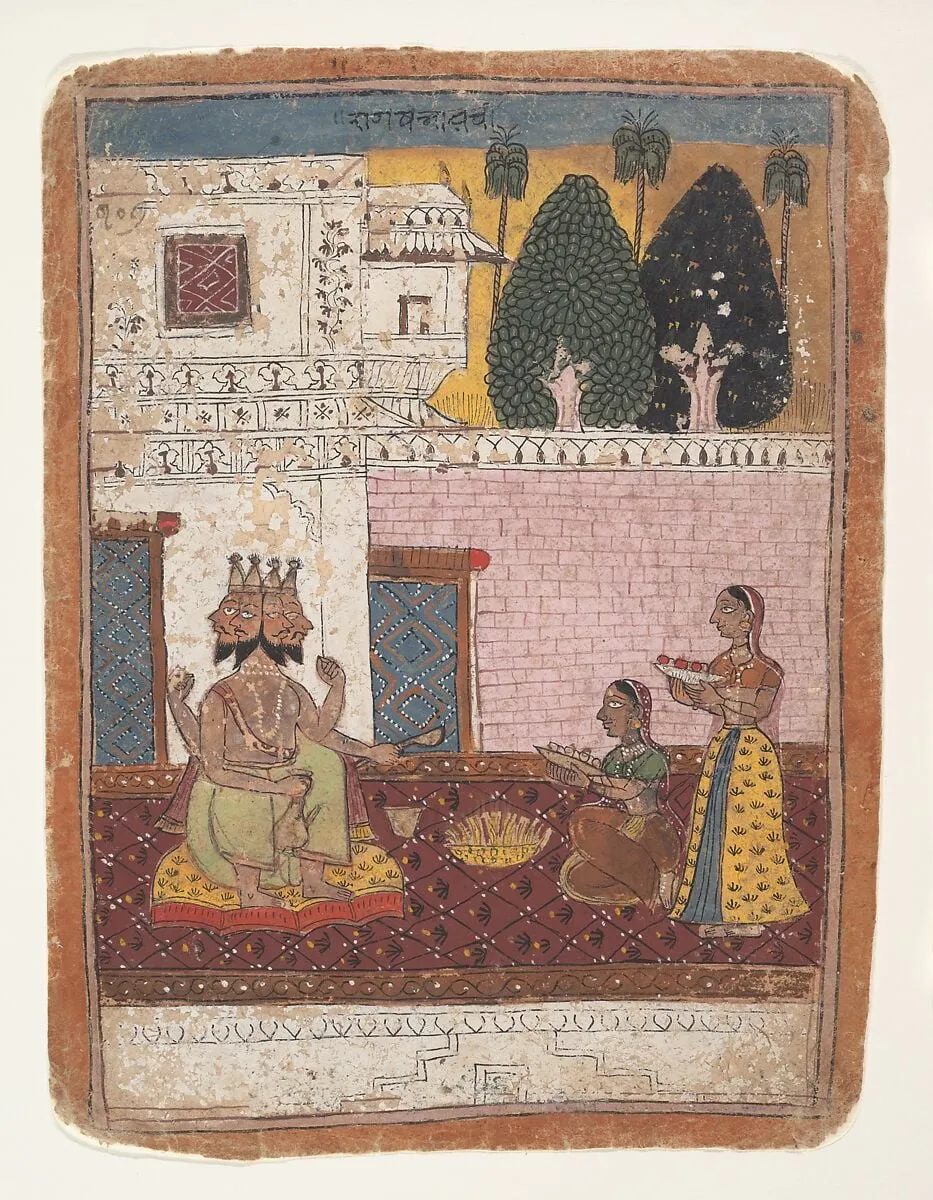
Untitled is a watercolor painting. It dates from 1712 and is held in the collection of the Metropolitan Museum of Art.
About this work
Subject & Meaning
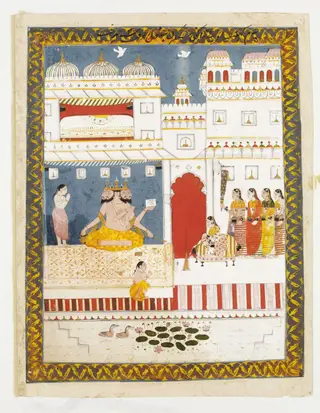
The untitled painting, dated 1712 and executed in ink and opaque watercolor on paper, is classified as a religious work.
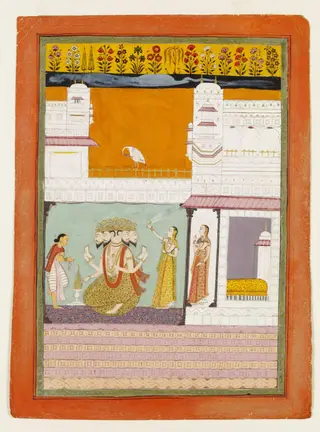
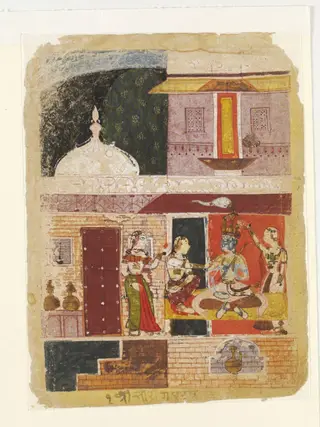
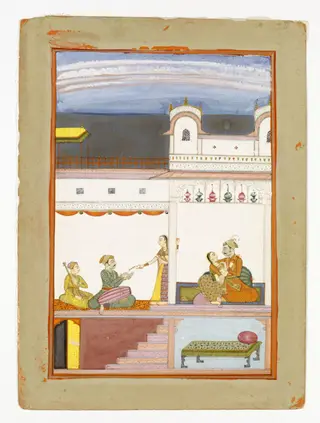
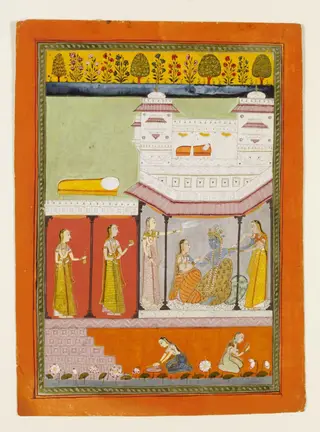
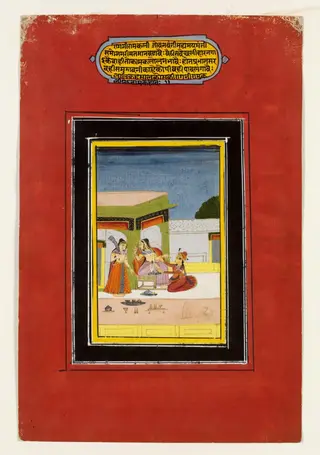
The untitled painting, dated 1712 and executed in ink and opaque watercolor on paper, is classified as a religious work. Its iconographic program centers on the Hindu creator deity Brahma, who is depicted alongside fire, fruit, and a woman. The inclusion of Brahma situates the composition within a devotional framework, while the presence of fire and fruit likely carries ritual or cosmological significance associated with creation, sacrifice, or auspiciousness in Hindu visual tradition.
The female figure may represent a consort or attendant, contributing to the theological narrative surrounding Brahma. Together, these elements convey a religious meaning rooted in Hindu iconography, presenting Brahma as the central subject within a symbolic arrangement of elemental and human motifs.
Technique & Style
Created in 1712 in India, this religious painting utilizes ink and opaque watercolor applied to a paper support. The work measures 30 cm in height by 22.7 cm in width. Stylistically, the composition features the deity Brahma alongside a woman, fire, and fruit, rendered through the specific application of opaque pigments characteristic of the region's artistic traditions during this period.
The piece is classified as a painting within the Metropolitan Museum of Art's collection, where its material construction and iconographic elements reflect the technical approaches of anonymous Indian artists of the early eighteenth century.
History & Provenance
The untitled painting, executed in ink and opaque watercolor on paper, has been dated to 1712 and is understood to have been produced in India. Attributed to an anonymous artist, the work depicts the Hindu god Brahma surrounded by fire, fruit, and a female figure. While no earlier owners or commissioning patron are recorded in the available sources, the painting entered the Metropolitan Museum of Art's collection and is presently housed there. Its provenance beyond the museum's acquisition remains undocumented.
Context
The painting, dated 1712 and executed in ink and opaque watercolor on paper, portrays the Hindu creator god Brahma amid fire, fruit, and a female figure, situating it within the religious genre of early Indian art. Its attribution to an anonymous painter reflects the limited documentation of individual artists in 18th-century Indian workshops. Measuring 30 × 22.7 cm, the work was produced in India and entered the Metropolitan Museum of Art's collection, underscoring the museum's role in preserving South Asian devotional imagery.
Such anonymous compositions typically functioned as ritual objects, embodying theological narratives while highlighting the collective nature of artistic production in that cultural milieu.
Overview
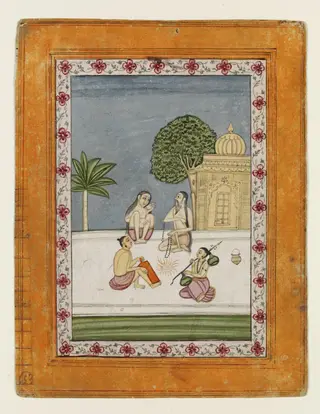
This untitled painting, executed with ink and opaque watercolor on paper, depicts a scene featuring a woman and a deity. Originating from Rajasthan, India, the work exemplifies the region's rich tradition of miniature painting. It presents a distinctive blend of mythological elements and earthly imagery, characteristic of the artistic practices prevalent in this area.
Artist & collection