Artwork
Untitled
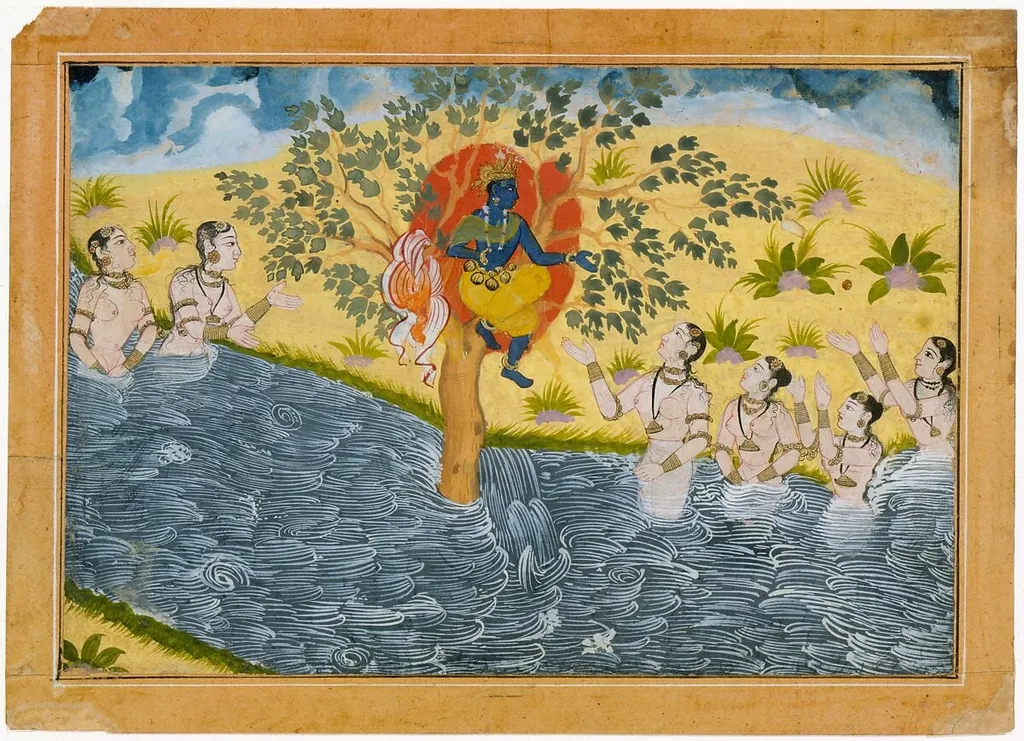
Untitled is a watercolor painting. It dates from 1610 and is held in the collection of the Metropolitan Museum of Art.
About this work
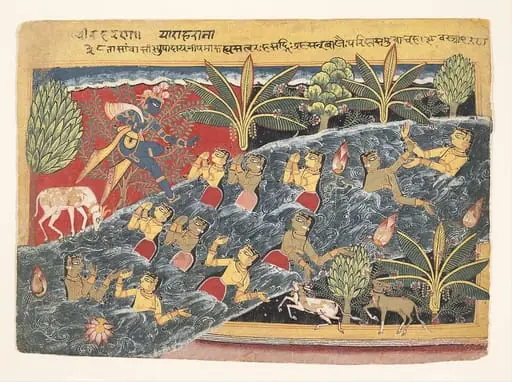
Blue-skinned Krishna stands in a river while women pour water over him from gold pitchers. The gold is real leaf pressed onto the paper, a technique Rajasthani workshops used to make sacred scenes glow. The style points to Bikaner around 1610; the painter is unknown.
Subject & Meaning
The inclusion of a woman may allude to the rasa (aesthetic flavor) of conjugal love, a recurrent motif in devotional art of the period.
The painting shows the Hindu god Krishna in a moment of bathing, accompanied by a female figure, suggesting a narrative of divine intimacy and pastoral abundance. Krishna's presence functions as an icon of benevolent deity and lover, while the act of bathing conveys themes of purification, fertility, and the sanctification of everyday life. The inclusion of a woman may allude to the rasa (aesthetic flavor) of conjugal love, a recurrent motif in devotional art of the period.
The work originates from early 17th-century Indian artistic circles, reflecting a synthesis of indigenous iconography with the stylistic conventions of manuscript illustration.
Technique & Style
The work is executed in ink, opaque watercolor, and gold on paper. Created circa 1610 in India, it belongs to the religious genre and portrays Krishna in a bathing scene alongside a woman. The composition reflects typical devotional imagery of the period, employing delicate line work and subtle color washes to emphasize the narrative. The painting is held in the Metropolitan Museum of Art collection.
Overview
This untitled painting, rendered with ink, opaque watercolor, and gold on paper, depicts a devotional scene. It portrays the blue-skinned deity Krishna standing within a river, attended by women who pour water over him from golden pitchers. The artwork's small scale and vibrant palette are characteristic of Indian miniature paintings from the early 17th century.
History & Provenance
While the specific artist of this painting remains unrecorded, its stylistic attributes align closely with works produced in the workshops of Bikaner, a prominent artistic center in Rajasthan, around the year 1610. This dating places the artwork within a period of flourishing artistic production in the region, characterized by its distinctive palette and narrative approach to religious themes.
Artist & collection

- Krishna Playing with the Gopis in the Yamuna
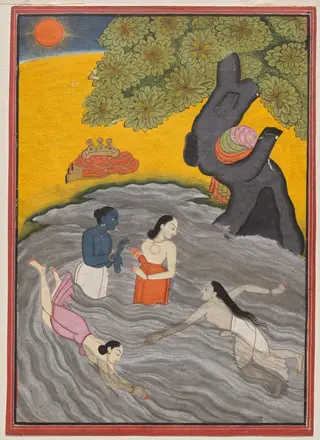 Krishna Playing with the Gopis in the Yamuna
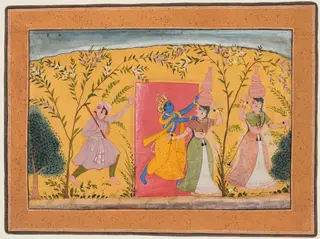 Krishna Exacts a Toll from the Milkmaids: Dana-Lila, from a Bhagavata Purana
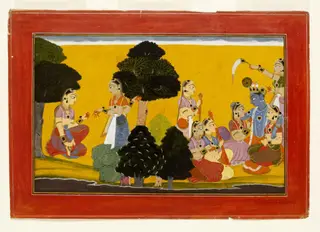 Radha and Krishna
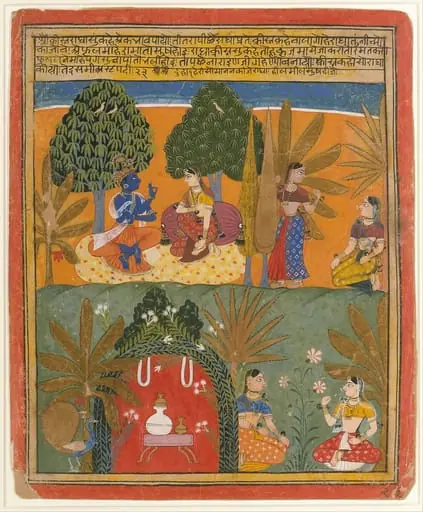 Untitled
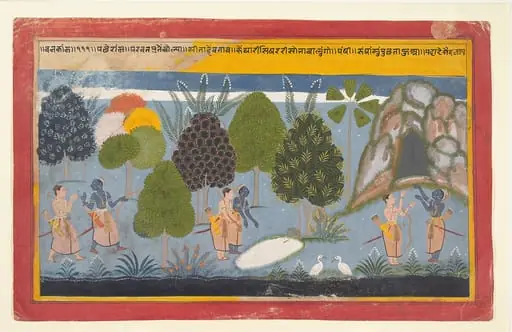 Untitled
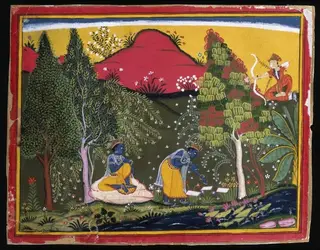 Cupid Disturbs Krishna's Penance, Page from a Gita Govinda
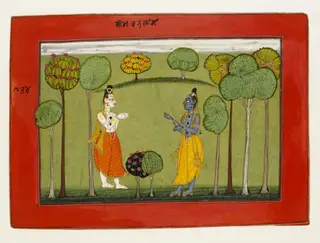 Rama and Lakshman
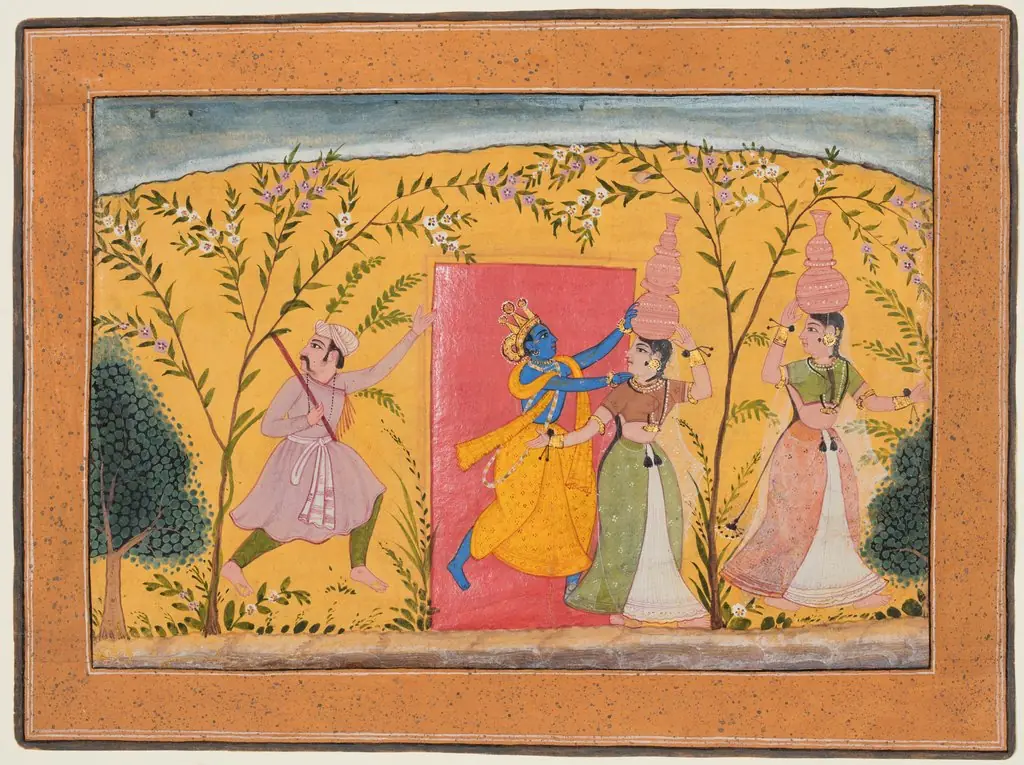 Krishna Exacts a Toll from the Milkmaids: Dana-Lila, from a Bhagavata Purana
 Krishna Steals the Clothes of the Milkmaids and Expounds on the Virtue of Trees, from a Braj Bhagavata Purana
 Untitled
 Untitled