Artwork
Krishna Playing with the Gopis in the Yamuna
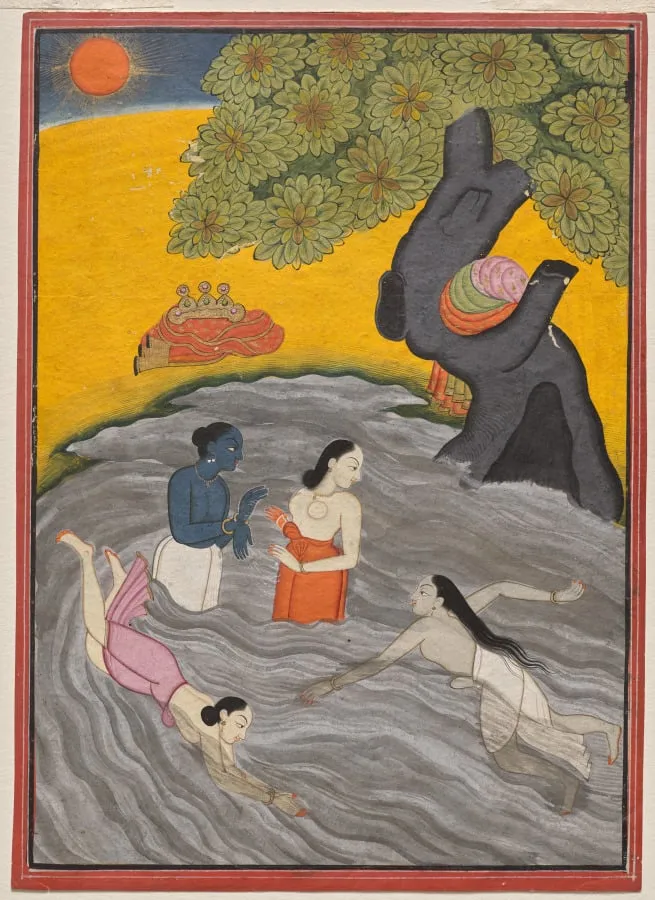
Krishna Playing with the Gopis in the Yamuna is an unspecified painting by the Pahari Painting artist Unknown. It dates from 1770 and is held in the collection of the Cleveland Museum of Art.
- Accession no.
- 2018.118
- Credit line
- Purchase and partial gift from the Catherine and Ralph Benkaim Collection; Severance and Greta Millikin Purchase Fund
About this work
Overview
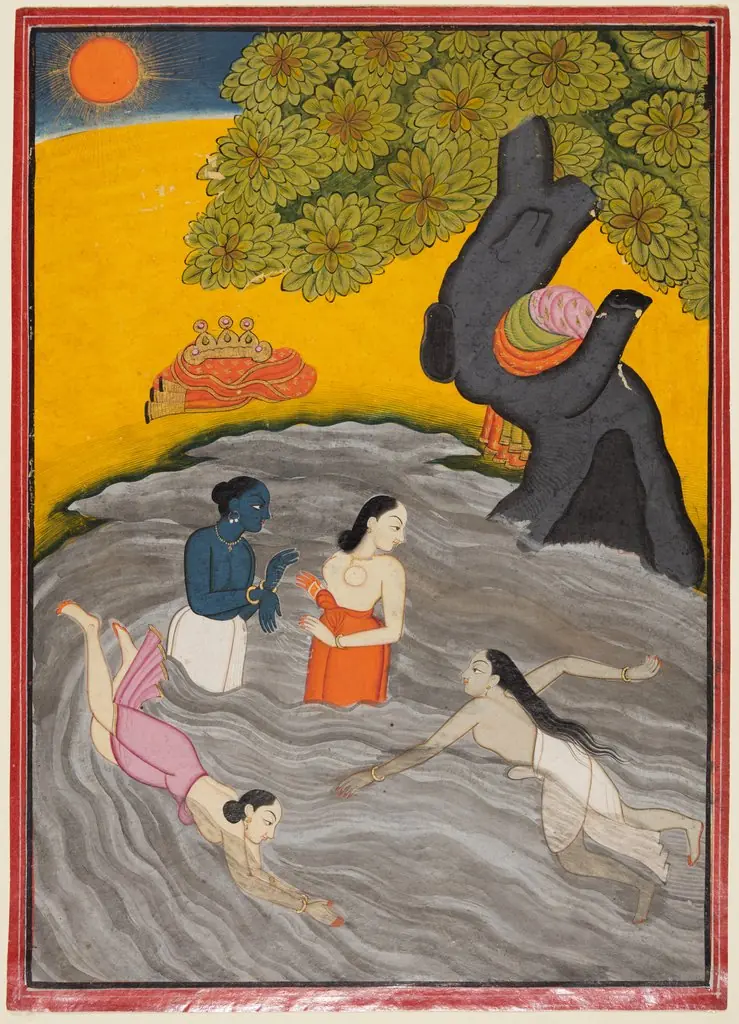
The work titled Krishna Playing with the Gopis in the Yamuna depicts the Hindu deity Krishna in a riverine setting, surrounded by three female milkmaids. Set beneath a bright sun, the figures are rendered in vivid blues and greens, with Krishna’s crown and a scarf placed on the riverbank while the women’s garments are neatly piled on a nearby tree branch.
Subject & Meaning
The scene illustrates a moment from Krishna’s youthful pastimes, where he engages the gopis, village maidens, in light‑hearted water play. One of the women turns away as Krishna splashes her, a gesture that conveys both playful intimacy and devotional affection, reflecting the theological theme of divine love expressed through everyday interaction.
Technique & Style
Executed in the characteristic Pahari style of northern India, the painting employs delicate brushwork and a bright, saturated palette. The composition balances narrative detail, such as the folded clothing and the placement of the crown, with a flattened spatial treatment typical of the regional courtly aesthetic, emphasizing ornamental elegance over strict realism.
Context
Pahari courts of the 18th‑century Himalayan foothills favored depictions of Krishna’s leelas, integrating local artistic conventions with devotional themes. This work aligns with that tradition, illustrating how regional patronage encouraged the synthesis of religious narrative and courtly visual pleasure.
History & Provenance
The painting originates from the Pahari kingdoms of northern India, a cultural milieu known for its prolific production of miniature and panel paintings. While specific ownership records are not documented, the work remains representative of the artistic output commissioned by local aristocracy for private devotional and decorative purposes.
Artist & collection









- Krishna Playing with the Gopis in the Yamuna
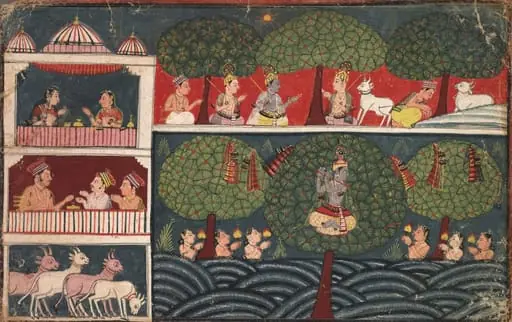 Krishna Steals the Clothes of the Milkmaids and Expounds on the Virtue of Trees, from a Braj Bhagavata Purana
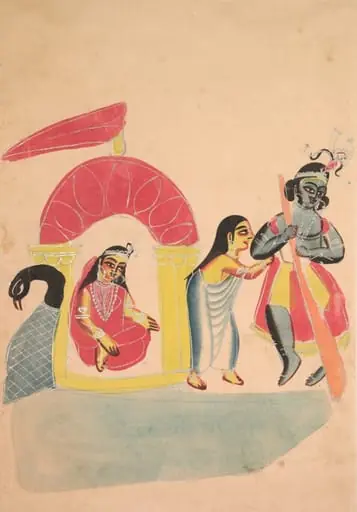 Krishna Ferrying Radha Across the Yamuna River
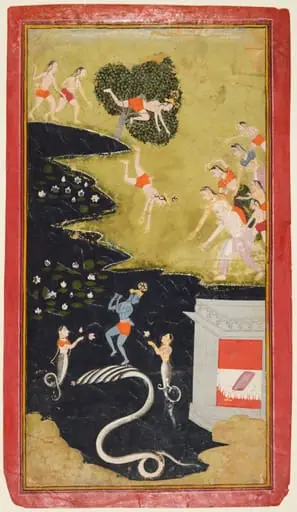 Krishna Quells the Serpent Kaliya, from a Bhagavata Purana
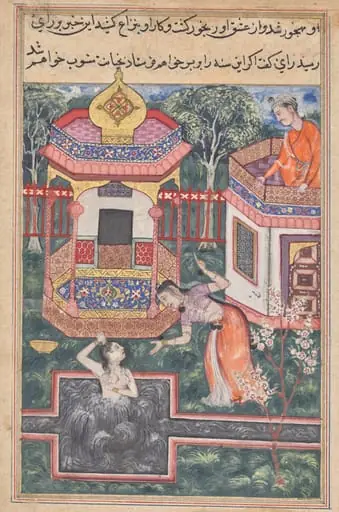 The son of the king of Babylon sees the Brahman transformed into a woman bathing and falls in love with her, from a Tuti-nama (Tales of a Parrot): Thirty-fifth Night
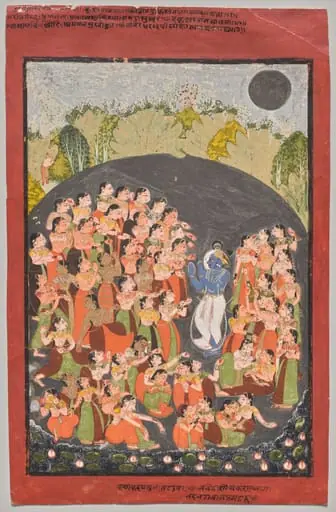 Krishna and the Gopis Gather for Rasamandala
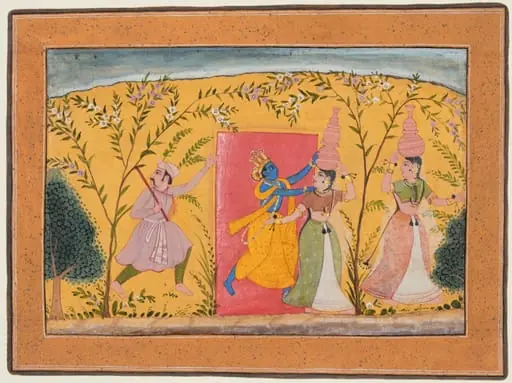 Krishna Exacts a Toll from the Milkmaids: Dana-Lila, from a Bhagavata Purana
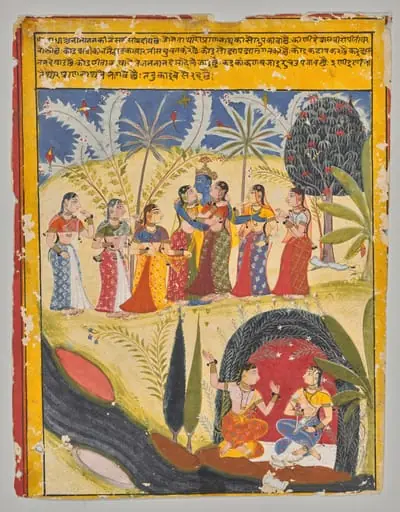 Krishna and Gopis
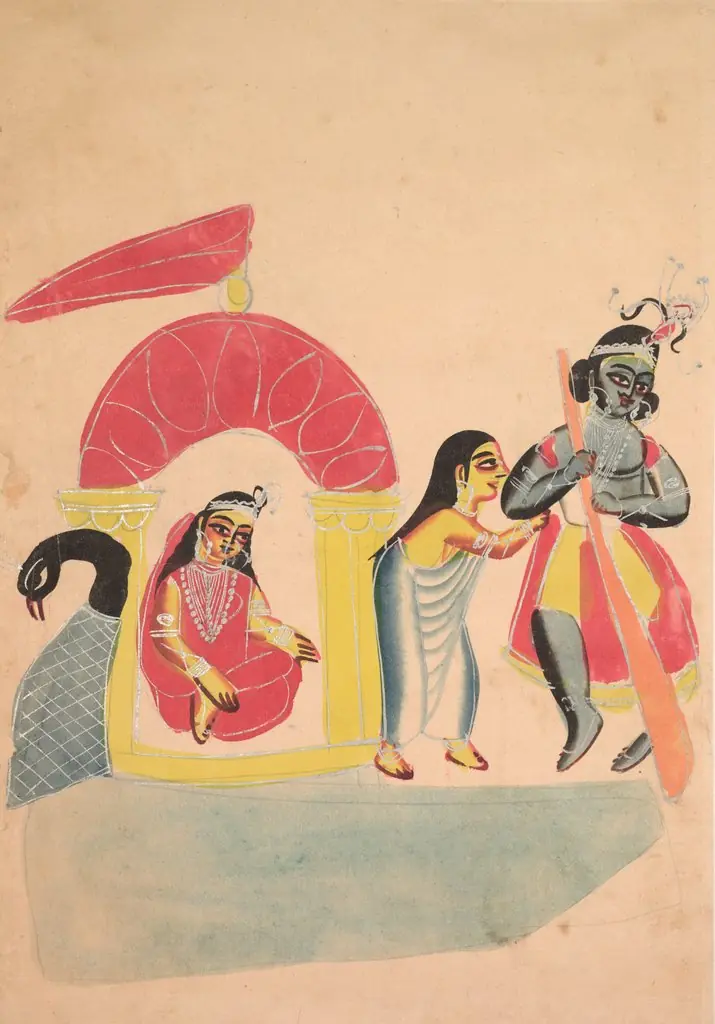 Krishna Ferrying Radha Across the Yamuna River