Artwork
Untitled
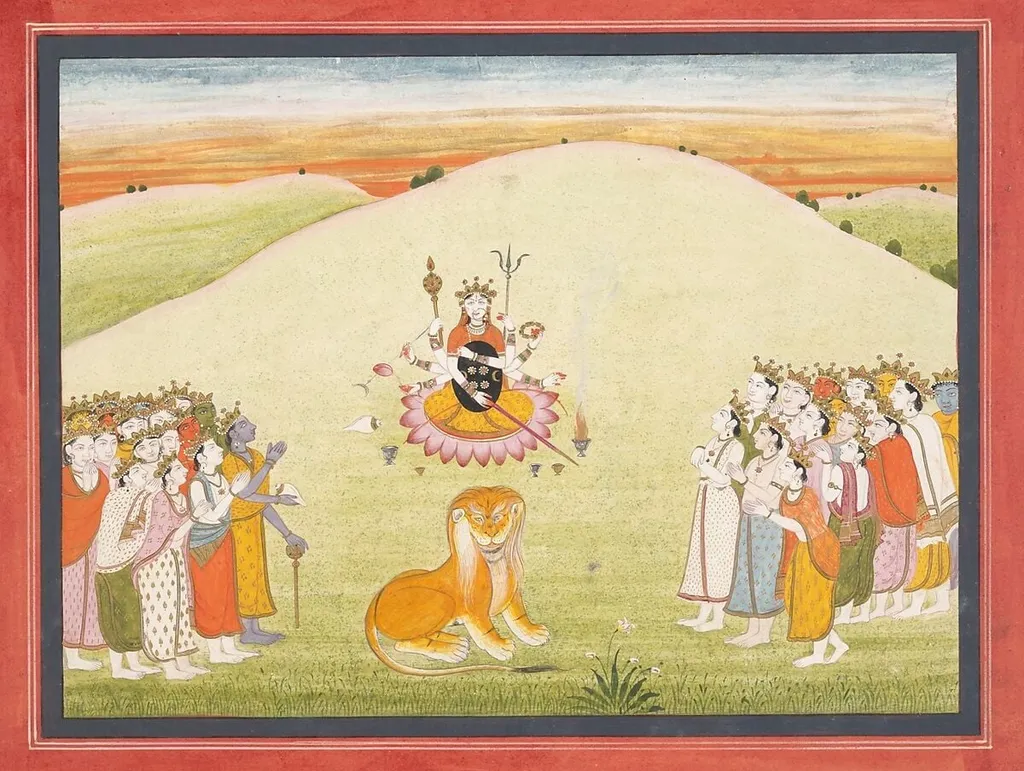
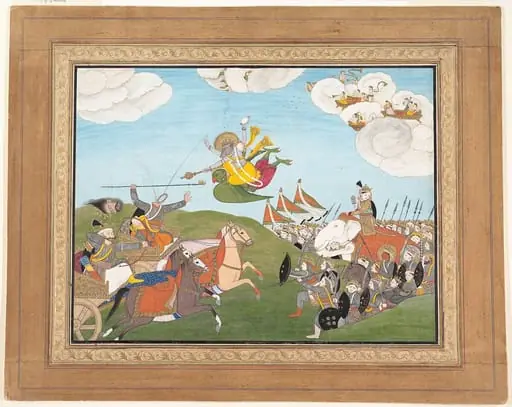
Untitled is a watercolor painting. It dates from 1815 and is held in the collection of the Metropolitan Museum of Art.
- Accession no.
- 1978.540.3
- Credit line
- Gift of Mr. and Mrs. Peter Findlay, 1978
About this work
Subject & Meaning
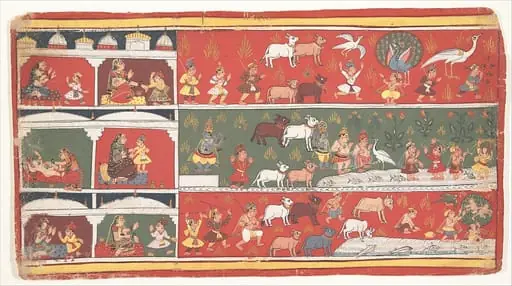
The work is attributed to an anonymous painter and is executed in ink and opaque watercolor on paper, capturing the visual narrative of this religious figure.
The artwork, created in 1815 in India, depicts the Hindu deity Durga, a central figure in mythology. The composition features the goddess accompanied by a lion, her traditional mount, set against a hilly landscape. As a mythological subject, the piece represents the divine feminine power associated with Durga.
The inclusion of the lion and the specific setting serves to identify the deity within the context of her iconographic traditions. The work is attributed to an anonymous painter and is executed in ink and opaque watercolor on paper, capturing the visual narrative of this religious figure.
Technique & Style
The work is an ink and opaque watercolor painting on paper, measuring 17.5 cm × 23.2 cm and dated to 1815. It was produced in India by an anonymous artist and entered the collection of the Metropolitan Museum of Art. The composition portrays the Hindu goddess Durga standing on a hill beside a lion, a narrative drawn from mythology.
Executed in a delicate wash, the piece combines fine line work with layered washes of color typical of early 19th‑century Indian illustration. No specific information about its current condition is recorded.
History & Provenance
The work, titled Untitled, was created in 1815 by an anonymous painter in India. Executed in ink and opaque watercolor on paper, the piece depicts the deity Durga accompanied by a lion and hills. While the specific commission details and original ownership chain prior to its acquisition remain undocumented in the available records, the painting is currently part of the collection at the Metropolitan Museum of Art.
The work measures 17.5 by 23.2 units and is classified within the genre of mythology. Its attribution is to an unknown artist, reflecting the common practice of anonymous production in the region during the early 19th century.
The artwork titled Untitled, created in 1815 by an anonymous artist, is held in the collection of the Metropolitan Museum of Art. This painting, executed in ink and opaque watercolor on paper, depicts the deity Durga alongside a lion and hills. While the specific accession number is not provided in the available documentation, the work is cataloged within the museum's holdings under the classification of paintings.
The piece originates from India and measures 17.5 cm in height by 23.2 cm in width. No specific exhibition history or loan records are detailed in the provided sources, though the work remains part of the permanent collection at the Metropolitan Museum of Art.
Context
The 1815 ink and opaque watercolor work, Untitled, is recorded as an anonymous Indian painting in the Metropolitan Museum of Art, where it is studied as a representative example of early nineteenth‑century mythological art. Its depiction of the Hindu goddess Durga alongside a lion on a hill aligns with devotional practices of the period, and its classification within the museum’s collection underscores scholarly interest in unattributed works from colonial‑era India. Because the artist remains unidentified, the piece serves as a touchstone for research into anonymous production, stylistic analysis, and the broader circulation of Hindu iconography in Western collections.
Overview
Created in 1815, this untitled work depicts the Hindu goddess Durga in her role as a warrior deity. The composition centers on Durga riding a lion across a landscape of rolling green hills. She is portrayed with multiple arms, each grasping a distinct weapon, as she engages in combat with a demon.
Executed in ink and opaque watercolor on paper, the piece employs a style characteristic of early 19th-century Indian painting, utilizing bright, flat colors without chiaroscuro to create bold, clear forms. The lack of shading emphasizes the narrative action and the divine nature of the figures rather than realistic spatial depth. This work reflects the tradition of mythological illustration prevalent in the region during the period, focusing on the triumph of good over evil.
The anonymous artist, active around 1800, adhered to established iconographic conventions for Durga, ensuring the deity is immediately recognizable through her attributes and mount. The piece serves as a visual record of religious storytelling through the medium of manuscript or devotional painting.
Artist & collection

- Gods Appeal to Durga for Help
 Radha and Krishna
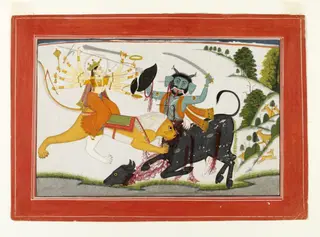 Durga and Mahishasura
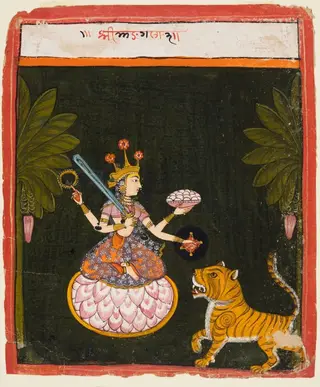 Goddess Mangala, from a Devi Series
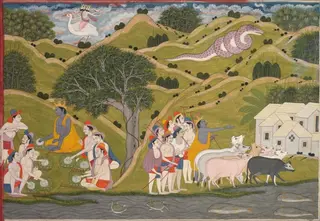 Krishna returns with the cowherds to Braj, from a Bhagavata Purana
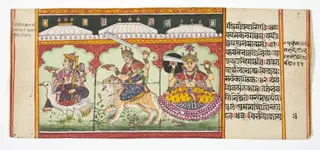 Legend of Durga
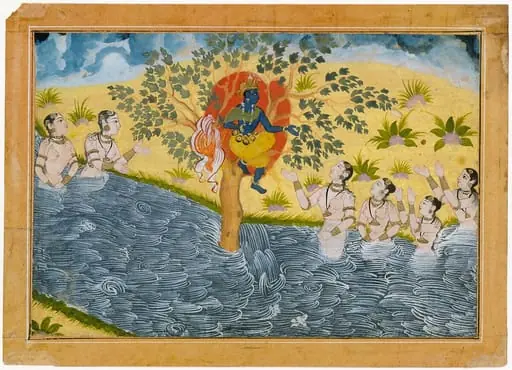 Untitled
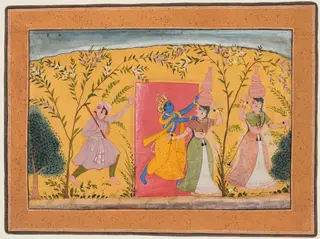 Krishna Exacts a Toll from the Milkmaids: Dana-Lila, from a Bhagavata Purana
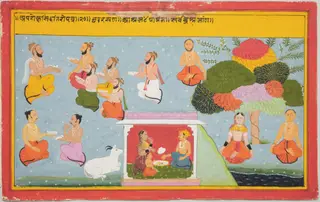 Worship of Hindu Deities (1 of 18)
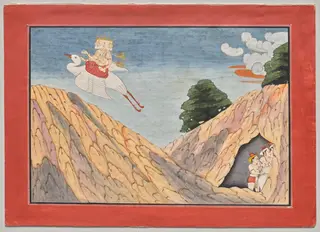 Brahma Hides the Cowherds and the Calves in the Cave, page from a Bhagavata Purana
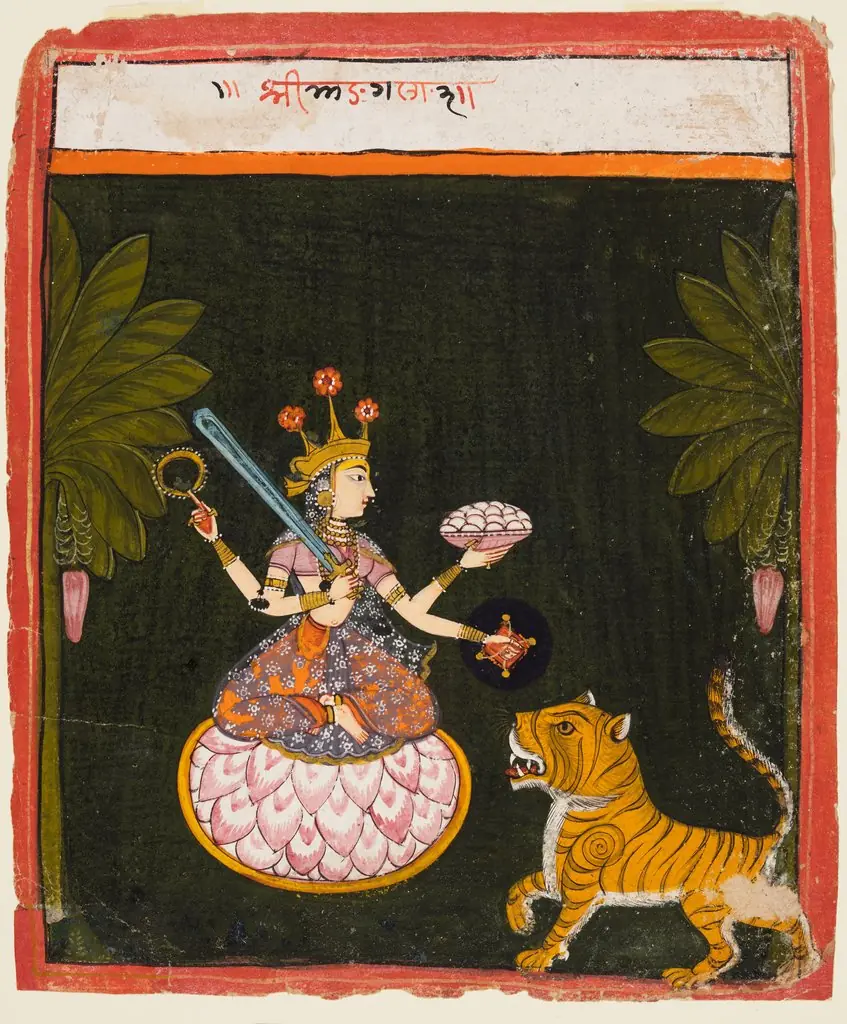 Goddess Mangala, from a Devi Series
 Untitled