Artwork
Venus and Cupid
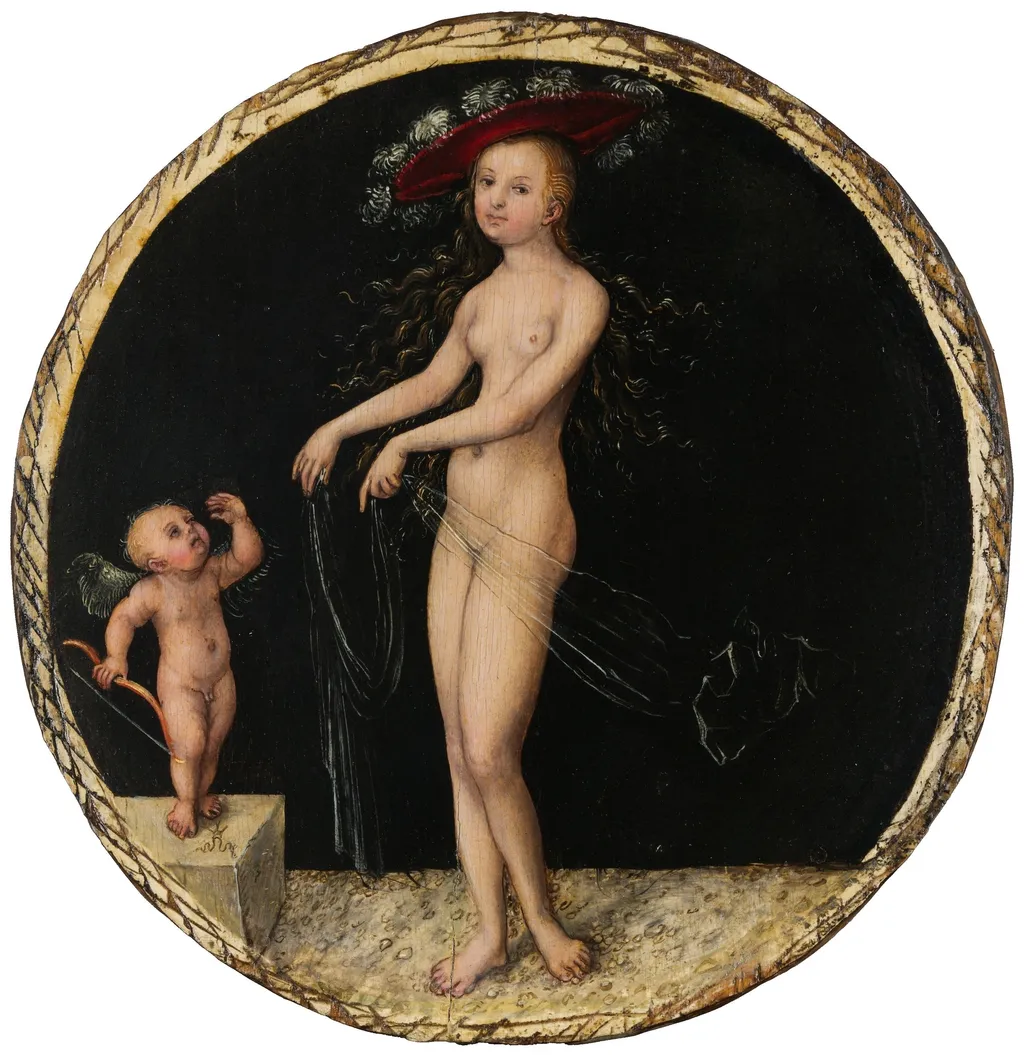
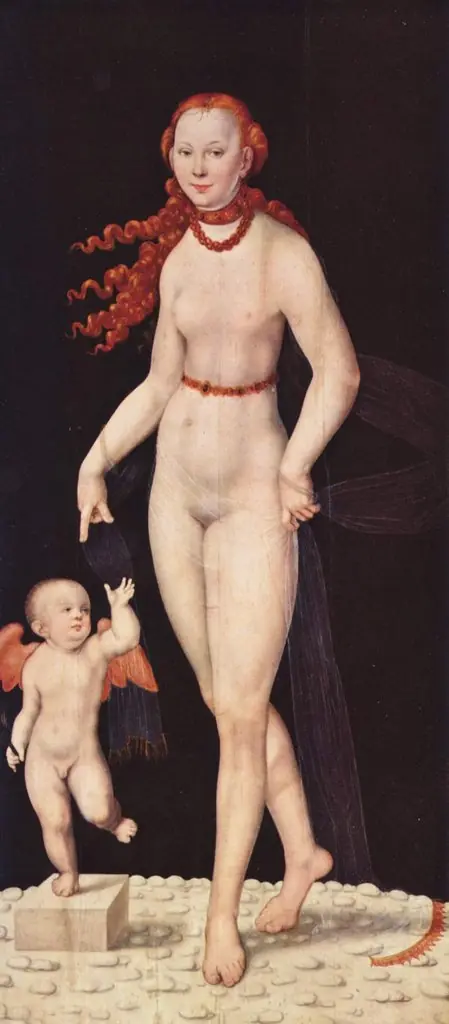
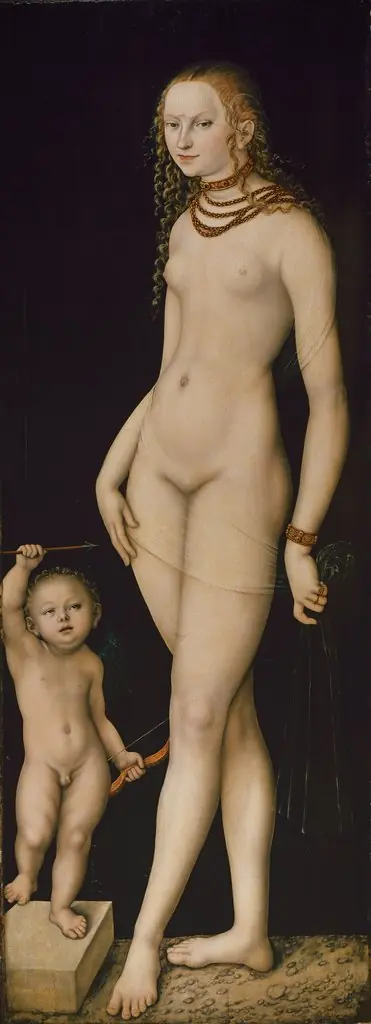
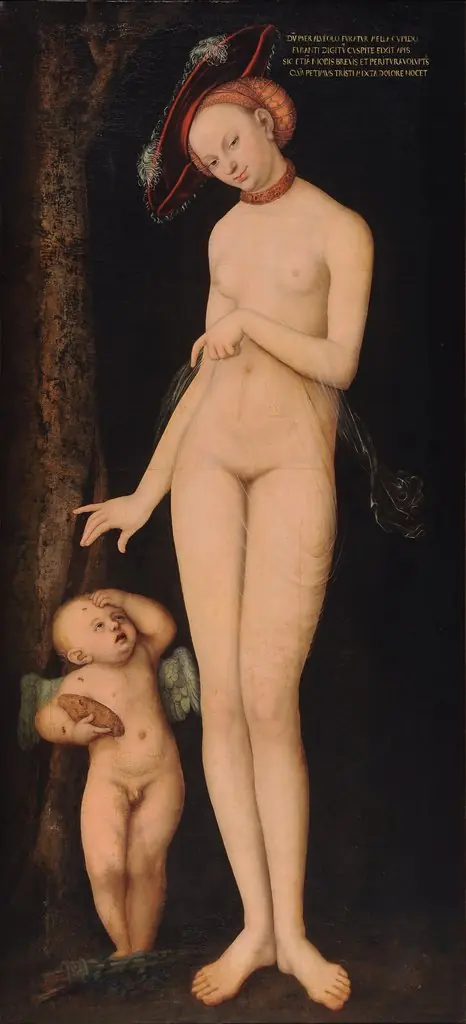
Venus and Cupid is an oil painting by the Northern Renaissance artist Lucas Cranach the Elder. It dates from 1525 and is held in the collection of the Metropolitan Museum of Art.
About this work
Subject & Meaning
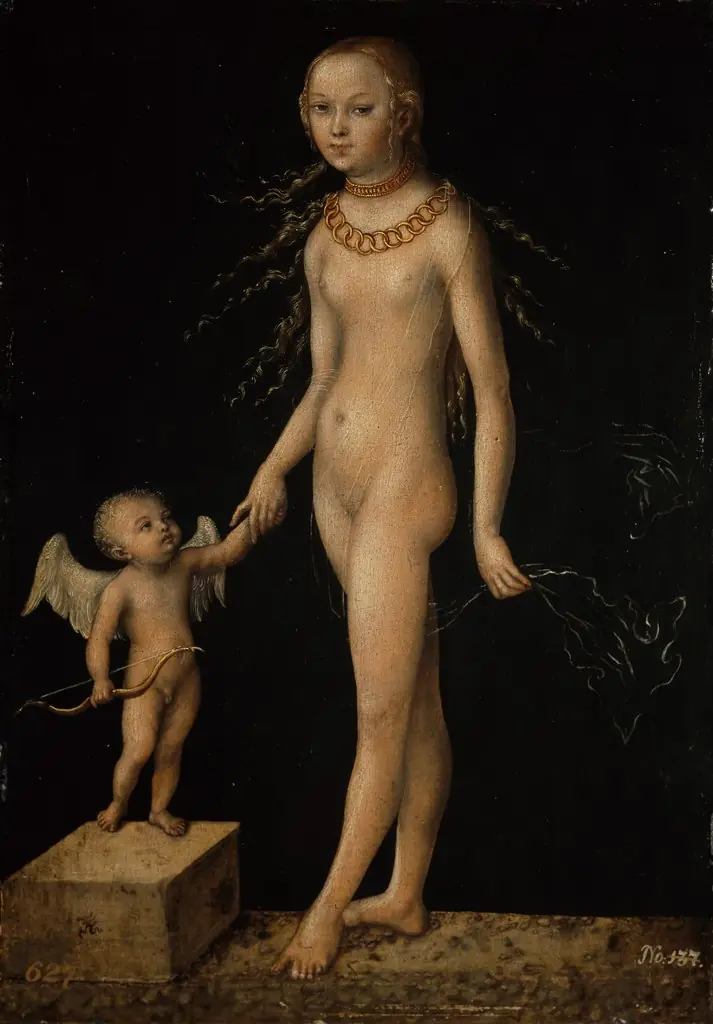
Venus and Cupid, painted by Lucas Cranach the Elder in 1525, portrays the mythological figures Venus and Cupid, both rendered nude, as the central subjects.
Venus and Cupid, painted by Lucas Cranach the Elder in 1525, portrays the mythological figures Venus and Cupid, both rendered nude, as the central subjects. The work is classified as a mythological painting and was created in the Northern Renaissance style. According to the Metropolitan Museum’s catalogue, the composition emphasizes the sensual and playful relationship between the goddess and her son, using nudity to highlight their divine attributes.
The painting’s iconography aligns with contemporary understandings of love and desire, reflecting the era’s interest in classical narratives.
Technique & Style
The work titled Venus and Cupid, painted by Lucas Cranach the Elder in 1525, is an oil painting executed on a wooden panel. As a mythological subject, it portrays the nude goddess Venus accompanied by her son Cupid, a motif typical of Cranach’s courtly repertoire. The composition is rendered in the artist’s characteristic linear drawing and soft modeling, employing rich, translucent oil pigments to achieve subtle tonal transitions.
The painting belongs to the Metropolitan Museum of Art’s collection, where it is preserved as part of the museum’s European Renaissance holdings.
History & Provenance
Created in 1525, this oil painting on panel was executed by the German Renaissance artist Lucas Cranach the Elder. The work depicts the mythological figures Venus and Cupid in the nude and is classified as a mythological genre painting from Cranach's prolific output of the mid-1520s. While specific details regarding its original commission or early ownership history are not provided in the available records, the painting is currently held in the collection of the Metropolitan Museum of Art in New York.
The records do not include an explicit accession number for the piece, nor do they detail any exhibition history beyond its presence in the museum’s holdings.
Context
Lucas Cranach the Elder’s 1525 oil painting Venus and Cupid, housed in the Metropolitan Museum of Art, exemplifies Northern Renaissance engagement with classical mythology. Classified as a mythological work, the piece reflects the artist’s broader output of secular subjects rendered with characteristic German narrative detail. Its depiction of the nude Venus with her son Cupid underscores a contemporary fascination with erotic and allegorical symbolism, while its presence at the Met situates it within the modern reassessment of Cranach’s role in disseminating mythological imagery north of the Alps.
Overview
Lucas Cranach the Elder completed the oil painting Venus and Cupid in 1525. This work presents figures from classical mythology, a recurring subject in Cranach's oeuvre. The composition features the goddess Venus alongside her son, Cupid, rendered in a distinctive Northern Renaissance style.
The painting is currently part of the collection at The Metropolitan Museum of Art, serving as an example of the artist's engagement with mythological themes.
Own this work as a print
Artist & collection
Artist
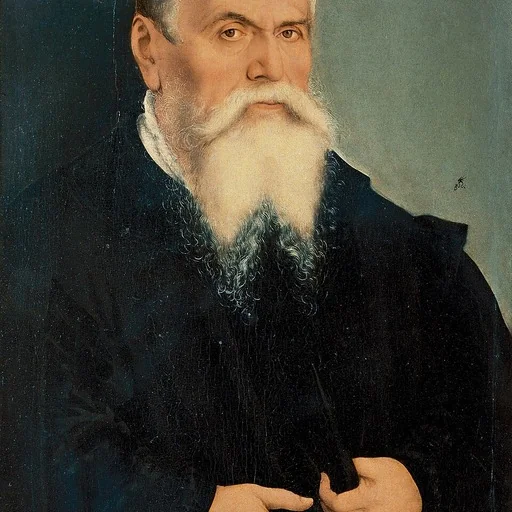
Lucas Cranach the Elder was a German Renaissance painter and printmaker in woodcut and engraving.