Artwork
Wall Painting of Male Saint
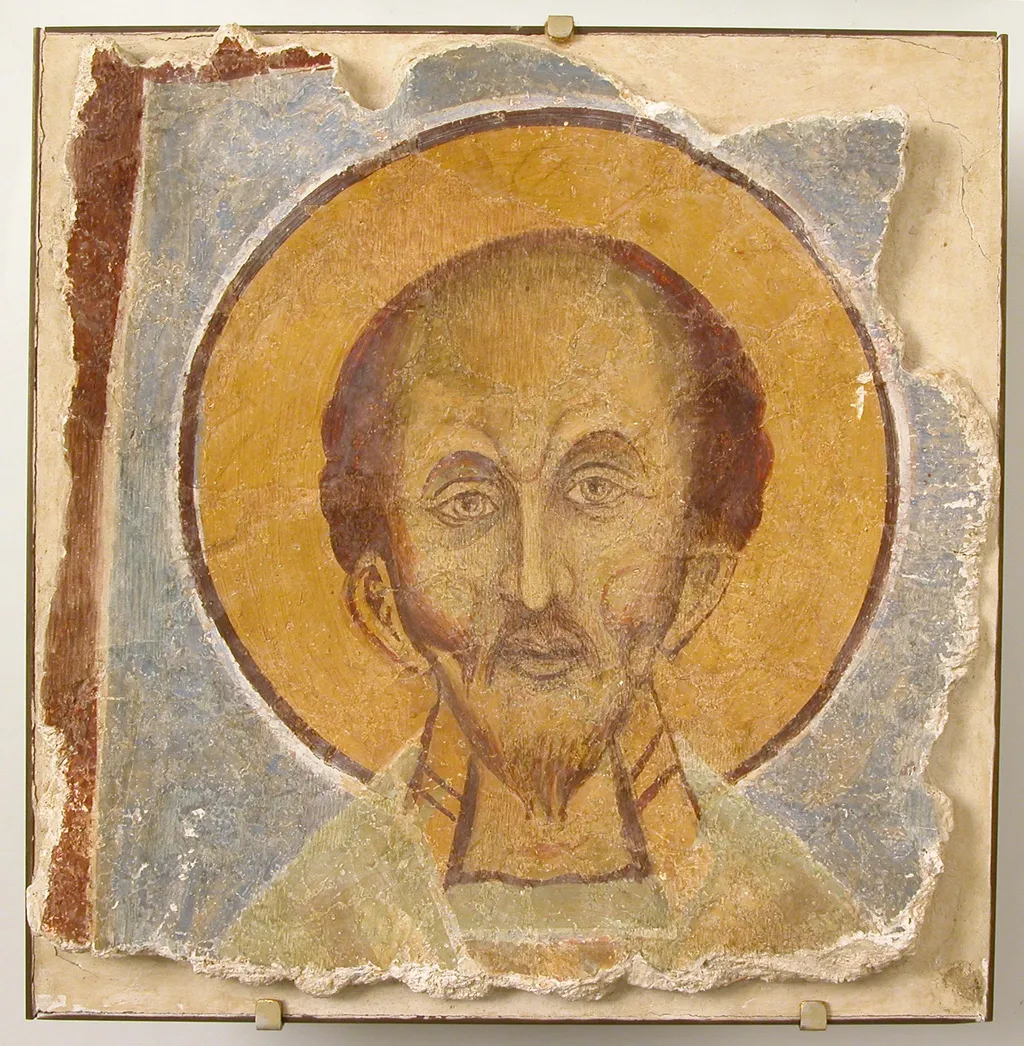
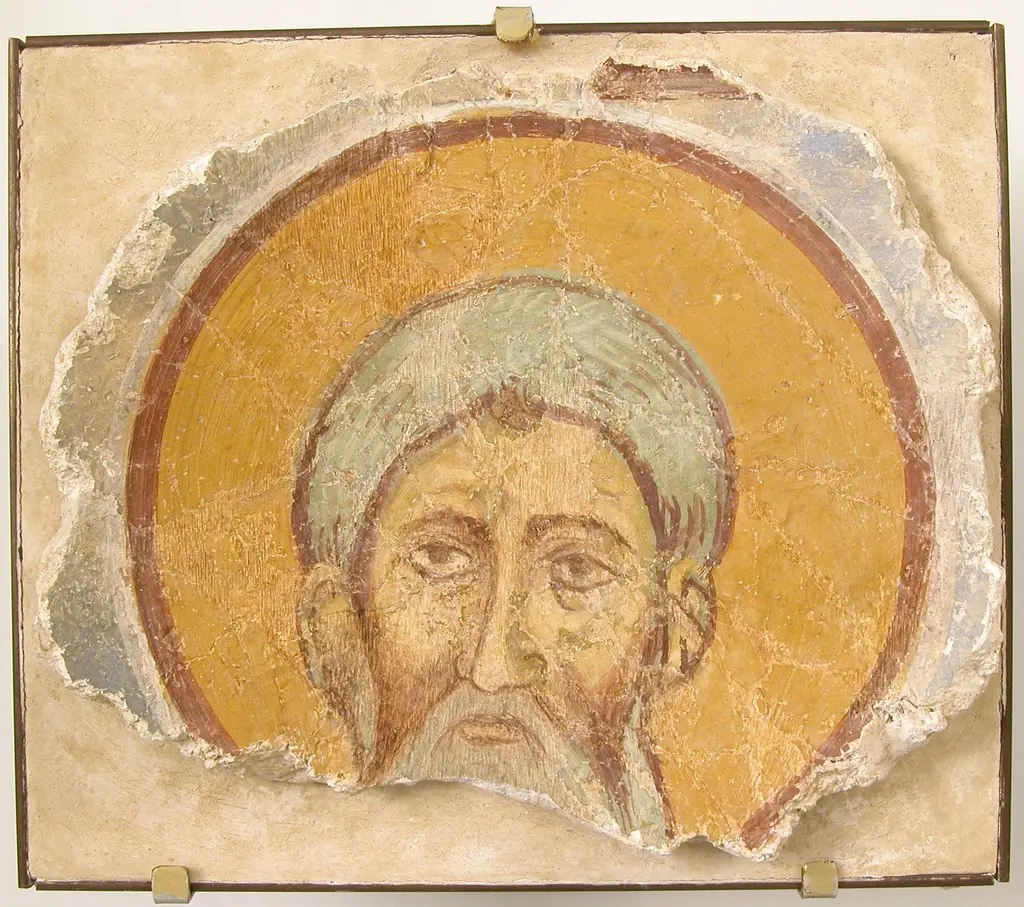
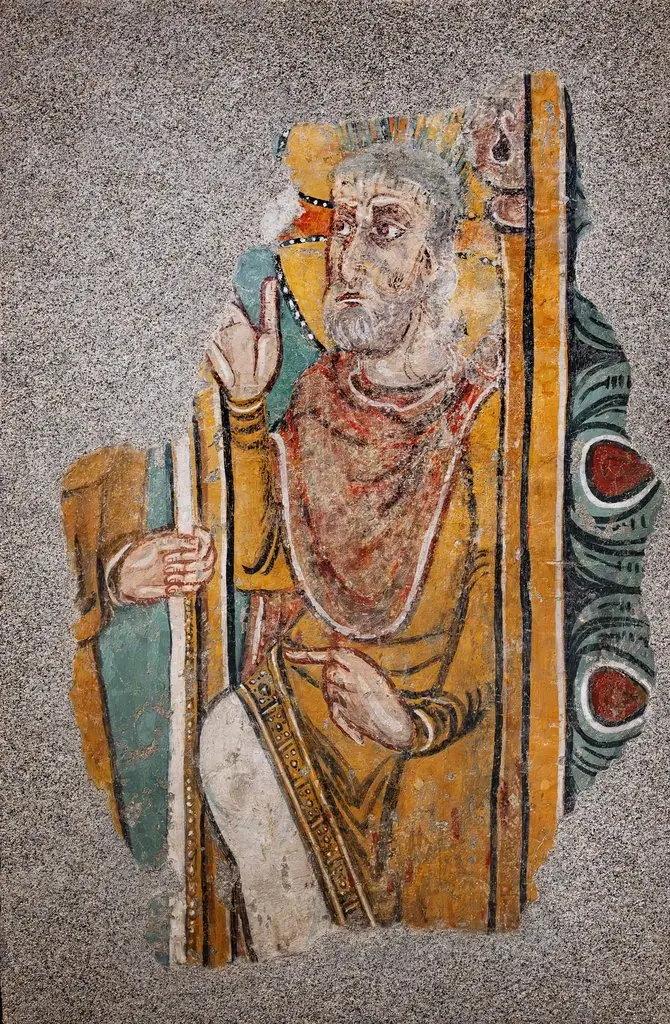
Wall Painting of Male Saint is an unspecified painting. It dates from 1150 and is held in the collection of the Metropolitan Museum of Art. This ancient wall painting depicts a male saint, characterized by a serious yet serene expression.
About this work
Subject & Meaning
The Wall Painting of Male Saint depicts an unidentified male holy figure, as indicated by its title and the Wikidata entry noting that it shows a saint and a man. Dated to circa 1150 and classified as a religious work, the painting exemplifies the devotional imagery produced in medieval Europe to inspire veneration and convey spiritual ideals. Held in the collection of the Metropolitan Museum of Art, the anonymous work presents a saintly figure, underscoring the saint’s association with devotion and spiritual aspiration within Christian iconography.
History & Provenance
The Wall Painting of Male Saint is held in the collection of the Metropolitan Museum of Art, where it remains part of the institution's holdings.
The Wall Painting of Male Saint is dated to 1150, establishing its creation in the mid-twelfth century. It is classified as a religious painting by an anonymous painter, reflecting the conventions of devotional mural work from that period. The work is now part of the collection of the Metropolitan Museum of Art, where it is held and displayed.
No further details regarding its original commission, early ownership, or transfer history are documented in the available sources.
The Wall Painting of Male Saint is held in the collection of the Metropolitan Museum of Art, where it remains part of the institution's holdings. Dated to 1150, the work entered the museum's collection as a religious painting by an anonymous maker. No specific inventory or accession number is recorded in the available documentation, and no exhibition history beyond its presence in the Metropolitan Museum of Art's collection is documented.
Overview
This ancient wall painting depicts a male saint, characterized by a serious yet serene expression. The artwork, now faded and worn, features a bearded figure enclosed within a golden halo, a traditional symbol of sanctity. Patches of paint are missing, and colors have diminished over time, revealing the age and history of the piece.
Technique & Style
The painting exhibits a straightforward approach to portraiture, focusing on the saint's facial features to convey solemnity. While the original vibrancy has diminished, the surviving elements suggest a style prioritizing clear representation. The current condition, marked by chipped paint and faded pigments, underscores its age and the challenges of preserving such ancient wall-based artworks.
Artist & collection

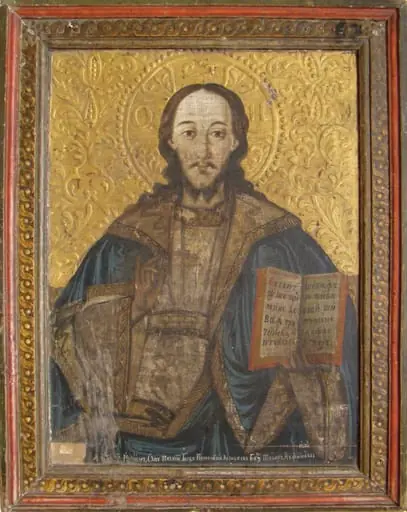 Iisus Hristos Învățător
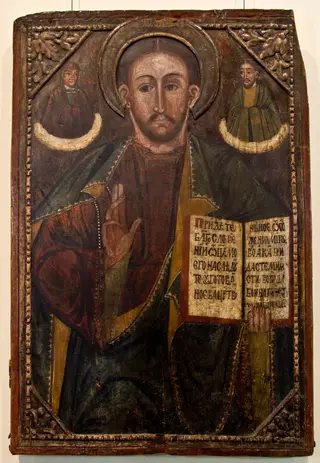 Iisus Hristos mare învățător, Mica Deisis; Icoană împărătescă; Icoană de catapeteasmă
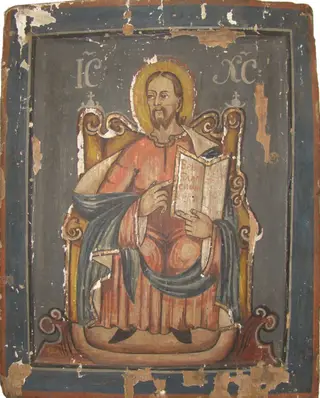 Iisus Hristos Învățător, tronând
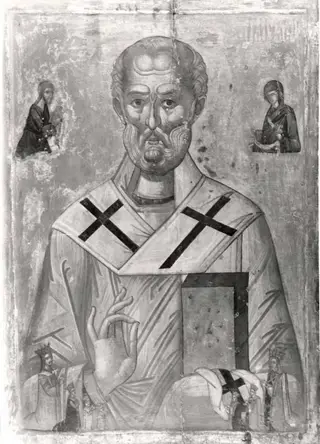 Sfântul Nicolae
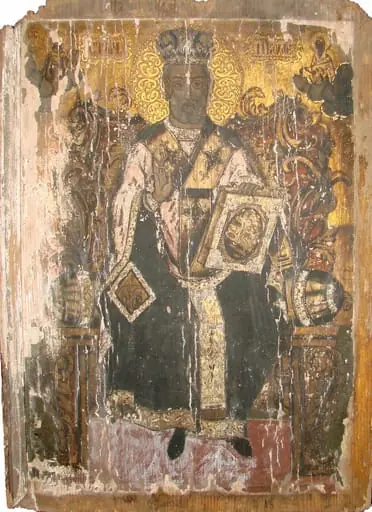 Sf. Nicolae
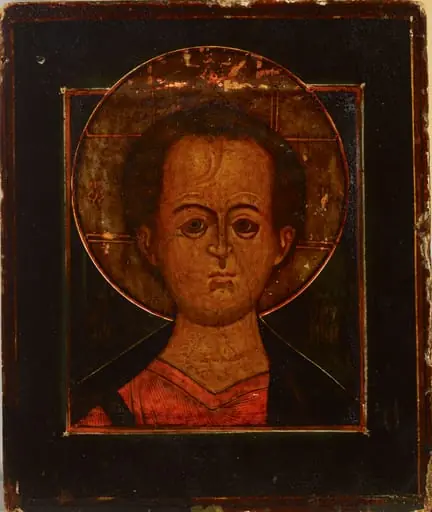 Jeesus Emanuel, venäläinen ikoni
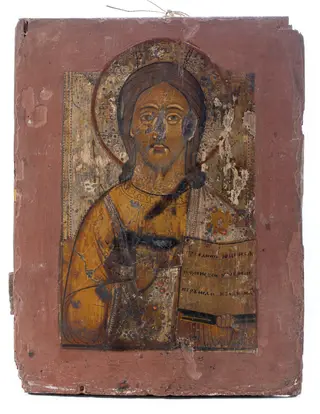 Christ binecuvântând
 Iisus Mare Învățător
 Christ of the Crown of Thorns from Sant Esteve d'Andorra
 Apostolul Marcu
 Sf. Ierarh Nicolae; Icoană de catapeteasmă
- Wall Painting of a Male Saint