Artwork
Wall Painting of a Male Saint
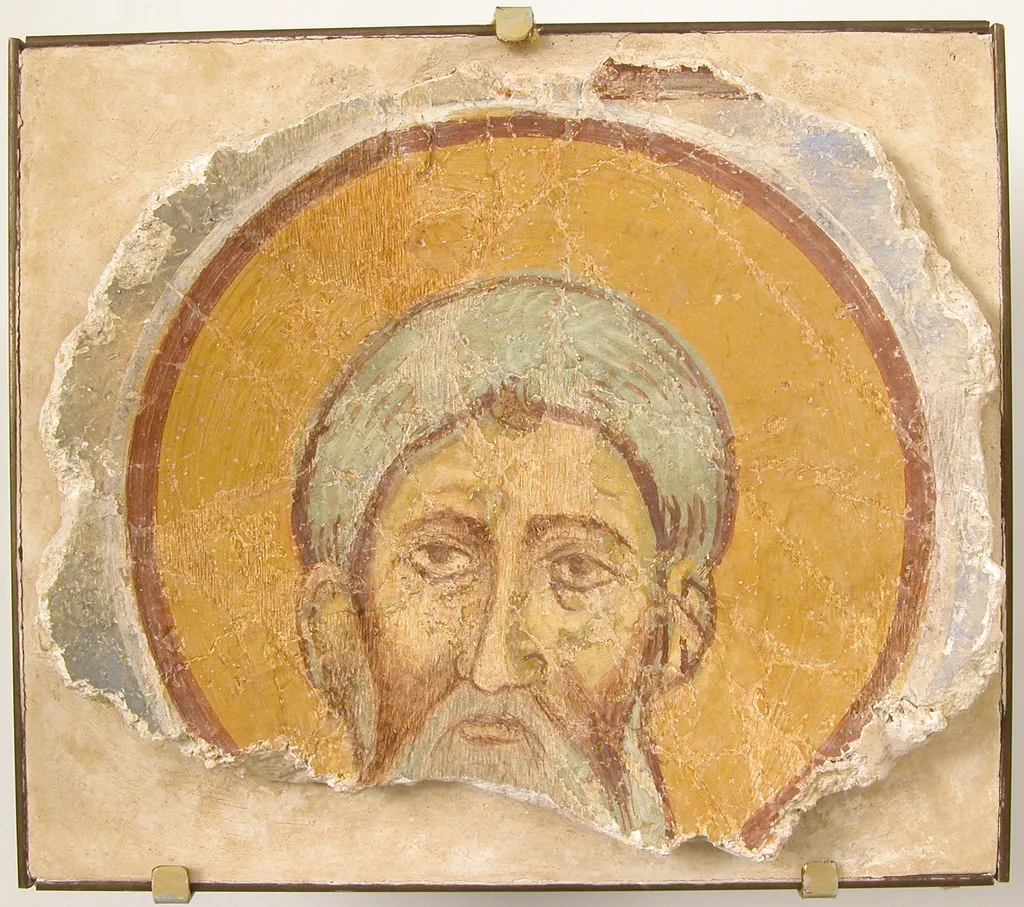
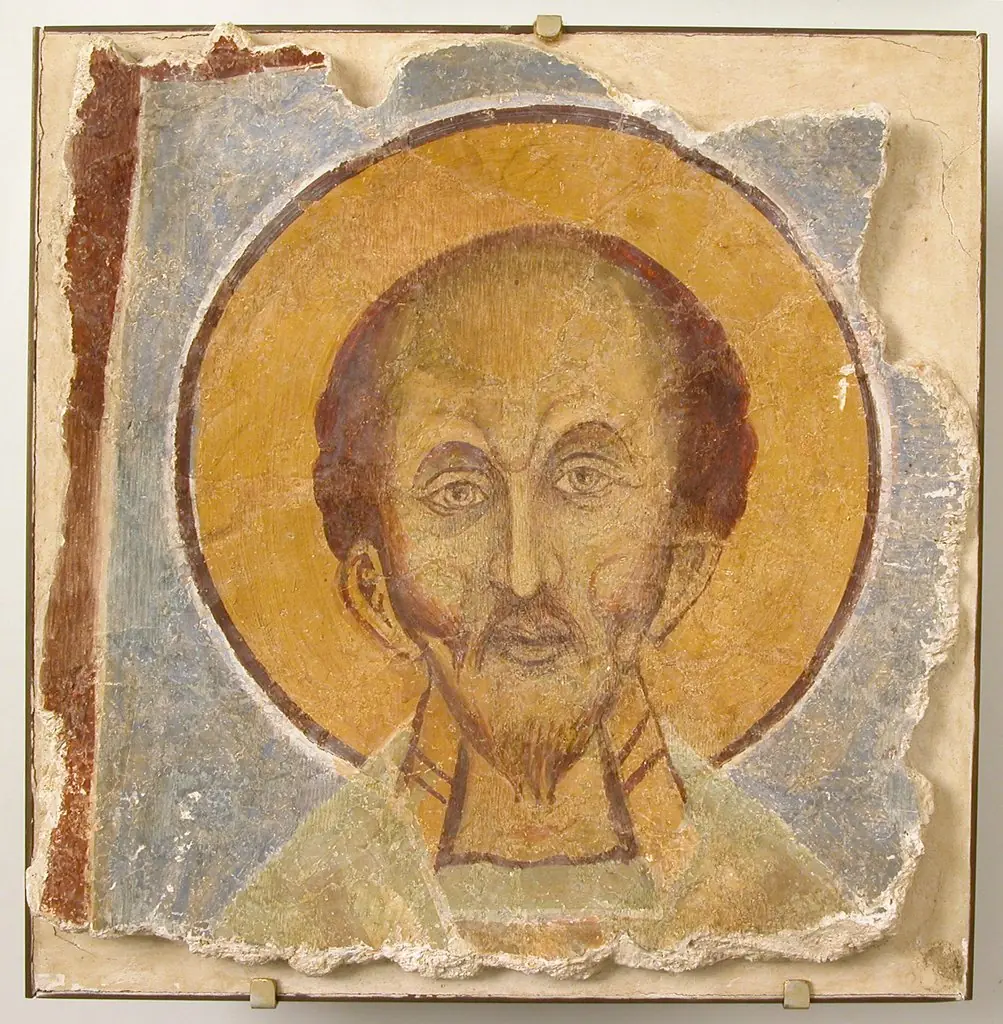
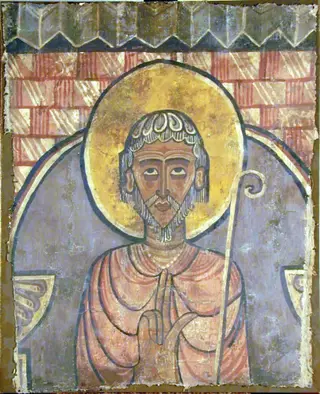
Wall Painting of a Male Saint is an unspecified painting. It dates from 1150 and is held in the collection of the Metropolitan Museum of Art. This painting portrays a male saint enclosed within a circular border, rendered in a manner evocative of medieval artistry.
About this work
Subject & Meaning
The male saint, rendered as a devotional subject, would have served both didactic and venerative functions within its original ecclesiastical setting.
The wall painting depicts a male saint, as indicated by its genre classification as religious art and its specific depiction of a saint and a man. Dating to 1150, this work belongs to the tradition of medieval religious imagery, where saints were portrayed as intercessory figures and models of Christian virtue. The male saint, rendered as a devotional subject, would have served both didactic and venerative functions within its original ecclesiastical setting.
The iconography aligns with standard portrayals of saints in twelfth-century European art, emphasizing sanctity and masculine religious authority. While specific attributes are not recorded in available sources, the identification as a male saint places the work within the broader context of medieval hagiographic representation, where such figures embodied spiritual ideals and communal religious identity.
History & Provenance
The Wall Painting of a Male Saint is a religious work created circa 1150 by an anonymous painter, depicting a male saint. It is held in the collection of the Metropolitan Museum of Art. The specific commission details and the original ownership chain prior to the museum's acquisition are not documented in the available records, reflecting the anonymous nature of many religious works from this era.
The records do not specify a distinct inventory or accession number, nor do they document any specific past exhibitions or loan history for the object.
Overview
This painting portrays a male saint enclosed within a circular border, rendered in a manner evocative of medieval artistry. The work exhibits significant signs of age and wear, yet it retains an aura of veneration, suggesting a long history of appreciation. Its yellow background and brown outline frame the central figure, whose serious countenance remains distinct despite the passage of time.
Technique & Style
The artist employed chiaroscuro, a technique utilizing strong contrasts between light and dark, to imbue the saint's form with depth and dimension. This method effectively draws the viewer's gaze to the saint's face, enhancing its expressive power. The overall style, with its clear outlines and iconic presentation, reflects aesthetic conventions prevalent in medieval religious art.
Context
The painting shows considerable evidence of its age, marked by visible cracks and surface damage. Despite this deterioration, the saint's face remains remarkably clear, preserving the integrity of its serious expression. The worn appearance contributes to the artwork's historical character, conveying a sense of its enduring presence through centuries.
Artist & collection

 Christ binecuvântând
 Christ of the Crown of Thorns from Sant Esteve d'Andorra
 Sfinții apostoli Pavel și Matei
 A Bishop Saint
 Iisus Hristos Învățător, tronând
 Prophets of the triumphal arch from El Burgal
 Funerary Portrait
 Suprinii
 Portrait of a thin-faced man
 Iisus Hristos Învățător
 Apostles from Orcau
- Wall Painting of Male Saint