Artwork
William I, Sovereign Prince of the United Netherlands, later King of the Netherlands
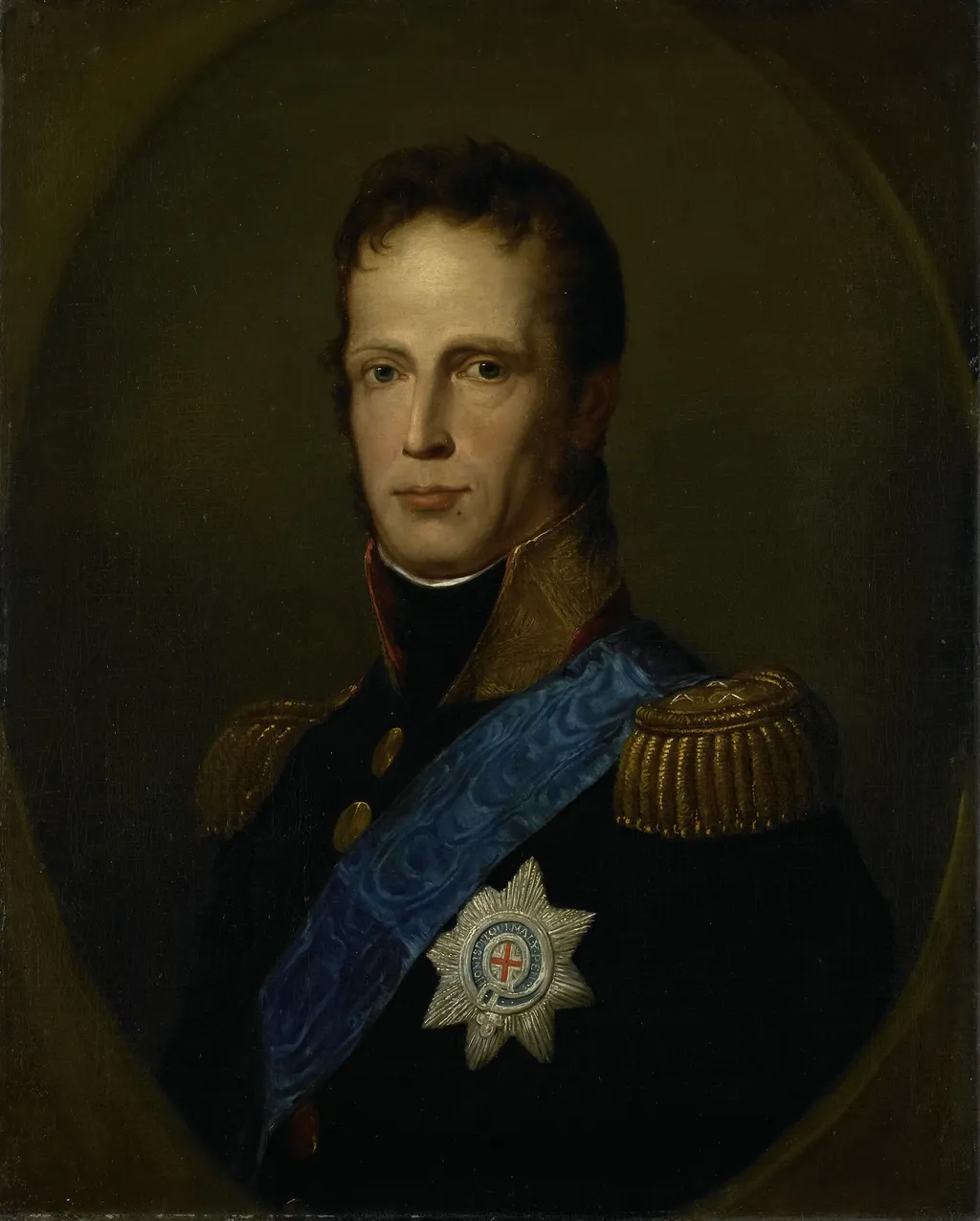
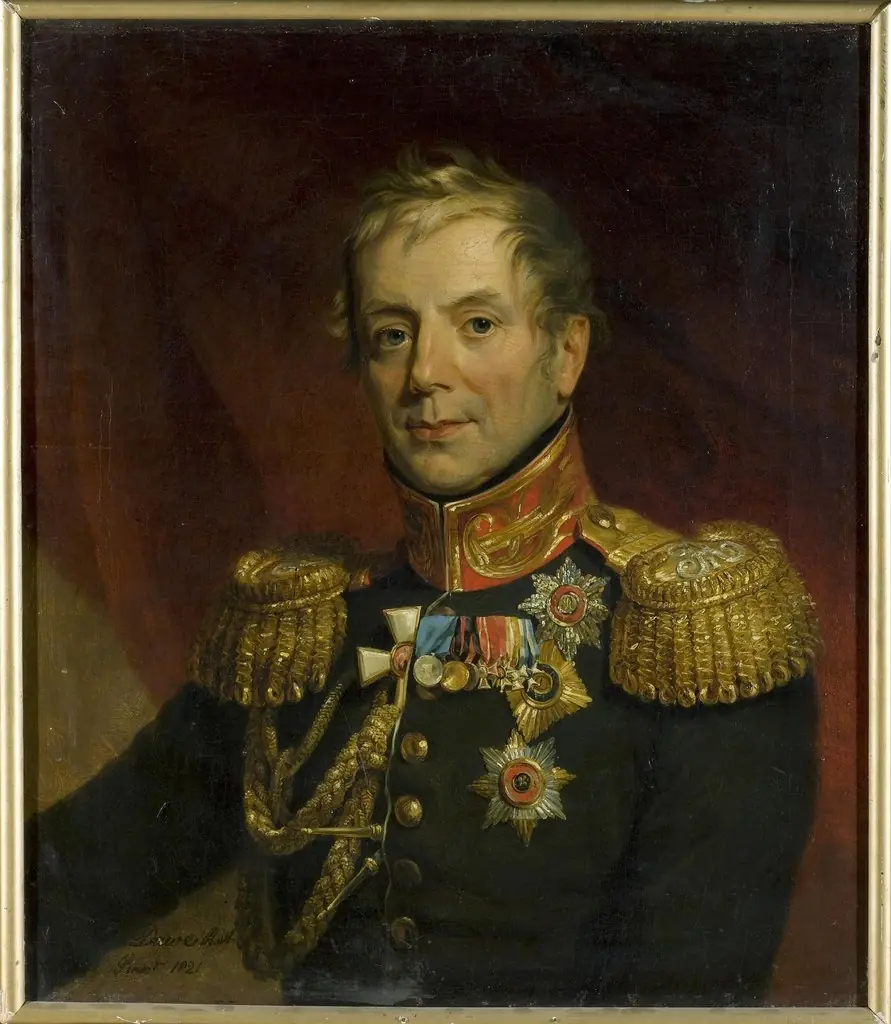
William I, Sovereign Prince of the United Netherlands, later King of the Netherlands is an oil painting by Unknown. It dates from 1813 and is held in the collection of the Rijksmuseum. This oil painting portrays William I, who served as Sovereign Prince and later King of the Netherlands.
About this work
Subject & Meaning
The portrait shows William I of the Netherlands in his role as sovereign prince before his accession to the kingship, emphasizing his political authority and the nascent unity of the Dutch nation after the Napoleonic Wars. Clad in formal regalia and bearing insignia of state, the composition underscores his legitimacy and the symbolic transition from stadtholder to monarch, reflecting the broader theme of national consolidation in early nineteenth‑century Dutch identity.
Technique & Style
The work is held in the collection of the Rijksmuseum, where its condition and handling are maintained within institutional care.
The work is executed in oil paint on canvas, a standard combination for early nineteenth-century European portraiture. The composition is a bust- or half-length portrait format, with the relatively modest canvas dimensions of 69 cm in height by 55 cm in width supporting an intimate scale suited to formal likeness rather than grand state display. Stylistically, the painting belongs to the portrait tradition of the Northern Low Countries, where it was produced in 1813, and is classified as a portrait painting.
The work is held in the collection of the Rijksmuseum, where its condition and handling are maintained within institutional care.
The attribution is anonymous, and no further information about specific handling techniques, brushwork, or surface condition is documented in the available sources.
History & Provenance
The work is an anonymous portrait of William I, painted in 1813 in the Northern Low Countries. It was created as an oil painting on canvas and entered the Rijksmuseum collection shortly after its creation, where it remains on display.
The piece was commissioned as a state portrait of the Dutch sovereign following his elevation to king, reflecting the formal commissioning of official portraiture for new monarchs in the early 19th century. Its creation history is tied to the establishment of the United Kingdom of the Netherlands in 1815, with the portrait likely produced to commemorate William I's ascension to the throne.
The work was catalogued by the Rijksmuseum in 1885 as part of its foundational collection, and it continues to be exhibited in the museum's portrait gallery, underscoring its institutional significance.
The portrait of William I, Sovereign Prince of the United Netherlands, later King of the Netherlands, is housed in the Rijksmuseum collection. It was acquired under the inventory number SK-A-1949 and has been part of the museum’s exhibition schedule, appearing in displays focused on Dutch portraiture and early royal imagery.
The work, created in 1813, measures 69 cm in height and 55 cm in width and is executed in oil on canvas. It has been featured in several Rijksmuseum exhibitions that explore the formation of the Dutch monarchy and the visual representation of its first monarch.
Context
The portrait of William I as Sovereign Prince of the Netherlands, painted in 1813 in the Northern Low Countries, occupies a pivotal position in Dutch royal portraiture of the early nineteenth century, reflecting the sitter's ascent to kingship and the nascent Kingdom's visual self‑definition. Executed in oil on canvas and housed in the Rijksmuseum, the work exemplifies the formal conventions of state portraiture while subtly negotiating the tension between princely authority and emerging national identity. Scholarship emphasizes its role as a canonical image that shaped public perception of the monarchy, linking artistic representation to political legitimacy in the post‑Napoleonic era.
Its reception within contemporary circles highlighted both admiration for technical skill and commentary on the symbolic appropriation of Dutch motifs, cementing its status as a benchmark for later royal commissions. The painting's enduring influence is evident in its frequent citation in studies of nineteenth‑century European portraiture and its contribution to the historiography of Dutch art during the transition from Republic to monarchy.
Overview
This oil painting portrays William I, who served as Sovereign Prince and later King of the Netherlands. The composition centers on a single male figure presented from the chest up, his body turned slightly toward the viewer while his gaze meets ours directly. The artist has arranged the subject against a dark, undefined background that isolates him from any specific setting and focuses attention entirely on his person.
Artist & collection









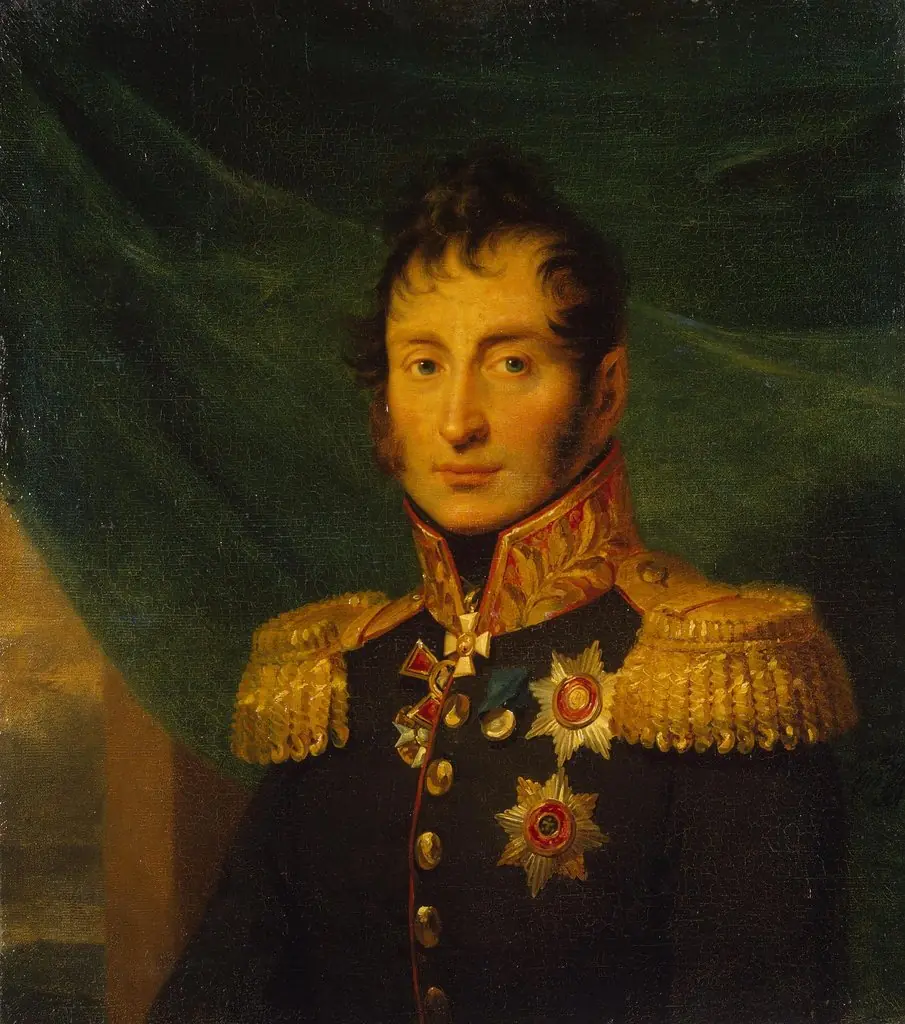
- Portrait of Nikolai A. Tuchkov (1765-1812) (1st)
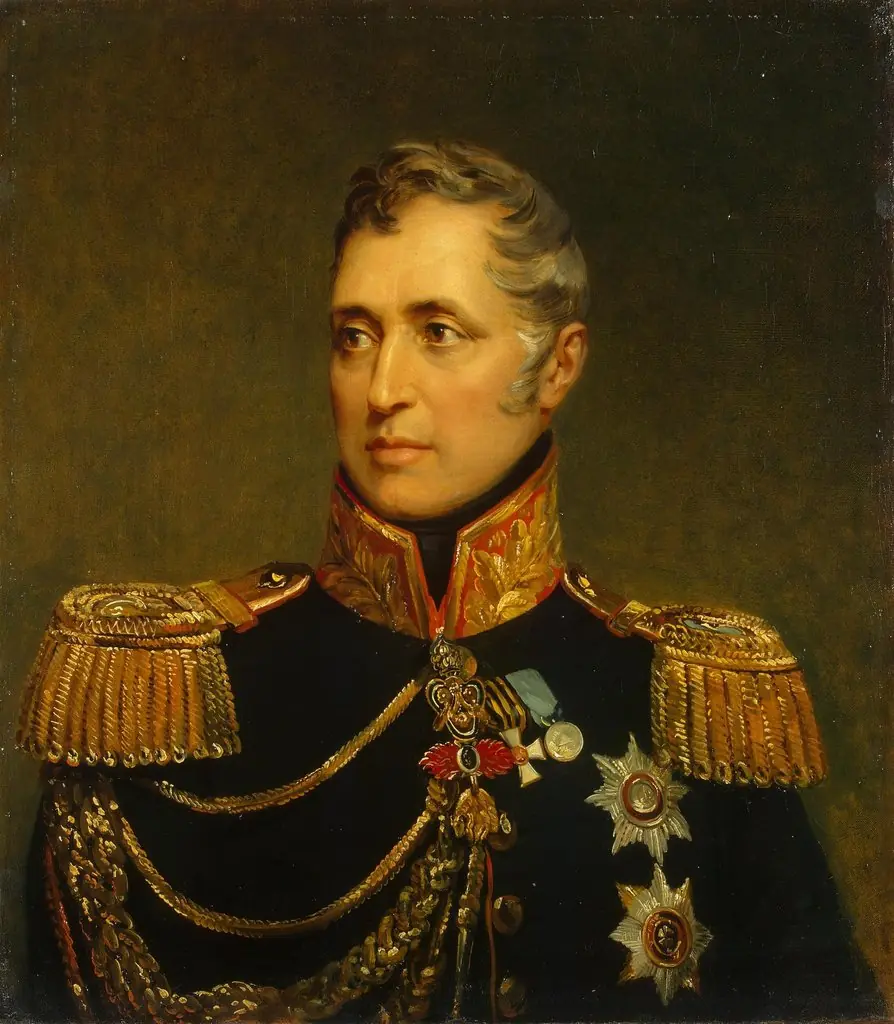 Portrait of Karl O. Pozzo di Borgo (1764-1842)
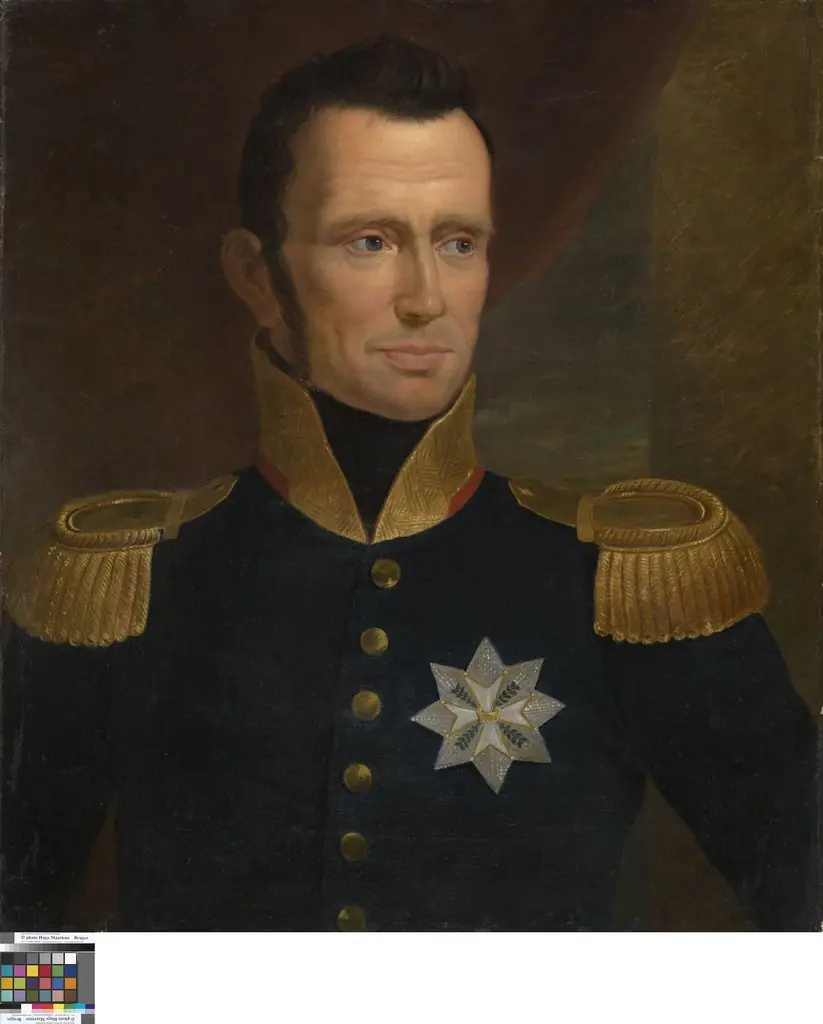 Portret van koning Willem I
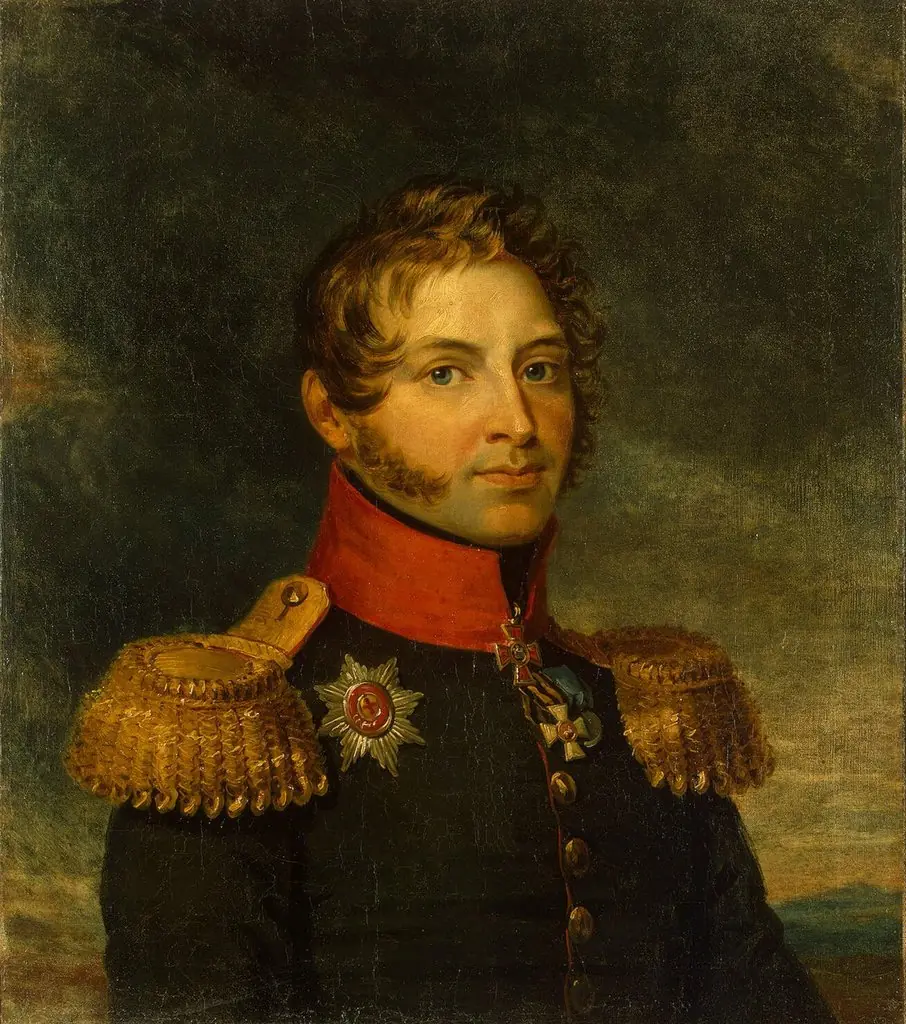 Portrait of Alexander P. Kutuzov (1777-1817)
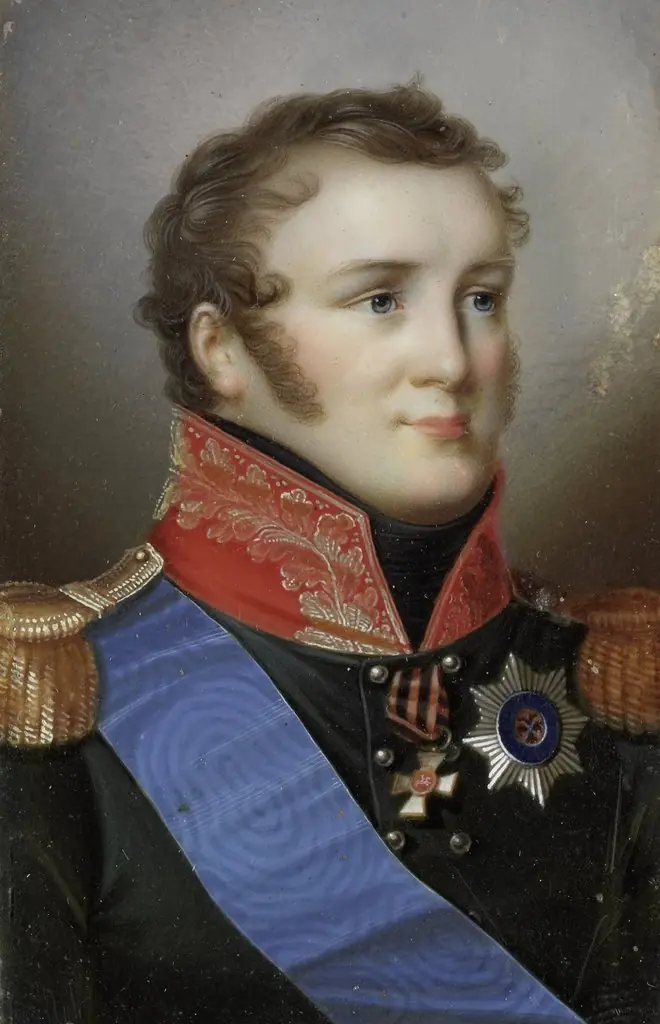 Portrait of Alexander I Romanov (1777-1825)
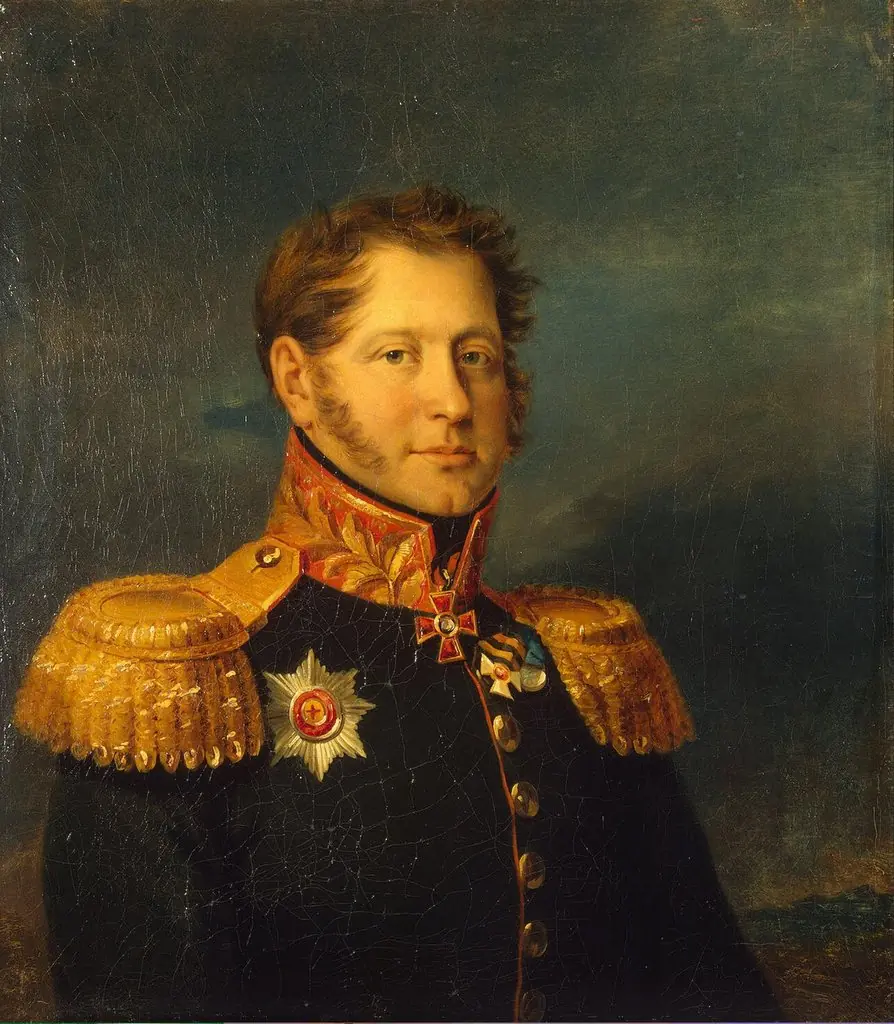 Portrait of Alexander I. Gressor (1772-1822)
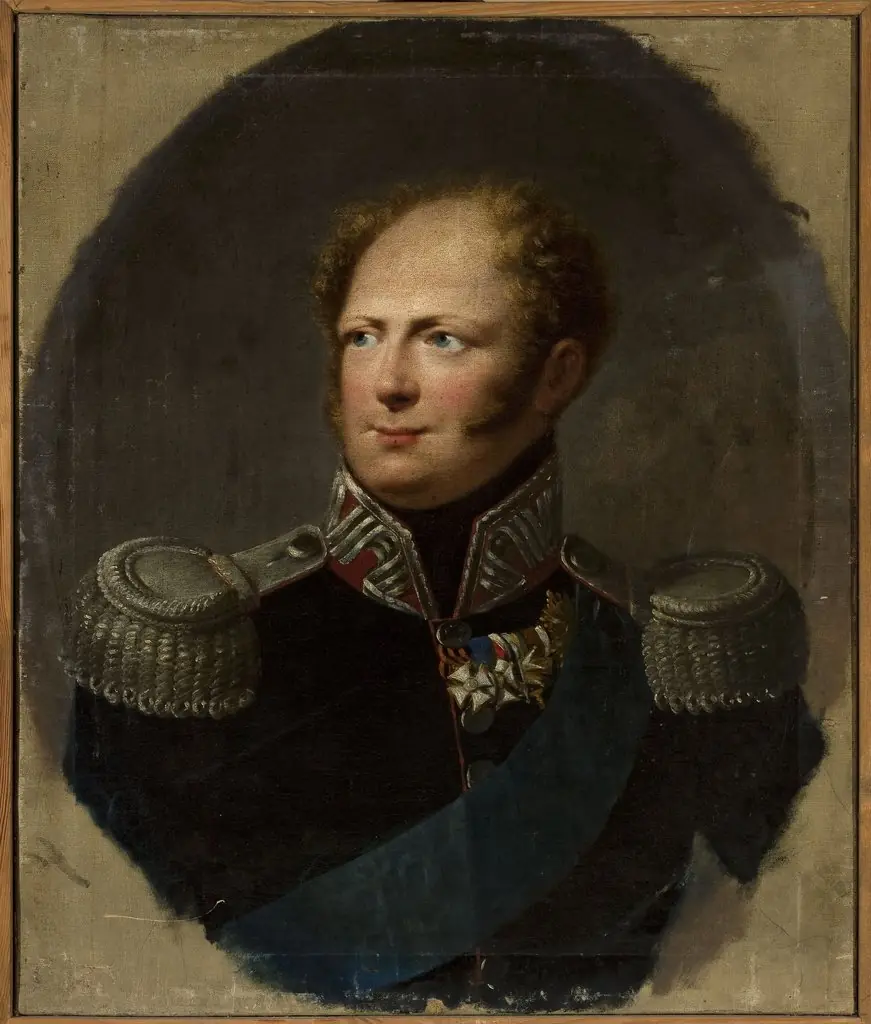 Portrait of Tsar Alexander I
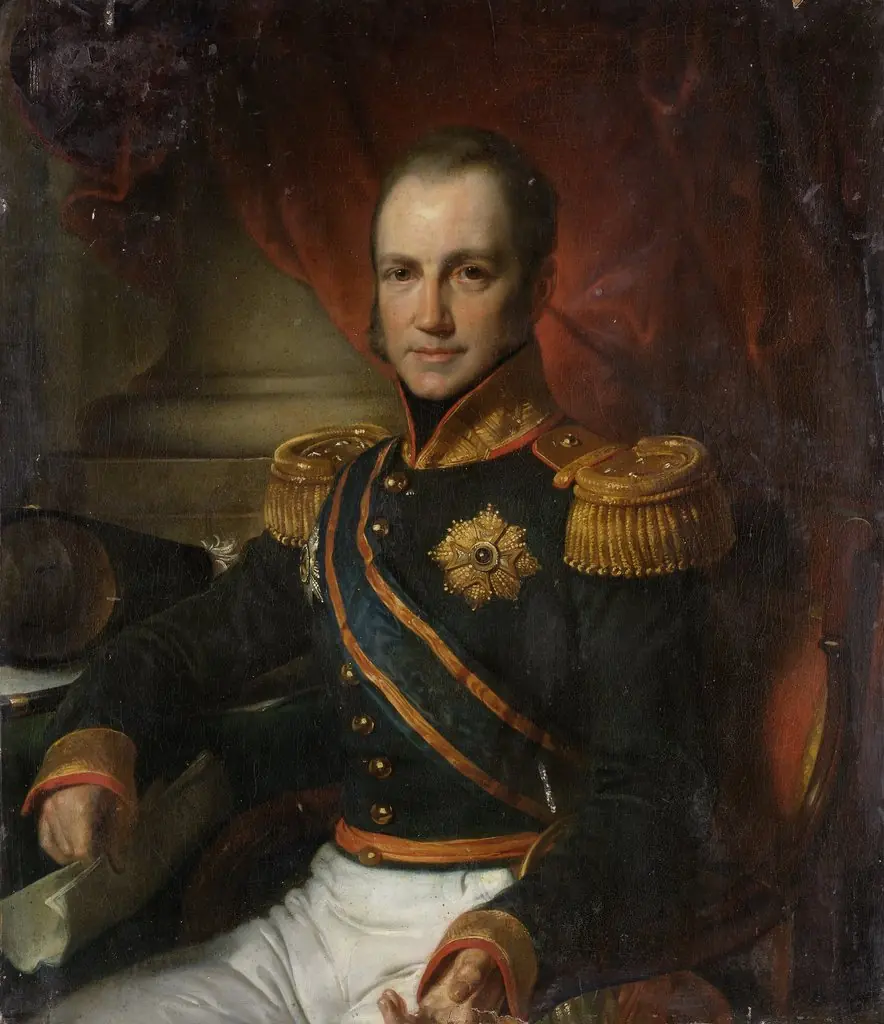 Portrait of Godart Alexander Gerard Philip, Baron van der Capellen, Governor-General of the Dutch East Indies
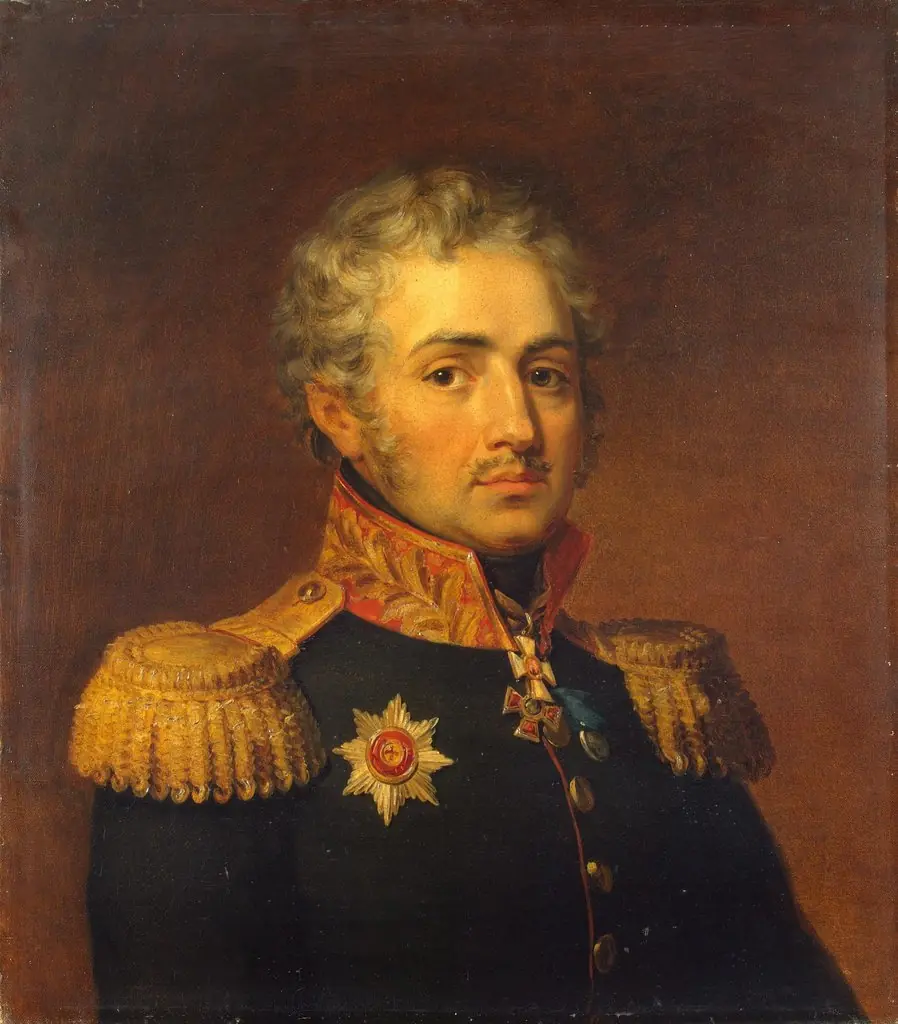 Portrait of Ivan Ye. Shevich (1754-1813)
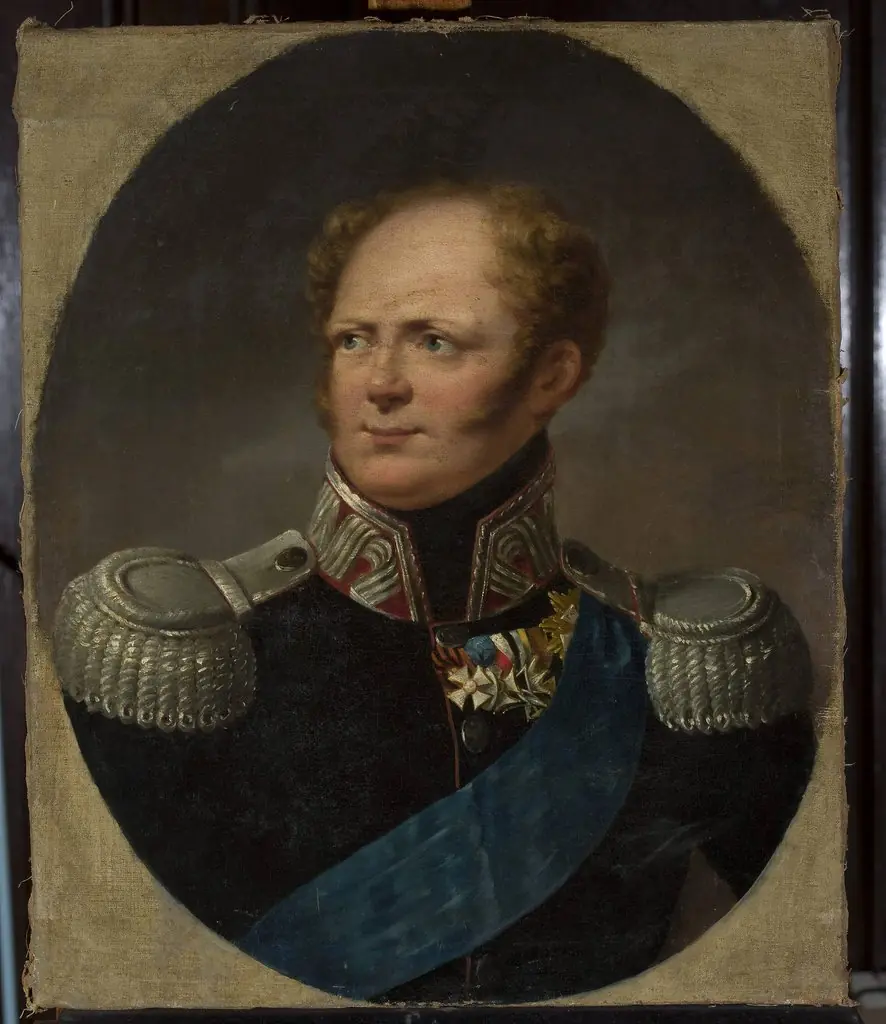 Portrait of Tsar Alexander I
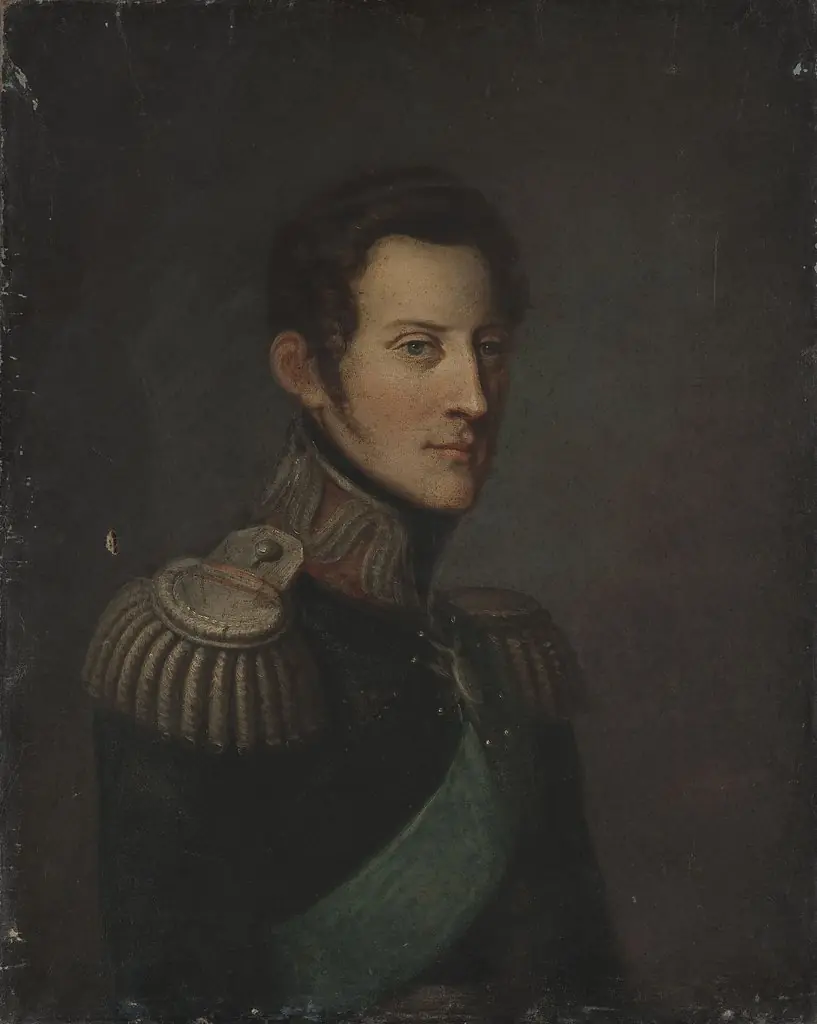 Portrait of Tsar Nicholas I in the Polish general’s uniform
 Portrait of Piotr Konovnitsyn (1764-1822)