Artwork
扇流図屏風|Women on a Bridge Tossing Fans into a River
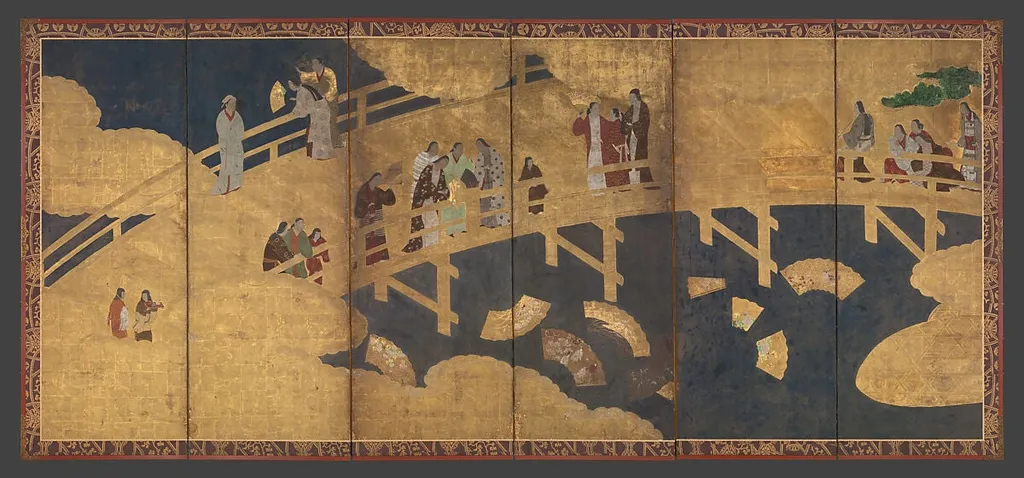
扇流図屏風|Women on a Bridge Tossing Fans into a River is an ink painting by the Renaissance artist Unknown. It dates from 1650 and is held in the collection of the Metropolitan Museum of Art. This six-panel folding screen depicts a group of women on a bridge, releasing fans into a river below.
About this work
Overview
Executed in ink, mineral pigments, and extensive gold leaf on paper, the work blends delicate line work with luminous metallic accents.
This six-panel folding screen depicts a group of women on a bridge, releasing fans into a river below. Executed in ink, mineral pigments, and extensive gold leaf on paper, the work blends delicate line work with luminous metallic accents. The composition captures a moment of ritual or play, with fans drifting or sinking in the water, their patterns rendered with precision against the shimmering background.
Subject & Meaning
The women, dressed in varied kimonos, engage in a gesture that may reflect seasonal customs or symbolic acts of release. The act of tossing fans into water could allude to purification, transience, or celebration, common themes in Japanese aesthetics. The absence of narrative clarity invites contemplation rather than literal interpretation, aligning with poetic traditions in Japanese visual culture.
Technique & Style
The screen employs fine ink outlines and layered color washes to define figures and clothing, while gold leaf covers the background and fan surfaces, creating a radiant, non-naturalistic space. The contrast between the subdued tones of the river and the glittering gold enhances the sense of ceremony. Each fan’s pattern is individually detailed, suggesting careful observation and artisanal skill.
History & Provenance
The work originates from the Edo period, likely produced in Kyoto or Osaka by a studio specializing in decorative screens. Its survival in good condition indicates it was preserved within a wealthy household or temple. No definitive record of its original commission exists, but its materials and scale suggest it was made for a domestic or ceremonial setting.
Context
Folding screens like this were central to interior decoration in elite Japanese homes, serving both as room dividers and status objects. The use of gold leaf was typical in works commissioned by the merchant or aristocratic classes during the 17th and 18th centuries. While Western art movements like the Renaissance developed independently, Japanese screen painting evolved from indigenous traditions of Yamato-e and Kano school aesthetics.
Legacy
This screen exemplifies the enduring appeal of decorative painting in Japanese art, where everyday actions are elevated through material richness and compositional harmony. It continues to be studied for its interplay of movement, texture, and symbolism, influencing later interpretations of gender, ritual, and nature in modern Japanese art.
Artist & collection









 The Tale of Genji
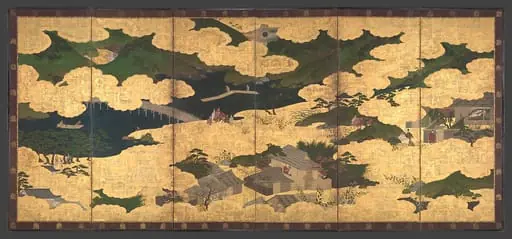 平家物語図屏風 「小督」 「大原御幸」|"Kogō" and "The Imperial Procession to Ōhara", from The Tale of the Heike (Heike monogatari)
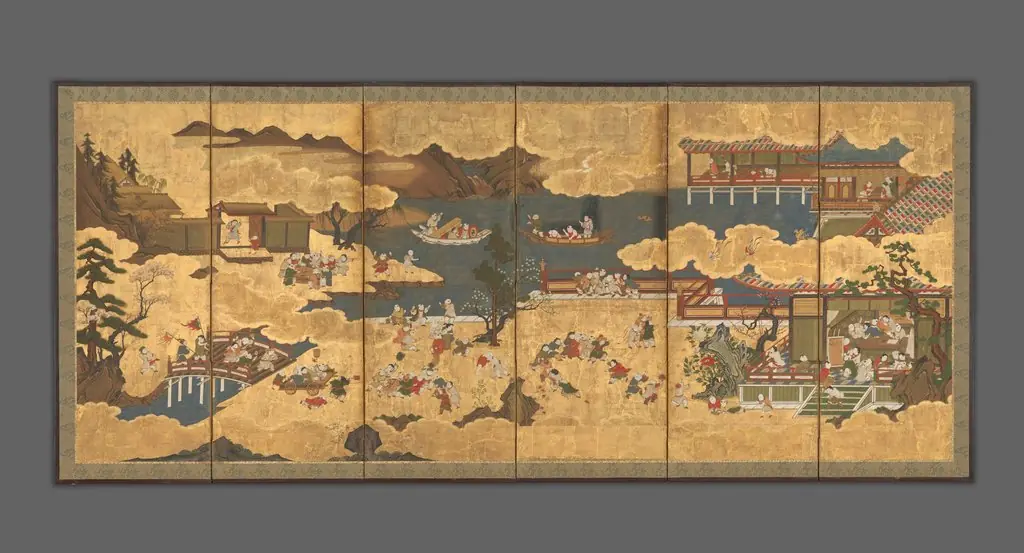 One Hundred Chinese Boys
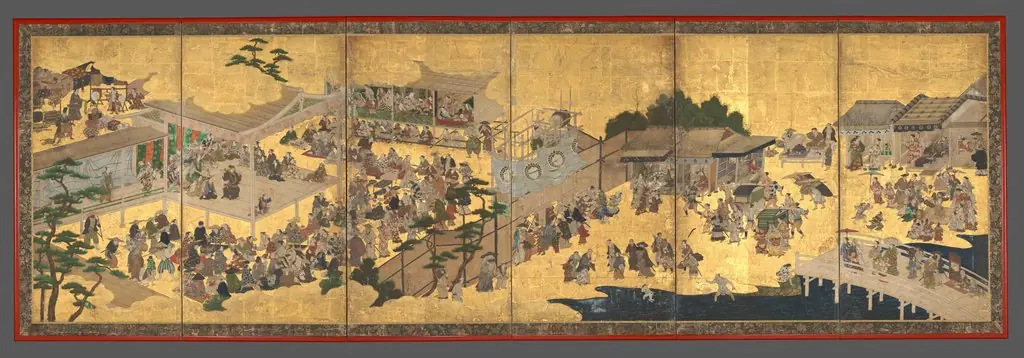 Women’s Kabuki
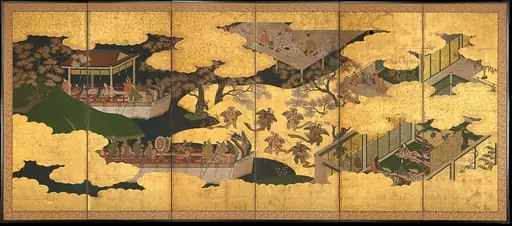 源氏物語図屏風 (胡蝶)|“Butterflies”
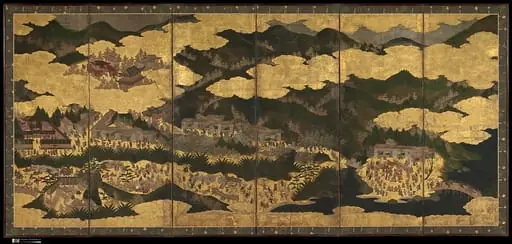 厳島吉野花見図屏風|Cherry Blossom Viewing at Itsukushima and Yoshino
 Scenes from the Tales of Ise
 Sugawara Michizane Traveling to Dazaifu
 Arrival of the "Southern Barbarians"
 Arrival of the "Southern Barbarians"