Artwork
Yudhishthira
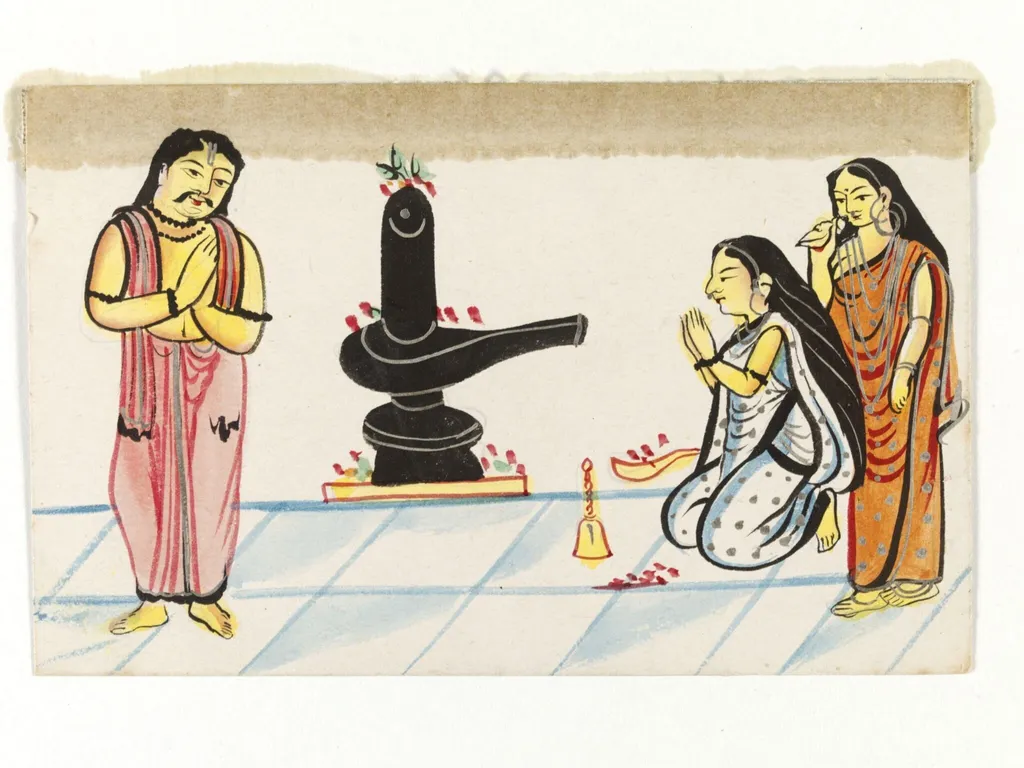
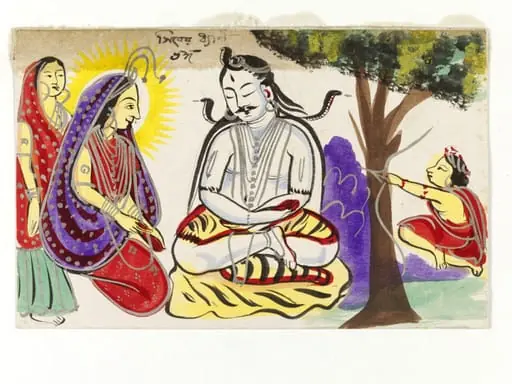
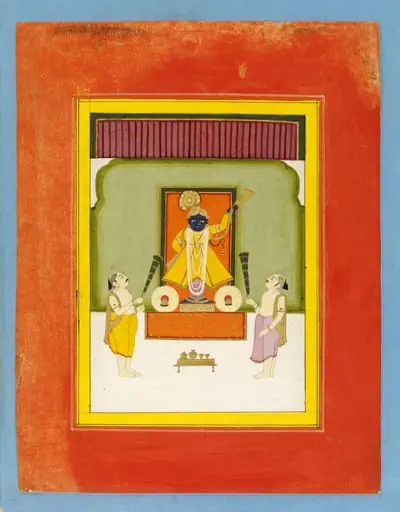
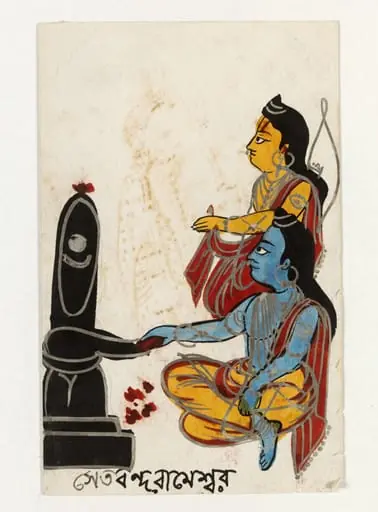
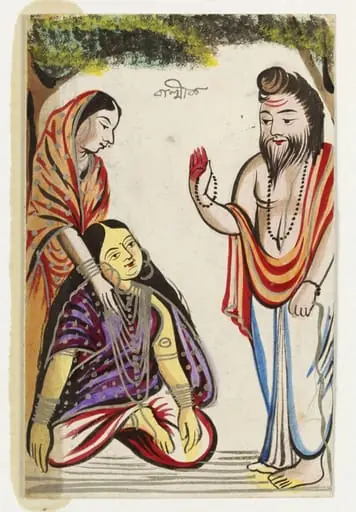
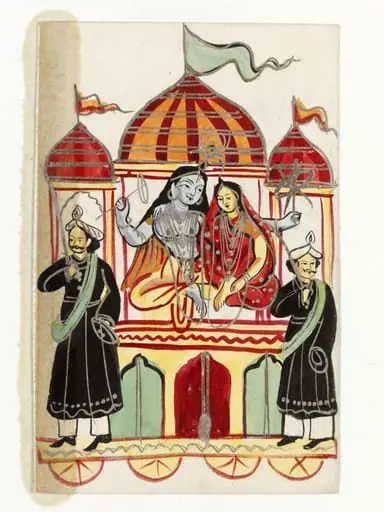
Yudhishthira is a paint painting by the Impressionist artist Unknown. It dates from 1890 and is held in the collection of the Victoria and Albert Museum. Created in 1890, this watercolor and tin alloy painting on cardboard portrays a moment of devotion centered on a three-faced lingam.
About this work
Overview
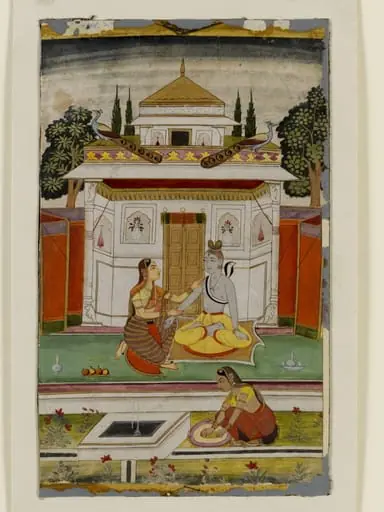
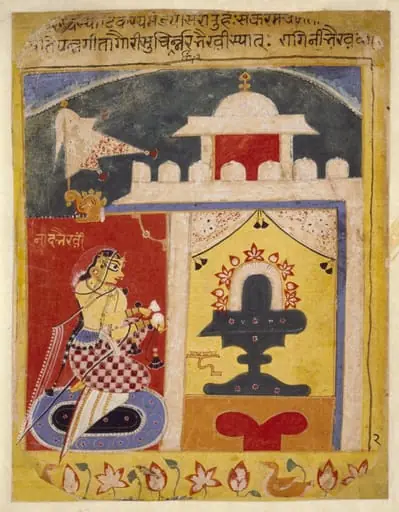
Created in 1890, this watercolor and tin alloy painting on cardboard portrays a moment of devotion centered on a three-faced lingam. The scene is rendered in flat, vivid hues against a tiled floor, with ritual objects like flowers and a bell placed nearby. The composition centers on three figures engaged in worship, their postures and attire distinguishing their roles within the sacred space.
Subject & Meaning
Their gestures of folded hands signify reverence, while the third woman’s poised stance suggests a moment of quiet conversation amid ritual.
The painting illustrates Yudhishthira, the eldest Pandava brother from the Mahabharata, alongside two women, likely his wives, offering prayers to a lingam, a symbolic representation of Shiva. Their gestures of folded hands signify reverence, while the third woman’s poised stance suggests a moment of quiet conversation amid ritual. The scene reflects a private act of piety, grounding epic narrative in intimate domestic devotion.
Technique & Style
The work employs watercolor with metallic tin alloy accents to enhance surface luminosity, typical of late 19th-century Indian studio painting. Forms are rendered in bold, flat planes with minimal shading, emphasizing pattern and color over naturalism. The background is simplified, focusing attention on the figures and the central shrine, aligning with regional traditions of devotional illustration.
History & Provenance
This piece originates from a period when Indian artists produced works for both local patrons and colonial collectors. Likely made in a commercial studio, it reflects the blending of traditional iconography with emerging market demands. Its survival and preservation suggest it was valued early on, possibly entering institutional collections through colonial-era acquisitions.
Context
In late 19th-century India, religious themes remained central to visual culture, even as artistic production adapted to new materials and audiences. Paintings like this one served devotional, decorative, and educational purposes, bridging classical epics with contemporary aesthetics. The presence of Western-style cardboard supports indicates a shift in artistic infrastructure during British rule.
Legacy
This painting contributes to a broader corpus of Indian devotional art that documented everyday religious practice during a time of cultural transition. Though not widely exhibited, it remains a quiet testament to how mythic narratives were sustained through domestic and artistic rituals, offering insight into the spiritual lives of non-elite communities in colonial India.
Artist & collection