Subject
Hinduism
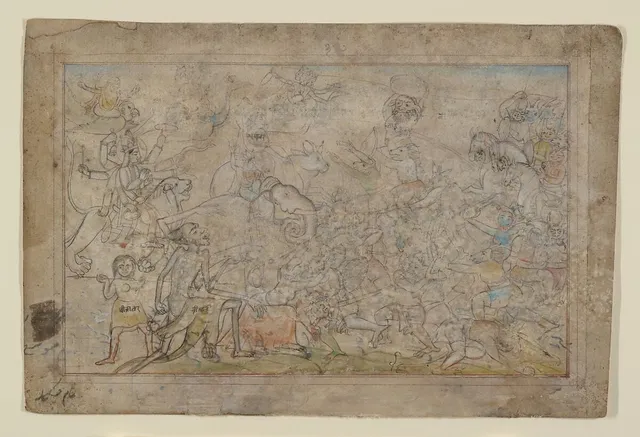
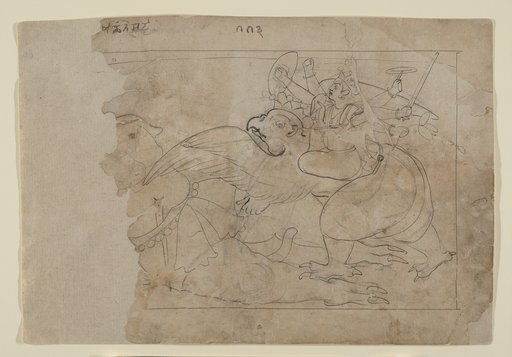
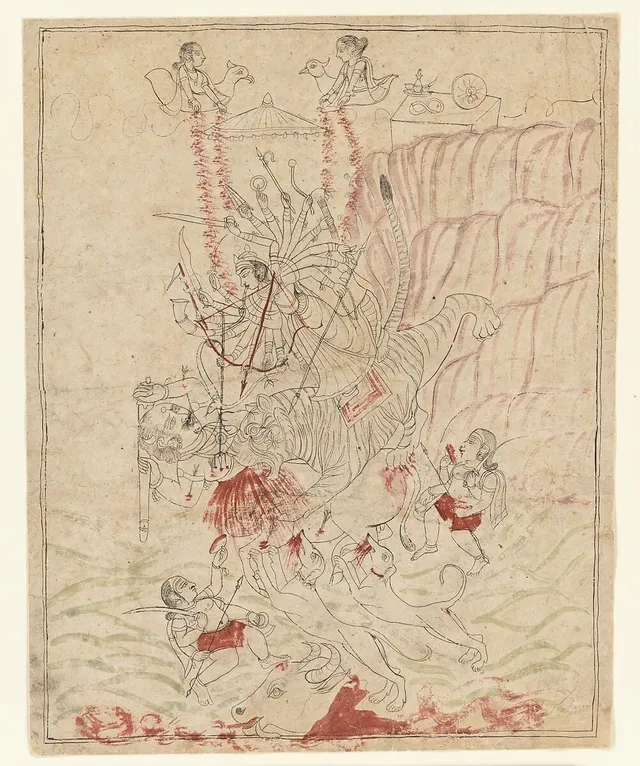
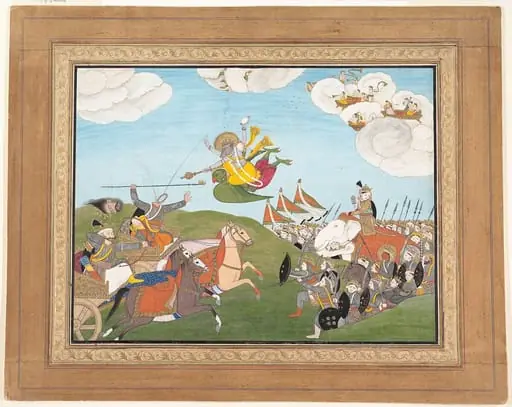
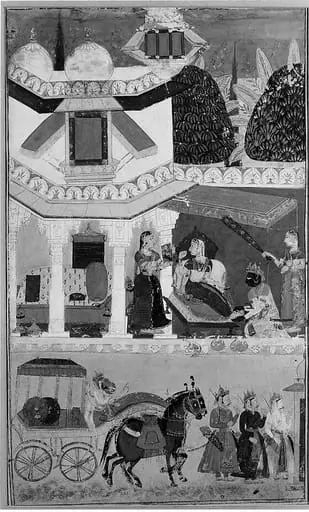
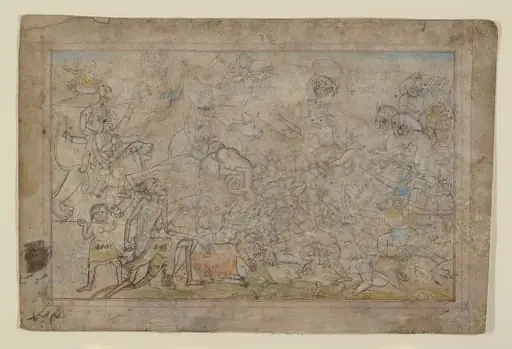
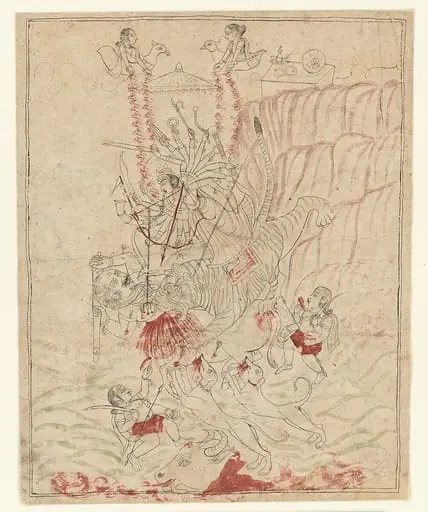
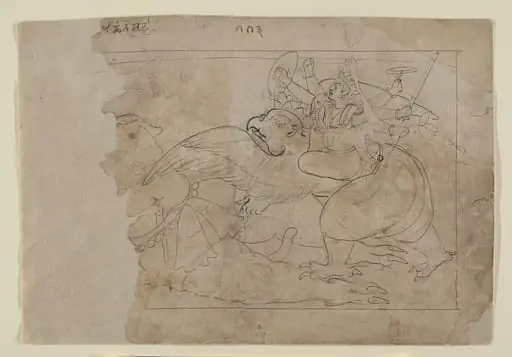
Hinduism is a subject in art. The gallery holds 25 works in this subject in art, including works by Seu Family and Nainsukh.
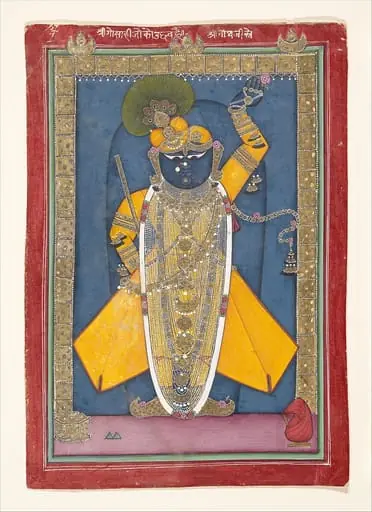
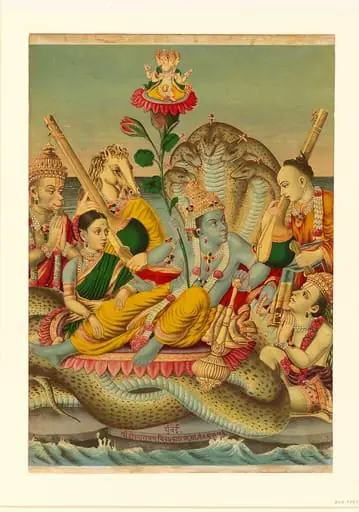
Hinduism is less a single religion than a federation of Indian traditions (sampradayas) bound by the concept of dharma and rooted in the Vedas, and its art is correspondingly vast — a continuous visual tradition stretching across some two millennia. While Vedic worship was largely aniconic, the impulse to give the gods bodily form crystallized in the early centuries CE. The carved reliefs of the Udayagiri caves in Madhya Pradesh, datable to the early fifth century, form the earliest intact body of Hindu sculpture and show that an established iconography of Vishnu, Shiva and the Goddess was already in place. It was under the Gupta dynasty (c. fourth–sixth century CE) that this language reached its classical balance and the first free-standing Hindu stone temples, such as the Dashavatara temple at Deogarh with its celebrated panel of Vishnu reclining on the serpent Ananta, were built.
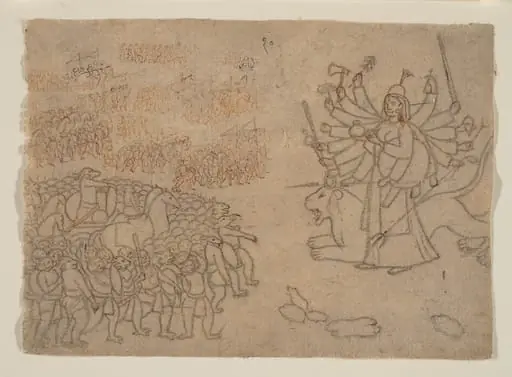
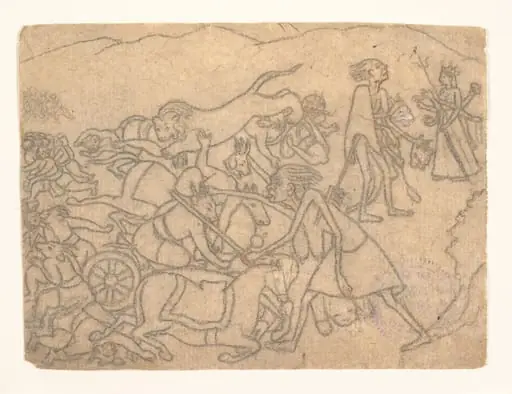
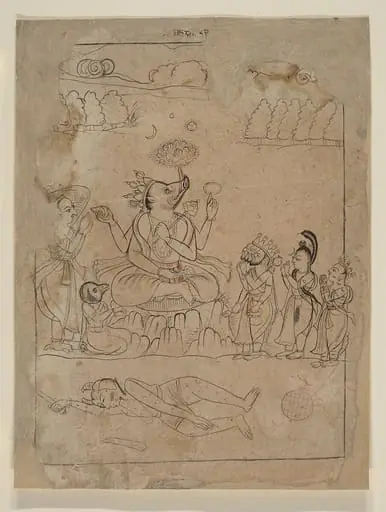
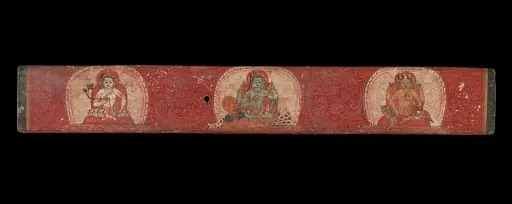
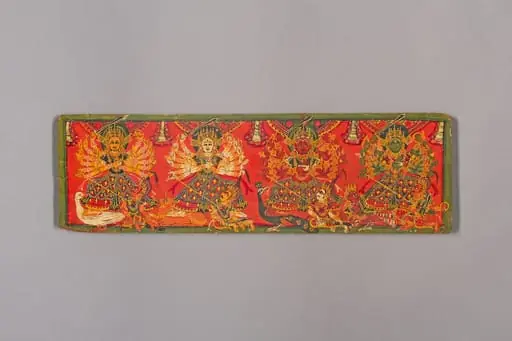
Hindu art is governed by codified iconography: deities are recognized by their attributes, mounts (vahanas), gestures (mudras) and the multiplication of arms and heads to signify divine power. Gupta sculptors at the great centres of Mathura and Sarnath modeled the body with a soft, sensuous naturalism and serene, inward expression. Medieval temple architecture then turned the building itself into a sculptural cosmos — the soaring spires and erotic surface carving of Khajuraho, and the monolithic, rock-cut Kailasa temple at Ellora, hewn downward from living basalt.
The other supreme achievement is South Indian bronze. From the tenth to the thirteenth century, sculptors of the Chola empire in Tamil Nadu used the lost-wax method to cast processional images of unmatched elegance, above all Shiva as Nataraja, the four-armed Lord of the Dance encircled by a ring of flame performing the anandatandava. Many, like those of the Brihadishvara temple at Thanjavur (built by Rajaraja I in the eleventh century), remain in worship.
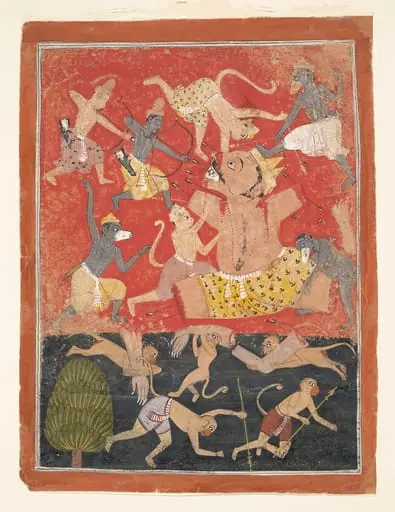
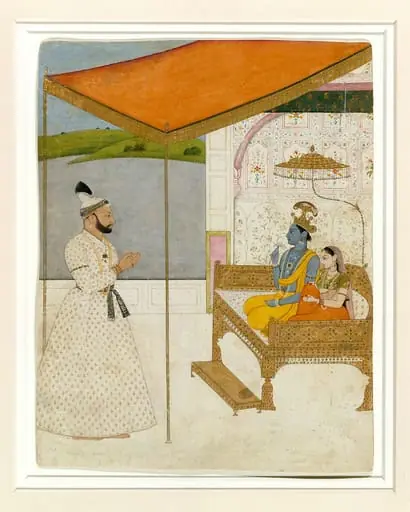
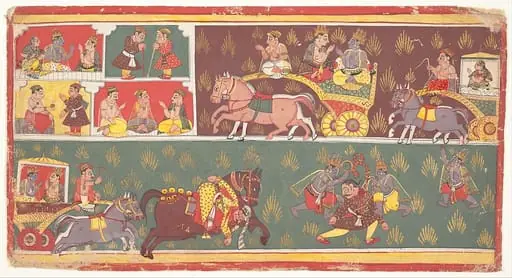
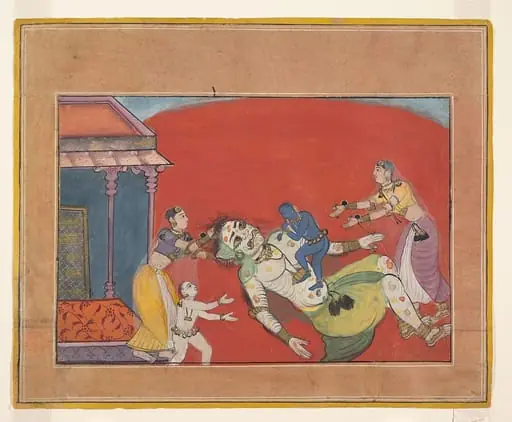
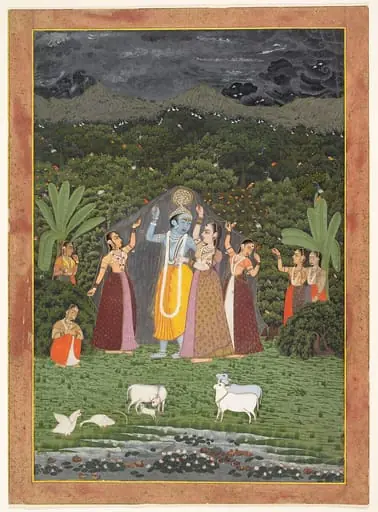
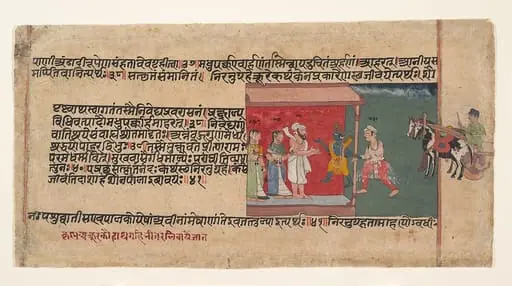
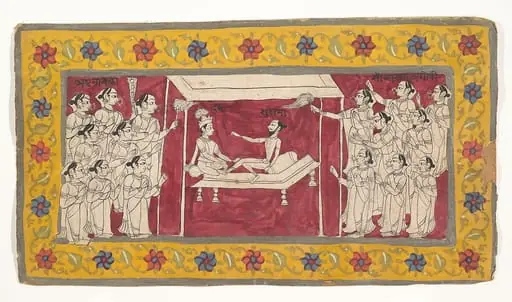
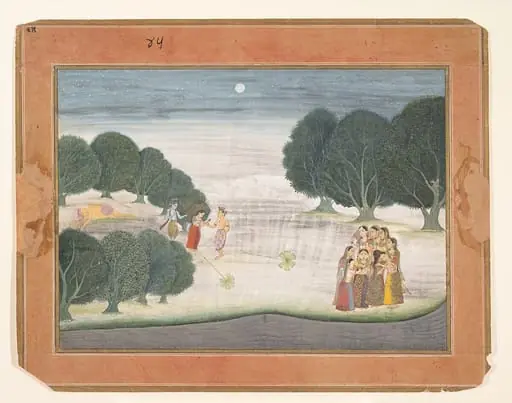
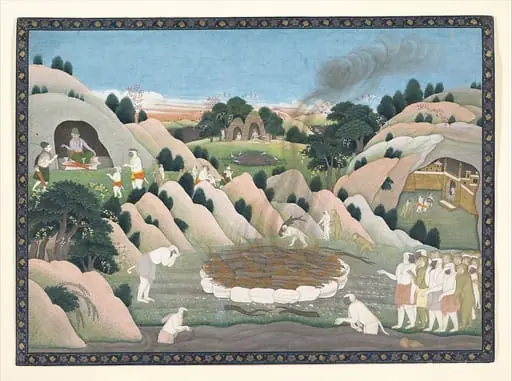
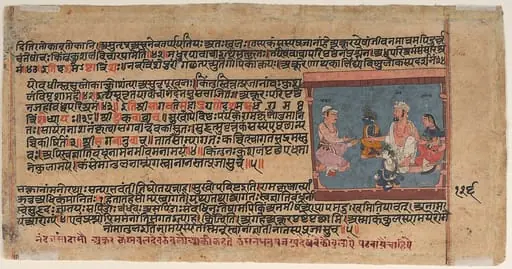
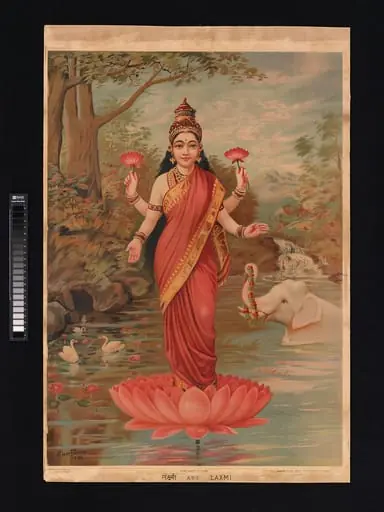
Painting flourished in the Rajput and Pahari miniature schools of the seventeenth and eighteenth centuries, whose Kangra and Basohli masters illustrated the Bhagavata Purana and Jayadeva's Gita Govinda with lyrical Radha-Krishna romances. In the nineteenth century Raja Ravi Varma fused European academic oil technique with Hindu mythological subjects, and his mass-produced oleographs fixed the popular image of the gods for modern India.
Key artists

Overview
Hinduism is an umbrella term for a range of Indian religious and spiritual traditions (sampradayas) unified by adherence to dharma, a cosmic order maintained through rituals and righteous living as expounded in the Vedas. The word Hindu is an exonym, derived from the Sanskrit Sindhu, the name of the Indus River. While often called the oldest surviving religion in the world, Hinduism is also described by the 19th-century term Sanātana Dharma ('eternal dharma'). It has no single founder, no founding date, no standard set of practices, and no single religious book as its basis. With approximately 1.17 billion followers, or around 15% of the global population, Hinduism is the world's third-largest religion and the largest ethnic religion, with adherents largely concentrated in India, Nepal, Mauritius, and Bali, Indonesia. The tradition encompasses diverse systems of thought marked by shared concepts including karma (action, intent and consequences), saṃsāra (the cycle of death and rebirth), and the four Puruṣārthas: dharma (ethics/duties), artha (prosperity/work), kama (desires/passions), and moksha (liberation from saṃsāra).
Iconography & meaning
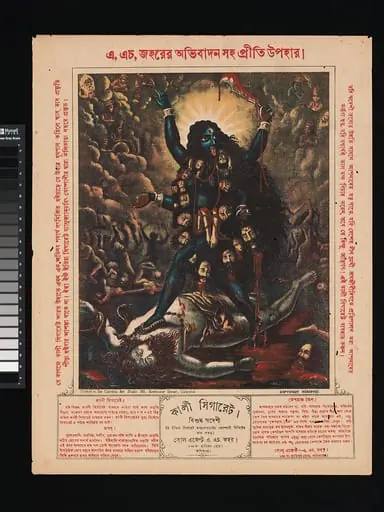
Hindu iconography and symbolism draw upon an extraordinarily rich textual and visual tradition. The major scriptures, classified into Śruti ('heard') and Smṛti ('remembered'), include the Vedas, Upanishads, Puranas, Mahabharata (including the Bhagavad Gita), Ramayana, and Agamas. These texts inform the representation of deities, cosmological concepts, and ritual practices in visual art. Four major denominations structure devotional imagery: Shaivism (devoted to Shiva), Vaishnavism (devoted to Vishnu), Shaktism (devoted to the Goddess or Shakti), and Smartism. The Trimurti, the triad of Brahma (creator), Vishnu (preserver), and Shiva (destroyer/transformer), provides a central organizing principle for much Hindu iconography. In Shaktism, the divine feminine manifests as Durga, Kali, Lakshmi, and Sarasvati, among other forms. The six Āstika schools of Hindu philosophy, Sankhya, Yoga, Nyaya, Vaisheshika, Mīmāṃsā, and Vedanta, contribute to the conceptual frameworks within which images are interpreted. Religious practices depicted and informed by art include bhakti (devotion), puja (worship), yajna (sacrificial rites), dhyana (meditation), and Yoga. The tension between the world-preserving ideal of dharma and the liberatory goal of moksha, as well as between individual karma and social bonds, generates much of the thematic complexity in Hindu visual culture.
Across movements & periods
The treatment of Hinduism in art has evolved considerably across historical periods and cultural contexts. Scholars regard Hinduism as a fusion or synthesis of Brahmanical orthopraxy with various Indian cultures that emerged after the Vedic period, between approximately 500 BCE and 300 CE, during the second urbanisation and early classical period when the epics and first Purāṇas were composed. This Hindu synthesis flourished in the medieval period, coinciding with the decline of Buddhism in India. From the 1st to 6th centuries CE, Hinduism spread along trade routes into Southeast Asia, particularly Burma, Cambodia, Indonesia, and the Malay Peninsula, generating distinctive regional artistic traditions. The term Hindu itself shifted from geographical designation to religious identification: in ancient Persian and Arabic records it referred to the land beyond the Indus, while by the 14th century it appeared in Indian texts with religious connotations, often in contrast to Muslims. European merchants and colonists from the 17th century adopted 'Hindu' to refer to residents of India as a religious community, with 'Hindooism' appearing in 1787 and 'Hinduism' gaining currency by the 1840s among Indians opposing British colonialism. Since the 19th century, modern Hinduism influenced by Western culture has acquired significant appeal in the West, reflected in the popularisation of Yoga and movements such as Transcendental Meditation and ISKCON's Hare Krishna movement. Diaspora communities have established temples and artistic traditions in North America, Europe, the Caribbean, and elsewhere, with notable examples including the Neasden Temple in London and the Sri-Kamadchi-Ampal-Temple in Hamm, Germany.
Legacy
The legacy of Hinduism as a subject in art extends far beyond its Indian origins, shaped by colonial encounter, diaspora, and global cultural exchange. The term Hinduism itself represents a legacy of categorization, emerging from Persian, Arabic, and eventually European attempts to comprehend the diversity of Indian religious life. By the 19th century, the term had been adopted by Indian reformers and nationalists as a self-designation, a process that transformed an externally imposed category into an asserted identity. In the contemporary period, Hinduism's influence is visible in the global dissemination of Yoga, meditation practices, and related spiritual commodities. The religion's characteristic tolerance for multiple perspectives, expressed in the prayer 'May good thoughts come to us from all sides,' has enabled its adaptive representation across cultures. However, this very diversity means that Hinduism resists easy visual summary. As both practitioners and scholars note, it may be better understood as a way of life or as multiple intertwined traditions rather than a single, bounded religion. The tension between universalist aspirations and particularist identity, between the eternal (sanatana) and the historically situated, continues to animate both Hindu self-understanding and its artistic representation in global contexts.
Works
Frequently asked questions
What is Hinduism?
Hinduism () is an umbrella term for a range of Indian religious and spiritual traditions (sampradayas) that are unified by adherence to the concept of dharma, a cosmic order maintained by its followers through rituals and righteous living, as expounded in the Vedas.
How many Hinduism works does Artifact World Gallery have?
Artifact World Gallery holds 25 public-domain Hinduism works, all free to view and download.
Who are the key Hinduism artists?
Key Hinduism artists in the collection include Seu Family and Nainsukh.
Where can I see Hinduism works?
Hinduism works in the collection are held by Metropolitan Museum of Art.