Artwork
Odysseus and Nausicaa
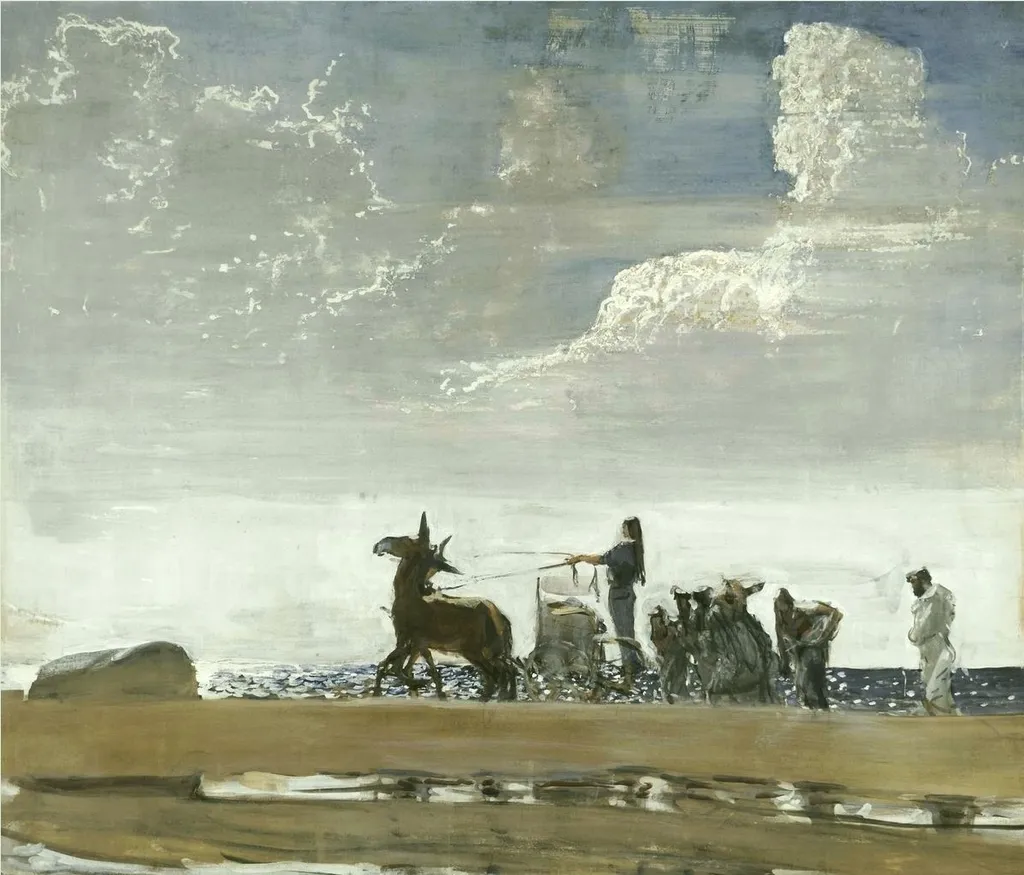
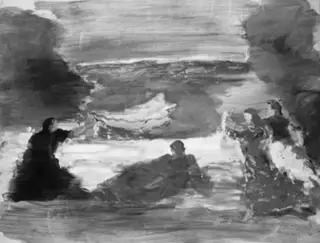
Odysseus and Nausicaa is a gouache painting by the Post-Impressionist artist Valentin Serov. It dates from 1910 and is held in the collection of the Tretyakov Gallery.
About this work
Subject & Meaning
The painting portrays a mythological scene from Homer's Odyssey in which the hero Odysseus is rescued by the young Nausicaa on the island of Scheria.
The painting portrays a mythological scene from Homer's Odyssey in which the hero Odysseus is rescued by the young Nausicaa on the island of Scheria. The composition features Odysseus, Nausicaa, a chariot, a sea, clouds, a mule, and a domestic worker, all rendered in gouache on cardboard. This mythological subject symbolizes the moment of safe arrival and hospitality after a long voyage, reflecting themes of divine intervention and human compassion. The work is classified as a mythological painting and is part of the Tretyakov Gallery collection.
Technique & Style
Valentin Serov's Odysseus and Nausicaa is executed in gouache paint on cardboard, a water-based medium applied to a rigid support. The work measures 83.5 cm in height by 101.5 cm in width. Classified as a mythological painting, it depicts Odysseus, Nausicaa, a chariot, the sea, clouds, mules, and a domestic worker, drawing on Homer's Odyssey as its narrative source.
The horizontal format accommodates the multi-figure composition, with the cardboard ground providing a stable surface for the opaque, matte handling characteristic of gouache.
The 1910 work is held in the Tretyakov Gallery.
History & Provenance
Odysseus and Nausicaa was created in 1910 by the Russian painter Valentin Serov. Executed in gouache on cardboard, the painting measures 83.5 cm in height and 101.5 cm in width and illustrates a scene from Homer’s Odyssey. Since its completion, the work has been part of the collection of the Tretyakov Gallery in Moscow, where it remains on display. It is classified as a mythological painting, reflecting Serov’s interest in classical themes.
Valentin Serov's gouache painting Odysseus and Nausicaa, created in 1910, is held in the collection of the Tretyakov Gallery. The work is executed on cardboard and measures 83.5 cm in height by 101.5 cm in width. While the sources confirm its current location within the gallery, no specific inventory or accession number is provided in the available documentation.
Additionally, the provided texts do not record any exhibition history for this mythological scene depicting Odysseus, Nausicaa, and their surroundings.
Context
Valentin Serov painted Odysseus and Nausicaa in 1910 as a mythological gouache work for the Tretyakov Gallery, drawing directly from Homer's Odyssey to depict the mythic encounter between the Greek hero and the Phaeacian princess amid chariot, sea, and cloud motifs.
The painting's composition emphasizes classical narrative through precise draughtsmanship and symbolic domesticity, reflecting broader Russian Symbolist interests in mythic allegory during the early 20th century.
Art historical analysis situates this work within Serov's mature period, where mythological subjects served as vehicles for psychological exploration, aligning with contemporary Russian artistic discourse on national epic heritage.
Legacy
The painting has been part of the Tretyakov Gallery's collection since its creation, anchoring its historical presence in Russian cultural institutions. Its mythological theme, drawn from Homer's Odyssey, has contributed to Serov's enduring reputation as a master of narrative art, though specific later exhibitions or critical assessments of its influence are not documented in the provided sources. The work remains recognized for its technical execution in gouache on cardboard, reflecting early 20th-century Russian approaches to classical subjects.
Overview
Valentin Alexandrovich Serov painted Odysseus and Nausicaa in 1910 with gouache, a water‑based medium that allows opaque color. The work belongs to the post‑impressionist vein of his later output and is part of the Tretyakov Gallery’s collection in Moscow.
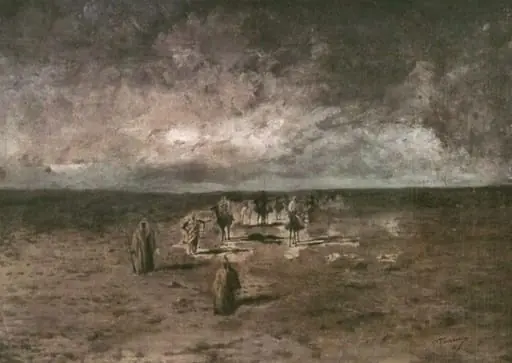
Artist & collection
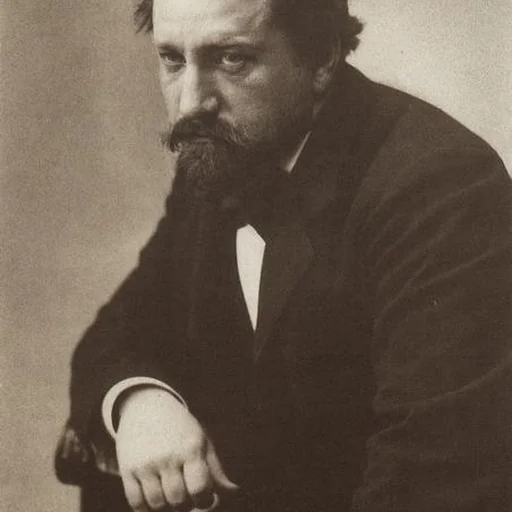
Artist
Valentin Alexandrovich Serov (Russian: Валентин Александрович Серов; 19 January 1865 – 5 December 1911) was a Russian painter and draughtsman during the Belle Époque, active in St.