Artwork
Cambyses Appointing Otanes Judge
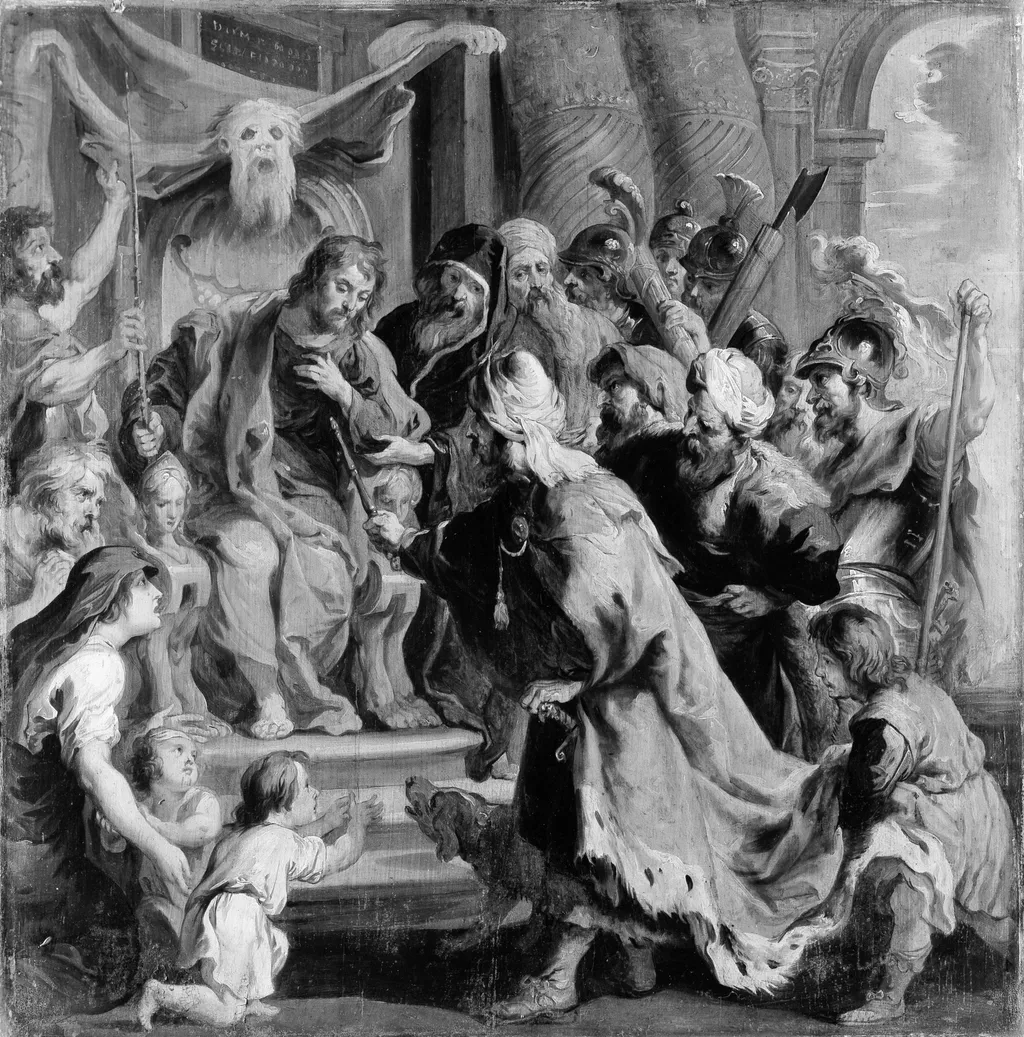
Cambyses Appointing Otanes Judge is an oil painting by Victor Wolfvoet. It is held in the collection of the Metropolitan Museum of Art.
About this work
Subject & Meaning
The painting illustrates the episode, recounted by the Greek historian Herodotus, in which the Persian king Cambyses appoints Otanes as judge, a scene traditionally read as an exemplum of justice and the responsible delegation of authority. The work is a copy after a lost composition by Peter Paul Rubens. Executed in oil on panel, it is housed in the Metropolitan Museum of Art.
Technique & Style
The work is an oil painting on a wooden panel, measuring 45.7 × 44.5 cm, recorded with a date of 1800 and identified as a copy after a lost composition by Peter Paul Rubens. It reproduces Rubens's baroque figure grouping and spatial arrangement on the traditional oil-on-panel support.
History & Provenance
No accession number or detailed exhibition history is recorded in the available documentation.
Recorded as the work of Victor Wolfvoet, Cambyses Appointing Otanes Judge is catalogued as a copy after a lost composition by Peter Paul Rubens, executed in oil on panel and dated 1800. The panel measures 45.7 cm in height by 44.5 cm in width and is held in the collection of the Metropolitan Museum of Art. No accession number or detailed exhibition history is recorded in the available documentation.
Overview
Victor Wolfvoet the Younger's painting, Cambyses Appointing Otanes Judge, is an oil on canvas work held in The Metropolitan Museum of Art. Created in 1800, this piece showcases a complex narrative scene with numerous figures. The artist, a Flemish painter and art dealer, was active in the early 17th century and developed his style under the significant influence of Peter Paul Rubens. The composition features a dramatic arrangement of characters, including a central judging figure, soldiers, and onlookers.
Own this work as a print
Artist & collection
Artist
Victor Wolfvoet (II) or Victor Wolfvoet the Younger (1612 – 1652), was a Flemish art dealer and painter of history and allegorical paintings. His artistic output was heavily influenced by Peter Paul Rubens.

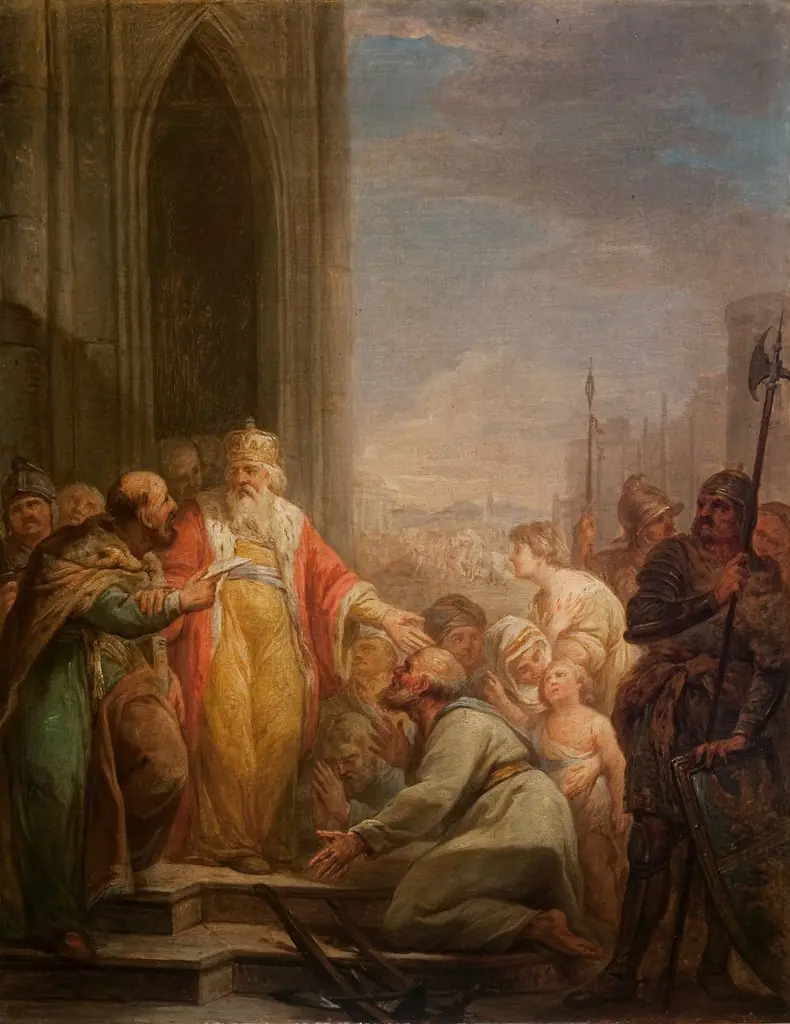
- Casimir the Great
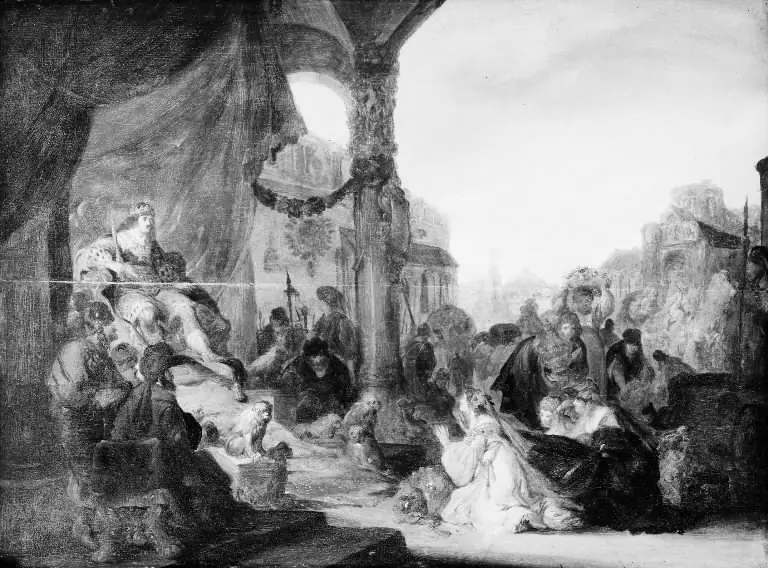 The Queen of Sheba's Visit to Solomon
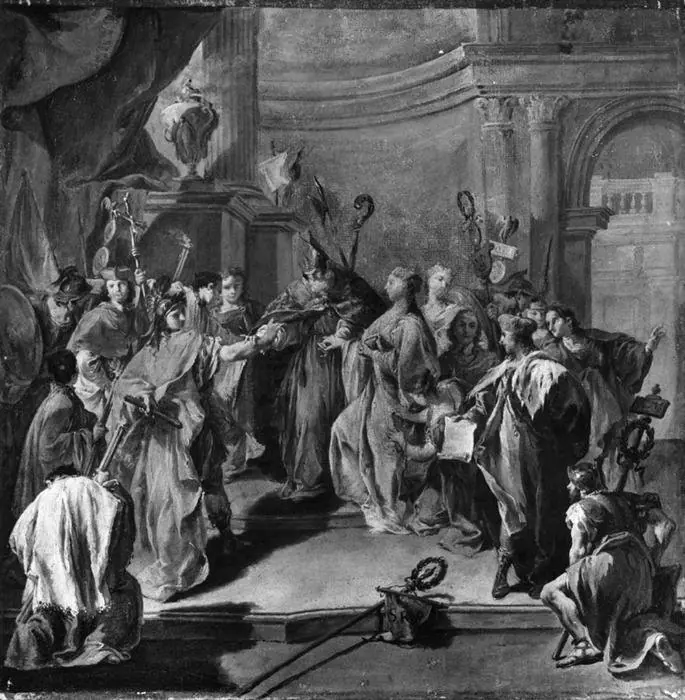 The Marriage of Placidia and Constantius
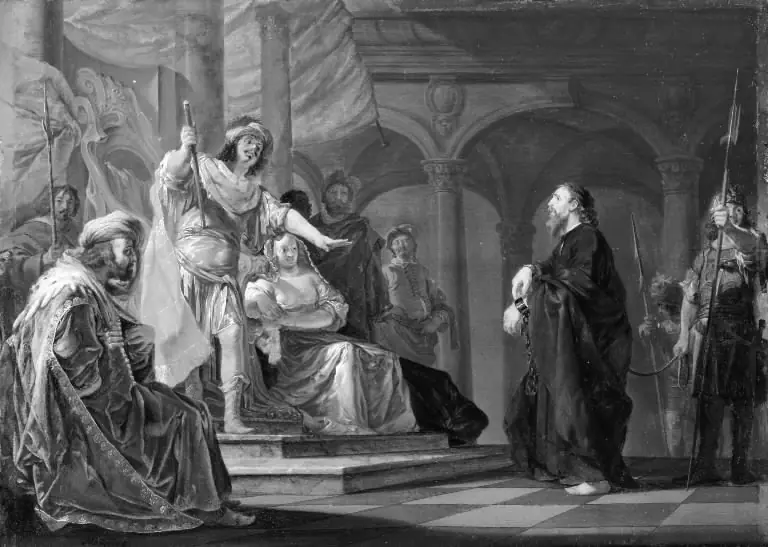 Paulus the Apostle defending himself at the Trial in Caesarea
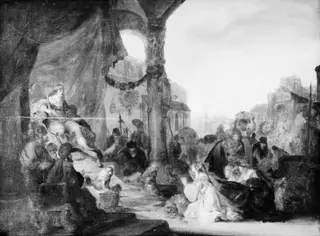 The Queen of Sheba's Visit to Solomon
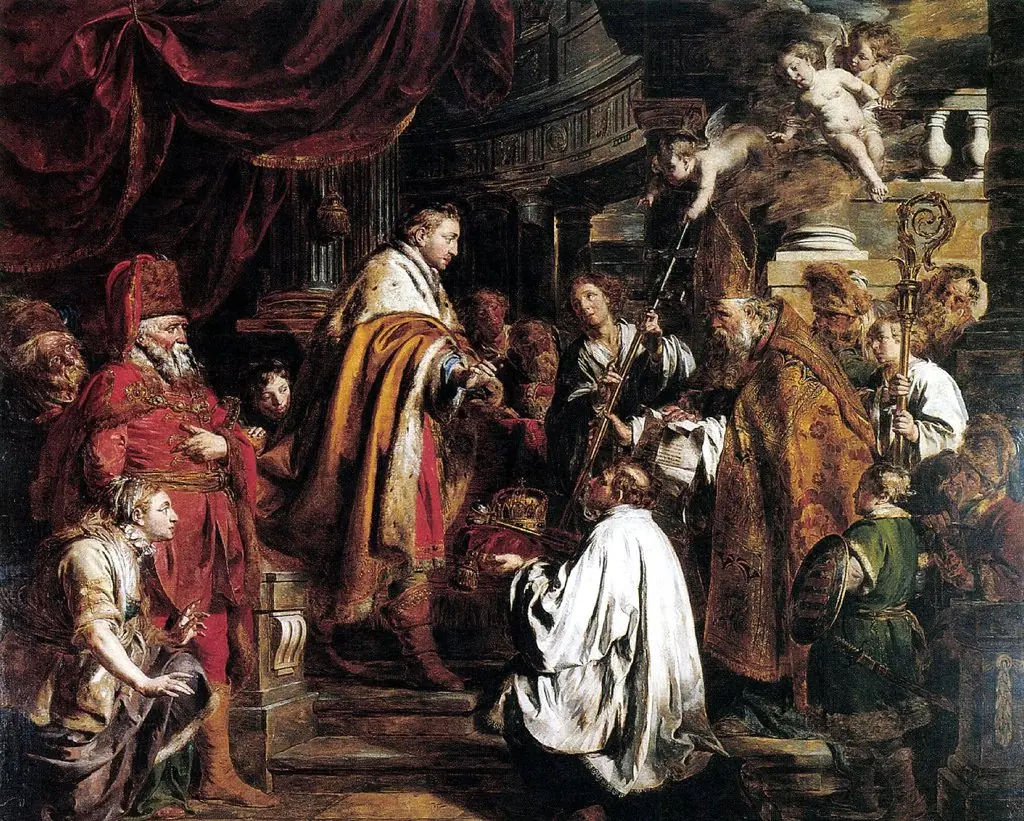 Saint Stephen, king of Hungary Receiving the Legate
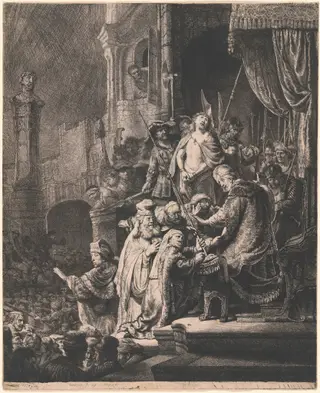 Christ before Pilate: Large Plate
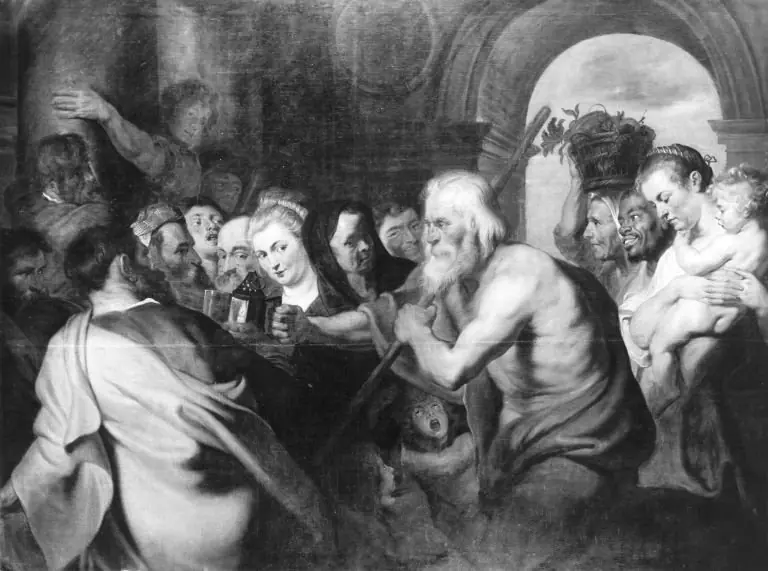 Diogenes seeking a True Man
 Jephta's Daughter Being Led to the Altar
 The prophet Nathan admonishes King David
 Joseph Claims Benjamin as his Slave
 Christ Before Pilate: Large Plate