Artwork
Christ nailed to the Cross
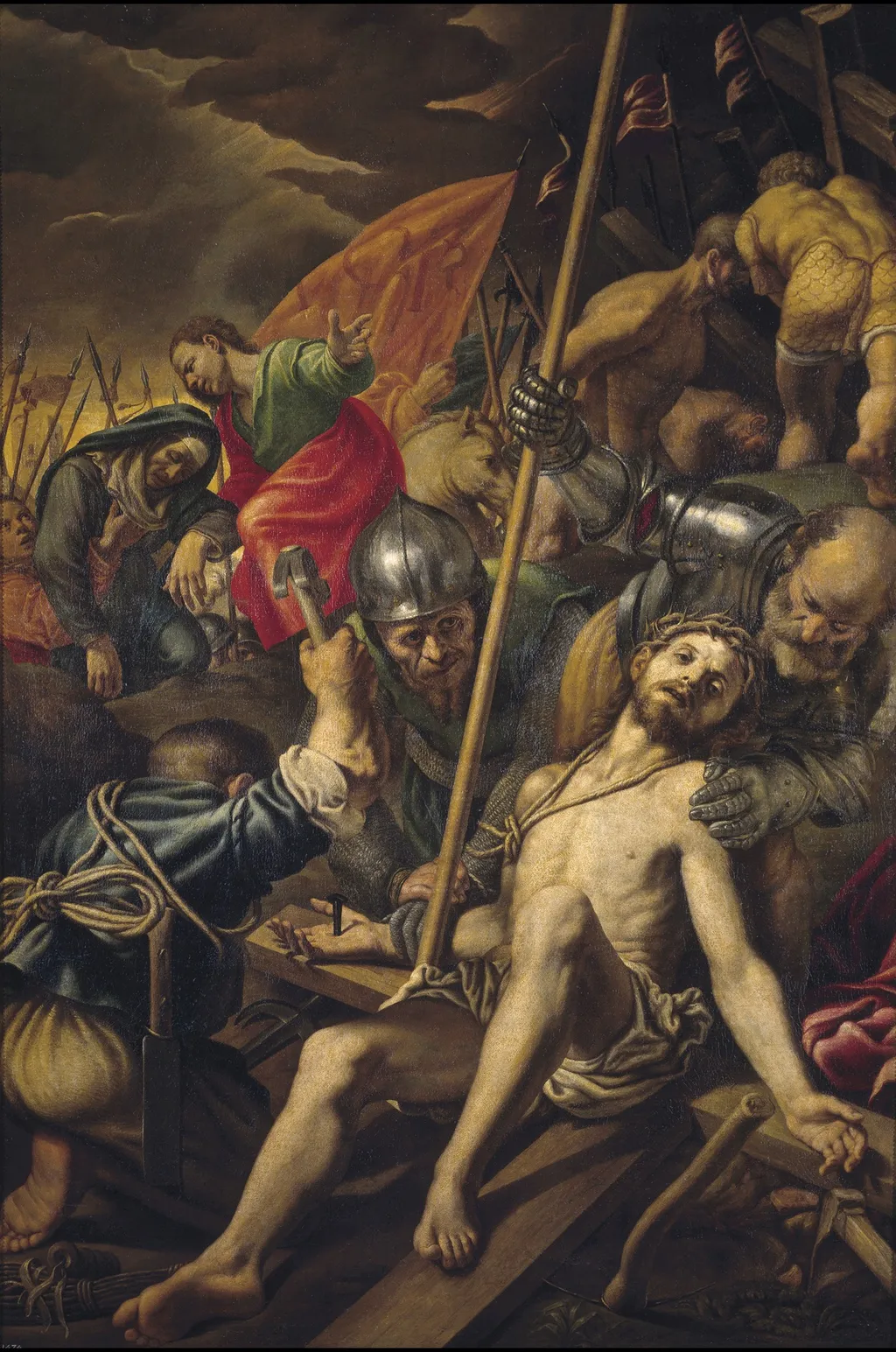
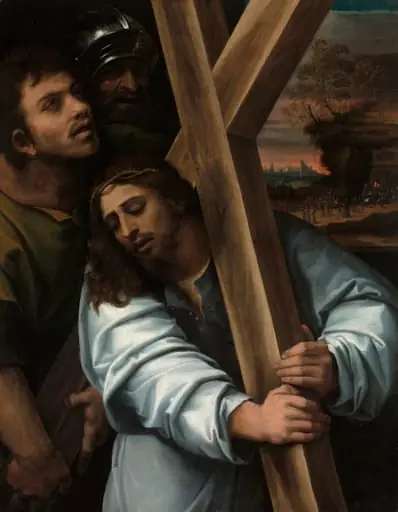
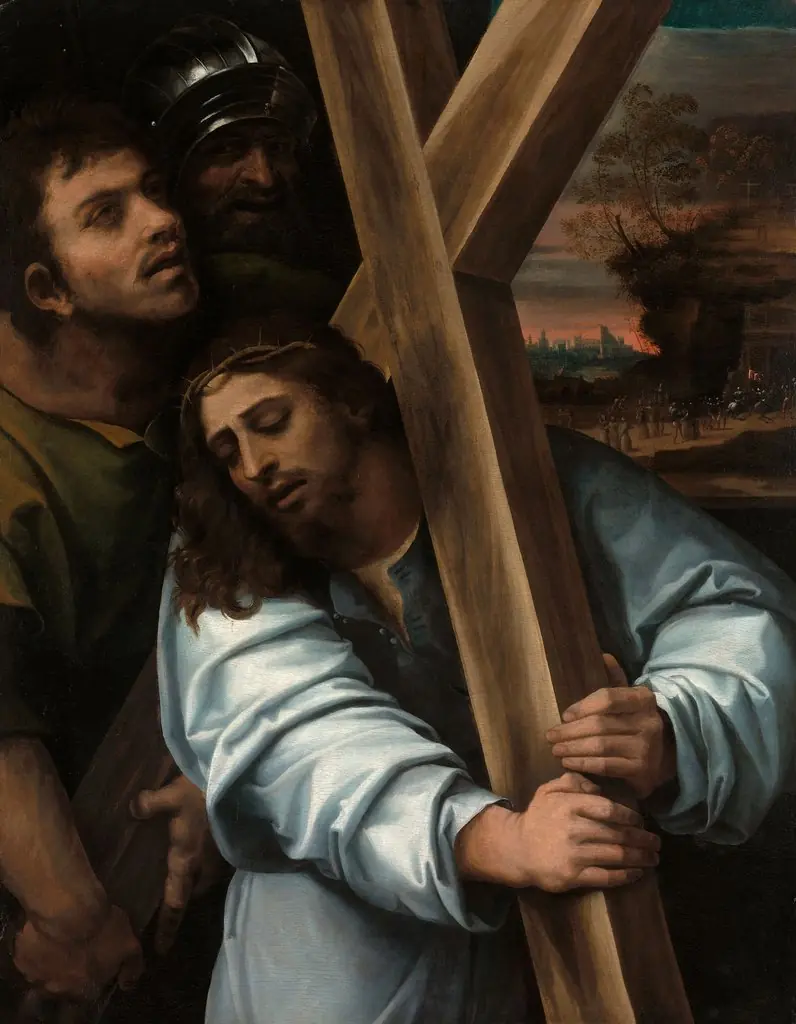
Christ nailed to the Cross is an oil painting by the Early Baroque Italian artist Vincenzo Campi. It dates from 1550 and is held in the collection of the Museo del Prado.
About this work
Subject & Meaning
The scene emphasizes suffering and sacrifice, key theological themes in Catholic devotion of the late Renaissance.
The painting depicts the Crucifixion of Jesus, a central subject in Christian iconography. The composition centers on Christ affixed to a cross, with the traditional placement of the three nails through his hands and feet and the crown of thorns upon his head. The scene emphasizes suffering and sacrifice, key theological themes in Catholic devotion of the late Renaissance.
The presence of the cross and the crown of thorns serve as explicit symbols of Christ’s martyrdom and redemptive death, aligning with sixteenth-century religious art’s focus on piety and penitence.
Technique & Style
The work is an oil painting executed on canvas. It measures 210 cm in height and 141 cm in width. The composition depicts Christ nailed to the cross, rendered with the naturalistic modeling and chiaroscuro characteristic of late Renaissance Italian religious painting.
The surface shows typical craquelure and pigment darkening consistent with age, while the canvas support remains taut with no structural deformation. The handling of drapery and anatomical precision reflect Vincenzo Campi's Mannerist-influenced style within the Cremonese school.
History & Provenance
Christ nailed to the Cross is an oil painting on canvas created by Vincenzo Campi in 1550. The work measures 210 cm in height and 141 cm in width, depicting the crucifixion scene. It was painted for the Confraternita del Gonfalone in Rome and later entered the collection of the Museo del Prado, where it remains today.
The painting's creation falls within the broader timeframe of 1550 to 1577, reflecting Campi's activity during the mid-to-late 16th century in the Italian Renaissance. Its religious genre and subject matter align with Counter-Reformation artistic intentions, emphasizing spiritual contemplation through naturalistic detail.
Christ nailed to the Cross by Vincenzo Campi is held in the collection of the Museo del Prado. The painting, executed in oil on canvas, measures 210 cm in height and 141 cm in width. No specific inventory or accession number is recorded in the available sources, and no exhibition history is documented.
Overview
Christ nailed to the Cross is a 16th-century oil painting by Vincenzo Campi, a Cremonese artist known for his realist genre scenes.
Own this work as a print
Artist & collection
Artist
Vincenzo Campi (Italian pronunciation:; c.1530/1535–1591) was a 16th-century Italian painter working in Cremona during the Late Renaissance.