Artwork
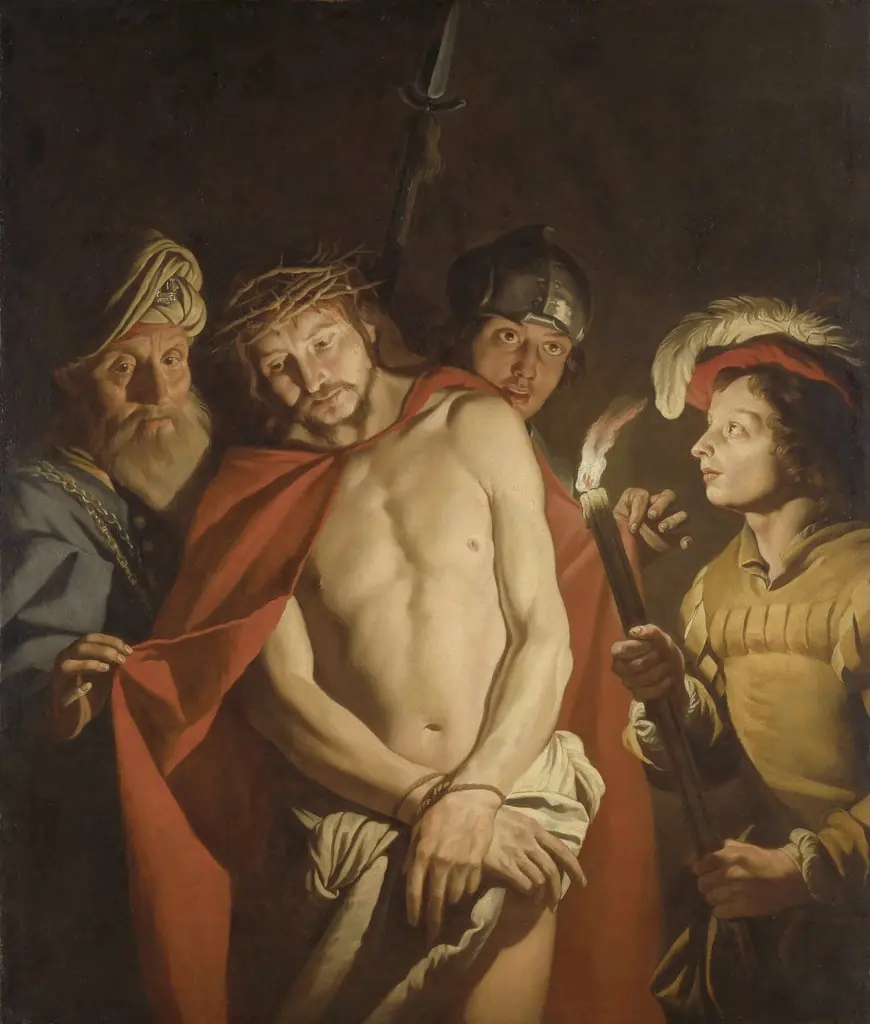
Ecce Homo
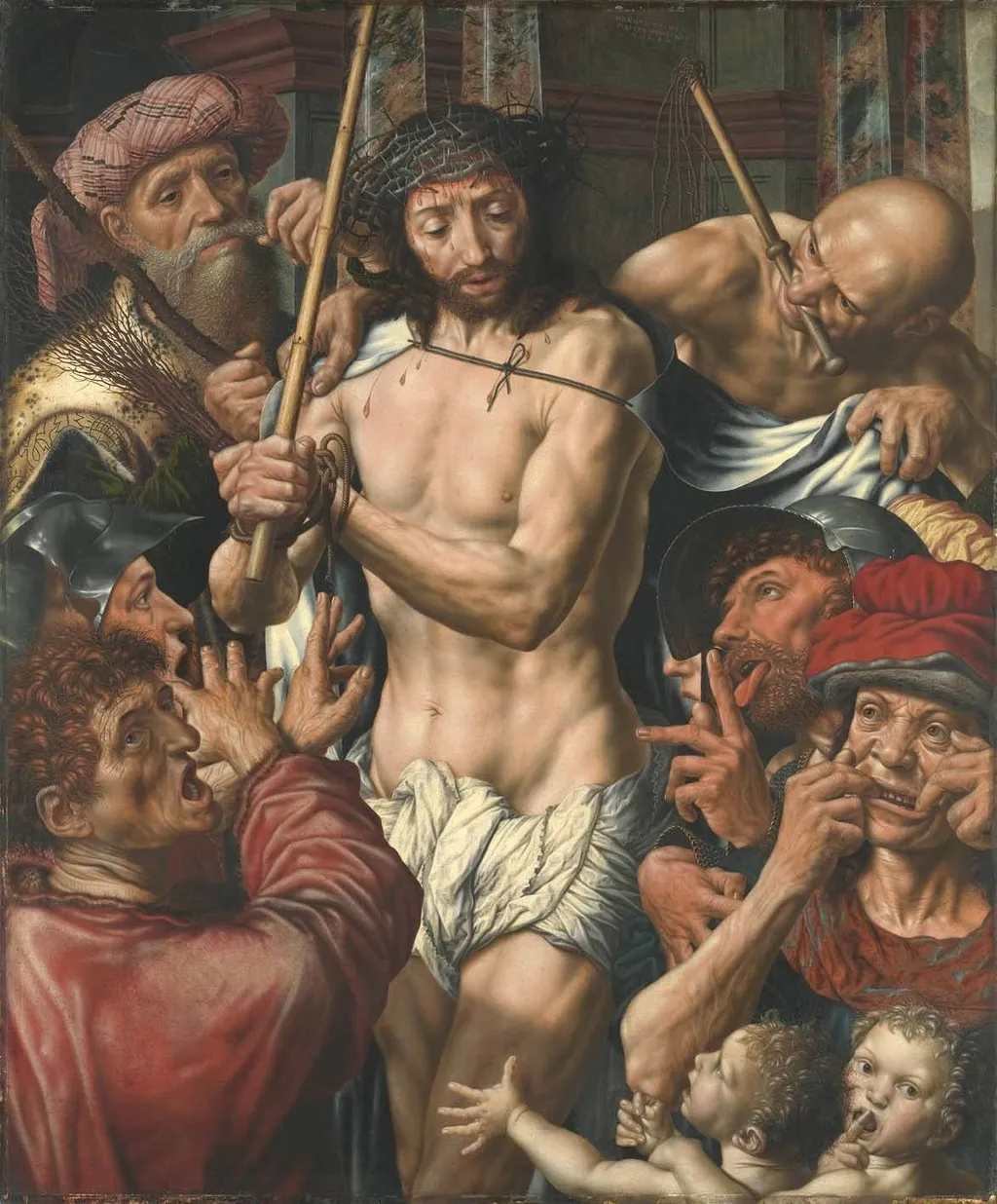
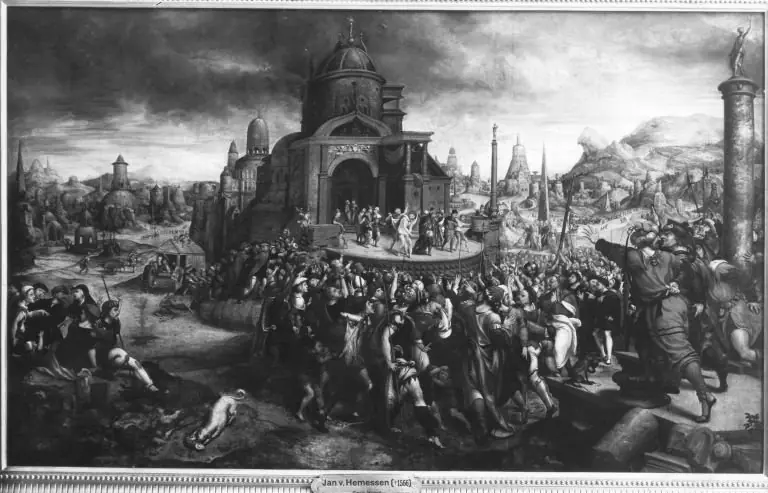
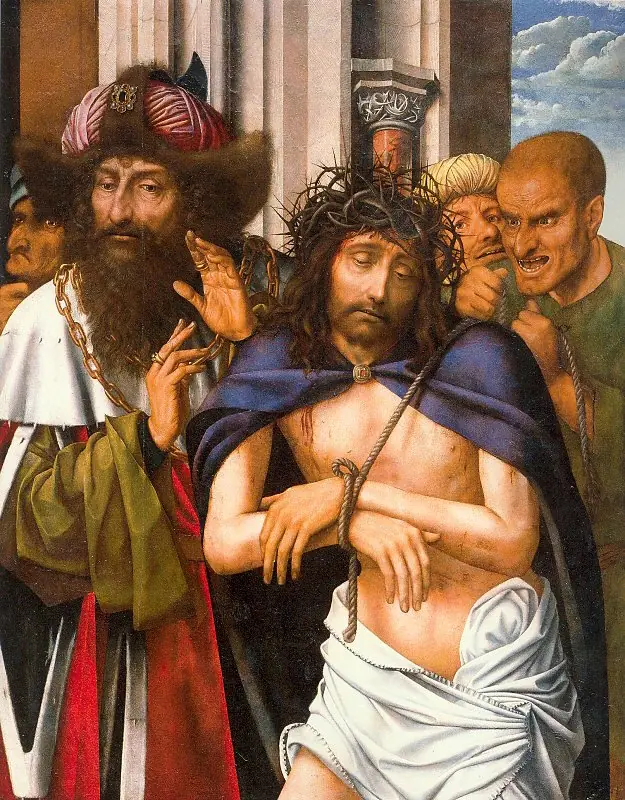
Ecce Homo is an oil painting by the Mannerist artist Jan Sanders van Hemessen. It dates from 1544 and is held in the collection of the Bavarian State Painting Collections.
About this work
Subject & Meaning
By focusing on this narrative event, the artwork functions as a piece of religious devotion intended to evoke empathy for Christ's suffering and humiliation.
Jan Sanders van Hemessen's 1544 oil painting portrays the biblical episode known as the Crowning with Thorns, a specific moment within the broader Passion of Jesus Christ. The work's primary subject is Jesus, depicted during his mockery by Roman soldiers prior to the crucifixion. By focusing on this narrative event, the artwork functions as a piece of religious devotion intended to evoke empathy for Christ's suffering and humiliation.
The composition visualizes the theological concept of the innocent Messiah enduring physical abuse and ridicule, serving as a meditative tool for viewers to contemplate the sacrifices central to Christian faith.
Technique & Style
Jan Sanders van Hemessen executed Ecce Homo in 1544 using oil paint applied to a wooden panel. The work measures 123 cm in height and 102.5 cm in width. As a religious painting, the piece depicts the Crowning with Thorns, focusing on the figure of Jesus Christ.
The medium and support align with the artist's practice in Northern Renaissance religious art, utilizing traditional materials to render the dramatic subject matter.
History & Provenance
Jan Sanders van Hemessen created Ecce Homo in 1544 using oil paint on a panel. The artwork, which depicts Jesus Christ and features the crowning with thorns as its main subject, was subsequently integrated into the Electoral Gallery Dusseldorf. It later became part of the Bavarian State Painting Collections and is currently housed at the Alte Pinakothek. The painting measures 123 cm in height and 102.5 cm in width.
Ecce Homo is held by the Alte Pinakothek in Munich as part of the Bavarian State Painting Collections. Its inventory designation is 1408, and it is associated with the Electoral Gallery in Düsseldorf. The painting, dated 1544, is catalogued as a religious work on panel depicting the Crowning with Thorns.
No exhibition history beyond its inclusion in the Bavarian State Painting Collections and the Alte Pinakothek's holdings is documented in the available sources.
Legacy
The 1544 painting Ecce Homo by Jan Sanders van Hemessen, depicting Jesus Christ crowned with thorns, entered the collection of the Alte Pinakothek in Munich and became part of the Bavarian State Painting Collections. Its religious subject and composition have been cited in studies of Netherlandish Renaissance art that influenced later depictions of the Passion, and it remains on public view in the museum’s gallery dedicated to works from the 16th century.
Overview
Painted in 1544 by Jan Sanders van Hemessen, Ecce Homo is an oil-on-panel work that captures a moment from the Passion of Christ. Van Hemessen, a Flemish artist, synthesized Italian Renaissance techniques with Northern European traditions after traveling to Italy and France. The painting is now part of the Alte Pinakothek’s collection in Munich, where it remains a key example of mid-16th-century religious imagery shaped by cross-regional artistic exchange.
Context
Van Hemessen’s exposure to Italian art in the 1520s and the First School of Fontainebleau in the 1530s informed his approach to anatomy and spatial depth. While his style retained Northern attention to detail, he absorbed Italian compositional clarity. Ecce Homo reflects a broader trend in the Low Countries of adapting Renaissance ideals to devotional subjects, responding to both Catholic piety and humanist interests in emotional expression.
Artist & collection
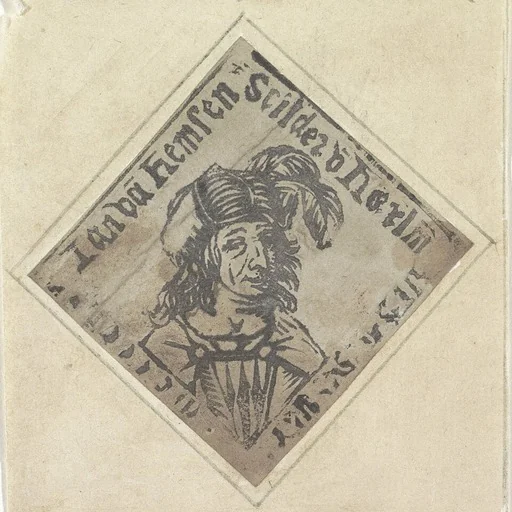
Artist
Jan Sanders van Hemessen (c. 1500 – c. 1566) was a leading Flemish Renaissance painter, belonging to the group of Italianizing Flemish painters called the Romanists, who were influenced by Italian Renaissance painting.…