Artwork
Crown of Thorns
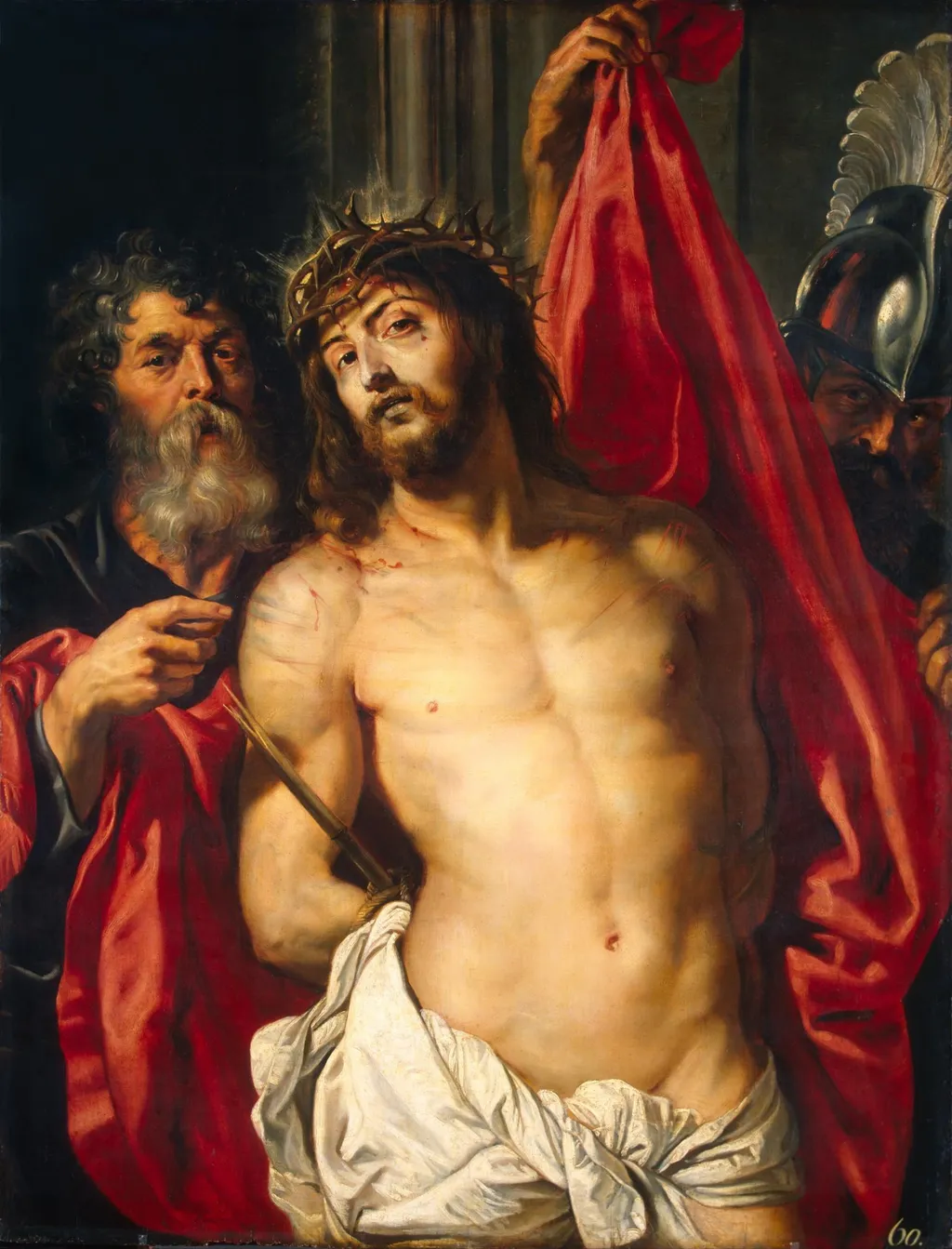
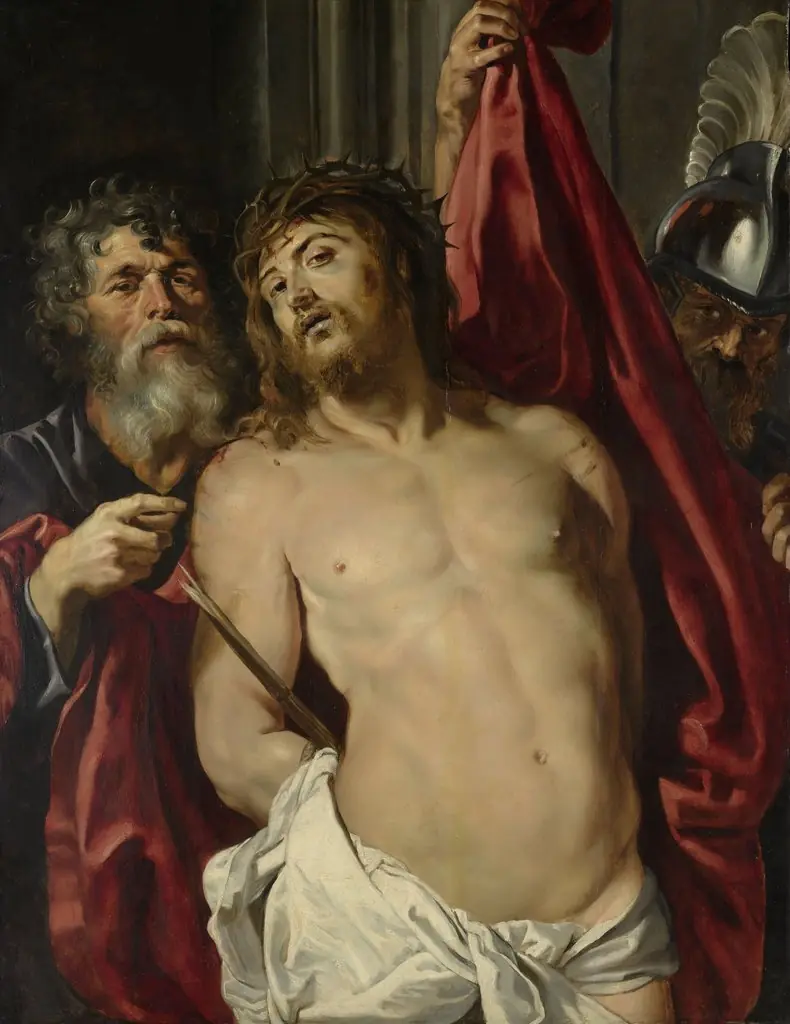
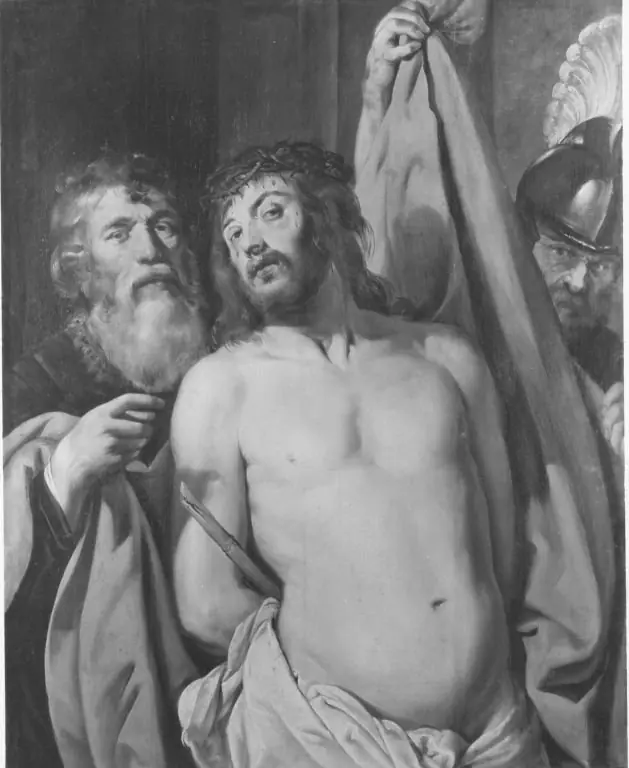
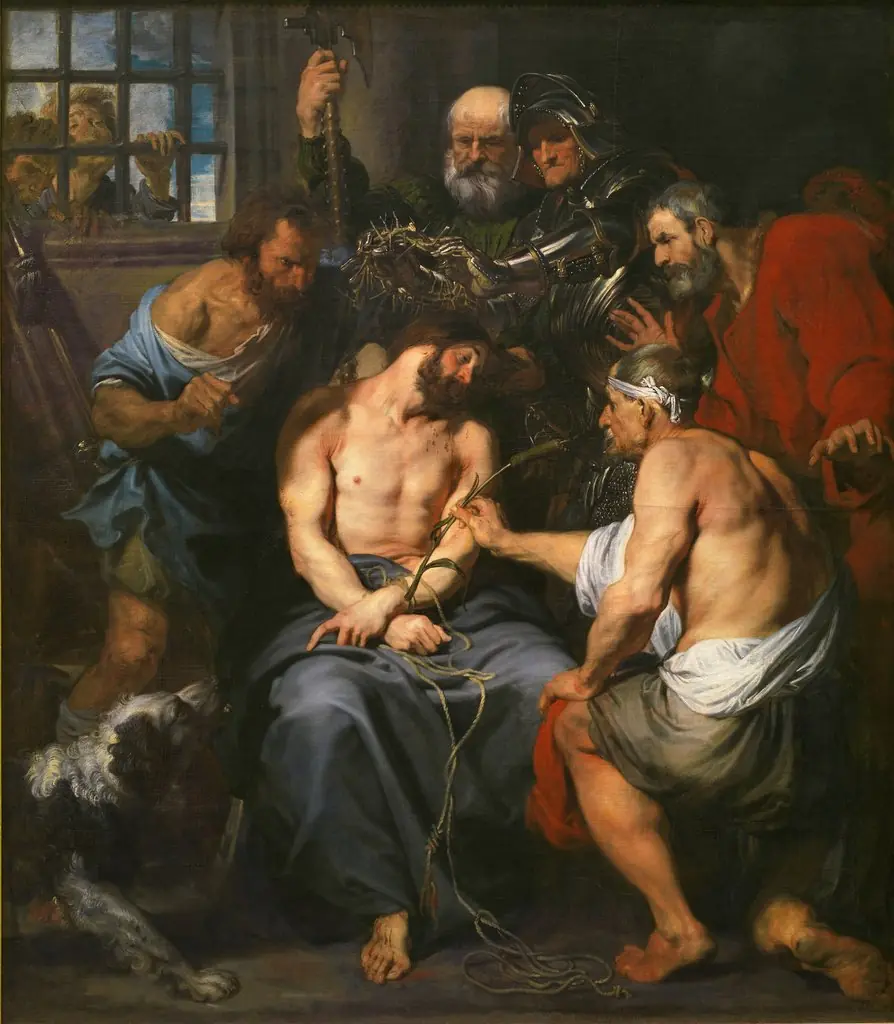
Crown of Thorns is an oil painting by the Flemish Baroque painting artist Peter Paul Rubens. It dates from 1612 and is held in the collection of the Hermitage Museum.
About this work
Subject & Meaning
The Flemish painterly character of Rubens emerges in the handling of drapery and in the reflection of light on the soldier's helmet.
The painting depicts the Ecce Homo subject, the moment described in the Gospel of John (19:5) when Pontius Pilate presents the tortured Jesus to the crowd and pronounces the words "Ecce homo" ("Behold the man"). Christ is shown bare-chested and crowned with the Holy Crown of Thorns during his Passion, his gaze directed toward the viewer. He is flanked by Pilate on the left, who points at him with his index finger while delivering the declaration, and a helmeted Roman soldier on the right who wraps him in the Holy Tunic.
Rubens renders Christ's face as proud and free of suffering, conveying an inner strength rather than anguish, and demonstrates his command of Renaissance and classical anatomy in the figure's construction. The Flemish painterly character of Rubens emerges in the handling of drapery and in the reflection of light on the soldier's helmet.
Technique & Style
Crown of Thorns (also known as Ecce Homo) is an oil painting executed on an oak panel, a characteristic support of the period. The vertical format composition measures 125.7 by 96.5 cm and depicts Jesus Christ at half-length, bare-chested and gazing directly toward the viewer. He is flanked by Pontius Pilate, who points an index finger at him, and a helmeted Roman soldier who drapes the Holy Tunic over him.
Stylistically, the work demonstrates Peter Paul Rubens's assimilation of Renaissance and classical art, notably in the precise anatomical rendering of Christ's figure, which was influenced by an antique centaur statue. Flemish pictorial traditions emerge in the execution of the drapery and the reflection of light on the soldier's helmet. Christ's face is portrayed as resolute rather than suffering, conveying an inner strength.
History & Provenance
Peter Paul Rubens painted the Crown of Thorns, an oil on oak panel, by 1612. The work was originally commissioned by Cardinal Massimego. Scholars have debated its place of execution: H. Evers argued it was produced during Rubens's stay in Genoa, while Keizer placed it in his later Antwerp period.
The composition may also have been conceived as a pendant to the 1616–1617 Drunken Silenus in the Alte Pinakothek.
By the end of the eighteenth century the painting had entered the collection of Prince Bezborodko in Saint Petersburg. It subsequently passed by inheritance to his relatives-in-law, the Counts Kushelev. In 1862, on the death of Count Nikolai Kushelev-Bezborodko, the collection was bequeathed to the Academy of Arts.
In 1922 the painting was transferred from the Kushelevskaya Gallery to the Hermitage Museum in Saint Petersburg, where it remains today.
The painting has been held at the Hermitage Museum in Saint Petersburg since 1922, when it was transferred from the Kushelev Gallery collection.
By the end of the 18th century the work was in Prince Bezborodko's collection in Saint Petersburg. It passed by inheritance to his relatives-in-law, the Counts Kushelev, and on the death of Count Nikolai Kushelev-Bezborodko in 1862 the collection was bequeathed to the Academy of Arts, from which it was later moved to the Hermitage. The Hermitage also retains an oil study for the figure of Pilate in the composition.
No temporary loan exhibitions are documented in the available sources.
Context
Rubens’s Crown of Thorns (c. 1612) is situated at the intersection of Flemish Counter-Reformation piety and Italian Renaissance formal ideals. Early scholarship, such as H. Evers’s analysis, links its conception to the artist’s Genoese sojourn, while Keizer situates it within Rubens’s Antwerp period, underscoring the painting’s contested chronology. The work’s composition reflects the influence of classical statuary, notably a centaur in the Borghese Gallery, and its vertical format aligns with contemporary Ecce Homo iconography.
Critics emphasize Rubens’s synthesis of anatomical precision and dramatic lighting, evident in the draped fabrics and the gleaming Roman helmet, as hallmarks of his early maturity. The painting’s restrained pathos, Christ’s gaze directed at the viewer without overt suffering, positions it within the Flemish tradition of conveying spiritual fortitude through serene physiognomy.
Institutional reception solidified in 1922 when the Hermitage accessioned the panel from the Kushelev-Bezborodko bequest, integrating it into Saint Petersburg’s Russian imperial collections. Its subsequent placement within the Hermitage’s holdings reinforced its canonical status, framing it as a key example of early Rubens in dialogue with Italian models.
Overview
Peter Paul Rubens painted an oil work on oak around 1612 that depicts the biblical Ecce Homo scene. The composition centers on a wounded Christ crowned with thorns, flanked by a gesturing older figure and a soldier in armor. The stark illumination highlights the flesh against a deep red backdrop, creating a dramatic visual focus.
Own this work as a print
Artist & collection
Artist
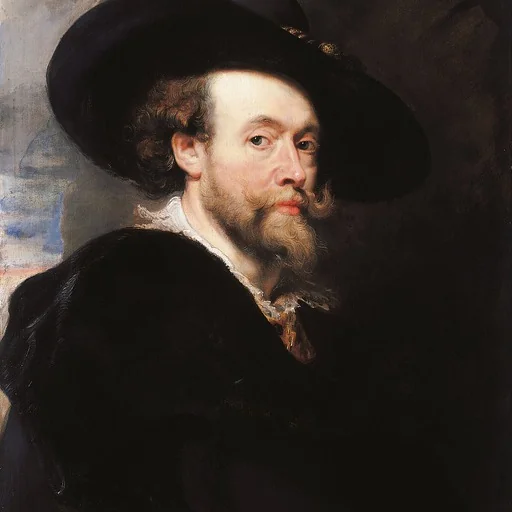
Sir Peter Paul Rubens ( ROO-bənz; Dutch:; 28 June 1577 – 30 May 1640) was a Flemish artist and diplomat.