Artwork
The Apparition of the Virgin to Saint Bernard
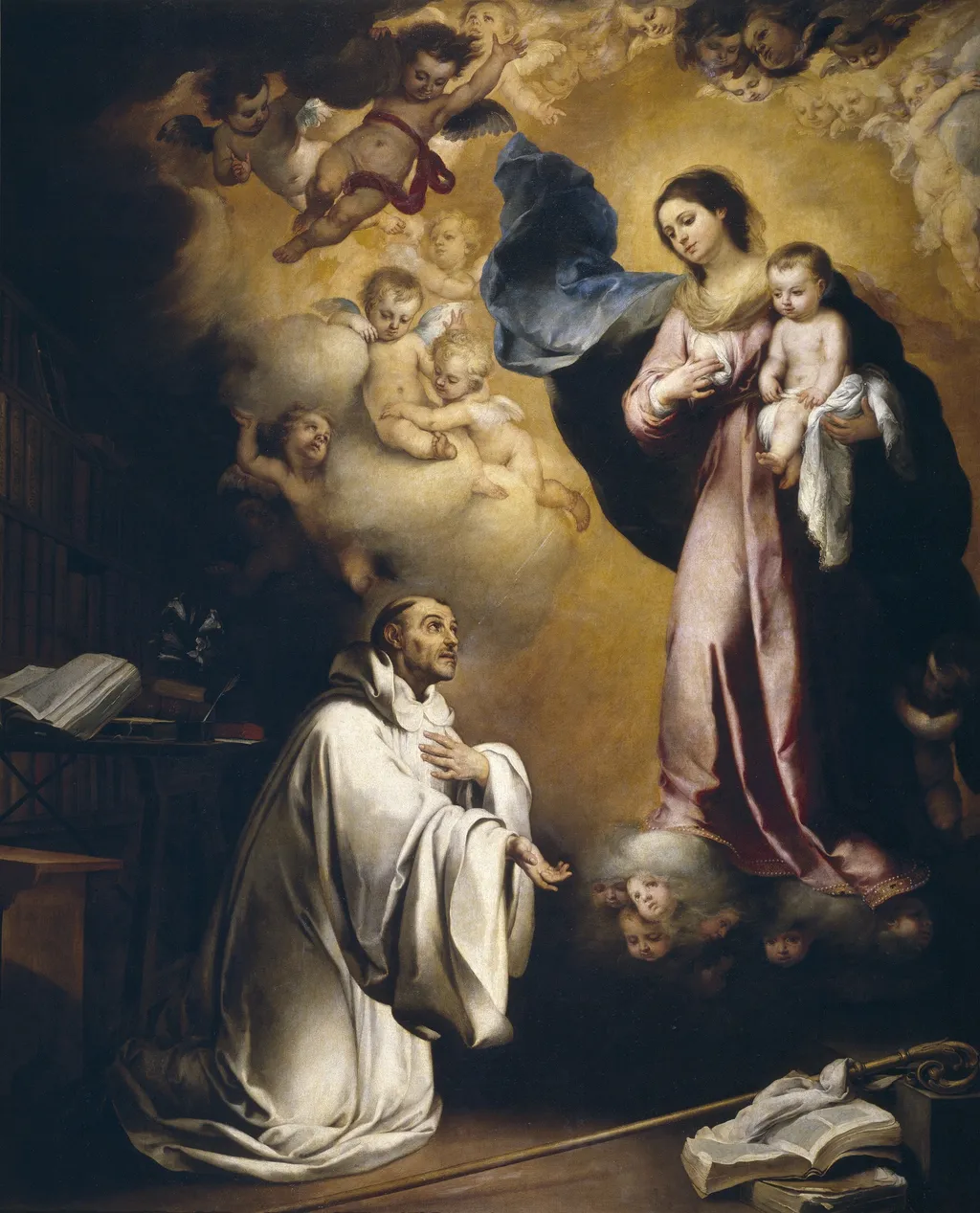
The Apparition of the Virgin to Saint Bernard is an oil painting by the Early Baroque Italian artist Bartolomé Esteban Murillo. It dates from 1655 and is held in the collection of the Museo del Prado.
About this work
Subject & Meaning
Elements such as an open book, crosier and lilies reinforce Catholic iconography, with the lilies specifically representing the Immaculate Conception.
The painting shows a miraculous Marian apparition to the 12th‑century theologian Bernard of Clairvaux, an event known as the Lactatio Bernardi miracle, which symbolizes divine favor toward a devoted scholar. The composition contrasts the monk's study cell with heavenly space, emphasizing spiritual revelation. Elements such as an open book, crosier and lilies reinforce Catholic iconography, with the lilies specifically representing the Immaculate Conception.
The Virgin is rendered in a baroque style and surrounded by angels, highlighting Murillo's emphasis on celestial majesty.
Technique & Style
The Apparition of the Virgin to Saint Bernard is an oil on canvas painting created around 1655. Murillo rendered the composition in a Baroque style, using oil paint on a canvas support to achieve rich color and dramatic chiaroscuro. The work depicts the Virgin Mary appearing to Saint Bernard in a moment of mystical vision, surrounded by angels, with a desk, open book, lilies, crosier, and a pile of books in the background.
The diagonal axis of the composition heightens the contrast between the monk's cell and the heavenly realm. The painting measures 311 cm in height and 249 cm in width, reflecting its large-scale formal presence. Its handling of light and material emphasizes the sacred moment, aligning with Murillo's characteristic blend of devotional intensity and decorative elegance.
History & Provenance
The painting was created in 1655 by Bartolomé Esteban Murillo and is dated to that year in the Prado’s records. It is one of two closely related tenebrist works, paired with The Apparition of the Virgin to Saint Ildefonsus, and is believed to have been commissioned for a Cistercian convent, though no documents confirm the original destination. The first documented appearance of the work is in the 1746 inventory of the Palace of La Granja, indicating its acquisition by Elisabeth Farnese, queen of Spain, around 1730 while the court was based in Seville.
By the early nineteenth century it entered the Spanish royal collection under Ferdinand VII, whose ownership is recorded before the painting’s transfer to the Museo del Prado in Madrid, where it remains.
The painting is held in the collection of the Museo del Prado in Madrid. It was first inventoried in 1746 at the Palace of La Granja, suggesting acquisition by the Queen of Spain around 1730 during Philip V's royal court in Seville. The work was later owned by Ferdinand VII of Spain and Elisabeth Farnese.
Context
The painting The Apparition of the Virgin to Saint Bernard by Bartolomé Esteban Murillo is recognized as a significant example of tenebrist religious art from the Spanish Golden Age. It was likely commissioned as an altarpiece for a Cistercian convent and first recorded in 1746 at the Palace of La Granja, suggesting an earlier acquisition by the Spanish court near 1730. Art historians debate its creation date, proposing a range between before 1655 and up to 1670, though it is generally associated with Murillo's mature period.
The work depicts the Lactatio Bernardi miracle, showing the Virgin Mary appearing to Saint Bernard of Clairvaux during study, rendered in a baroque style with dramatic lighting and symbolic elements such as lilies representing the Immaculate Conception. It is housed in the Museo del Prado in Madrid, where it remains part of the permanent collection.
Overview
Bartolomé Esteban Murillo’s oil on canvas, dated around 1655, is part of the Museo del Prado’s collection in Madrid. The work captures a moment of divine intervention, portraying the Virgin Mary appearing to the 12th‑century Cistercian monk Saint Bernard of Clairvaux while he is immersed in study. The composition centers on Bernard’s kneeling figure, with his scholarly materials arranged in the background.
Own this work as a print
Artist & collection
Artist
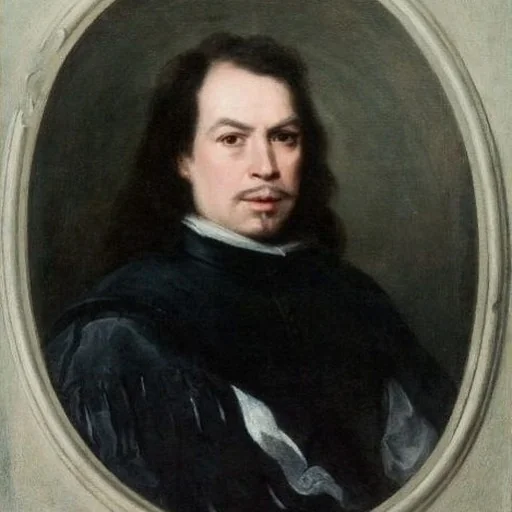
Bartolomé Esteban Murillo ( mure-IL-oh, m(y)uu-REE-oh, Spanish:; late December 1617, baptised 1 January 1618 – 3 April 1682) was a Spanish Baroque painter.

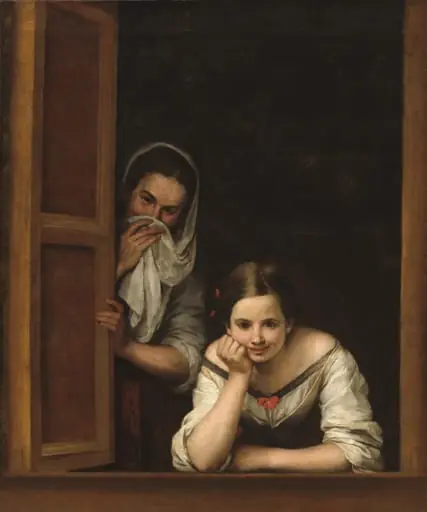
 Lactatio of Saint Bernard of Clairvaux
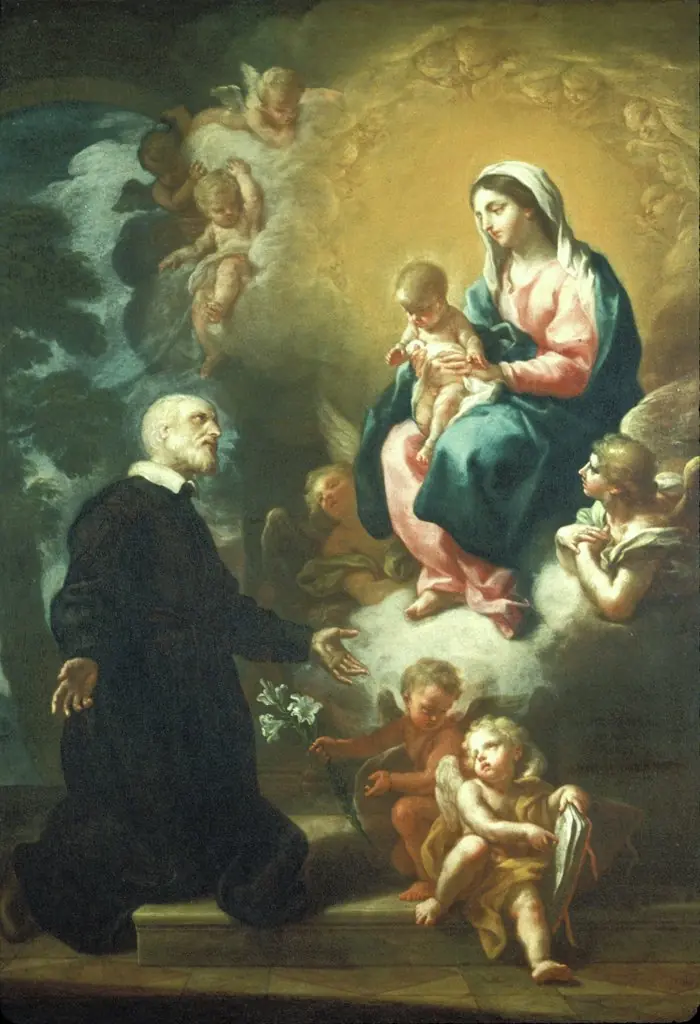
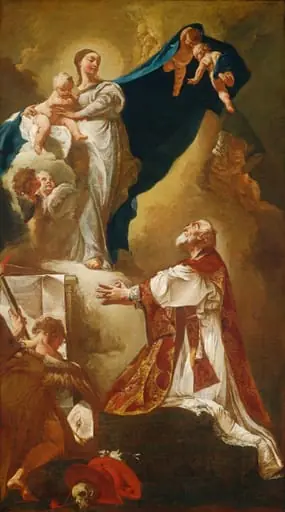 Madonna and Child Appearing to Saint Philip Neri
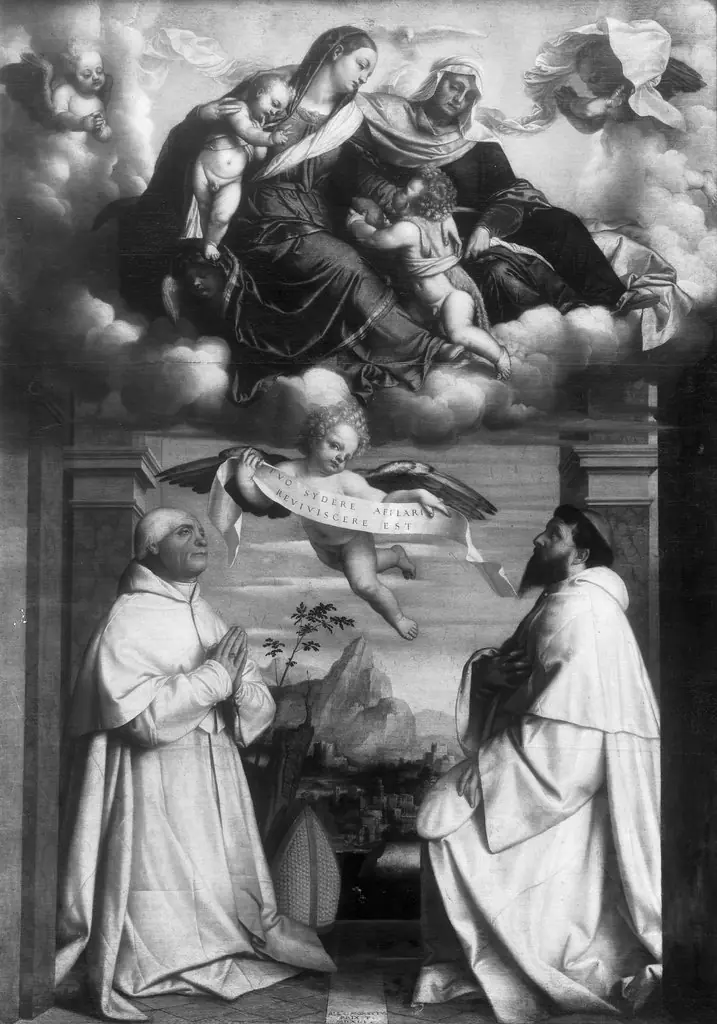 Mary, Elisabeth, the child and the young st. John in glory, adored by two monks in white religious costume
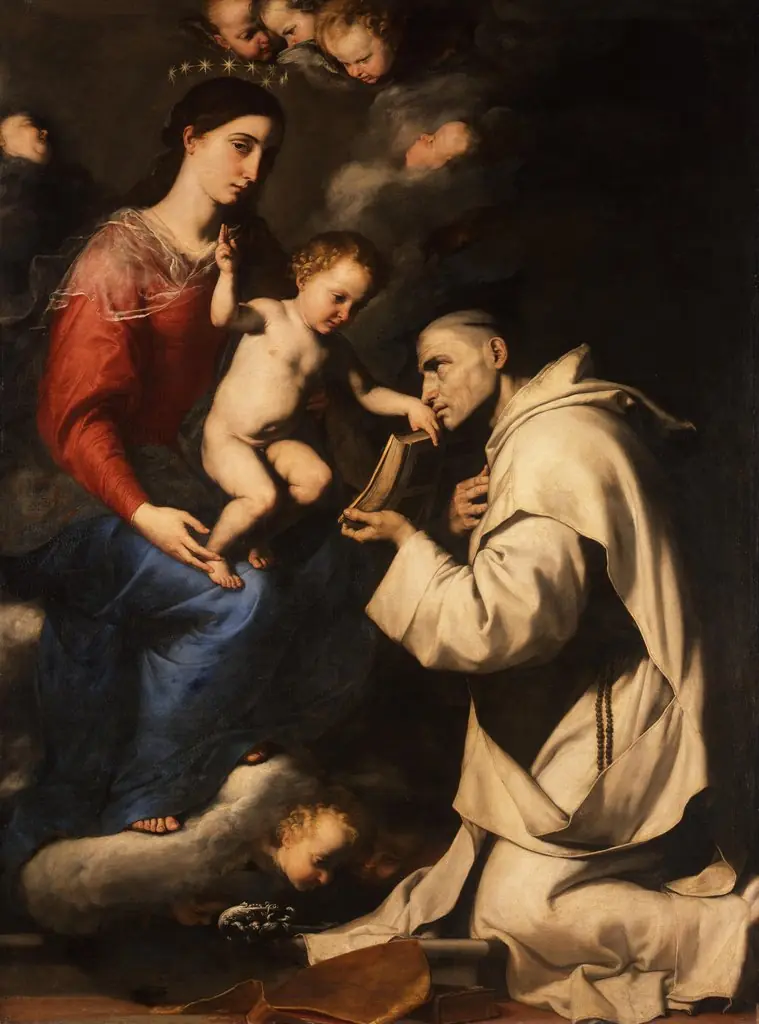 Madonna with the Christ Child and Saint Bruno
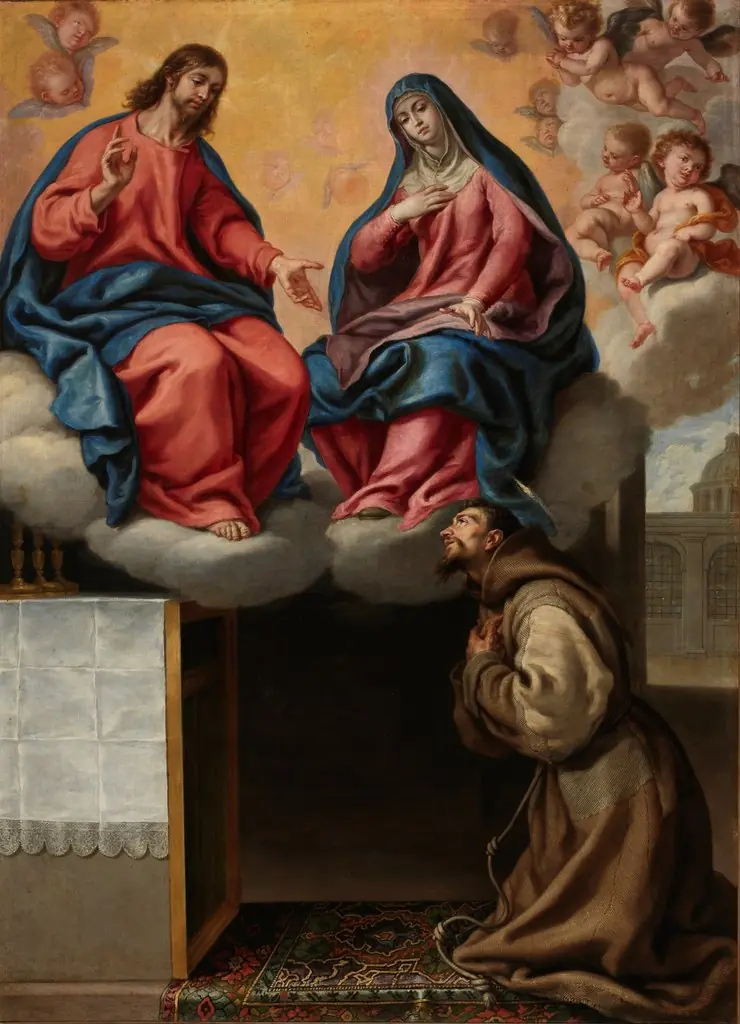 Saint Francis of Assisi in la Porziuncola
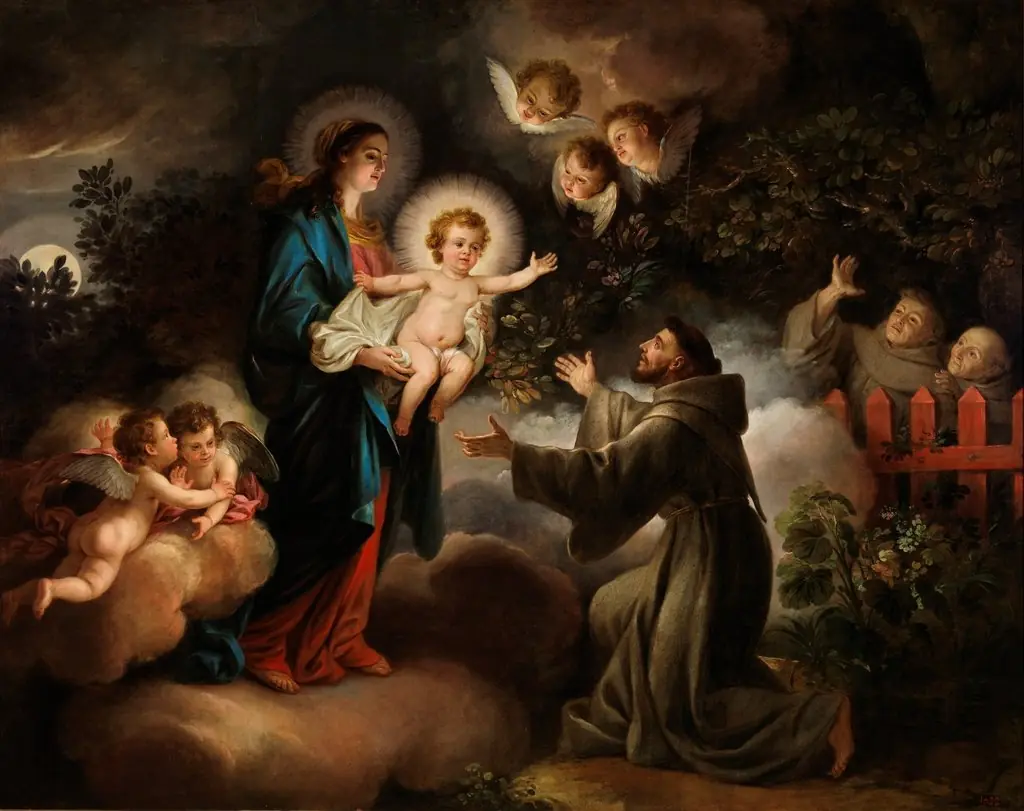 La Aparición de la Virgen a San Francisco
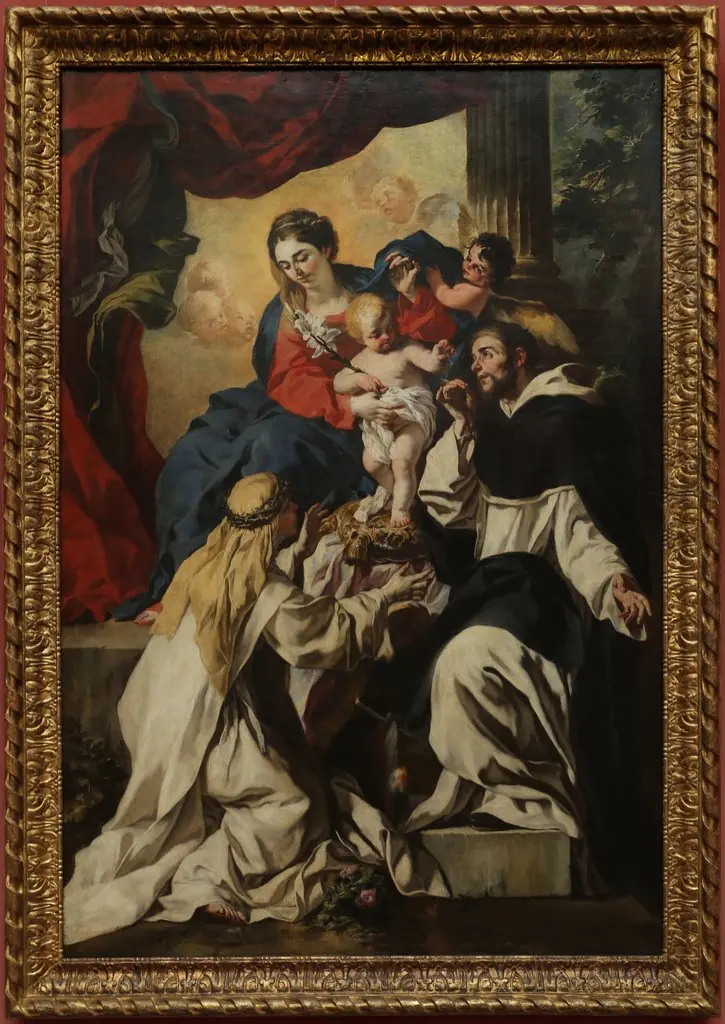 Die thronende Maria mit dem Kind, dem Heiligen Dominikus und der Heiligen Katharina von Siena (Rosenkranzmadonna)
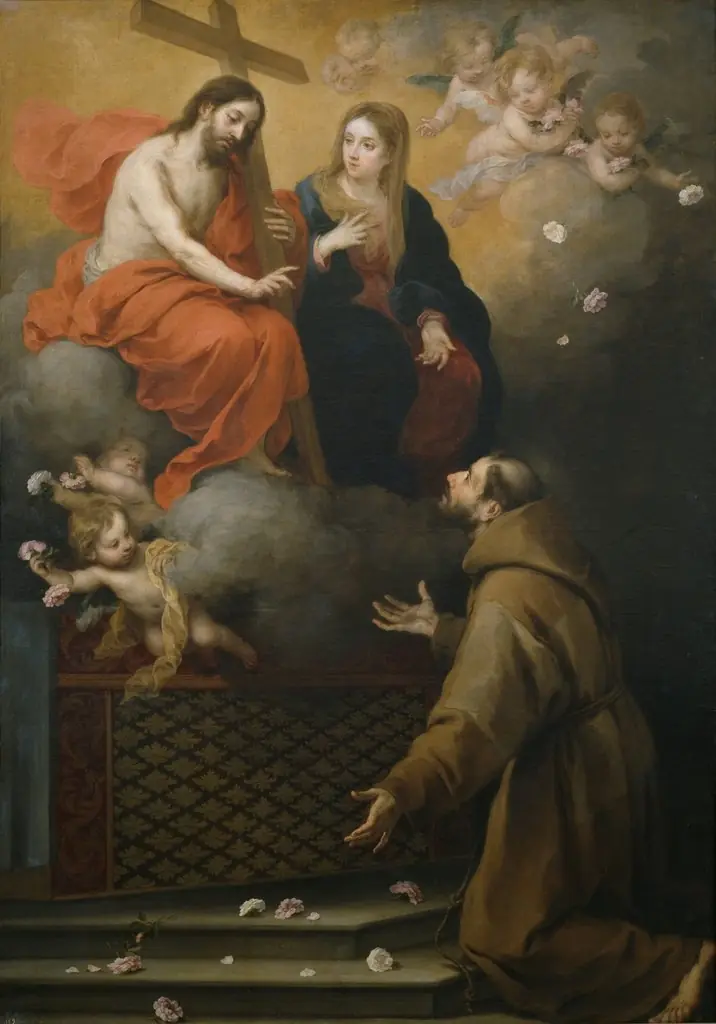 The Vision of Saint Francis in the Portiuncula
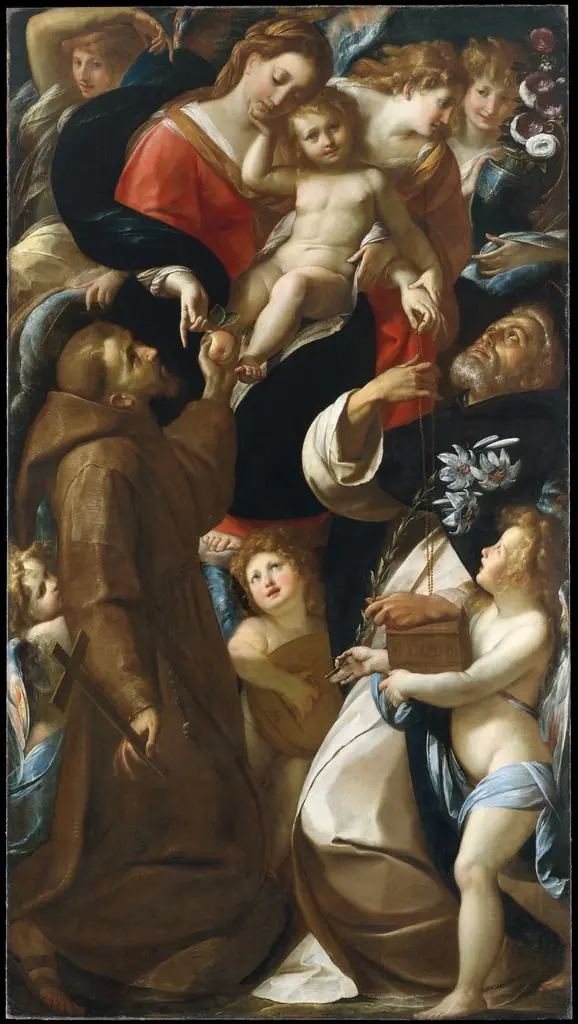 Madonna and Child with Saints Francis and Dominic and Angels