Artwork
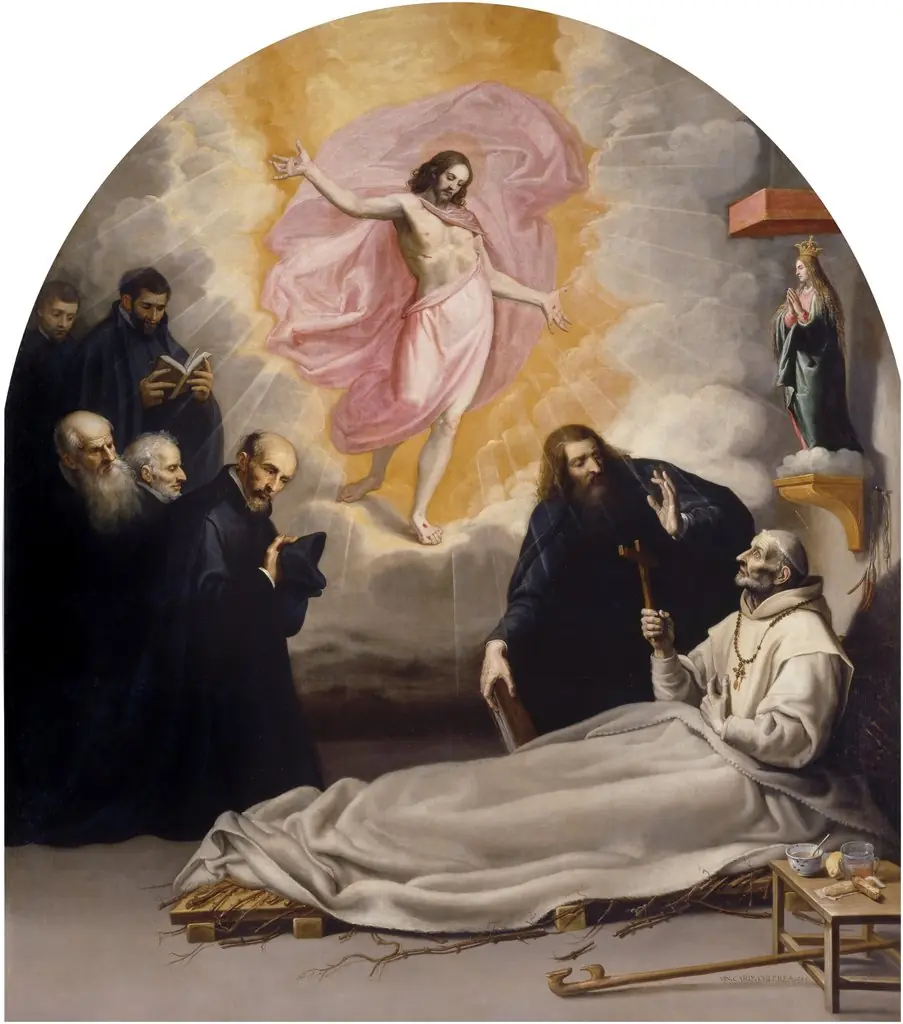
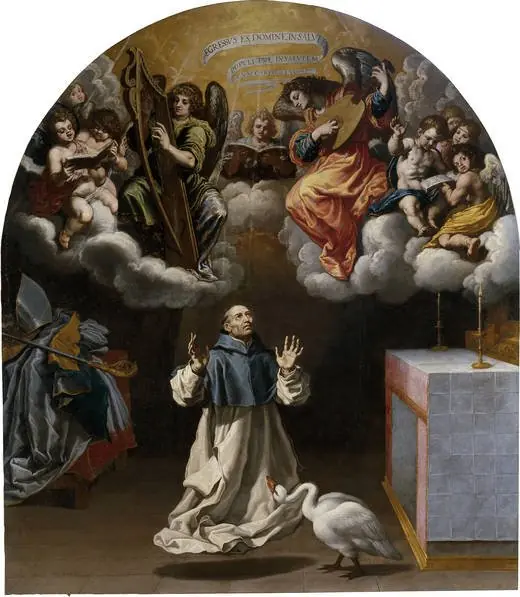
The Vision of Dionisio Rickel The Carthusian
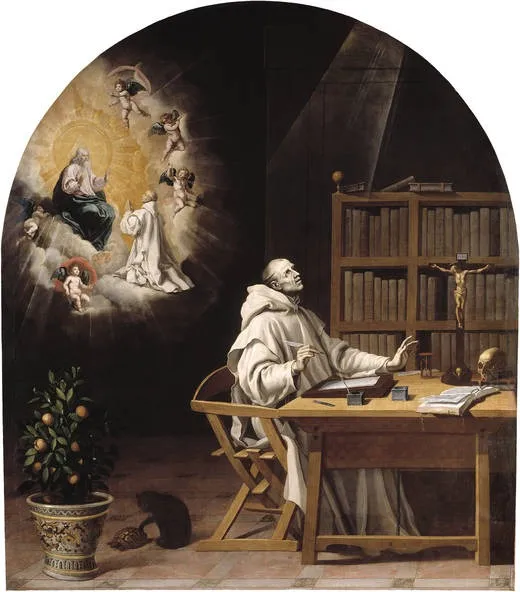
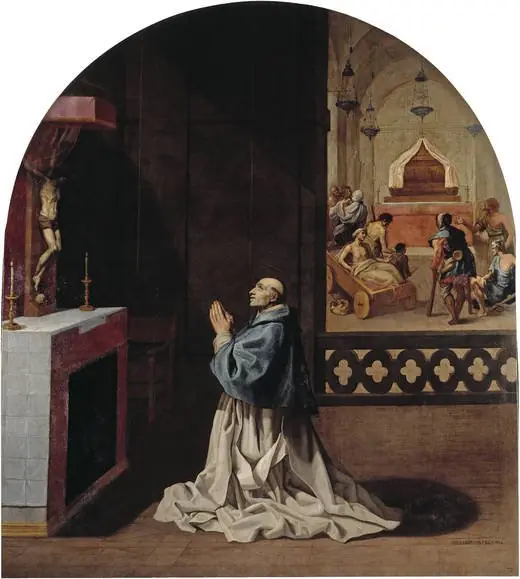
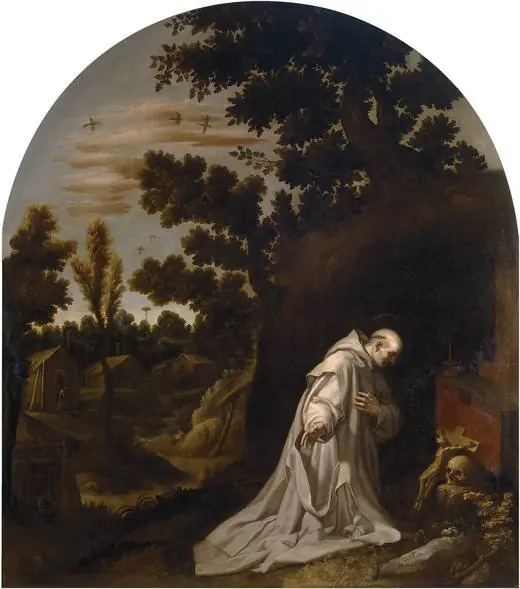
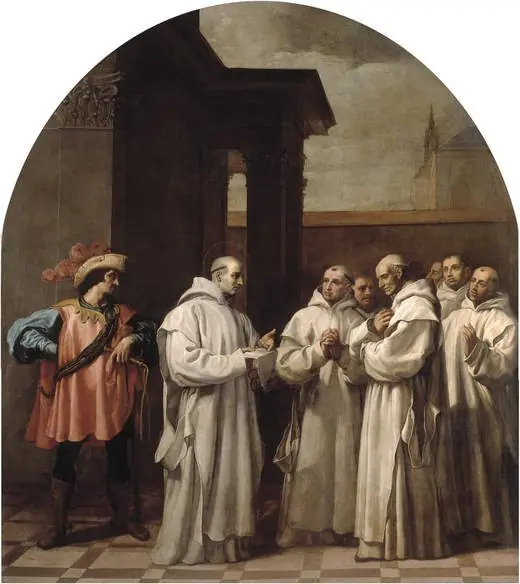
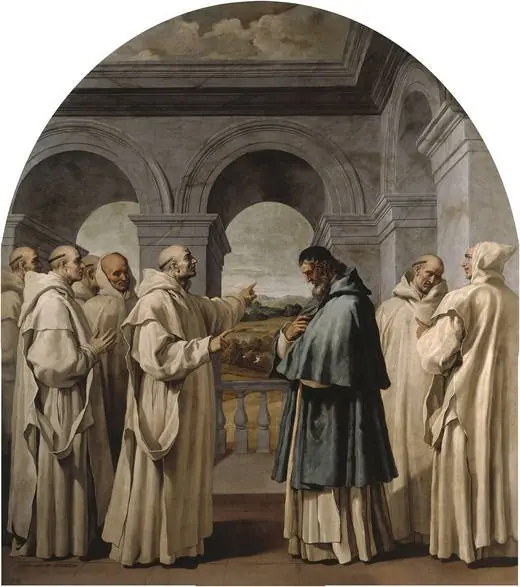
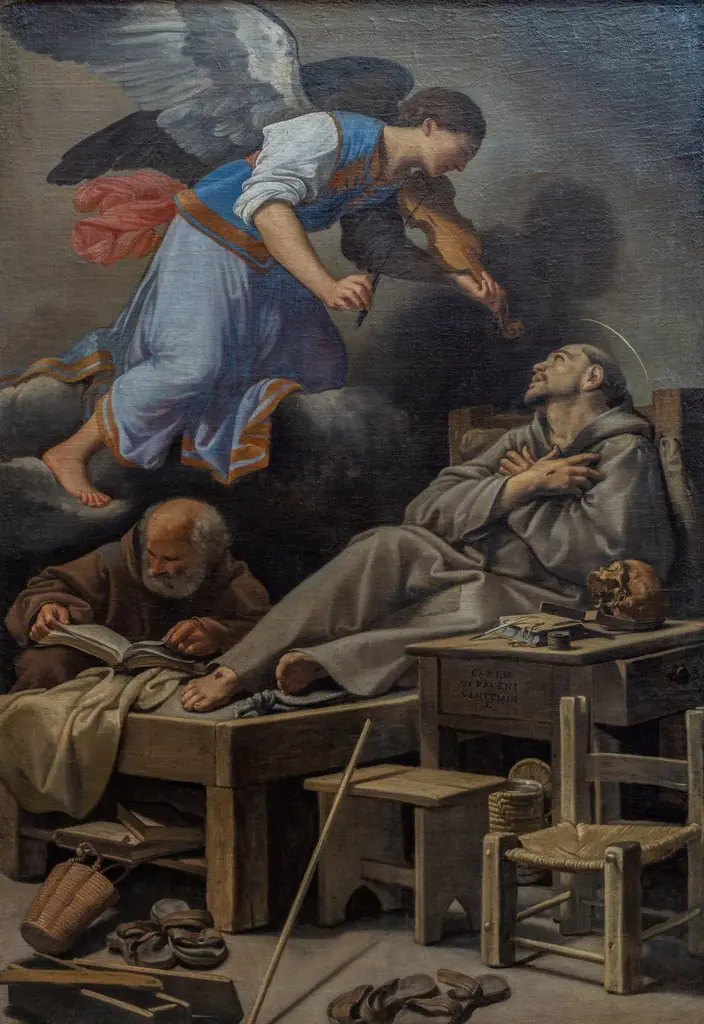
The Vision of Dionisio Rickel The Carthusian is an oil painting by the Early Baroque Italian artist Vincenzo Carducci. It dates from 1626 and is held in the collection of the Museo del Prado.
About this work
Subject & Meaning
The painting represents a Carthusian monk in ecstatic vision, identified as Dionisio Rickel, who kneels before a visionary apparition of the Virgin and Child.
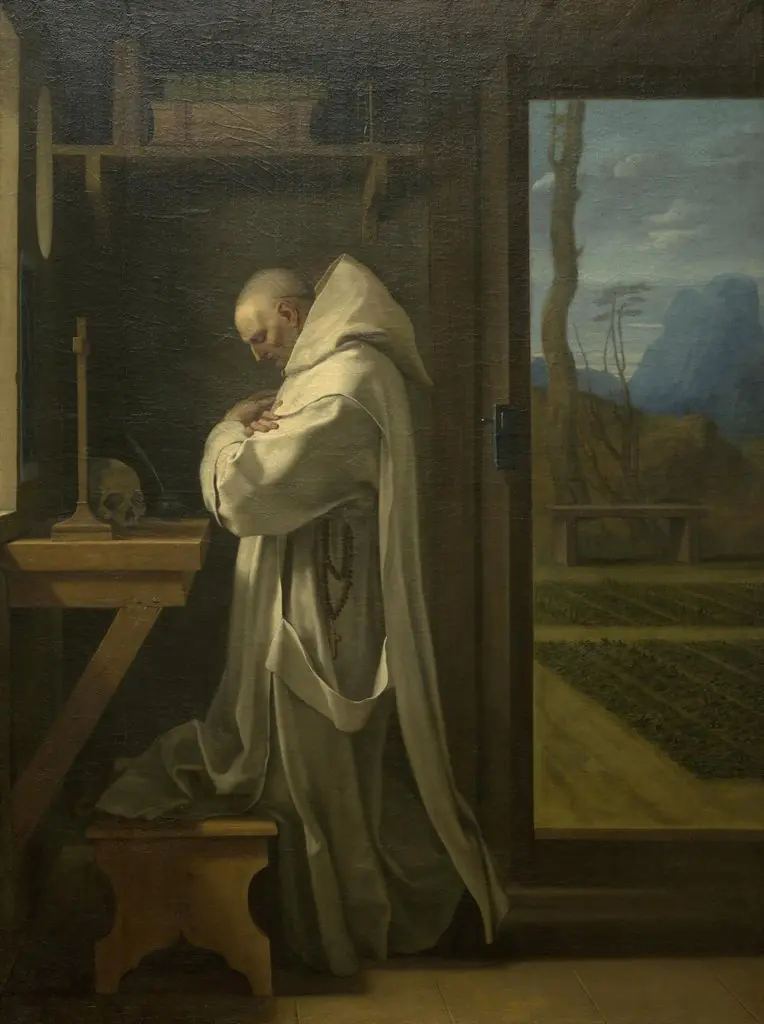
The painting represents a Carthusian monk in ecstatic vision, identified as Dionisio Rickel, who kneels before a visionary apparition of the Virgin and Child. Behind him, a skull, book, inkwell, and hourglass rest on a draped table, signaling mortality, study, and the fleeting nature of earthly life. The Virgin and Child appear above a radiant cloud, underscoring the intersection of divine grace and monastic contemplation.
These elements together convey the Carthusian ideal of solitary prayer and the memento mori tradition, where earthly objects remind the viewer of spiritual priorities.
Technique & Style
The Vision of Dionisio Rickel The Carthusian is executed in oil paint on canvas, measuring 336.5 cm in height by 297.5 cm in width. The handling aligns with the tenebrist tradition of the period, employing strong chiaroscuro to heighten the spiritual intensity of the scene.
The composition centers on a seated Carthusian monk, Saint Bruno, whose visionary state is conveyed through symbolic objects, a skull, open book, inkwell, and hourglass, arranged with deliberate clarity against a dark background. The brushwork is controlled, with smooth transitions in the modeling of the figure and precise detailing in the rendering of the monk’s habit and the still-life elements.
History & Provenance
The painting titled The Vision of Dionisio Rickel The Carthusian was created by Vincenzo Carducci, also known as Vicente Carducho. While some records suggest an inception date of January 1, 1626, the work is also associated with the year 1629. Executed in oil on canvas, the large-scale religious work measures 336.5 cm in height and 297.5 cm in width.
The piece depicts religious iconography including a skull, book, inkwell, and hourglass. It is currently held in the collection of the Museo del Prado in Madrid, having previously been part of the Museo de la Trinidad.
Context
Vincenzo Carducci's 1626 painting The Vision of Dionisio Rickel The Carthusian entered scholarly discourse through its inclusion in early 20th-century art historical surveys examining Counter-Reformation religious imagery. Its religious genre and use of symbolic objects like the skull and hourglass reflect Baroque-era theological preoccupations with mortality and divine vision, situating it within broader European trends of mystical representation in art. The work's attribution to Carducci, a Sienese painter active in the early 17th century, connects it to regional artistic networks in Italy while its presence in major museum collections such as the Museo del Prado underscores its recognized significance in art historical narratives.
Legacy
The Vision of Dionisio Rickel The Carthusian has been recognized for its dramatic chiaroscuro and symbolic composition within Counter‑Reformation religious painting. Art historians cite its influence on later Baroque depictions of martyrdom and contemplative themes, noting its integration of emblematic objects such as the skull and hourglass as moralizing motifs. Reproductions in scholarly catalogues have reinforced its reputation as a pivotal example of Spanish tenebrismo, and the work continues to be referenced in studies of 17th‑century visual allegory.
Overview
Vincenzo Carducci, an Italian artist active in Spain, painted The Vision of Dionisio Rickel the Carthusian in 1626. Executed in oil on canvas, the work belongs to the early Baroque period and is classified as a religious composition. It is part of the Museo del Prado’s permanent collection.
Artist & collection
Artist
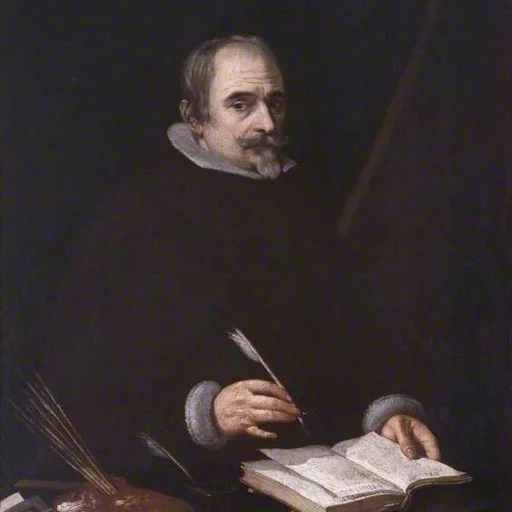
Vincenzio Carduccio (in Spanish, sometimes Vicencio or Vicente Carducho; 1576 or 1578–1638) was an Italian painter who spent his career in Spain.