Artwork
Place Vintimille
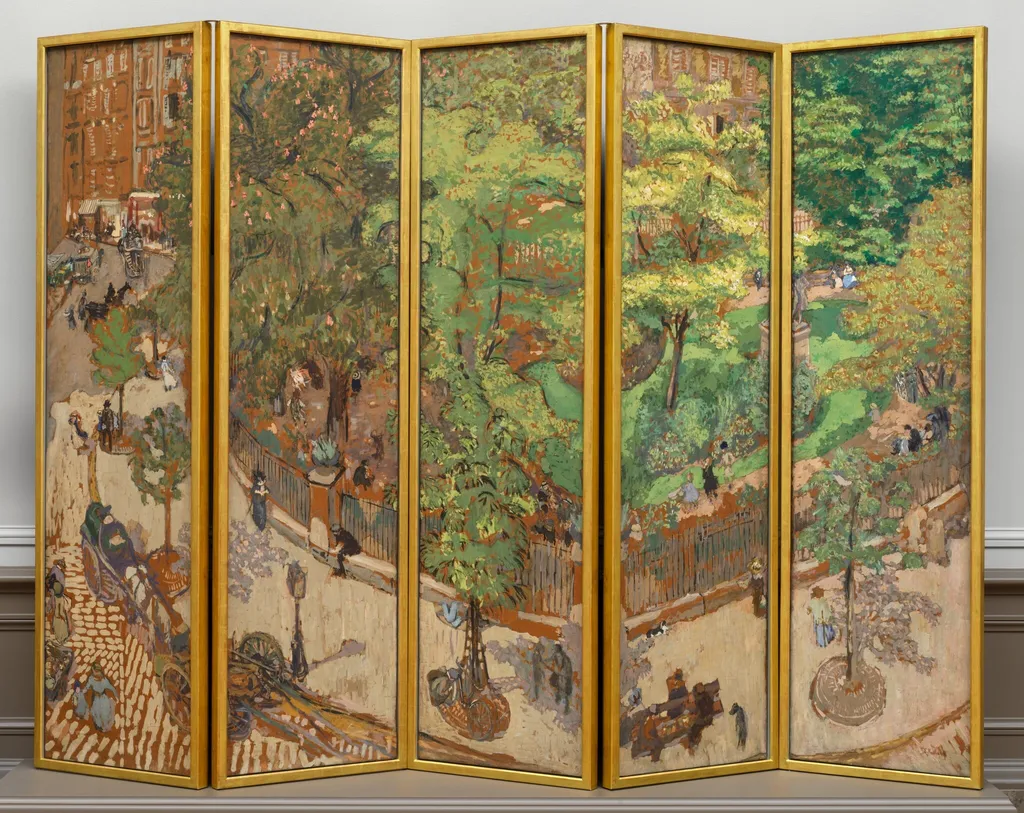
Place Vintimille is a distemper painting by the Post-Impressionist artist Édouard Vuillard. It dates from 1911 and is held in the collection of the National Gallery of Art.
- Inscription
- Inscribed:lower right, far right panel: E. Vuillard
About this work
Technique & Style
The work is classified as a painting within the National Gallery of Art's holdings, where it entered the collection in 1998 as a gift from Enid Annenberg Haupt.
Place Vintimille is a five-panel screen executed in distemper on paper laid down on canvas, a technique characteristic of Vuillard's decorative commissions of the period. The use of distemper, a matte, fast-drying paint bound with glue or casein, applied to paper and then mounted on canvas would have produced the soft, atmospheric surface and muted tonalities associated with his work. The multi-panel screen format allowed for a continuous panoramic composition, with the depiction of trees integrated across the joined panels to create a unified urban landscape.
The work is classified as a painting within the National Gallery of Art's holdings, where it entered the collection in 1998 as a gift from Enid Annenberg Haupt.
History & Provenance
Place Vintimille was commissioned in 1911 by Marguerite Chapin, later Princess of Bassiano, who retained it until at least 1924 and lent it to that year's Paris exhibition. By 1938 the five-panel screen had passed to Albert Sancholle Henraux of Paris, who still owned it in 1945. The work entered the collection of Mrs. Enid Annenberg Haupt of New York by 1973; she gave it to the National Gallery of Art in 1998.
Place Vintimille is held by the National Gallery of Art in Washington, D.C., where it entered in 1998 as a gift from Mrs. Enid Annenberg Haupt, who had acquired the work by 1973. The screen's exhibition history traces back to its commission by Marguerite Chapin (later Princess of Bassiano), who lent it to a 1924 exhibition in Paris. By 1938 it was lent to a Paris exhibition by Albert Sancholle Henraux, who owned the work by that year and retained it until at least 1945.
Overview
Édouard Vuillard's Place Vintimille, created in 1911, is a distinctive five-panel screen rendered in distemper on paper mounted on canvas. This painting captures a serene Parisian street scene, characterized by its muted palette and soft forms. As a decorative artwork, it reflects Vuillard's ongoing exploration of spatial and chromatic effects, continuing themes from his earlier association with Les Nabis.
Subject & Meaning
The artwork depicts a tranquil corner of a Parisian street, featuring a prominent tree alongside various architectural elements. Vuillard renders the scene without sharp outlines, instead using gentle patches of color to evoke a calm atmosphere. This focus on an everyday urban landscape, transformed through a decorative lens, exemplifies the artist's interest in subtle visual experiences.
Context
Created over a decade after the dissolution of Les Nabis, the avant-garde group Vuillard belonged to from 1891 to 1900, Place Vintimille demonstrates his sustained commitment to decorative art. While the Nabis championed a departure from naturalistic representation, Vuillard continued to explore spatial arrangements and patterns, applying these principles to both intimate interiors and, as seen here, exterior urban views.
Own this work as a print
Artist & collection
Artist
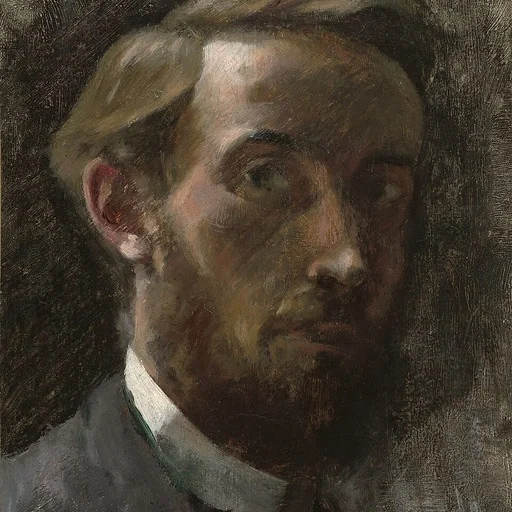
Jean-Édouard Vuillard (French:; 11 November 1868 – 21 June 1940) was a French painter, decorative artist, and printmaker.

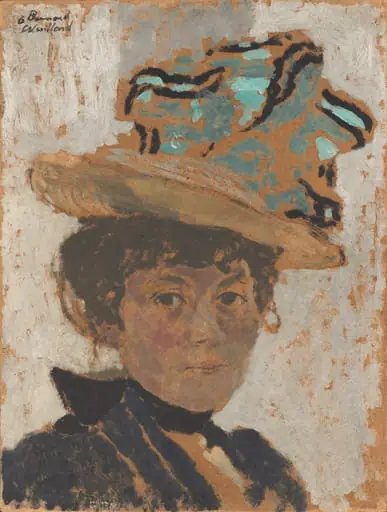
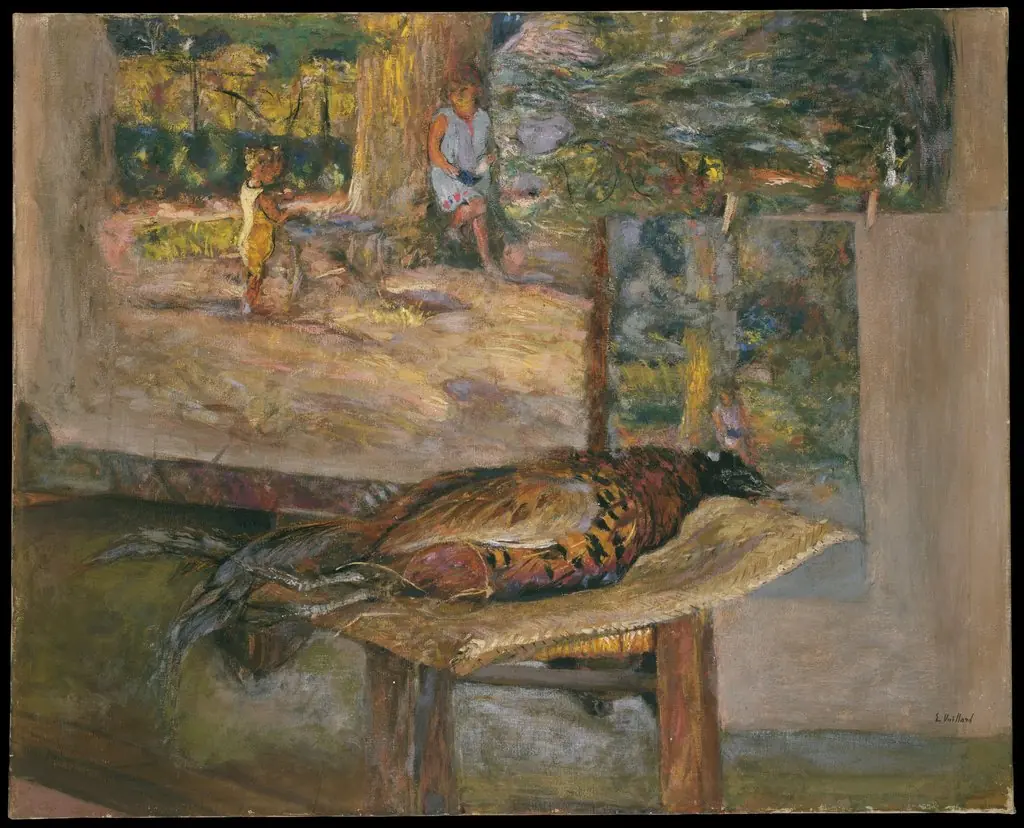
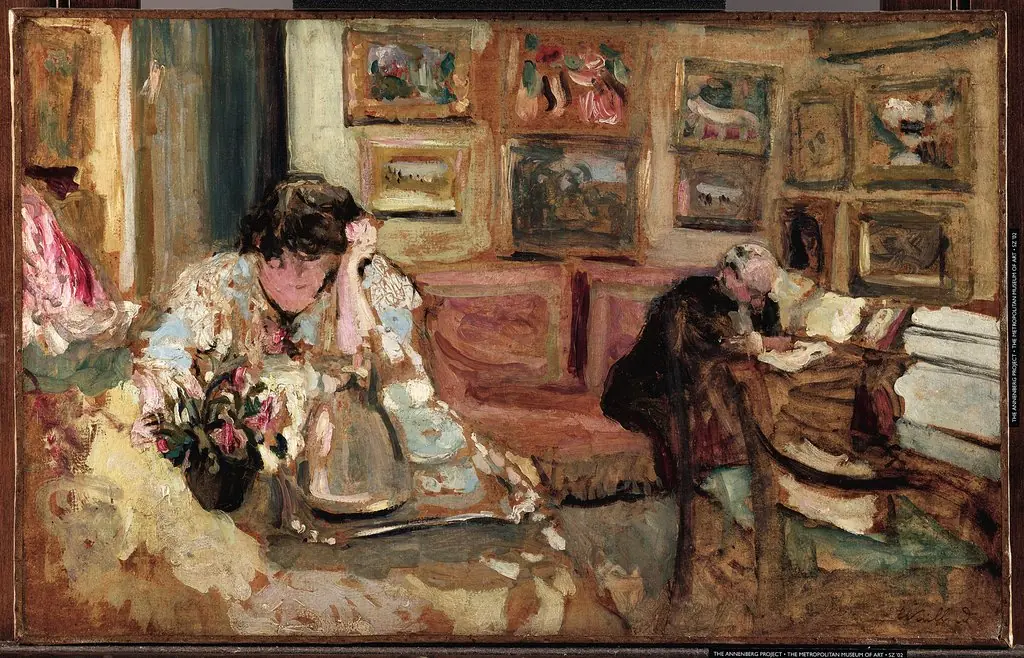
- Foliage—Oak Tree and Fruit Seller
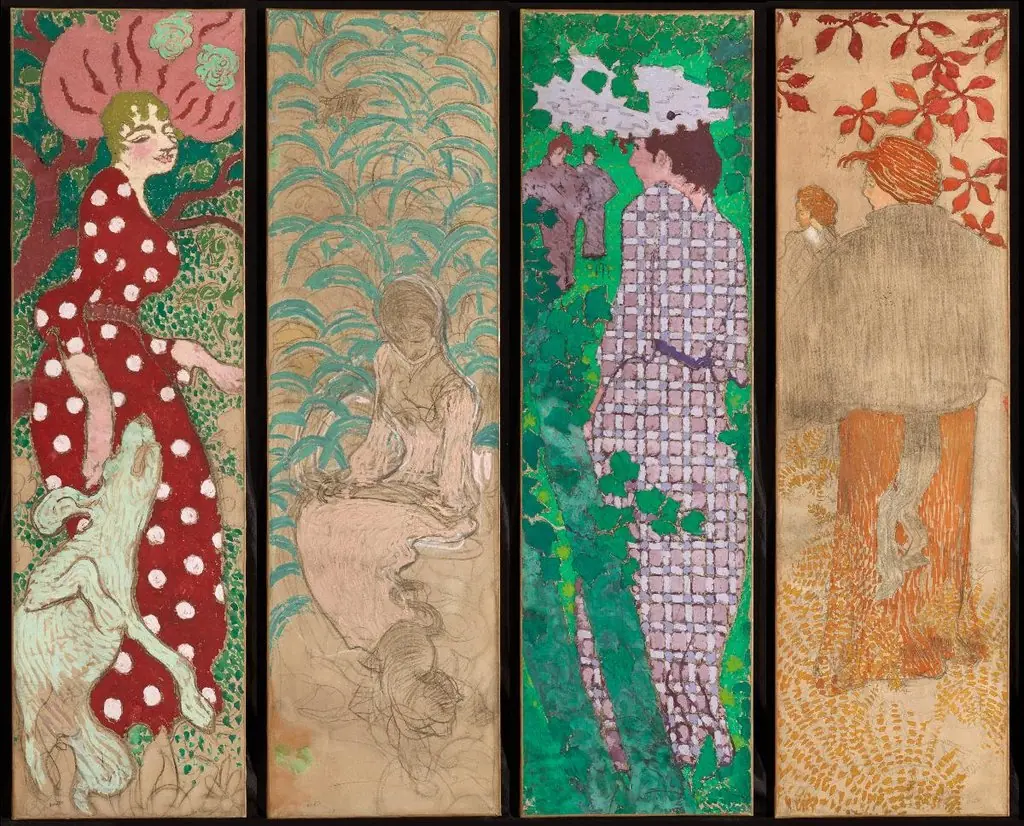 Panneaux décoratifs - Femmes au jardin
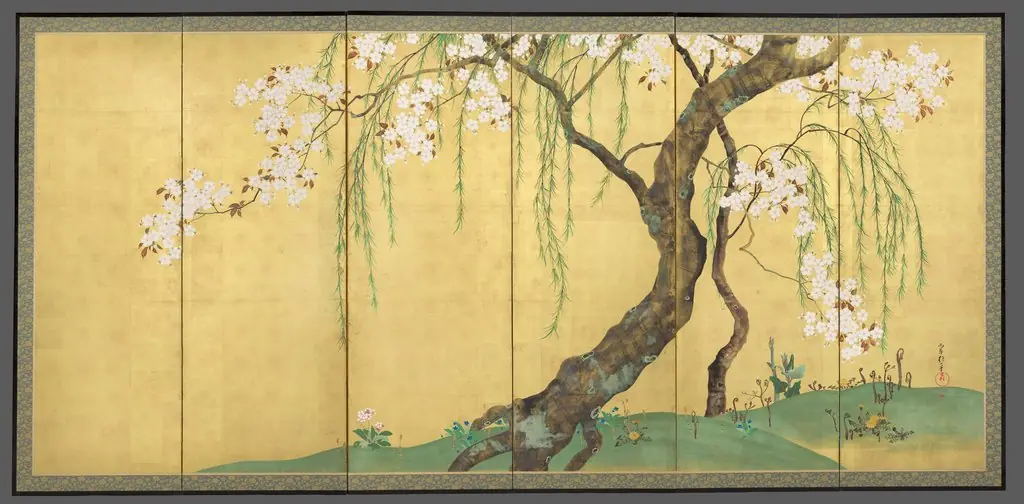 Cherry and Maple Trees
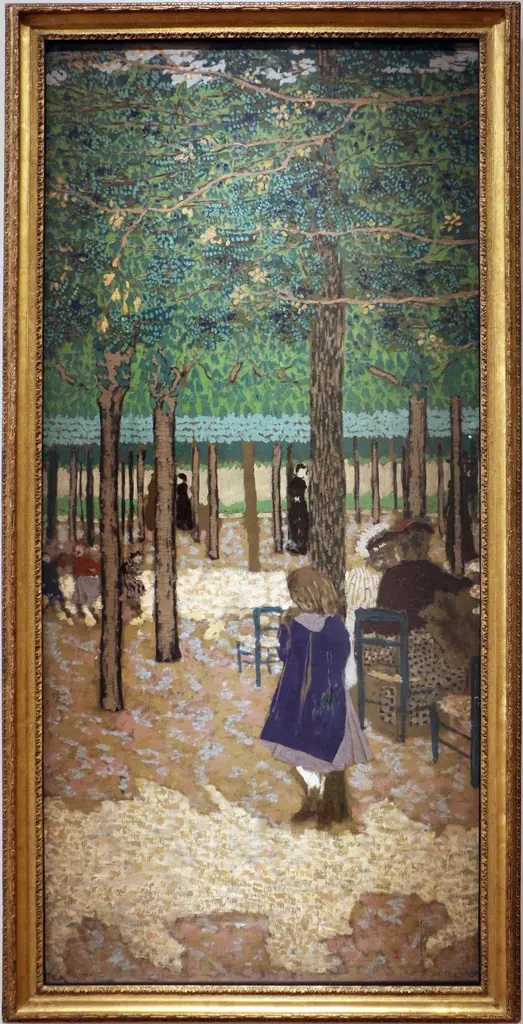 Under the Trees (from "The Public Gardens")
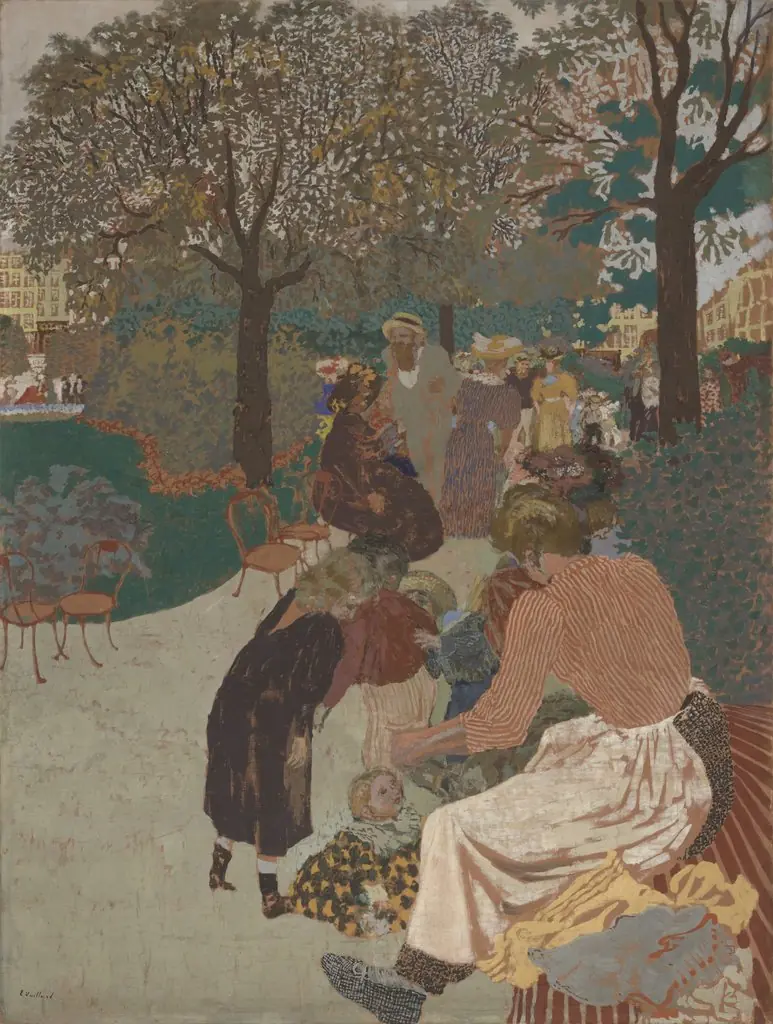 Park
Park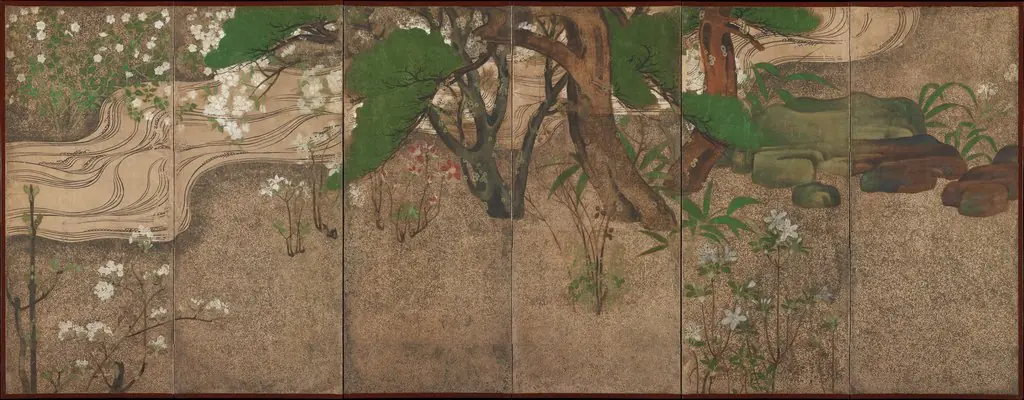 Spring Trees and Grasses by a Stream
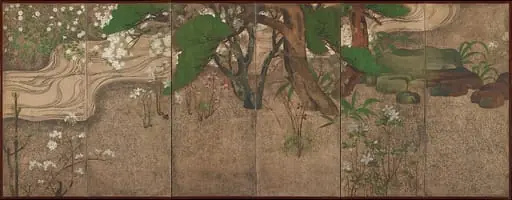 渓流春秋草木図屏風|Spring Trees and Grasses by a Stream
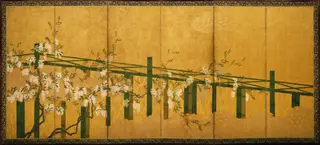 Blue and White Wisteria on a Bamboo Trellis
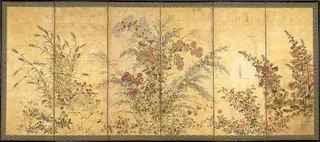 Flowers of All Seasons
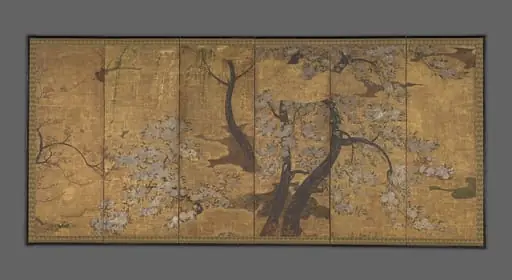 桜梅柳図屏風|Cherry, Plum and Willow Trees
 Anthology of Japanese and Chinese Poems (Wakan rōeishū) with Underpainting of Arrowroot Vines
 Cherry, Plum and Willow Trees