Artwork
Cherry and Maple Trees
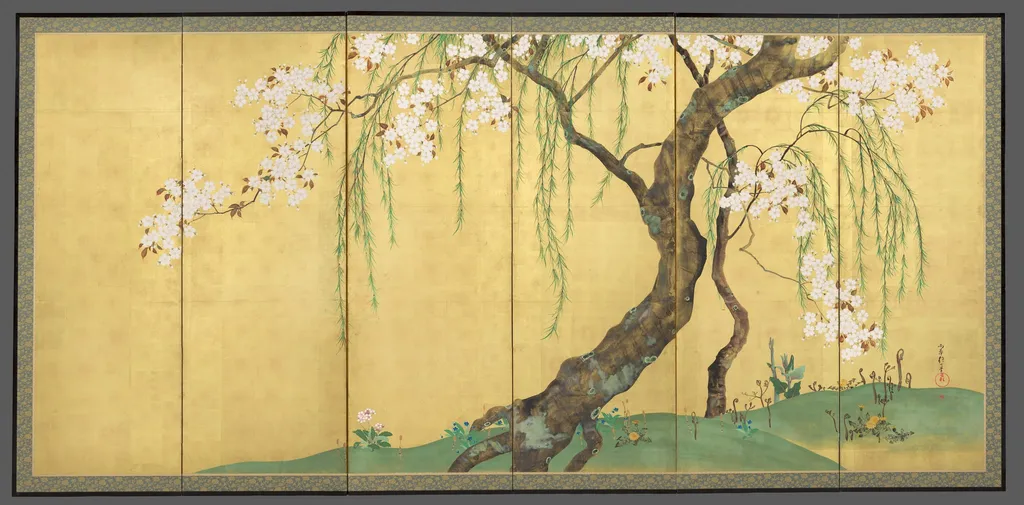
Cherry and Maple Trees is an unspecified painting by the Nihonga artist Sakai Hōitsu. It dates from 1821 and is held in the collection of the Metropolitan Museum of Art.
About this work
History & Provenance
Cherry and Maple Trees, a painting by Sakai Hōitsu dated 1821, is held in the collection of the Metropolitan Museum of Art.
Sakai Hōitsu created the painting Cherry and Maple Trees in 1821 in Japan. The work was completed on January 1, 1821, establishing its definitive date of inception. The piece is currently held in the collection of the Metropolitan Museum of Art.
No specific details regarding the original commission, the identity of the initial patron, or the intermediate ownership chain between its creation and its arrival at the museum are provided in the available records.
Cherry and Maple Trees, a painting by Sakai Hōitsu dated 1821, is held in the collection of the Metropolitan Museum of Art. According to its Wikidata record, the work is located at the Metropolitan Museum of Art and was created in Japan. No accession number is provided in the available sources, and no exhibition history is documented.
The painting entered the Metropolitan Museum of Art's collection, where it remains housed. Beyond this institutional placement, the sourced material does not record specific exhibitions, loans, or display dates.
Overview
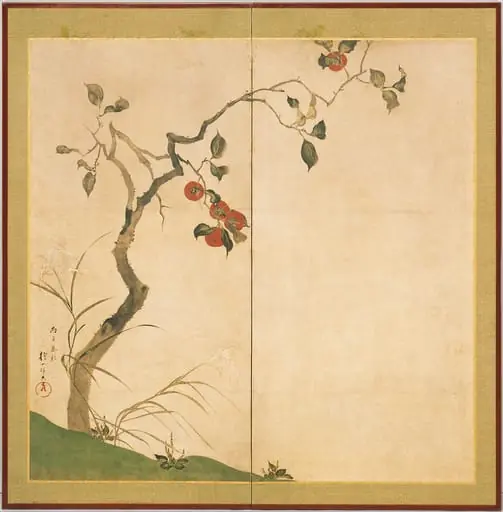
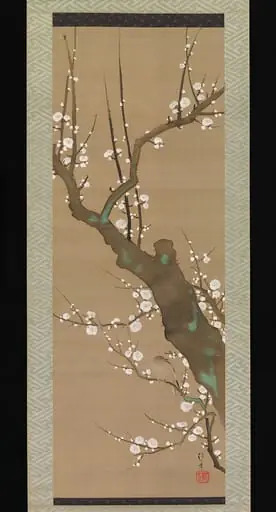
Created in 1821 by the Japanese painter Sakai Hōitsu, this hanging scroll depicts a solitary tree in full blossom. The work is part of the collection of the Metropolitan Museum of Art in New York, where it is displayed as an example of early‑nineteenth‑century Rinpa painting.
Subject & Meaning
The central motif is a single tree bearing white flowers and drooping branches, set against an unadorned gold field. Beneath the trunk a modest green hill supports a few low plants and a pair of birds, suggesting a tranquil, seasonal scene that emphasizes the fleeting beauty of spring.
Technique & Style
Hōitsu employs the characteristic Rinpa approach of flat, decorative surfaces and bold outlines. The gold background, applied with mineral pigments, heightens the contrast of the delicate pink‑white blossoms and deep green foliage. A thin, colored border of blue and green frames the composition, echoing the decorative motifs typical of the school.
Artist & collection


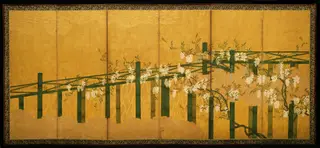 Blue and White Wisteria on a Bamboo Trellis
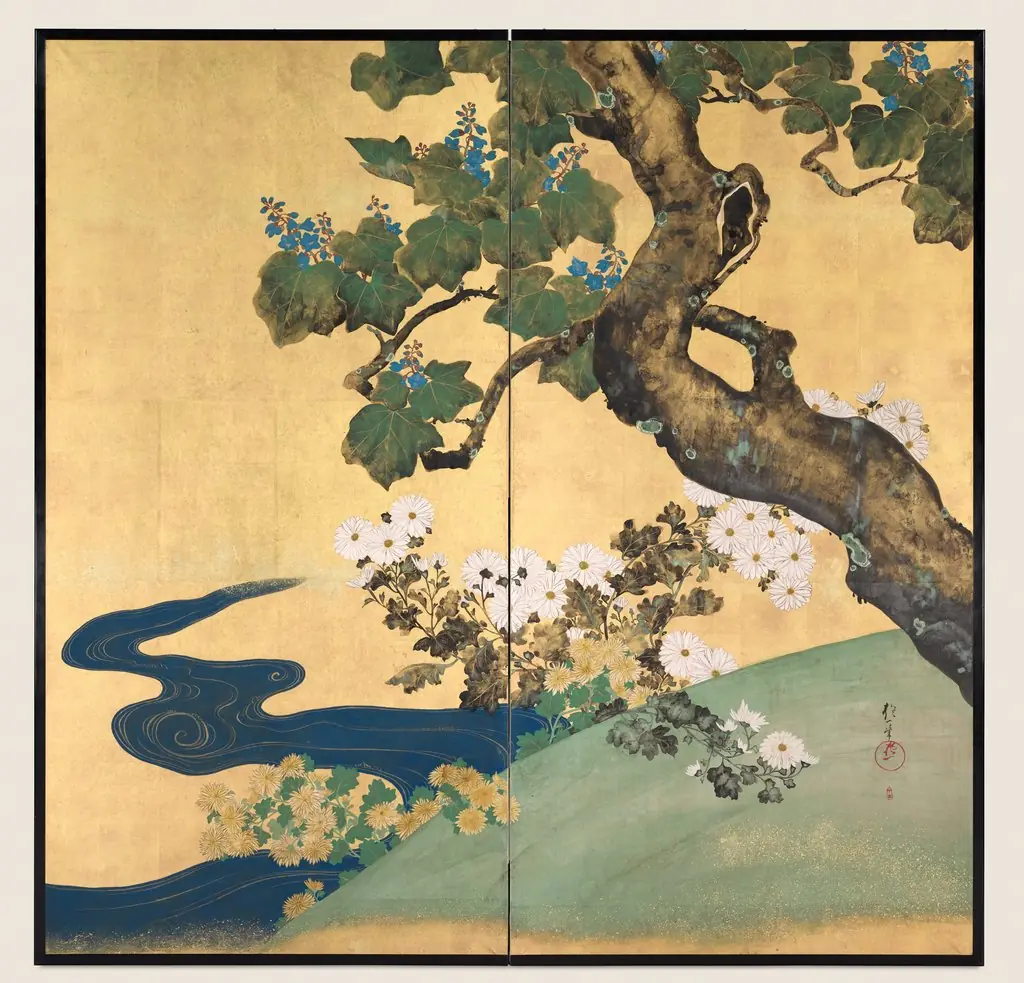 Paulownias and Chrysanthemums
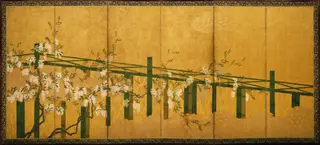 Blue and White Wisteria on a Bamboo Trellis
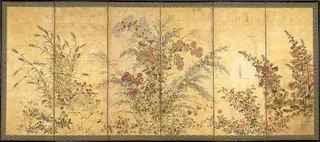 Flowers of All Seasons
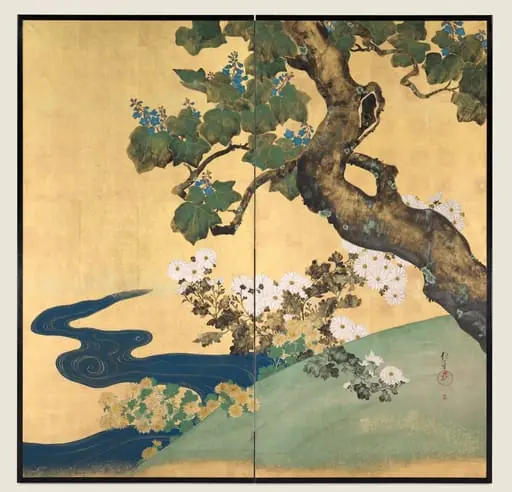 Paulownias and Chrysanthemums
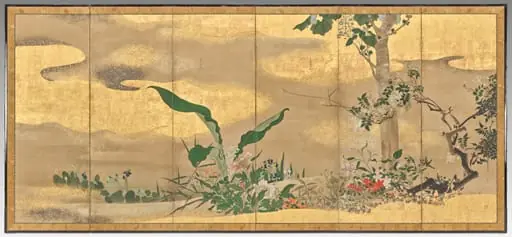 Flowers and Trees of the Four Seasons (right screen)
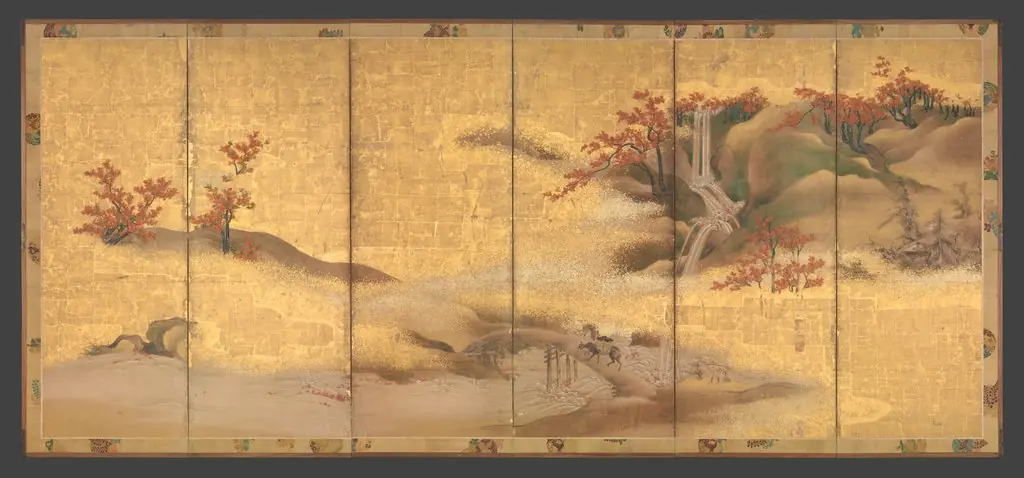 Mountains and Rivers in Autumn
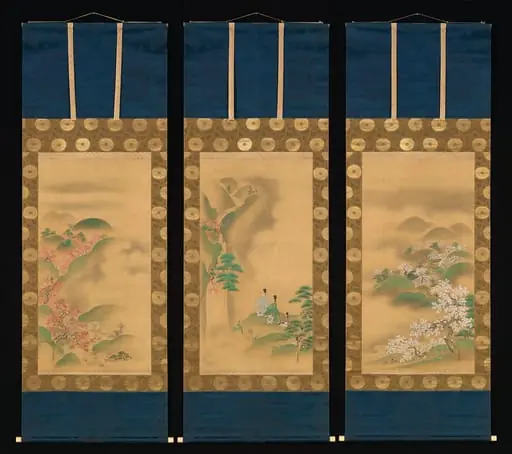 狩野常信筆 滝見業平図|Nunobiki Waterfall, Mount Yoshino, and Tatsuta River
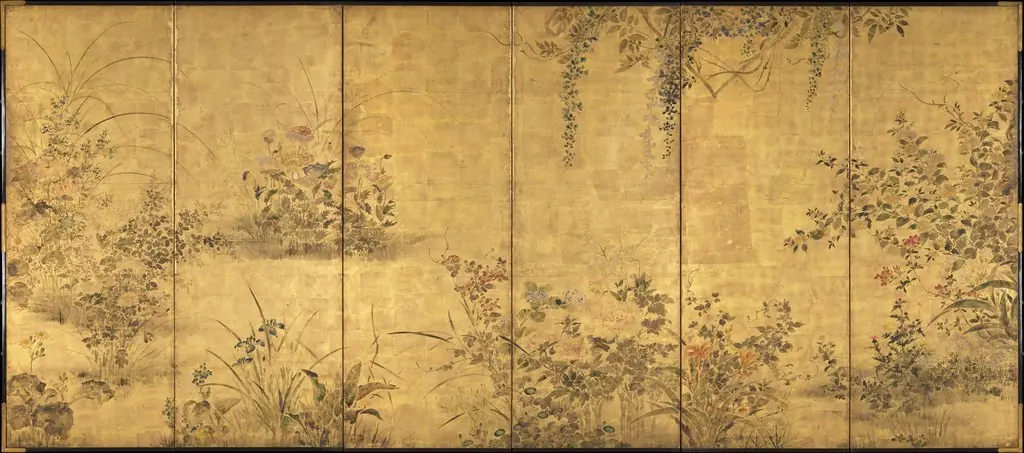 Flowering Plants and Vegetables of the Four Seasons