Artwork
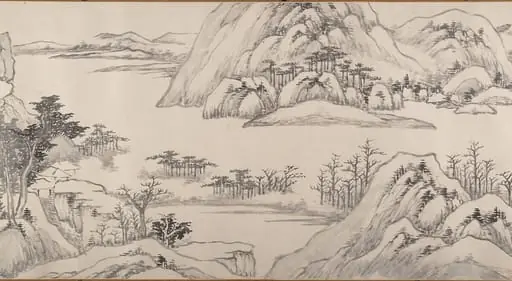
明 王紱 江山漁樂圖 卷|Joys of the Fisherman
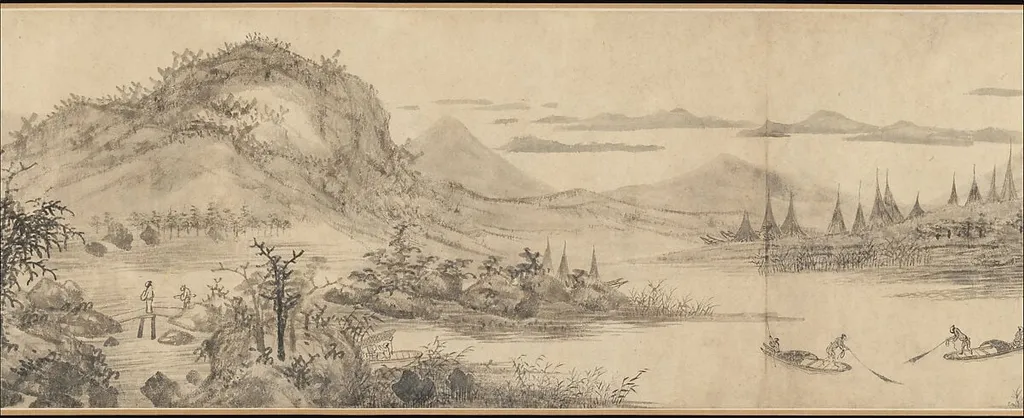
明 王紱 江山漁樂圖 卷|Joys of the Fisherman is an ink painting by the Ming dynasty painting artist Wang Fu. It dates from 1410 and is held in the collection of the Metropolitan Museum of Art.
About this work
Subject & Meaning
The work thus represents the joys of pastoral retreat within the tradition of Chinese landscape painting.
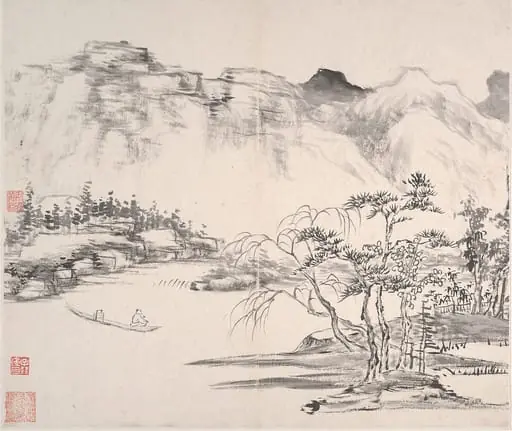
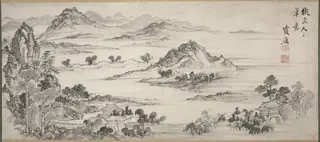
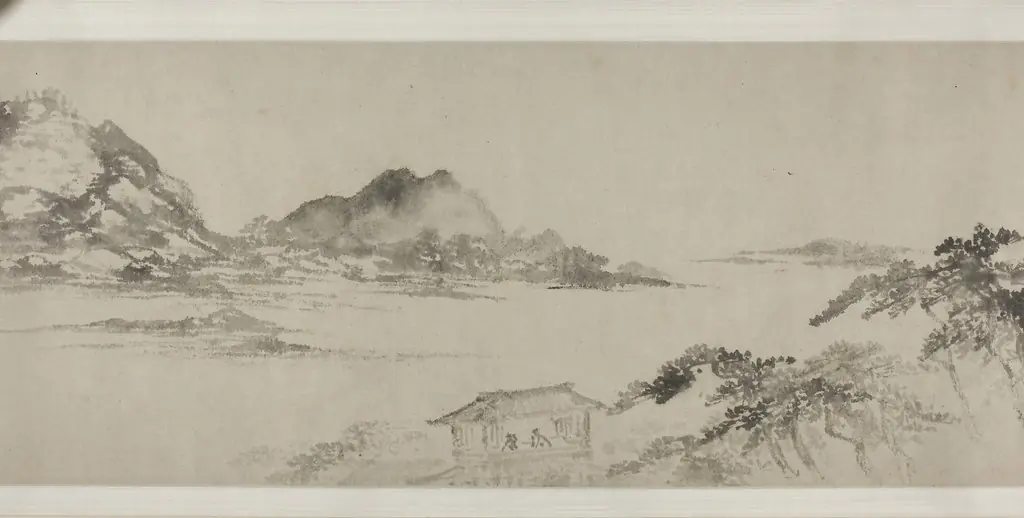
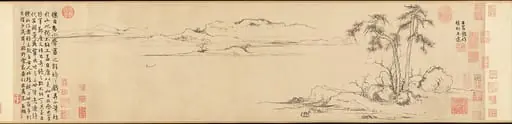
The handscroll Joys of the Fisherman, painted by Wang Fu in 1410, portrays a solitary fisherman in a small boat navigating a tranquil river amid a misty mountain landscape. The composition emphasizes the act of fishing as a peaceful pastime, with the boat and surrounding water underscoring themes of harmony with nature and simple leisure. The title itself signals an idealized vision of rural contentment, while the inclusion of a lone figure in a natural setting reflects Daoist-inspired notions of balance and contentment. The work thus represents the joys of pastoral retreat within the tradition of Chinese landscape painting.
Technique & Style
Wang Fu’s Joys of the Fisherman (1410) is executed as a handscroll in ink on paper, a medium and support typical of Ming-dynasty literati painting [1]. The technique relies on modulated brushwork, ranging from dry, textured strokes for rocky crags to fluid, wet lines for river surfaces, demonstrating the artist’s mastery of ink tonalities without reliance on color [1]. Stylistically, the composition adheres to Northern Song monumental landscape conventions, yet the handling is looser and more calligraphic, reflecting Wang’s individualistic adaptation of earlier models [1]. The scroll remains in stable condition, with no major losses or restorations documented in institutional records [1].
History & Provenance
The handscroll Joys of the Fisherman is held in the collection of the Metropolitan Museum of Art, New York. Its accession number is 1973.121.1, assigned upon acquisition. The painting was exhibited at the Metropolitan Museum of Art in the exhibition Art of the Brush: Chinese Painting and Calligraphy (1974–1975), where it was prominently displayed as part of the museum’s holdings in Chinese painting.
Legacy
Wang Fu’s Joys of the Fisherman (1410) emerged as a seminal work in later Ming and Qing dynasty landscape painting, influencing literati artists who admired its restrained brushwork and poetic evocation of reclusion. By the 17th century, connoisseurs such as Dong Qichang praised the scroll for embodying the ideal of yipin (‘untrammelled’) painting, a category reserved for works that transcended technical precision in favor of expressive spontaneity. The painting’s inclusion in the Shiqu baoji, the imperial Qing catalog, further cemented its canonical status, ensuring its study by court artists and collectors.
Modern exhibitions, including its display at the Metropolitan Museum of Art, have reinforced its reputation as a touchstone of early Ming literati aesthetics, often cited in surveys of Chinese landscape traditions.
Overview
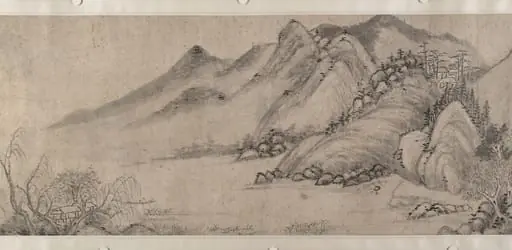
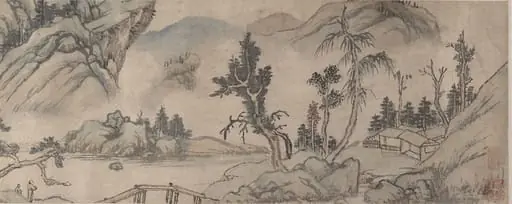
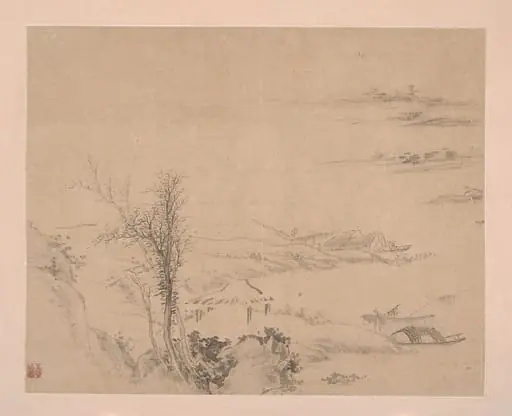
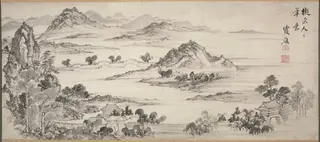
The handscroll Joys of the Fisherman by Wang Fu, rendered in ink on paper, presents a panoramic view of a river landscape. It depicts a winding waterway flanked by misty mountains, populated by small figures of fishermen engaged in their daily activities, both in boats and along the shore. This painting, created in the early 15th century, captures a serene vision of nature and human interaction.
Context
Created in the early 15th century, Joys of the Fisherman stands apart from the prevailing artistic trends of its era. While many contemporary painters focused on emulating established old masters, Wang Fu distinguished himself by observing natural landscapes directly. His approach prioritized capturing the authentic character and atmosphere of real rivers and mountains, offering a fresh perspective during a period often characterized by stylistic imitation.
Artist & collection


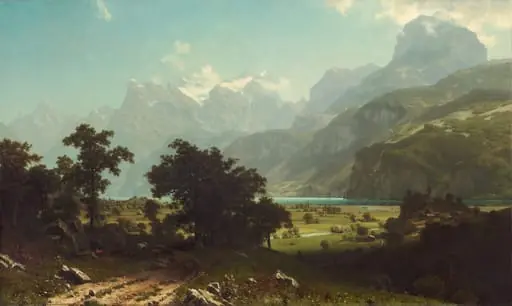 Lake Lucerne
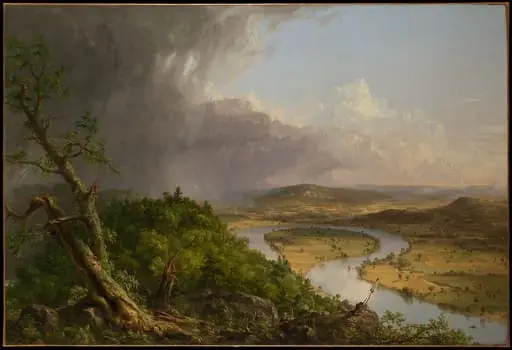 View from Mount Holyoke, Northampton, Massachusetts, after a Thunderstorm—The Oxbow
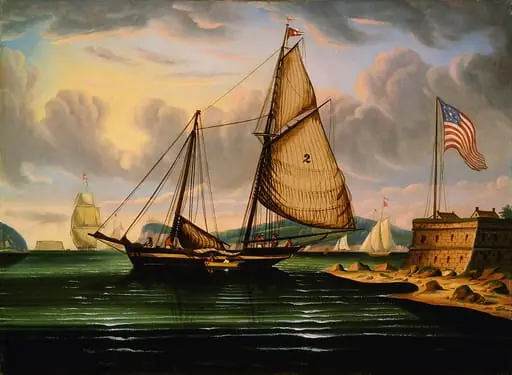 New York Harbor with Pilot Boat "George Washington"
 Marine Landscape
 Threatening Sky, Bay of New York
 Lake George and the Village of Caldwell
 Rio de Janeiro Bay
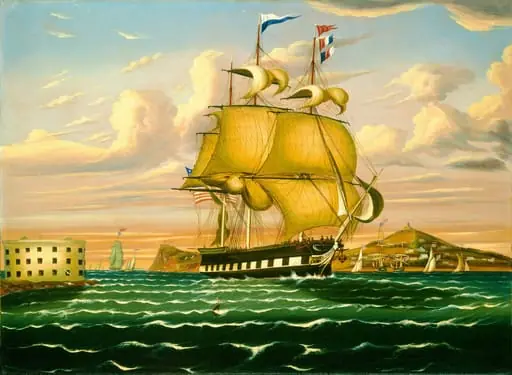 Packet Ship Passing Castle Williams, New York Harbor