Artwork
Morning Toilette in the Women's Quarters
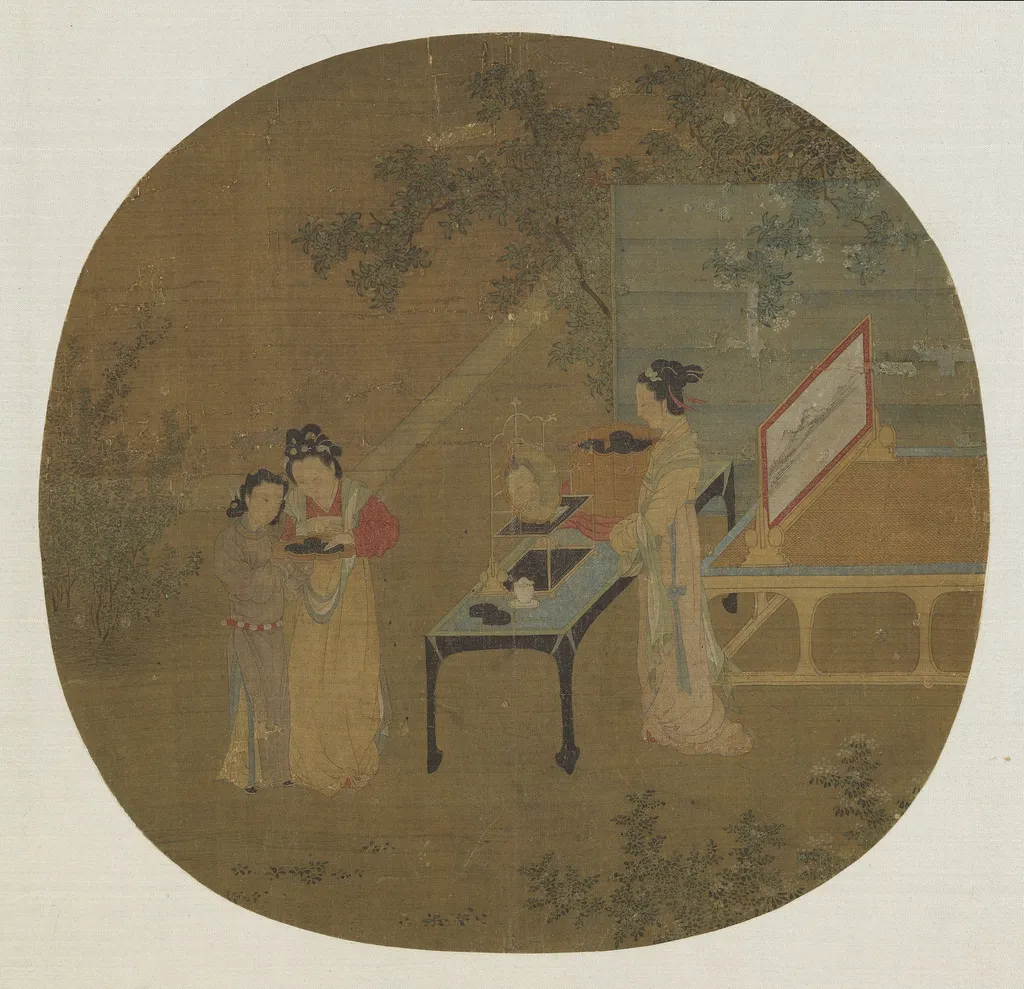
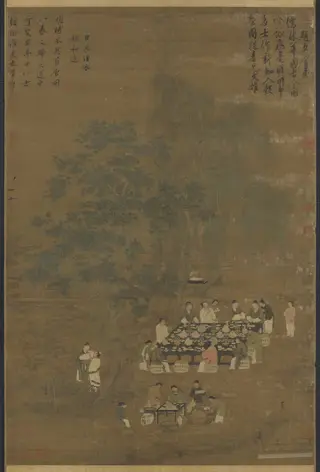
Morning Toilette in the Women's Quarters is an unspecified painting by the Song dynasty painting artist Wang Shen. It dates from 1050 and is held in the collection of the National Palace Museum.
About this work
You can learn more about this type of art by looking up the museum: National Palace Museum.
The painting is called Morning Toilette in the Women's Quarters. It was created by Wang Shen in 1050. The National Palace Museum holds this work, and that's where you can find it, which might give us a clue about its significance, since museums often collect art that's historically important or shows something about the time it was made. You can learn more about this type of art by looking up the museum: National Palace Museum.
Overview
Wang Shen, a multifaceted figure of the Northern Song dynasty, produced this painting around 1050 as part of the courtly painting tradition. Though primarily recognized for his calligraphy and poetry, he also contributed to visual art that captured the quiet rhythms of palace life. The work survives as one of the few attributed paintings from his hand, preserved in the National Palace Museum’s collection.
Subject & Meaning
The scene portrays women engaged in the private rituals of morning grooming within the inner quarters of the imperial palace. Rather than grand ceremonial moments, it focuses on subtle, everyday actions, applying cosmetics, arranging hair, exchanging quiet gestures. This intimacy reflects a cultivated aesthetic that valued restraint and personal refinement over spectacle, aligning with literati ideals of inner harmony.
Technique & Style
Executed in ink and light color on silk, the painting employs delicate brushwork and muted tones to convey texture and atmosphere. Figures are rendered with subtle outlines and minimal detail, emphasizing posture and gesture over individual identity. The composition is restrained, with spatial depth suggested through layered screens and soft gradations, characteristic of early Song court painting.
History & Provenance
The painting entered the imperial collection during the Song dynasty and remained within royal holdings through subsequent dynasties. After the fall of the Qing, it was transferred to the National Palace Museum in Taipei, where it is now preserved. Its survival is notable, as many court paintings from this period were lost or dispersed, making this a rare example of early literati-influenced court art.
Context
Wang Shen operated within a circle of scholar-officials, including Su Shi and Mi Fu, who valued personal expression and literary allusion in art. Though court painters often served official commissions, this work reflects the growing influence of literati sensibilities, favoring quiet observation, emotional nuance, and domestic intimacy over public grandeur, even within palace settings.
Legacy
The painting stands as a quiet testament to the blending of literati culture and courtly life in the Northern Song. It influenced later depictions of women’s interiors in Chinese art, reinforcing the legitimacy of private, domestic subjects within the broader canon. Its preservation underscores its role as a bridge between official art and the introspective aesthetics of the scholar class.
Own this work as a print
Artist & collection
Artist
Wang Shen (c. 1036 – c. 1093), courtesy name Jinqing, was a Chinese calligrapher, painter, poet, and politician of the Song dynasty. He is best known for his surviving paintings, poetry, and calligraphy (Murck 2000, pp.…

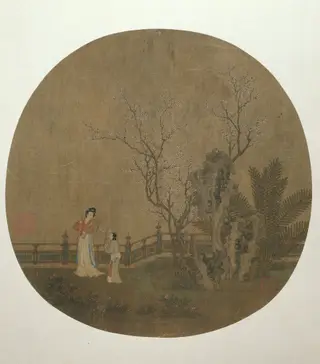
- Woman with Female Servant in a Palace Garden
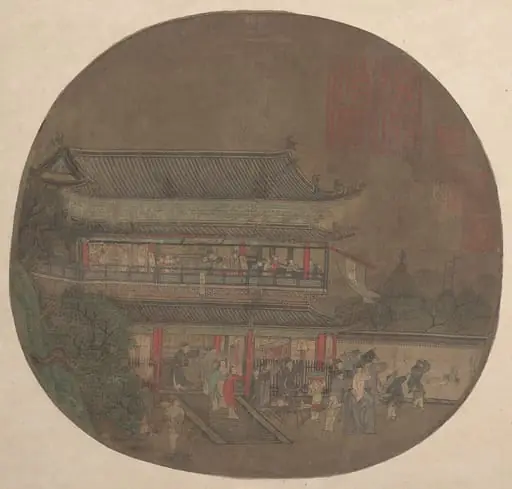 南宋/元 佚名 呂洞賓過岳陽樓圖 扇|The Immortal Lü Dongbin Appearing over the Yueyang Pavilion
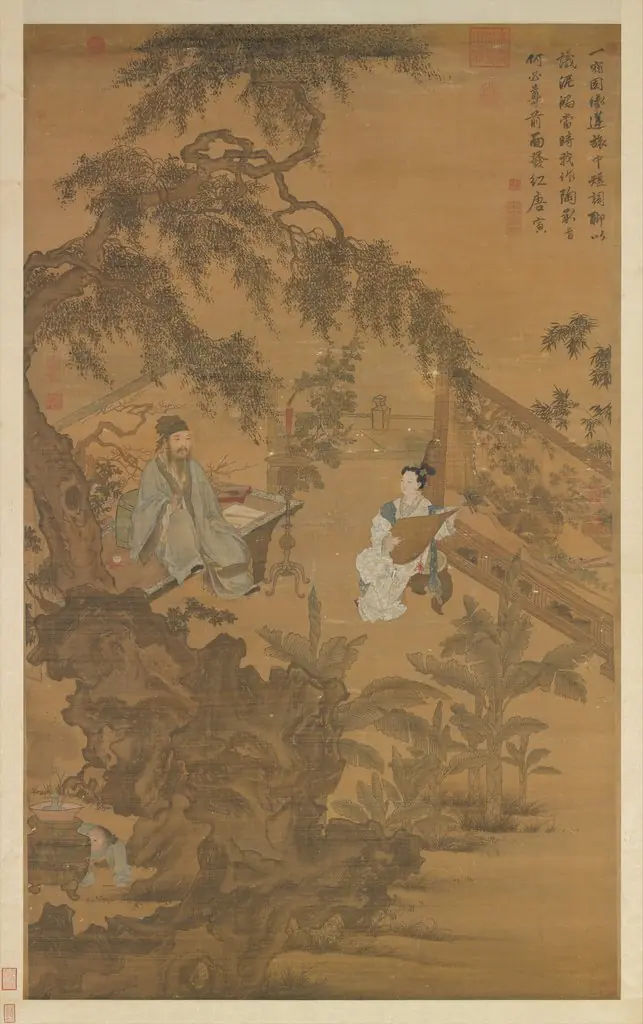 Tao Gu Presenting a Lyric
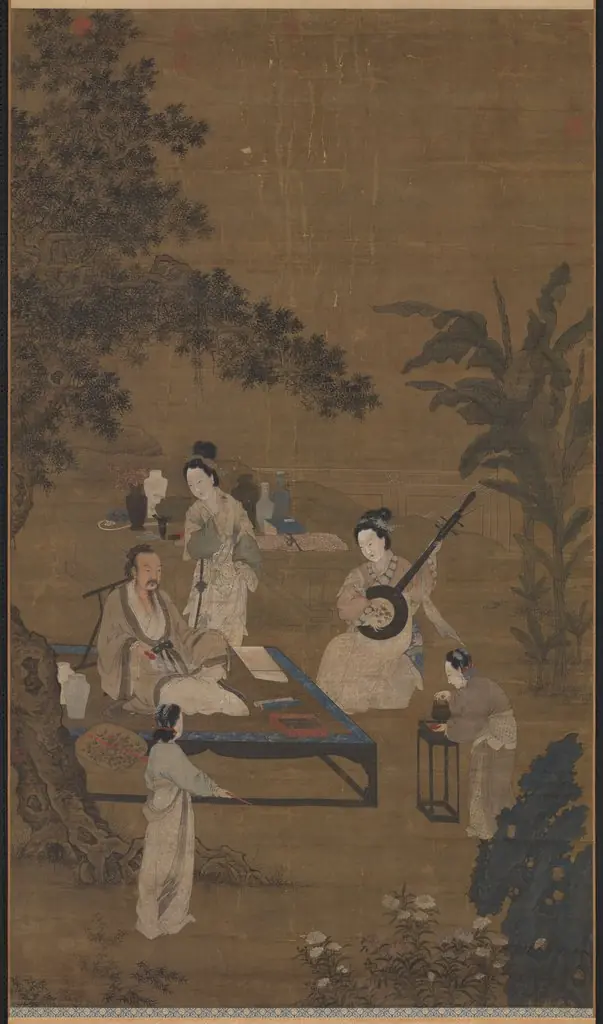 Listening to the Lute
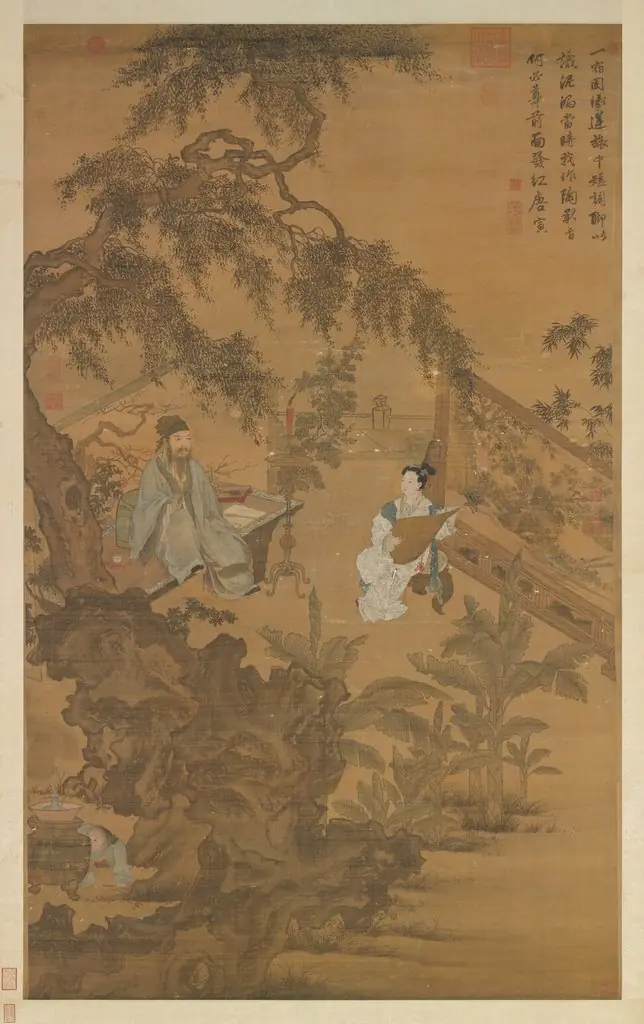 明唐寅陶穀贈詞圖 軸
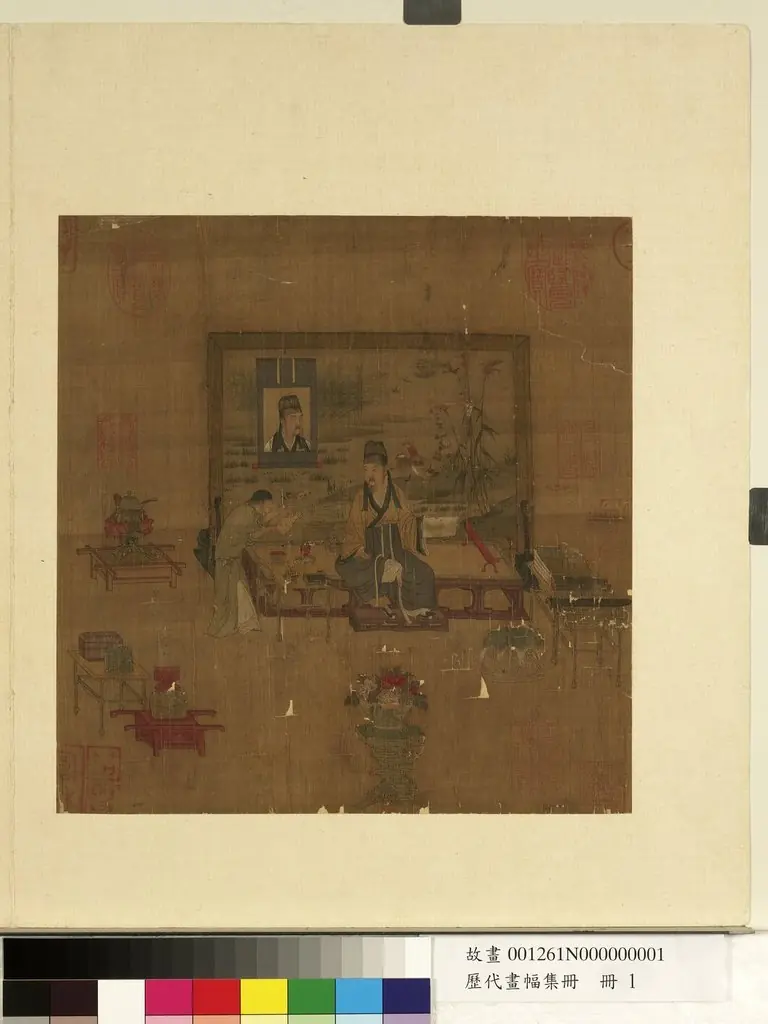 無款人物(歷代畫幅集冊)
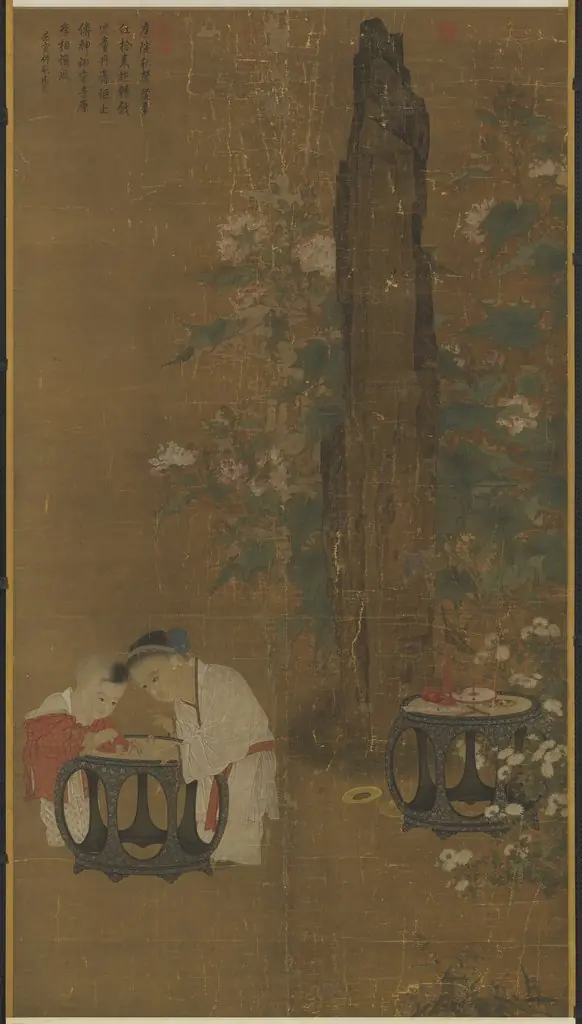 Children at Play in an Autumn Garden
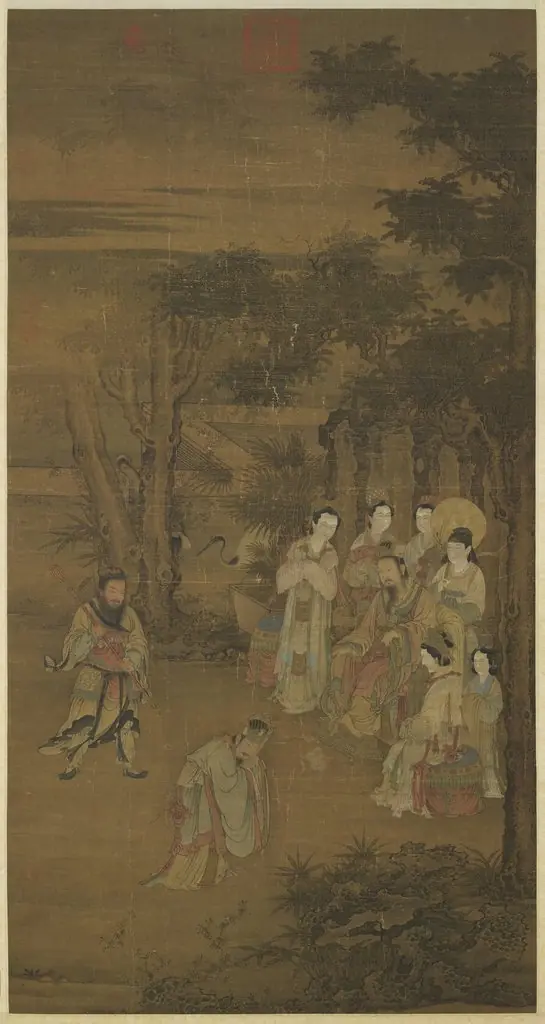 宋人卻坐圖 軸
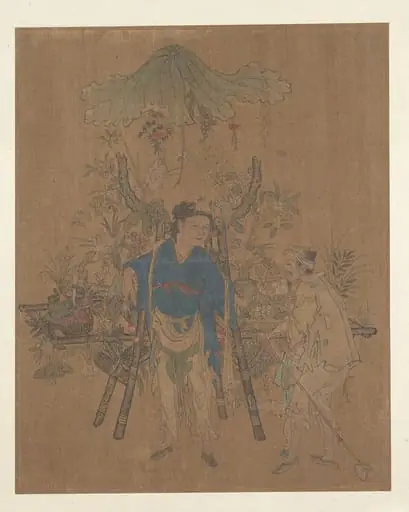 明/清 佚名 賣花郎 冊頁|Flower Vendor
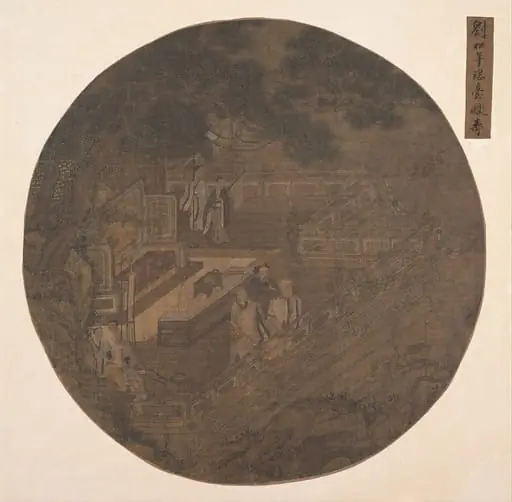 明 佚名 瑤臺獻壽圖 扇|Paying homage to Xiwangmu, the Queen Mother of the West
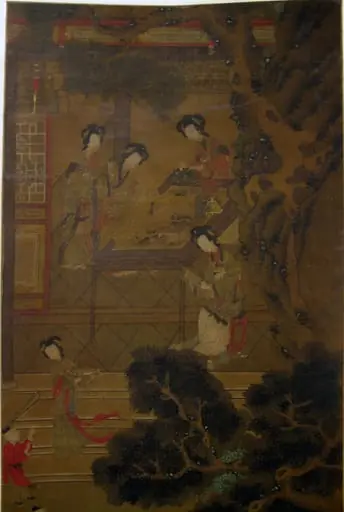 Untitled
 宋徽宗文會圖軸