Artwork
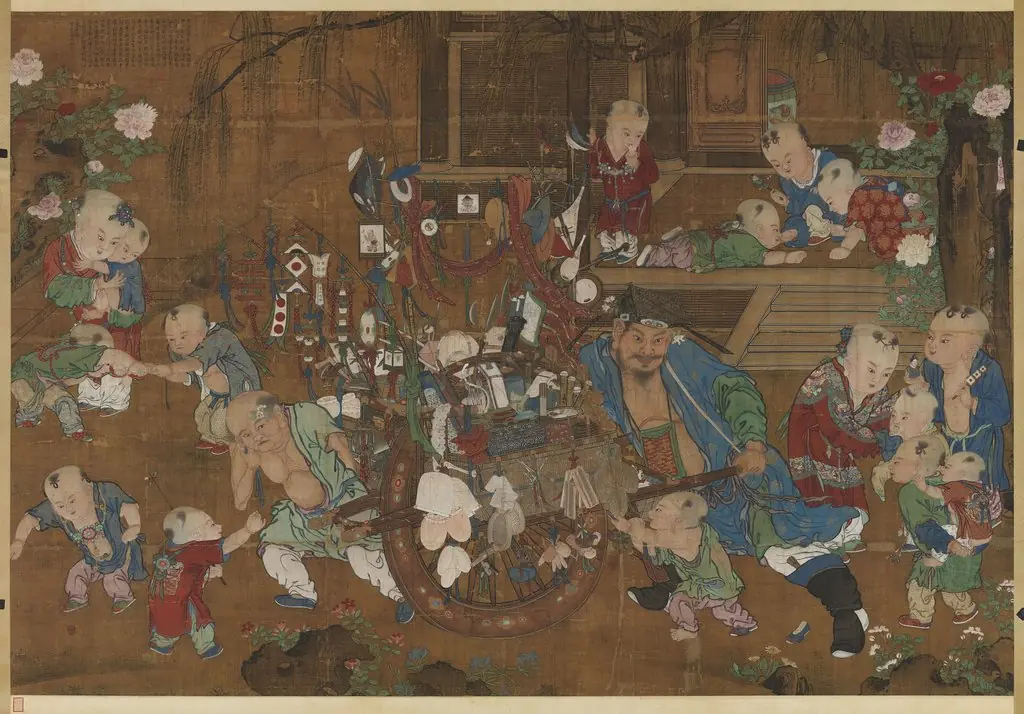
Children at Play in an Autumn Garden
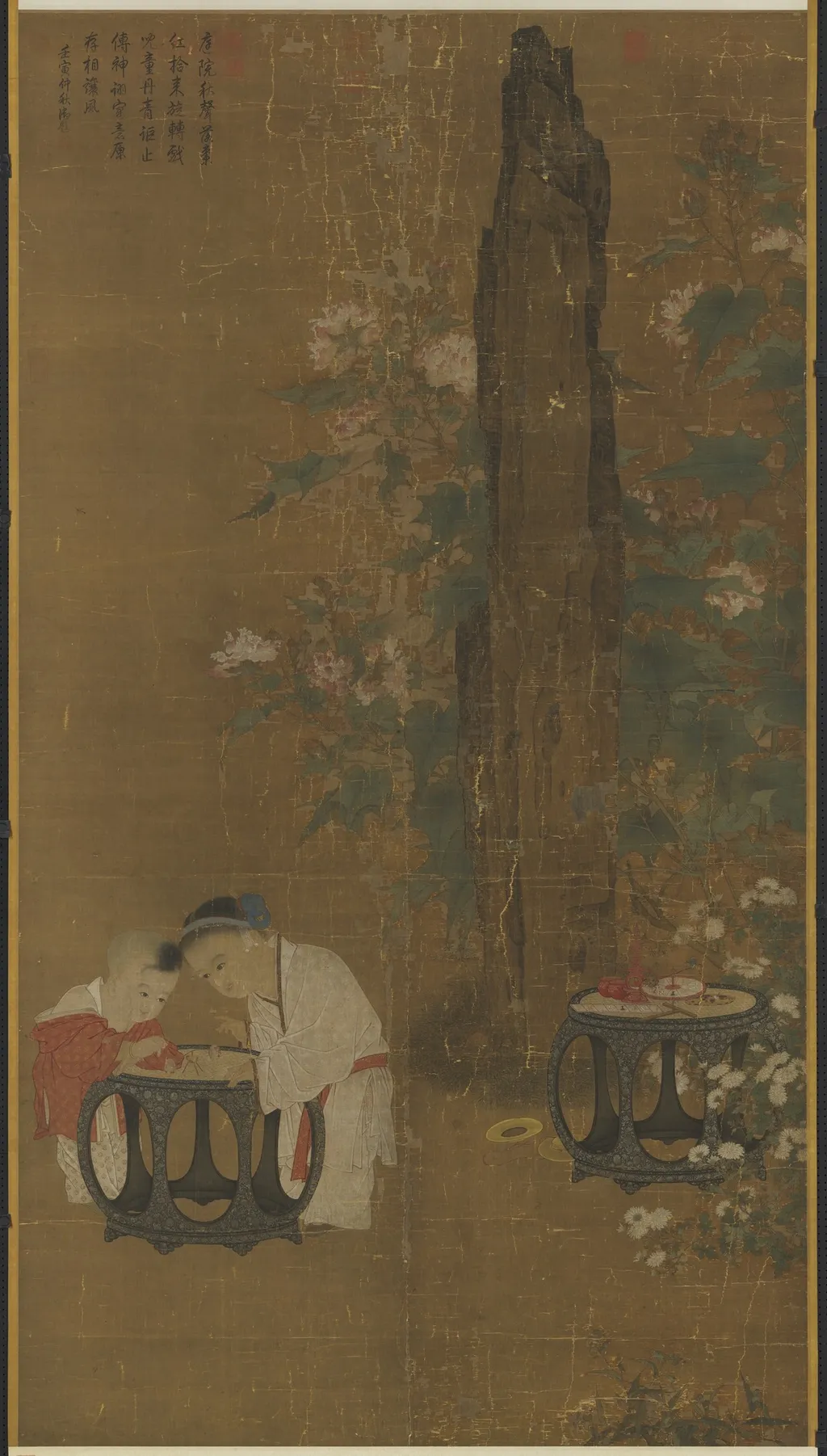
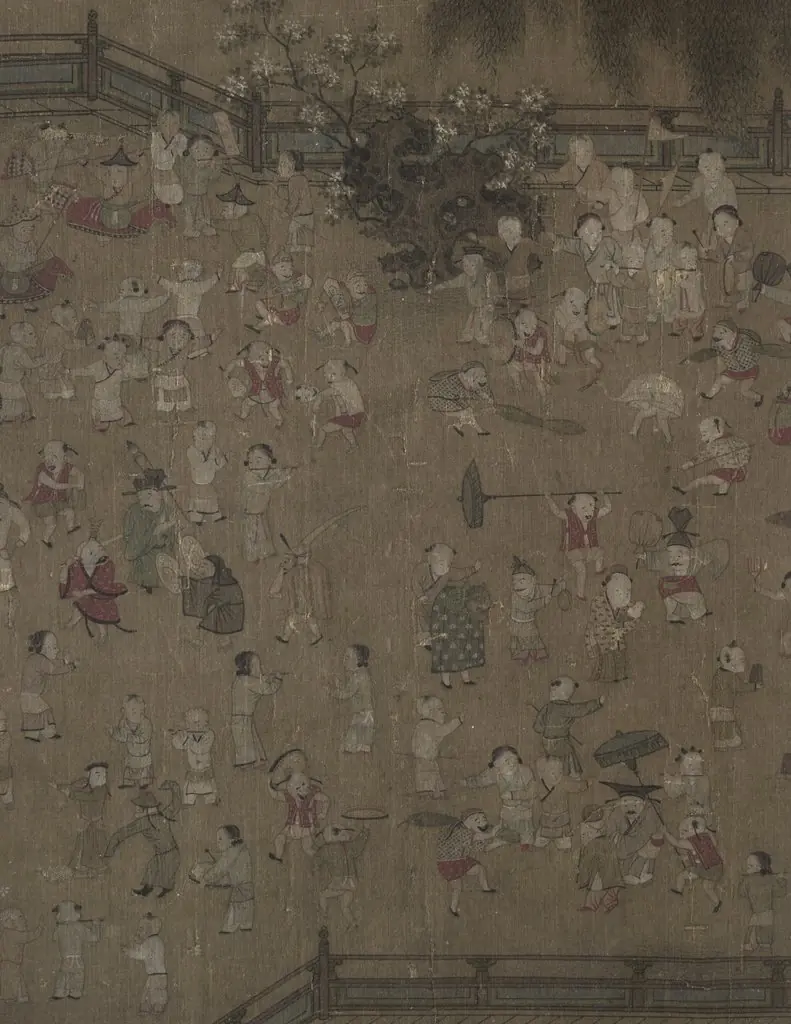
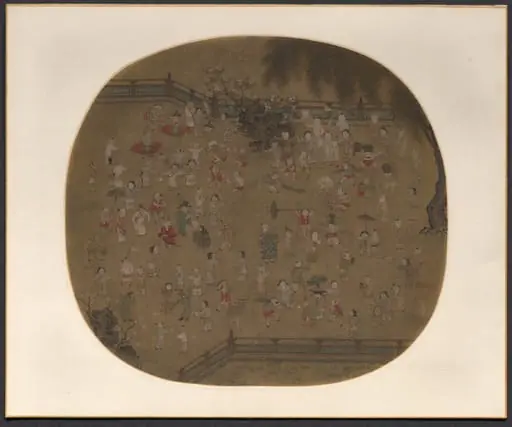
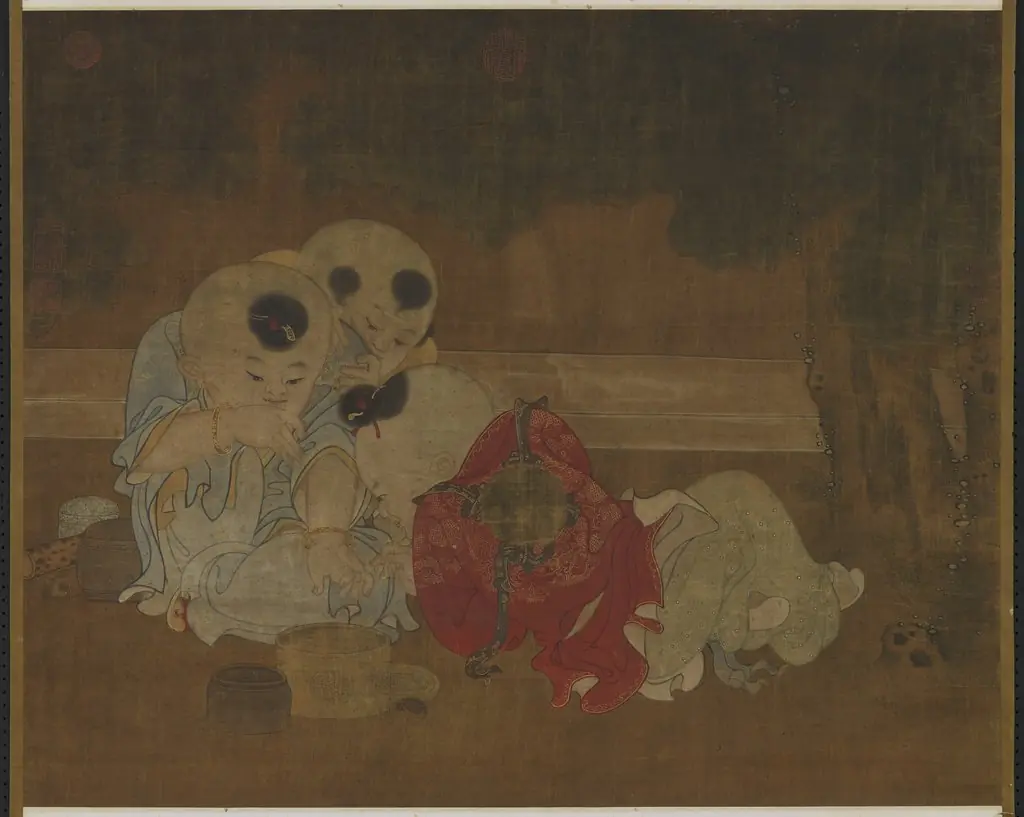
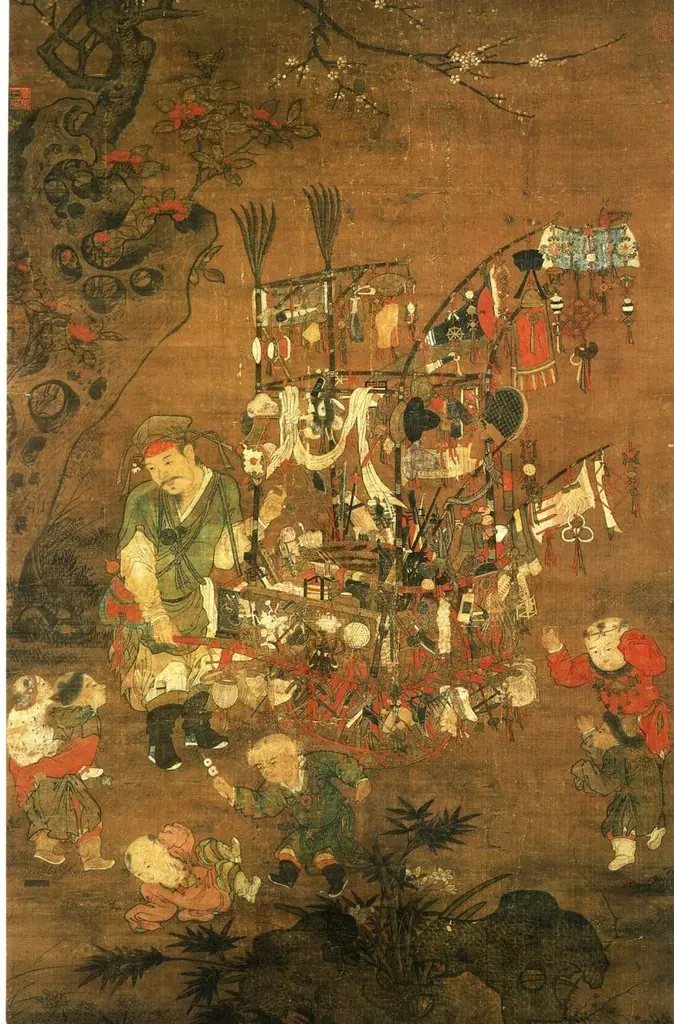
Children at Play in an Autumn Garden is an unspecified painting by the Song dynasty painting artist Su Hanchen. It dates from 1141 and is held in the collection of the National Palace Museum.
About this work
Overview
Painted around 1141 by Su Hanchen, a court artist of the Southern Song dynasty, this work captures a quiet moment of childhood leisure.
Painted around 1141 by Su Hanchen, a court artist of the Southern Song dynasty, this work captures a quiet moment of childhood leisure. Su served as a Painter-in-Attendance, trained in the refined traditions of the imperial studio in Zhejiang. The painting reflects the court’s interest in intimate, everyday scenes, rendered with precision and restraint.
Its composition centers on two children in a seasonal garden, embodying the Song ideal of harmony between human activity and nature.
Subject & Meaning
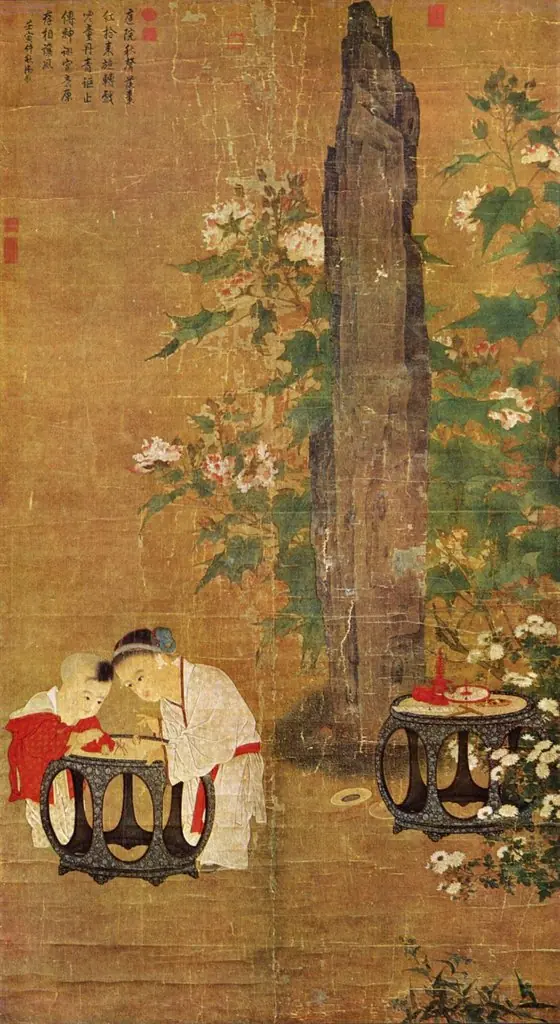
Two children, dressed in white and red robes, are depicted mid-play beside a low table, its contents indistinct but suggestive of toys or ritual objects. The autumn setting, marked by sparse foliage and subtle seasonal shifts, frames their activity as both transient and tender. Rather than depicting grand narratives, the scene elevates ordinary moments, aligning with Confucian and Daoist values that honored quiet virtue and the natural rhythm of life.
Technique & Style
Su Hanchen employed fine, controlled brushwork to define the children’s garments and the garden’s delicate flora, while using muted yet vivid pigments to suggest texture and depth. The background is rendered with loose, atmospheric strokes, contrasting with the sharper delineation of the figures. This balance between detail and suggestion reflects the Song court’s aesthetic preference for lyrical restraint, avoiding overt drama in favor of poetic subtlety.
History & Provenance
Created during the Southern Song period, the painting originated in the imperial atelier, where artists like Su were commissioned to document courtly life. Its survival suggests it was preserved within imperial collections, likely passed through successive dynastic holdings. While its early provenance is not fully documented, its style and attribution align with known works from the Zhejiang school, reinforcing its courtly origin.
Context
In 12th-century China, court painters shifted focus from monumental religious or historical themes to intimate, observational scenes. Su Hanchen’s work emerged amid this trend, influenced by the imperial court’s renewed interest in domestic tranquility following the loss of northern territories. Such paintings served not merely as decoration but as visual meditations on order, harmony, and the moral value of simple pleasures.
Legacy
Su Hanchen’s approach to childhood and nature influenced later generations of Chinese painters who sought to capture fleeting, unposed moments. His emphasis on emotional nuance over spectacle helped define the Southern Song’s distinctive visual language. Though few of his works survive, this painting remains a key reference for understanding how Song artists transformed daily life into enduring aesthetic statements.
Artist & collection
Artist
Su Hanchen (Chinese: 蘇漢臣; pinyin: Sū Hànchén; 1094–1172) was a Chinese painter active in the Song dynasty.