Artwork
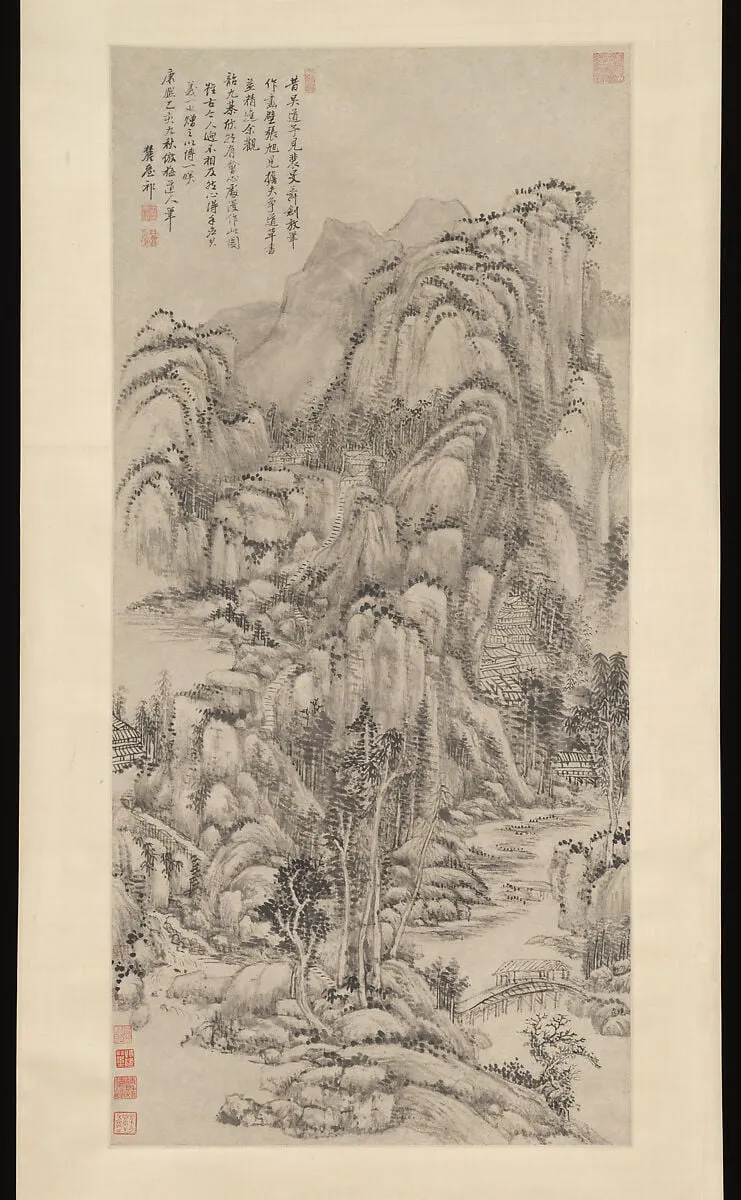
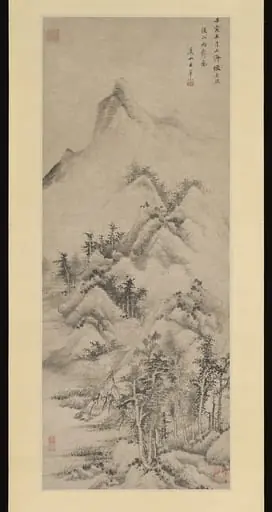
清 王原祁 倣吳鎮山水圖 軸|Landscape after Wu Zhen
About this work
He didn’t just copy, he used lighter ink and softer brushstrokes, making the scene feel like a quiet memory instead of a bold original.
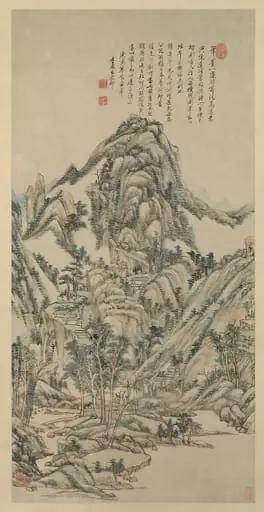
You see a tall scroll of ink on paper: misty mountains, twisted pines, and a tiny scholar’s hut tucked in the folds.
Wang Yuanqi painted this in 1695, copying a 1300s artist named Wu Zhen. The twist? He didn’t just copy, he used lighter ink and softer brushstrokes, making the scene feel like a quiet memory instead of a bold original.
If you like the way ink can build a whole world, look up cross-hatching.
Subject & Meaning
The work is a hanging scroll painted in 1695 by Wang Yuanqi that depicts a mountain landscape, rendered in ink on paper and styled as a "Landscape after Wu Zhen". By modeling the composition on Wu Zhen’s aesthetic, the piece signals the artist’s engagement with the earlier master’s tradition of naturalistic mountain imagery. The subject, a solitary mountain, functions within the Chinese literati visual language as a representation of enduring natural forms, while the work’s creation in China and inclusion in the Metropolitan Museum of Art underscore its role as a cultural artifact linking contemporary practice to historic landscape conventions.
Technique & Style
Wang Yuanqi executed Landscape after Wu Zhen in 1695 as a hanging scroll employing ink on paper. The work belongs to the landscape genre and depicts a mountain. As its title indicates, the painting is a deliberate imitation of the stylistic qualities of the earlier Yuan dynasty master Wu Zhen, reflecting Wang's practice of engaging with historical models.
The composition relies on the traditional Chinese medium of monochrome ink applied to a paper support, which is formatted for vertical display. The piece is held in the collection of the Metropolitan Museum of Art.
History & Provenance
The hanging scroll titled Landscape after Wu Zhen was created by the Chinese artist Wang Yuanqi in 1695. Executed in ink on paper, this landscape painting depicts mountainous terrain and is classified within the genre of landscape art. The work originated in China and is currently held in the collection of the Metropolitan Museum of Art.
While the specific commission details or the immediate chain of ownership prior to its arrival at the museum are not detailed in the available records, the creation date is firmly established as 1695. The piece serves as an homage to the earlier master Wu Zhen, reflecting Wang Yuanqi's engagement with historical styles during the Qing dynasty.
The painting is held by the Metropolitan Museum of Art in New York. Its accession number is 1973.120.12. The work has been exhibited at the museum since its acquisition; notable instances include displays of Chinese painting and calligraphy within the permanent galleries, though specific temporary exhibitions are not recorded in the cited sources.
Legacy
The hanging scroll by Wang Yuanqi, dated 1695 and titled Landscape after Wu Zhen, is classified as a Qing dynasty landscape painting that depicts a mountain. Its scholarly recognition is reflected by its inclusion in the collection of the Metropolitan Museum of Art, where it is studied as an exemplar of Chinese landscape art from the period. The work’s presence in a major institutional collection has contributed to ongoing discussions of its stylistic influence on later landscape painting and its role in preserving Qing artistic heritage.
Overview
Painted in 1695, Landscape after Wu Zhen is a hanging scroll executed in ink on paper by the Qing dynasty master Wang Yuanqi. The work depicts a vertical composition of mist-shrouded mountains and twisted pine trees, featuring a small scholar's hut nestled within the rocky folds. While the title indicates a homage to the Yuan dynasty artist Wu Zhen, Wang Yuanqi does not merely replicate the earlier master's style; instead, he reinterprets it through his own distinctive aesthetic.
He employs lighter ink tones and softer, more rhythmic brushstrokes compared to Wu Zhen's typically denser and darker application, creating an atmosphere of quiet contemplation. This piece exemplifies Wang Yuanqi's central role in the Orthodox School of painting, which prioritized the study and emulation of ancient masters as a means of achieving artistic perfection. By engaging with Wu Zhen's legacy, Wang demonstrates his theoretical approach to landscape painting, where the act of copying serves as a dialogue with art history rather than simple reproduction.
The work stands as a significant example of late 17th-century literati landscape painting, reflecting the Qing court's endorsement of traditionalist values.
Artist & collection


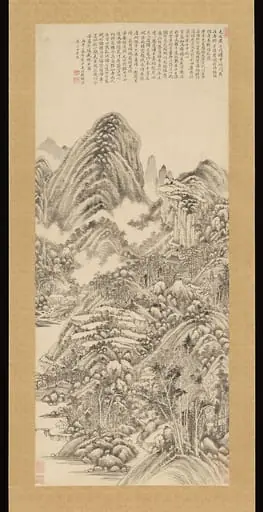 清 王時敏 仿黃公望山水圖 軸 絹本|Landscape in the style of Huang Gongwang
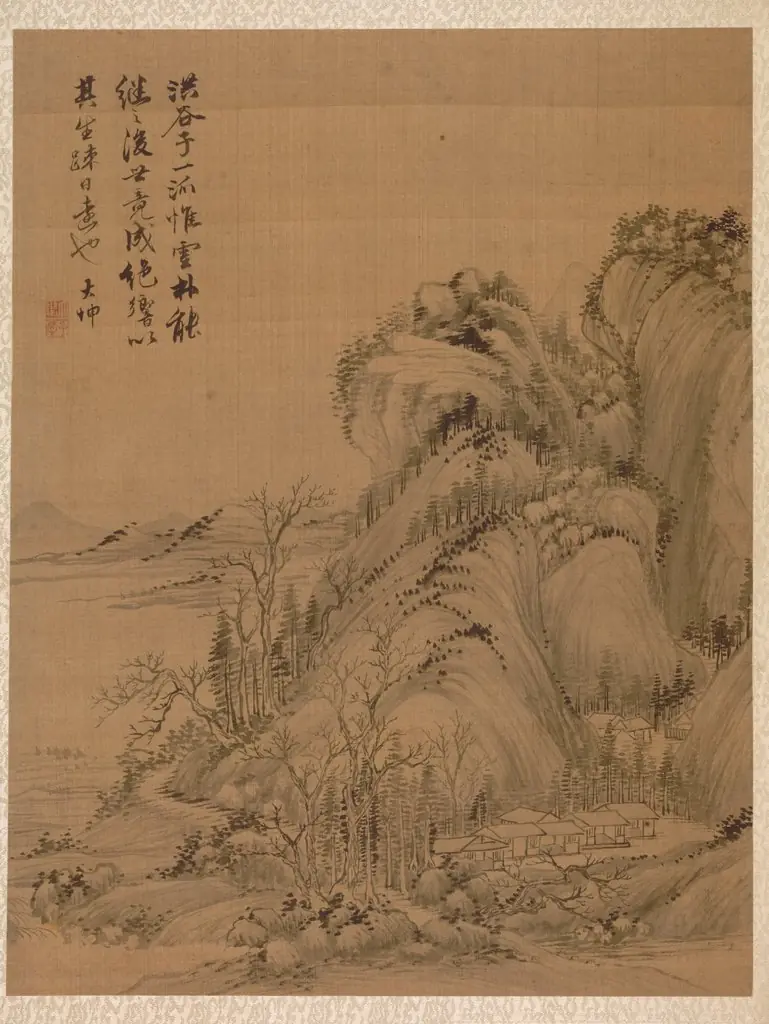 Landscape in the Style of Ching Hao
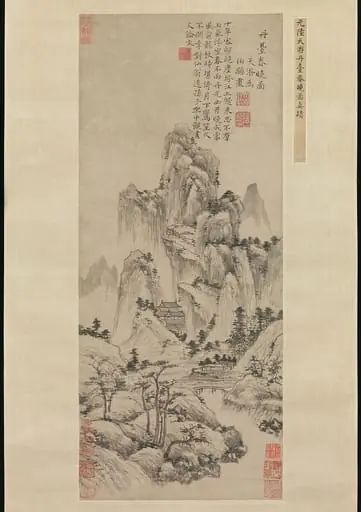 元 陸廣 丹臺春曉圖 軸|Spring Dawn Over the Elixir Terrace
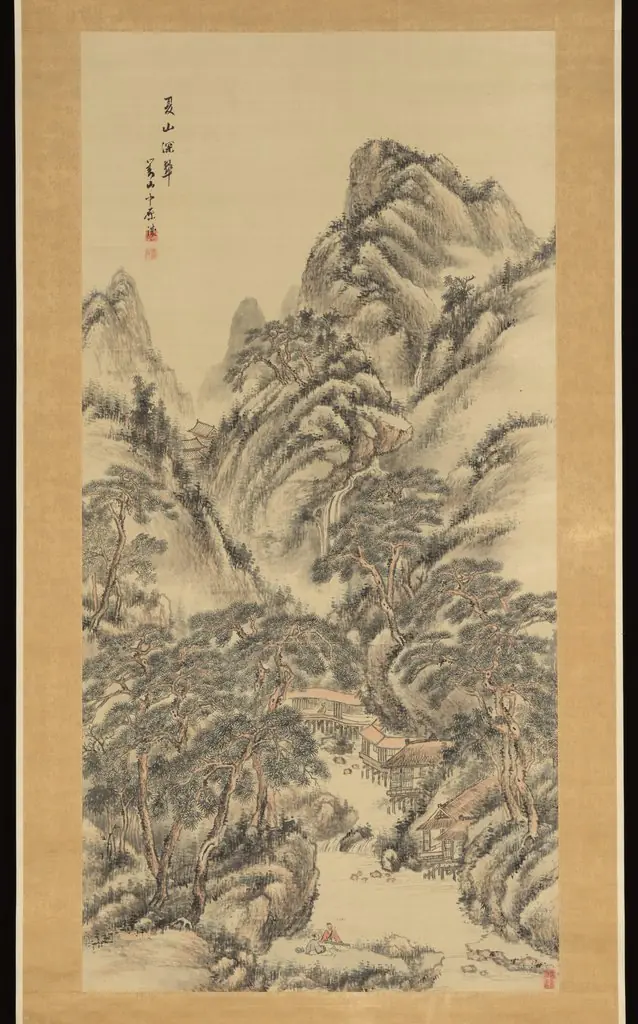 “The Deep Green of Summer Mountains”
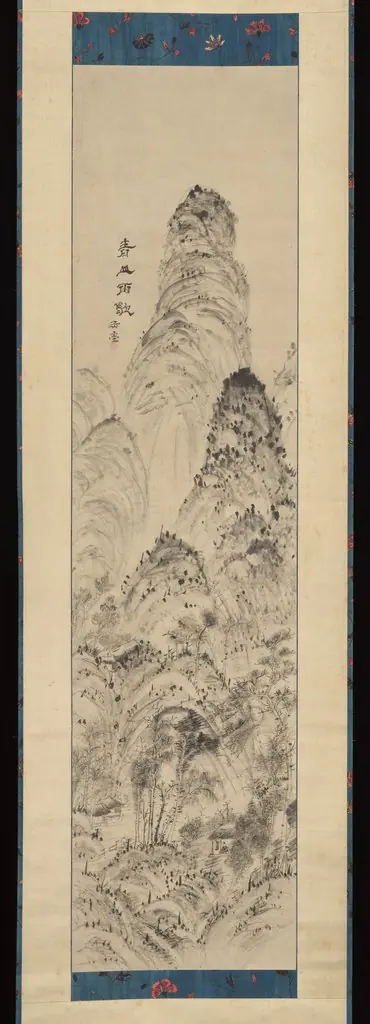 Green Mountains as the Rain Ceases
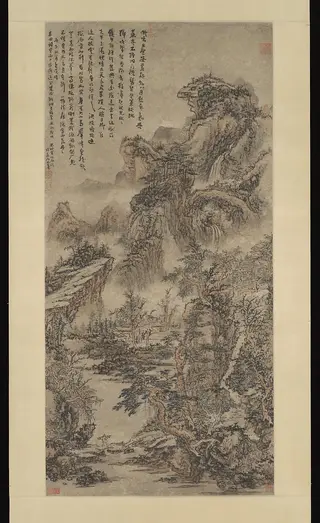 清 倣髡殘 蒸嵐昏巒圖 軸|Wooded Mountains at Dusk
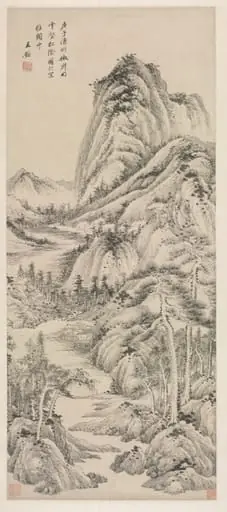 Shade of Pines in a Cloudy Valley
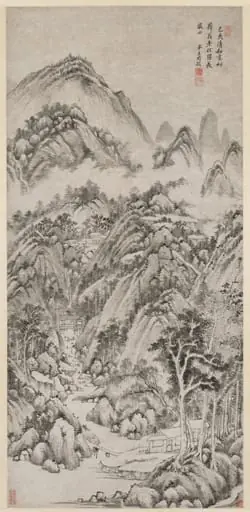 Mountain Village Embraced by the Summer
 清 王翬 溪山雨霽圖 軸|Clearing after Rain over Streams and Mountains