Artwork
Portrait of Ōzora Buzaemon
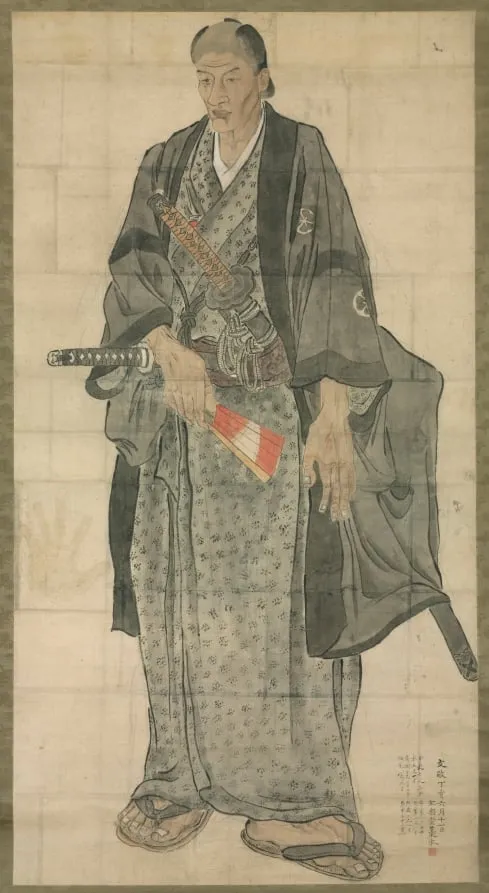
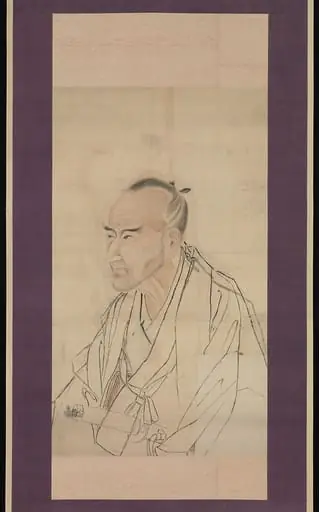
Portrait of Ōzora Buzaemon is an unspecified painting by the Joseon dynasty painting artist Watanabe Kazan. It dates from 1827 and is held in the collection of the Cleveland Museum of Art. This large-scale portrait depicts Ōzora Buzaemon, a man of extraordinary height who attracted public attention in Edo during 1827.
- Accession no.
- 1980.177
- Credit line
- Leonard C. Hanna Jr. Fund
About this work
A long scroll beside him has Japanese writing you can’t read, but it mentions a famous scholar’s home.
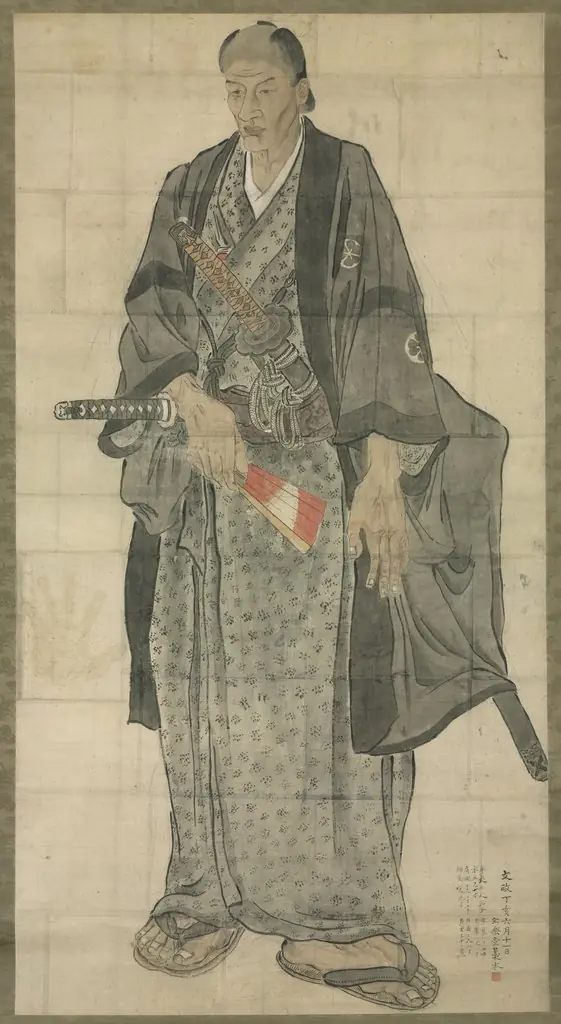
This painting shows a tall man in a dark robe sitting stiffly against a plain wall. His face looks tired and uneasy. A long scroll beside him has Japanese writing you can’t read, but it mentions a famous scholar’s home.
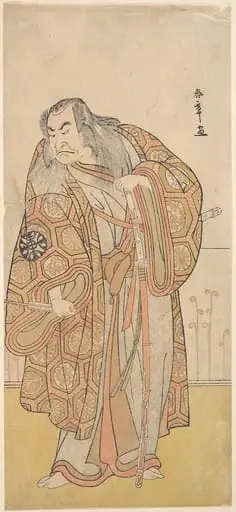
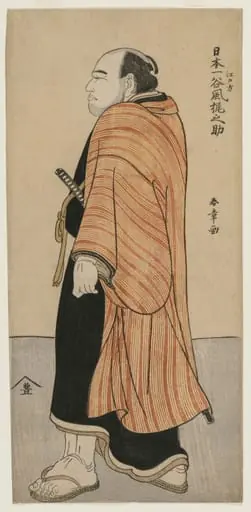
Buzaemon was a celebrity in 1827 Edo. People bought prints of him, and his handprints were souvenirs. Kazan used a light projector, like a pinhole camera, to trace Buzaemon’s exact shape first.
The artist made the man’s discomfort part of the portrait. See it at The Cleveland Museum of Art.
Overview
This large-scale portrait depicts Ōzora Buzaemon, a man of extraordinary height who attracted public attention in Edo during 1827. Painted by Watanabe Kazan, the work captures Buzaemon in a moment of quiet unease, seated before a bare wall. The painting originated from a preparatory sketch made using a camera obscura, a device that projected his image for accurate tracing. Its scale and intimate realism set it apart from typical celebrity imagery of the time.
Subject & Meaning
Buzaemon, though celebrated for his stature and treated as a curiosity, is portrayed not as a spectacle but as a weary individual. His rigid posture and downcast gaze suggest discomfort with being observed. The inclusion of a scroll inscribed with scholarly references implies his presence was framed within intellectual circles, contrasting his public fame with a private sense of alienation. The portrait resists glorification, instead offering a subdued human presence.
Technique & Style
Watanabe Kazan employed a camera obscura to trace Buzaemon’s form, ensuring precise anatomical accuracy. The final painting, rendered in ink and light pigments on silk, emphasizes tonal subtlety over dramatic contrast. The plain background isolates the figure, heightening focus on his expression and posture.
Brushwork is restrained, avoiding decorative flourish, aligning with Kazan’s scholarly aesthetic and his interest in observational realism over idealization.
History & Provenance
The portrait was created after Kazan met Buzaemon at the home of a respected Confucian scholar, where the celebrity was likely invited as a subject of curiosity. While mass-produced woodblock prints of Buzaemon circulated widely, this painting remained a private, singular work. It entered the collection of the Cleveland Museum of Art in the 20th century, preserving a rare example of early 19th-century Japanese portraiture that engaged with Western optical tools.
Context
In 1820s Edo, public fascination with physical anomalies was common, and Buzaemon’s image was commodified through prints and handprint souvenirs. Yet Kazan’s approach diverged from popular culture, reflecting the influence of Confucian ideals and early Western scientific methods. His use of the camera obscura signaled a shift toward empirical observation in Japanese art, even as the subject remained embedded in the social dynamics of celebrity and spectacle.
Legacy
The portrait stands as an early example of Japanese artists integrating optical technology into portraiture, anticipating later photographic practices. Unlike commercial prints that celebrated Buzaemon’s novelty, Kazan’s work invites contemplation of the individual behind the spectacle. It remains a quiet testament to the tension between public fascination and personal dignity, offering a nuanced counterpoint to the era’s popular imagery.
Artist & collection