Artwork
Ceres (Summer)
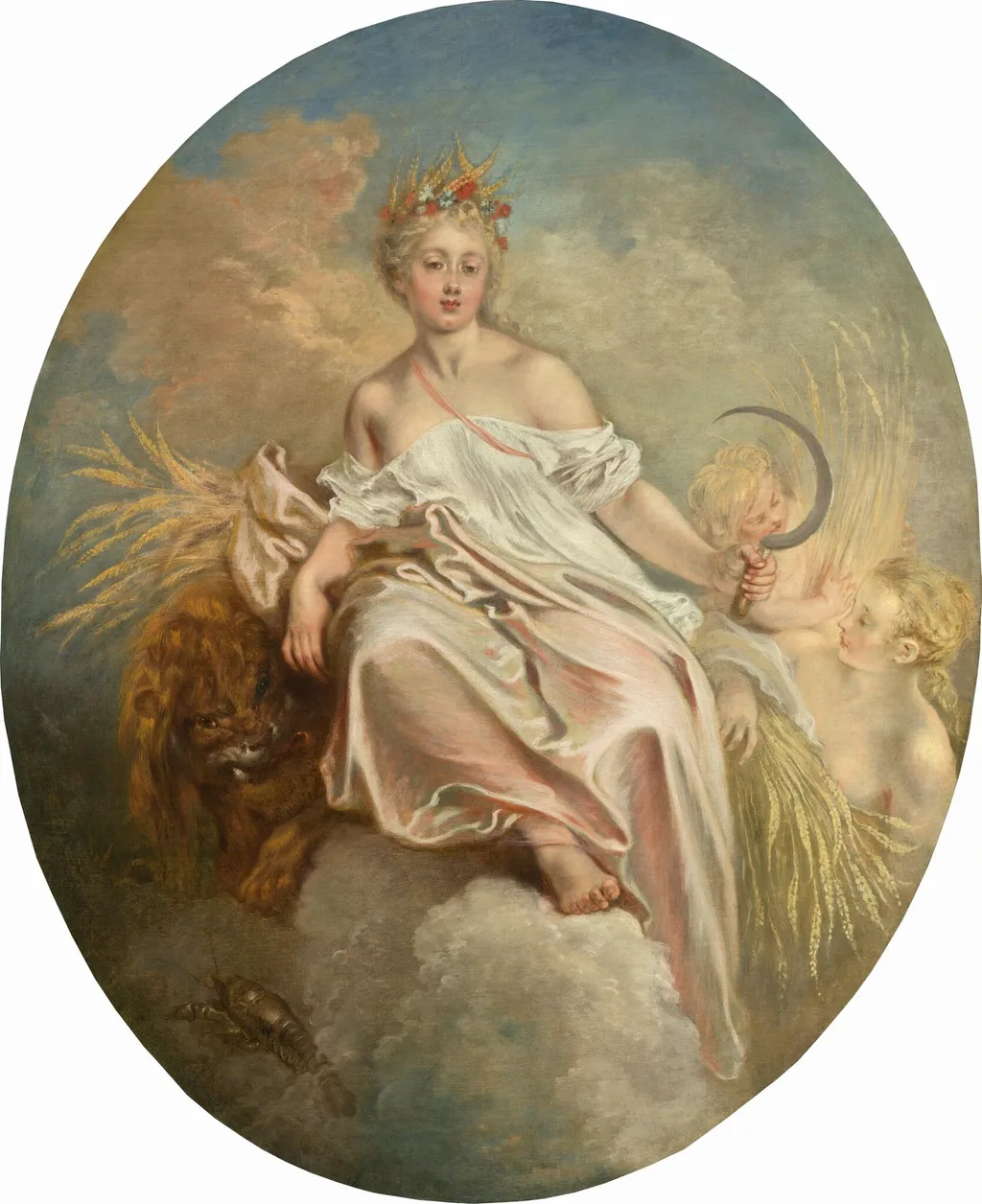
Ceres (Summer) is an oil painting by the Baroque artist Jean Antoine Watteau. It dates from 1718 and is held in the collection of the National Gallery of Art.
About this work
Technique & Style
Its handling reflects Watteau’s characteristic feathery brushwork and delicate tonal modulations, typical of his fêtelike allegories.
The painting is executed in oil on canvas, measuring 142 cm in height and 116 cm in width. Its handling reflects Watteau’s characteristic feathery brushwork and delicate tonal modulations, typical of his fêtelike allegories. The composition’s fluidity and light-filled palette emphasize the seasonal theme, with Ceres depicted in flowing drapery and a wreath of wheat, aligning with the allegorical genre of the series. The surface shows the artist’s layered glazes and subtle blending, consistent with early eighteenth-century French academic practice.
History & Provenance
Painted in 1717, Ceres (Summer) was commissioned by Pierre Crozat for the dining room of his hôtel on the rue de Richelieu in Paris. The canvas passed by inheritance to Crozat's nephew, Louis François Crozat, marquis du Châtel, and subsequently to the latter's daughter, Louise-Honorine Crozat, who had married the duc de Choiseul. When the hôtel was sold and demolished in 1772, the painting was removed, probably to the Choiseul's Château de Chanteloup, and later appeared in the duc de Choiseul's estate sale in 1786, where it was acquired by Meunier.
In the following decades the work circulated through several Parisian collections and dealers, including Jean Baptiste Pierre Le Brun (with sales in 1791), Roehn, and the Charles Sedelmeyer Galleries. Charles Wertheimer owned it in London before Sedelmeyer sold it in 1898 to Sir Lionel Phillips. After passing through the Michel-Lévy family and Charles-Louis Dreyfus, it was handled by Wildenstein & Co. by 1935.
The painting is now in the Samuel H. Kress Collection at the National Gallery of Art, Washington, D.C.
The painting is held in the collection of the National Gallery of Art in Washington, D.C., as part of the Samuel H. Kress Collection. Its exhibition history includes a showing at the Charles Sedelmeyer Galleries in Paris by 1895. Prior to its acquisition by the gallery, the work appeared in several notable sales, including the estate sale of the duc de Choiseul in Paris in 1786 and auctions conducted by Jean Baptiste Pierre Le Brun in 1791.
Later, it was sold at Christie, Manson & Woods in London in 1913 and featured in sales at the Galerie Georges Petit in Paris in 1919 and 1925.
Overview
Antoine Watteau's oil painting, Ceres (Summer), created around 1718, presents an allegorical scene. This artwork depicts a central female figure, likely representing the Roman goddess of agriculture, surrounded by symbolic elements. The composition, executed on canvas, reflects the artist's characteristic approach to mythological and pastoral themes, often imbued with a sense of grace and subtle narrative, typical of the period's evolving artistic tastes.
Subject & Meaning
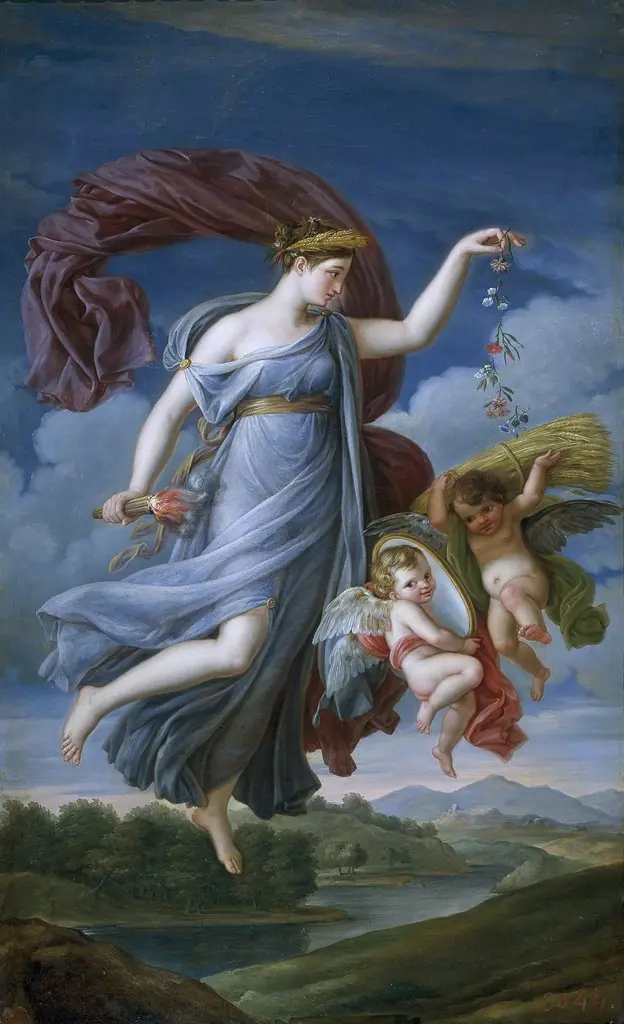
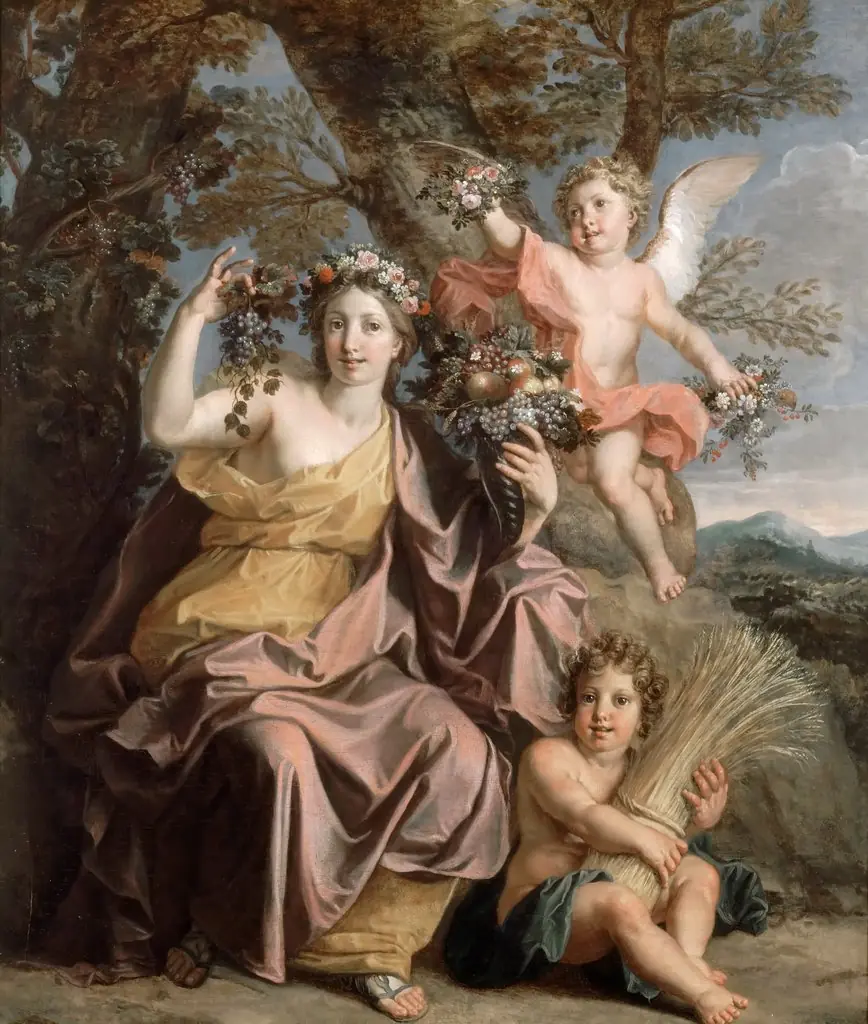
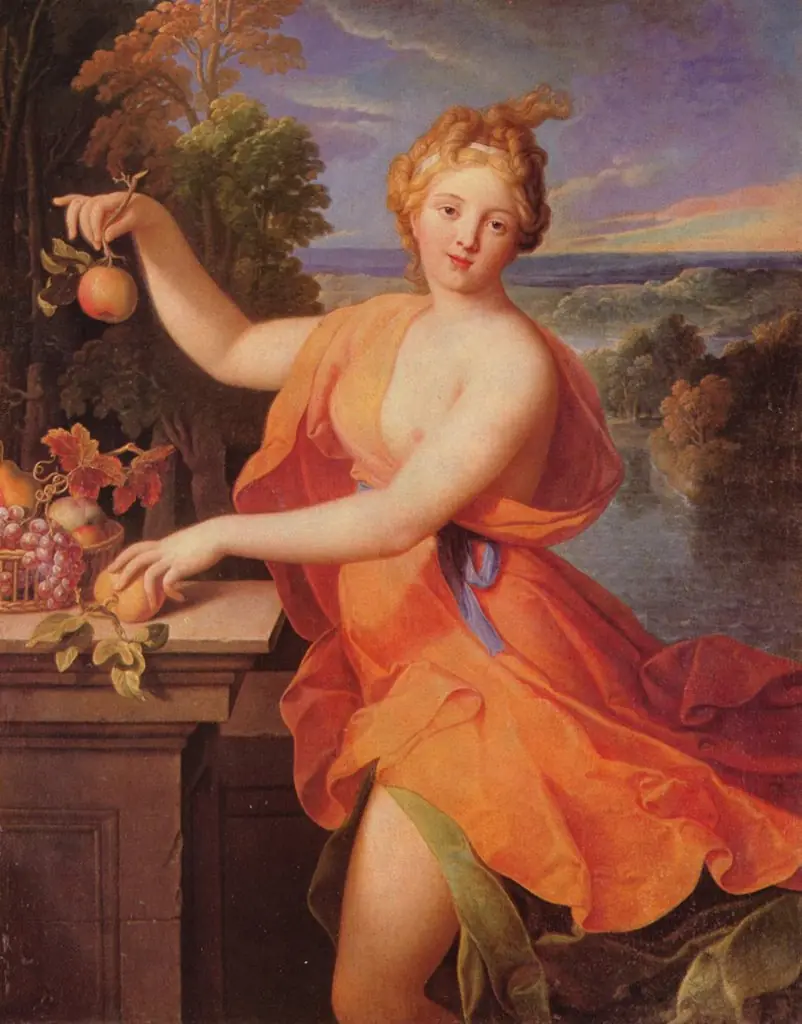
The painting centers on a woman adorned with a crown of flowers and holding a sheaf of wheat, strongly identifying her as Ceres, the goddess associated with summer and harvest. A small, winged child, possibly a putto, holds a mirror behind her, while a shaggy dog rests at her feet. These additional figures introduce layers of symbolic interpretation, hinting at themes beyond simple seasonal representation, perhaps concerning vanity, reflection, or the transient nature of beauty.
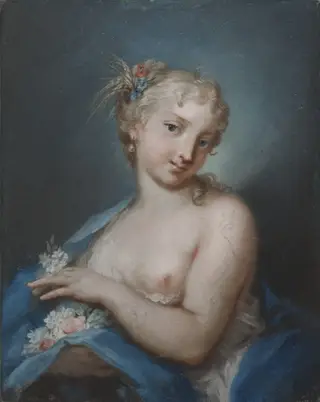
Own this work as a print
Artist & collection
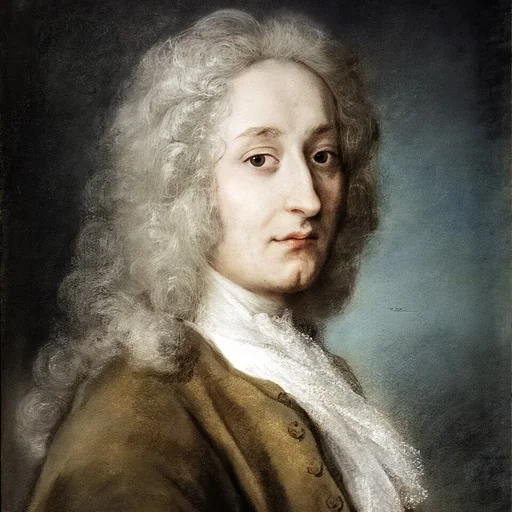
Artist
Jean-Antoine Watteau was a French painter and draughtsman whose brief career spurred the revival of interest in colour and movement, as seen in the tradition of Correggio and Rubens.