Artwork
Saint Catherine
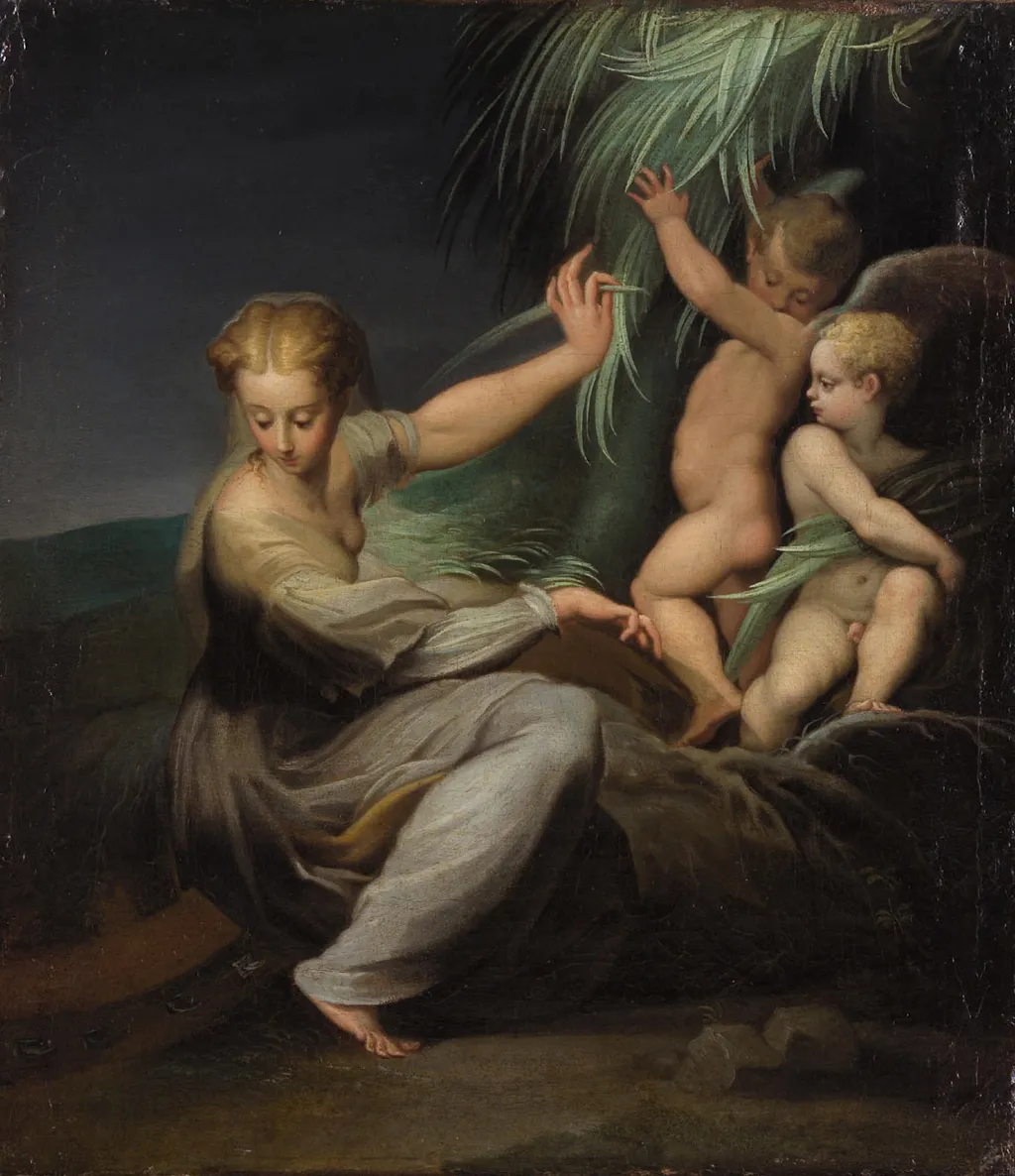
Saint Catherine is an oil painting by the Mannerist artist Unknown. It dates from 1550 and is held in the collection of the Kunsthistorisches Museum. The work depicts a seated woman on a rock, clutching a long green palm frond.
About this work
Overview
Saint Catherine is an oil painting on panel created around 1550, attributed to an unknown artist working after Francesco Mazzola, known as Parmigianino.
Saint Catherine is an oil painting on panel created around 1550, attributed to an unknown artist working after Francesco Mazzola, known as Parmigianino. Measuring 28 by 25 centimeters, the work belongs to the religious genre and depicts Catherine of Alexandria. It is currently held in the Kunsthistorisches Museum. The painting captures the saint in a quiet, contemplative moment with the Christ Child, reflecting the Mannerist interest in elongated forms and refined spiritual subjects that defined the era following the High Renaissance.
Subject & Meaning
The painting portrays Catherine of Alexandria, a noble virgin and scholar venerated as a Christian martyr. In this specific depiction, she sits in flowing pale robes, her right hand reaching upward to grasp a palm frond, the traditional attribute signifying her martyrdom. Her left hand extends toward two nude children positioned on a rocky outcrop beside her, one of whom reaches up toward the palm. A book rests on the ground near her foot, symbolizing her renowned wisdom and her legendary defeat of fifty pagan philosophers in debate. The interaction between Catherine and the children evokes the mystic marriage of Saint Catherine, a popular theological motif in which the infant Jesus presents a ring to the saint, symbolizing her spiritual consecration to him.
Technique & Style
Executed in oil paint on a wooden panel, the work demonstrates a highly refined technique characterized by smooth, blended brushwork and soft transitions between forms. The artist employed a restrained palette dominated by silvery whites, soft greens, and deep browns. Light falls from the upper left, illuminating the face of the saint and the bodies of the children against a dark, muted landscape with low hills under a gray sky. The surface of the painting exhibits fine craquelure throughout, a natural aging pattern consistent with its mid-sixteenth-century date. The composition and cool coloration reflect the influence of Parmigianino, whose Mannerist style was defined by elegant, elongated figures and an emphasis on grace over naturalistic depth.
History & Provenance
The painting is dated to 1550 and is recognized as a work by an unknown artist painting after Parmigianino. While the specific details of its original commission and early ownership remain unrecorded in the provided sources, its status as a derivative work suggests it was produced to satisfy the demand for Parmigianino's popular compositions in the decades following his death. The painting eventually entered the collection of the Kunsthistorisches Museum in Vienna, where it remains today as part of the museum's holdings of Renaissance art.
Context
The painting emerged in a period when depictions of Saint Catherine were ubiquitous across Europe, establishing her as one of the most represented saints from the medieval era through the eighteenth century. The saint's widespread veneration was fueled by texts like the Golden Legend, which circulated her story of miraculous survival from the spiked wheel and subsequent beheading by the emperor Maxentius. Although her historical existence was questioned by a papal commission in 1969, leading to her removal from the universal liturgical calendar, she was restored as an optional memorial in 2002, a decision partly attributed to her enduring importance in the Eastern Orthodox Church and her traditional role as the patroness of philosophers. The production of paintings after Parmigianino in the mid-sixteenth century reflects the broader Mannerist practice of replicating successful devotional images for a receptive public.
Legacy
The cultural afterlife of Saint Catherine extends far beyond individual paintings, permeating Western visual and linguistic traditions. Her attribute, the spiked breaking wheel, lent its name to the Catherine wheel firework, a lasting secular echo of her martyrdom. She remained a powerful intercessor in the Christian tradition, counted among the Fourteen Holy Helpers and serving as a patron of young women, scholars, and various trades involving wheels. Her reported apparitions to saints like Dominic and Joan of Arc cemented her theological significance, while her iconographic attributes, the palm, book, crown, and sword, provided a enduring visual vocabulary for artists across centuries to identify one of the church's most revered virgin martyrs.
Artist & collection









- Cupid Chastised
 Virgin and Child, with an Angel
 St. Catherine
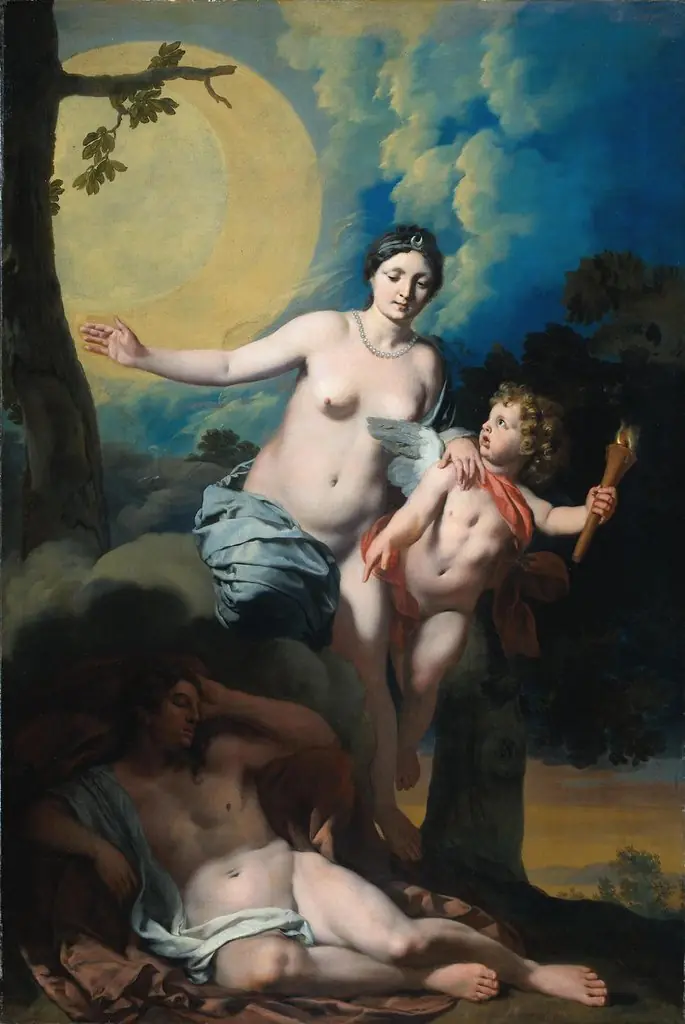 Selene and Endymion
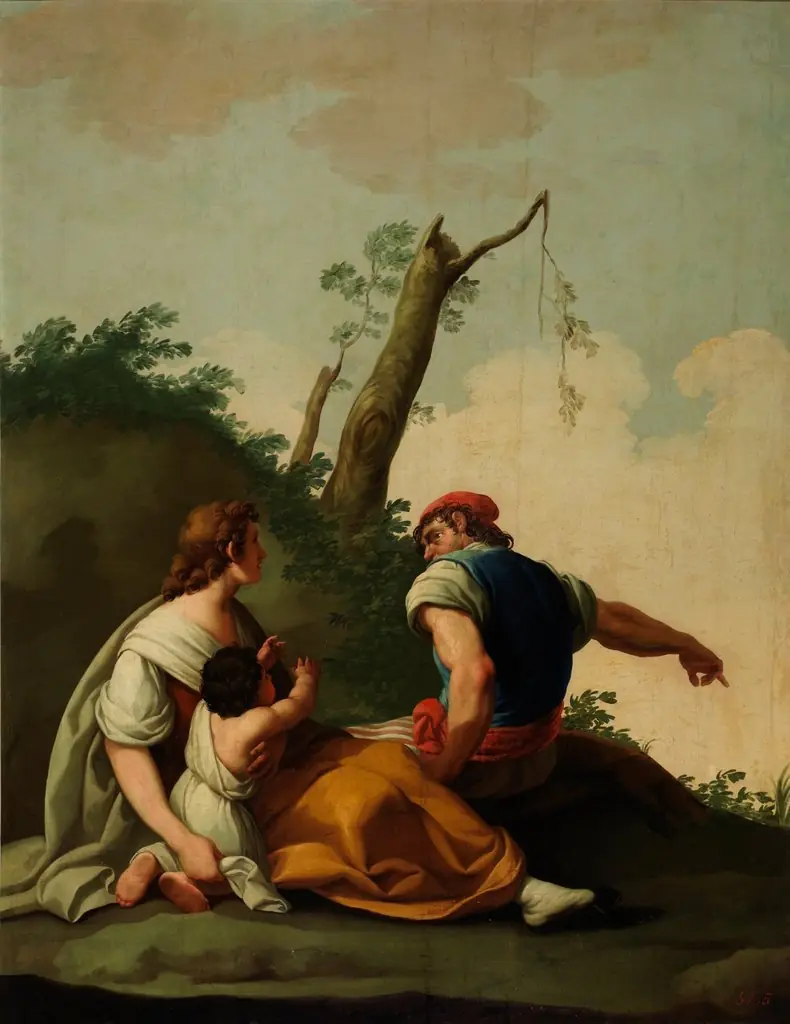 Hombre y mujer con un niño en brazos
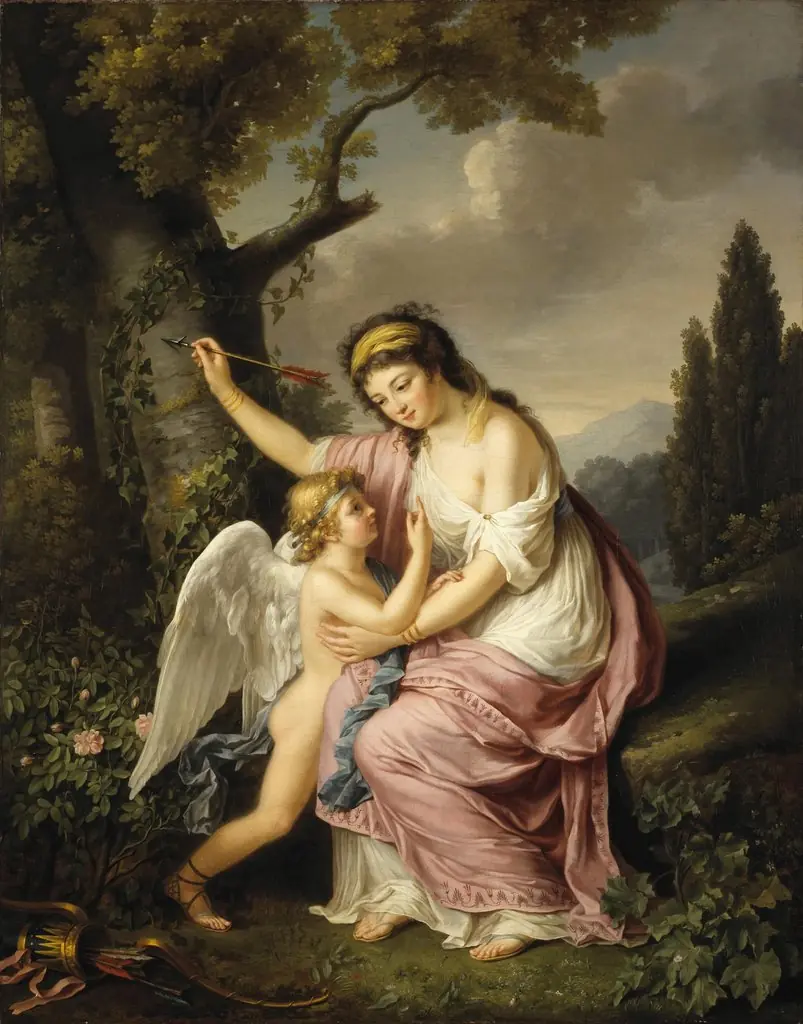 Woman and Cupid
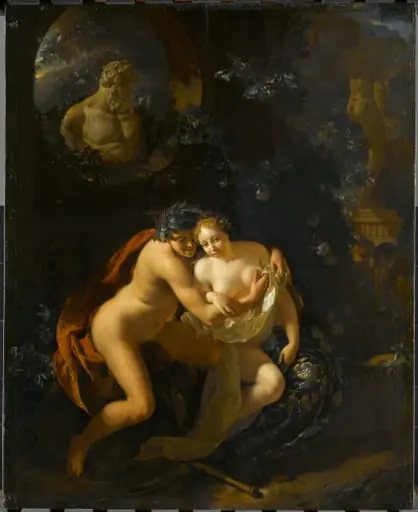 A Couple Making Love in a Park Spied on by Children
 Rest on the Flight into Egypt
 Jupiter, Disguised as Diana, Seducing the Nymph Callisto
 Cupid, Stung by a Bee, Is Cherished by his Mother
 Maria mit Kind, Johannesknaben und Engeln
 Spring