Artwork
Elizabeth, Countess of Effingham
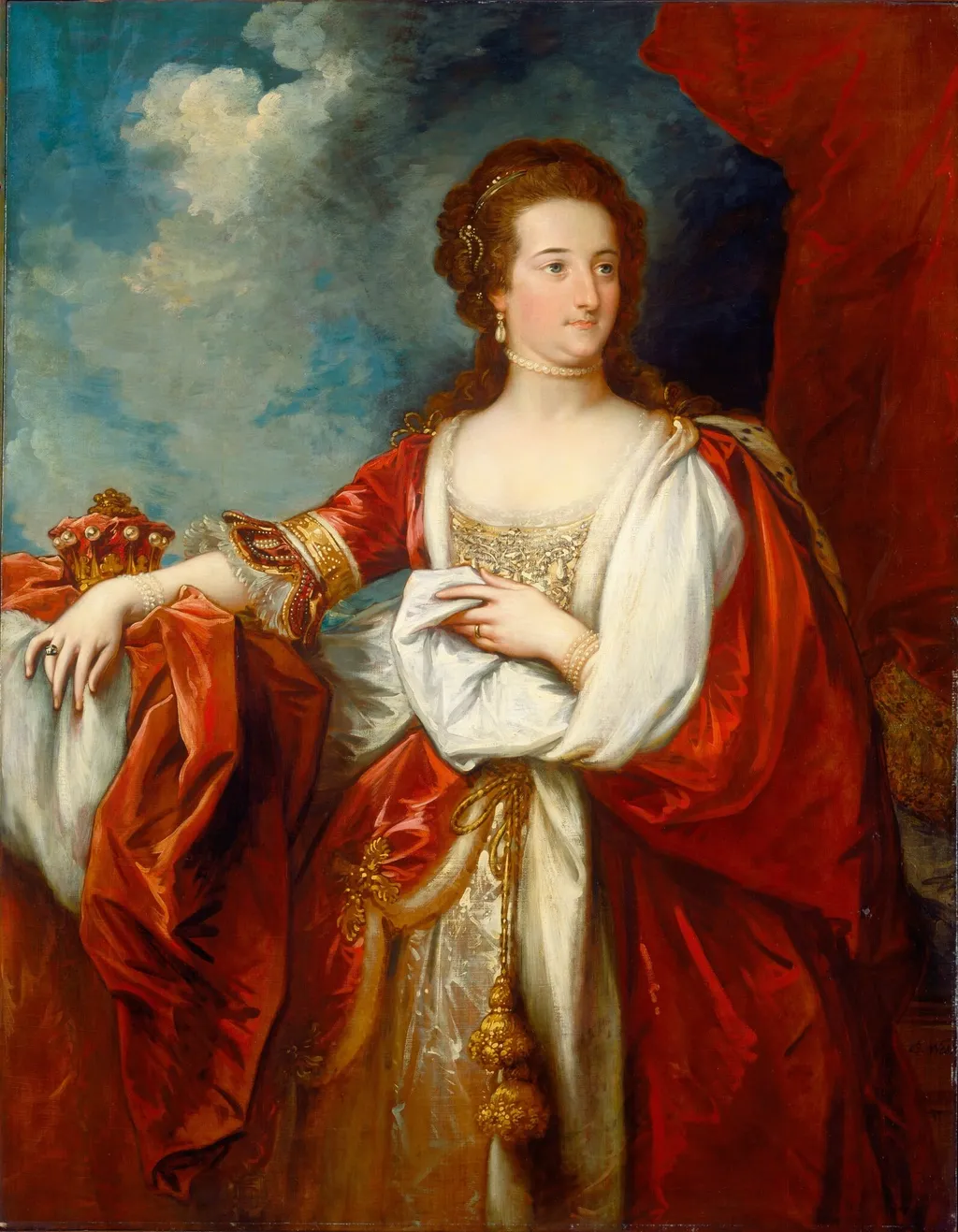
Elizabeth, Countess of Effingham is an oil painting by the American Impressionist artist Benjamin West. It dates from 1797 and is held in the collection of the National Gallery of Art.
- Inscription
- Inscribed:lower right: B. West; on back of canvas in a later hand: Elisabeth Countess of Effingham / Daughter of Peter Beckford Esq:r
About this work
Subject & Meaning
The portrait underscores the role of elite women in preserving aristocratic heritage during a period of evolving British cultural identity.
The painting portrays Elizabeth Howard, Countess of Effingham, as a distinguished noblewoman rendered in a grand portrait style characteristic of late 18th-century British art. The work functions as both a record of aristocratic status and a reflection of contemporary ideals of feminine virtue and lineage. Its iconography emphasizes the sitter's noble lineage and domestic virtue, aligning with Georgian portraiture conventions that conveyed social standing and moral propriety through clothing, setting, and compositional balance.
The portrait underscores the role of elite women in preserving aristocratic heritage during a period of evolving British cultural identity.
The painting measures 146.3 cm in height and 115.6 cm in width, executed in oil on canvas in 1797 by Benjamin West. It was originally owned by William Beckford and later passed through several generations of the Hamilton family before being sold in 1919 and acquired by Thomas B. Clarke in 1920. Subsequently, it entered the collection of the National Gallery of Art in Washington, D.C., through the bequest of Andrew W. Mellon in 1947.
Technique & Style
Elizabeth, Countess of Effingham is an oil painting on canvas executed by Benjamin West in 1797. The work measures 146.3 cm in height by 115.6 cm in width, a tall, moderately wide format suited to a standing or seated portrait composition. The medium of oil on canvas is consistent with West's standard practice for full-length and three-quarter-length portraiture of the period, allowing for layered glazing and refined handling of flesh tones and textiles.
The painting is held in the Andrew W. Mellon collection at the National Gallery of Art in Washington, D.C., where it has been preserved since its 1947 transfer from The A.W. Mellon Educational and Charitable Trust. No specific condition notes, conservation history, or stylistic analysis are documented in the available sources.
History & Provenance
The portrait was commissioned in 1797 by William Beckford, who later owned it at Fonthill Abbey and in Bath. After Beckford’s death it descended to his daughter Susan Euphemia Beckford, 10th Duchess of Hamilton, and remained at Hamilton Palace. By descent it passed to the 12th Duke of Hamilton, whose estate sold it at Christie’s London on 6 November 1919 (lot 77).
The Tooth Brothers purchased it and resold it on 4 February 1920 to New York collector Thomas B. Clarke. Clarke’s estate disposed of the work in 1936 via M. Knoedler & Co. to The A.W. Mellon Educational and Charitable Trust, which gave it to the National Gallery of Art, Washington, in 1947.
The painting is held in the collection of the National Gallery of Art in Washington, D.C., having entered the institution as a gift from the A.W. Mellon Educational and Charitable Trust in 1947. Prior to this acquisition, the work passed through the estate of Thomas B. Clarke and was sold via M. Knoedler & Co. to the Trust in January 1936.
Regarding its exhibition history, the portrait was included in the 1928 show "Portraits by Early American Artists of the Seventeenth, Eighteenth and Nineteenth Centuries Collected by Thomas B. Clarke," organized by the Philadelphia Museum of Art while still in Clarke's possession.
Legacy
The portrait of Elizabeth, Countess of Effingham, painted by Benjamin West in 1797, has been part of the National Gallery of Art's collection in Washington, D.C., since 1947 through the Andrew W. Mellon gift. Its provenance traces a complex lineage from William Beckford's collection at Fonthill Abbey through the Hamilton family to Thomas B. Clarke and ultimately to the museum. The work's enduring presence in a major American institution has contributed to scholarly attention on West's portraiture and the representation of aristocratic women in late 18th-century Britain.
Overview
Benjamin West’s oil portrait, executed around 1797, presents Elizabeth Howard, Countess of Effingham, in a poised stance. Rendered on canvas, the work captures the aristocratic sitter in a richly colored ensemble against a sky‑filled backdrop, reflecting the conventions of late‑eighteenth‑century portraiture.
Own this work as a print
Artist & collection

Artist
Benjamin West (October 10, 1738 – March 11, 1820) was an American-born British painter who specialised in history painting, creating such works as The Death of Nelson, The Death of General Wolfe, the Treaty of Paris,…

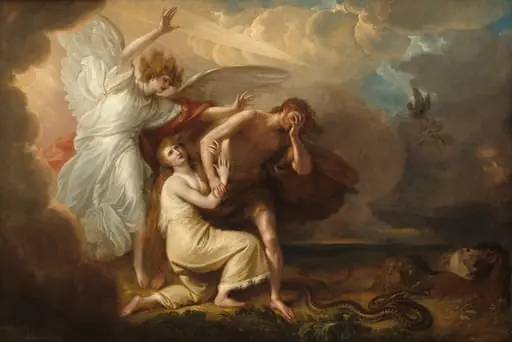 The Expulsion of Adam and Eve from Paradise
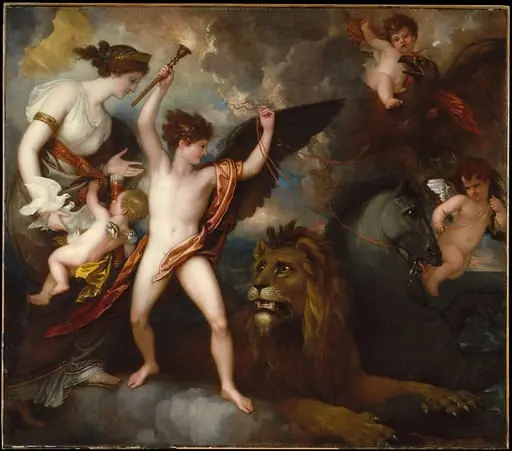 Omnia Vincit Amor, or The Power of Love in the Three Elements
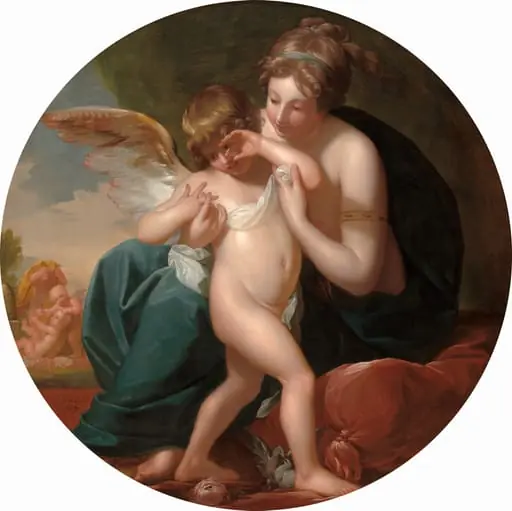 Cupid, Stung by a Bee, Is Cherished by his Mother
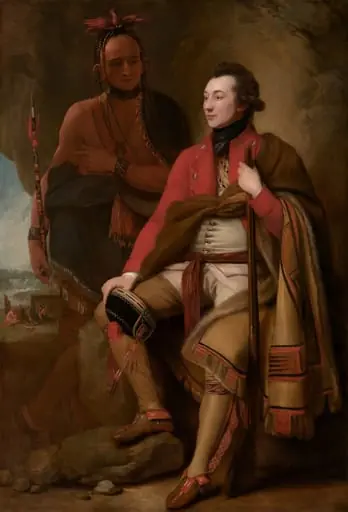 Colonel Guy Johnson and Karonghyontye (Captain David Hill)
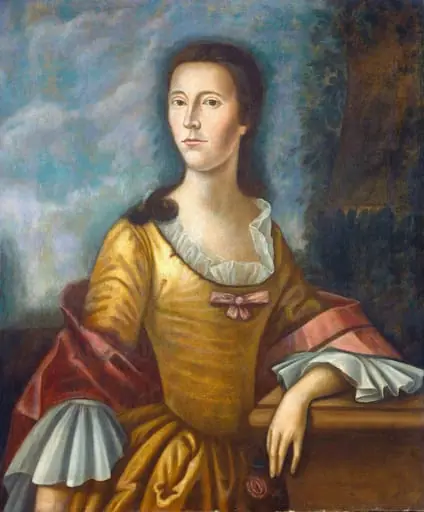 Mary Bethel Boude (Mrs. Samuel Boude)
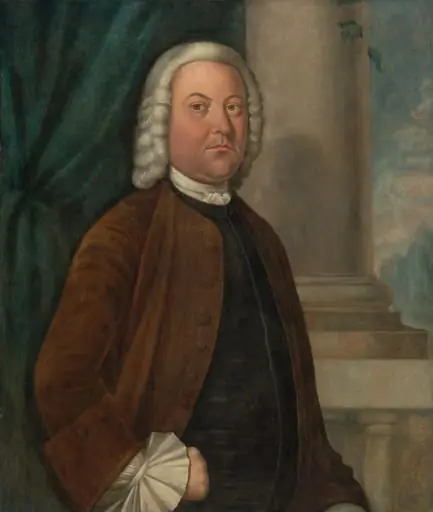 Dr. Samuel Boude
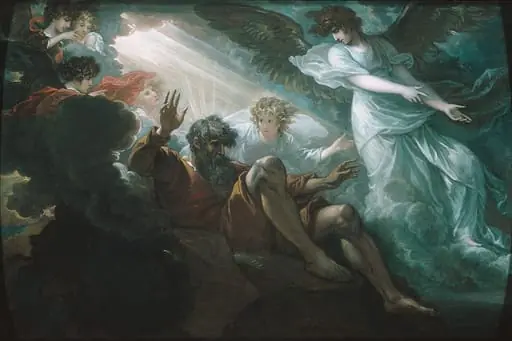 Moses Shown the Promised Land
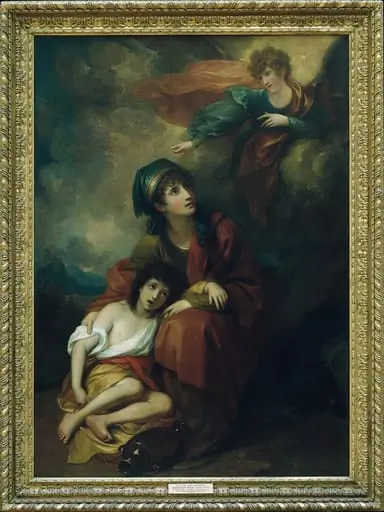 Hagar and Ishmael
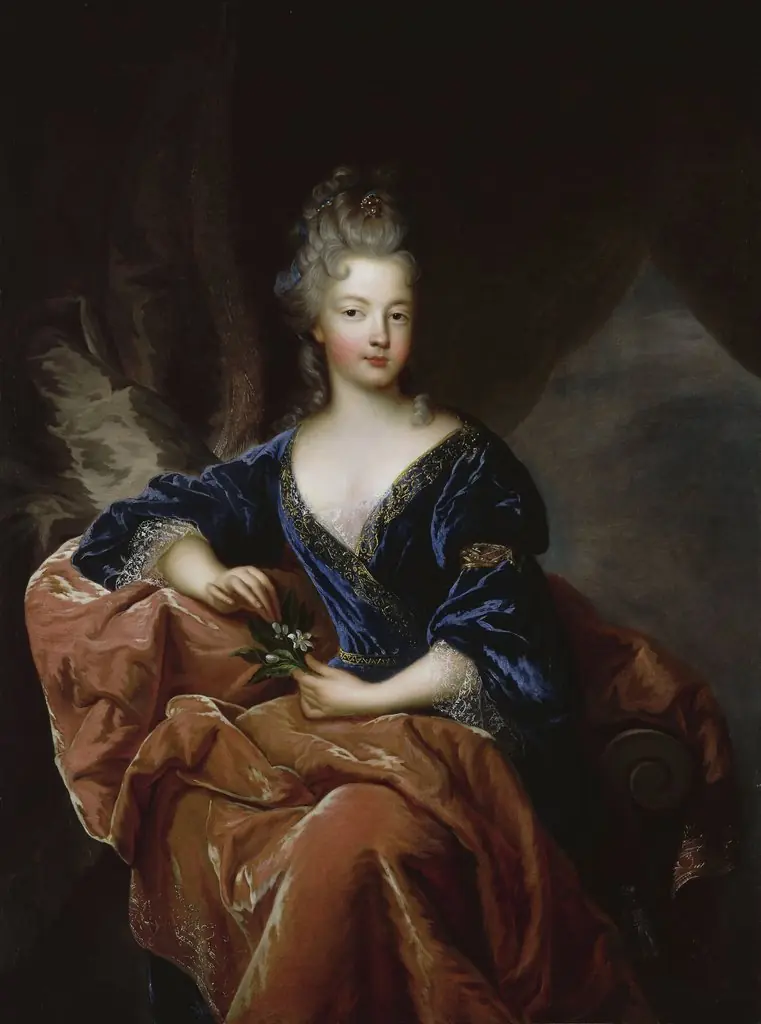
- Portrait of Françoise Marie de Bourbon (1677-1749)
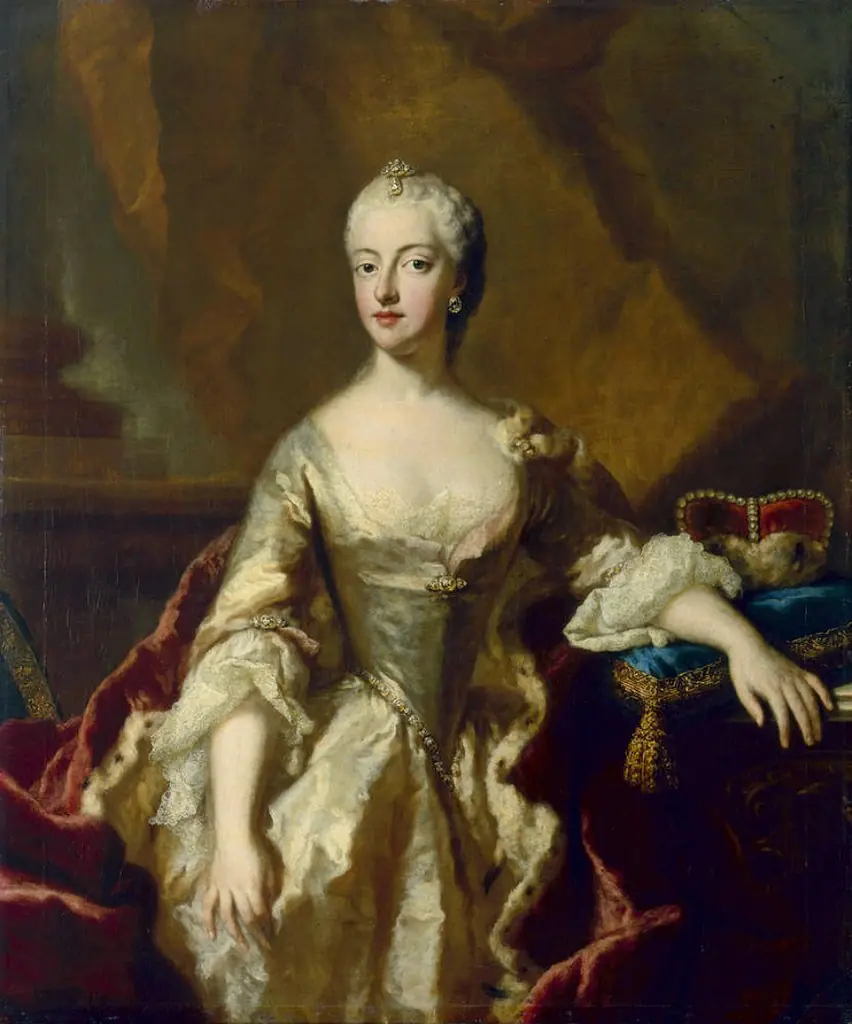 Margravine Maria Anna Josepha of Baden-Baden
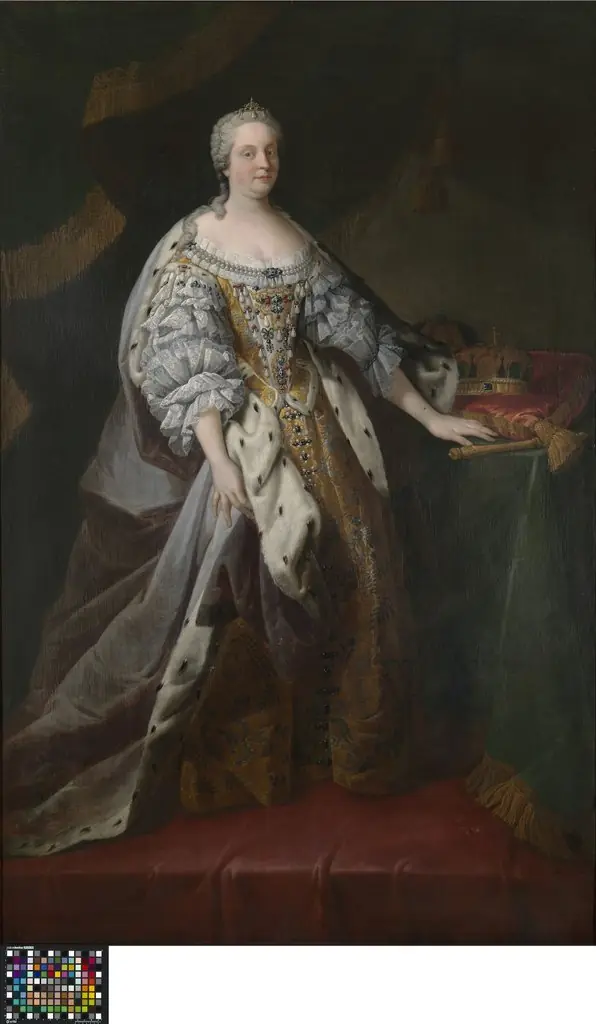 Portret van keizerin Maria Theresia
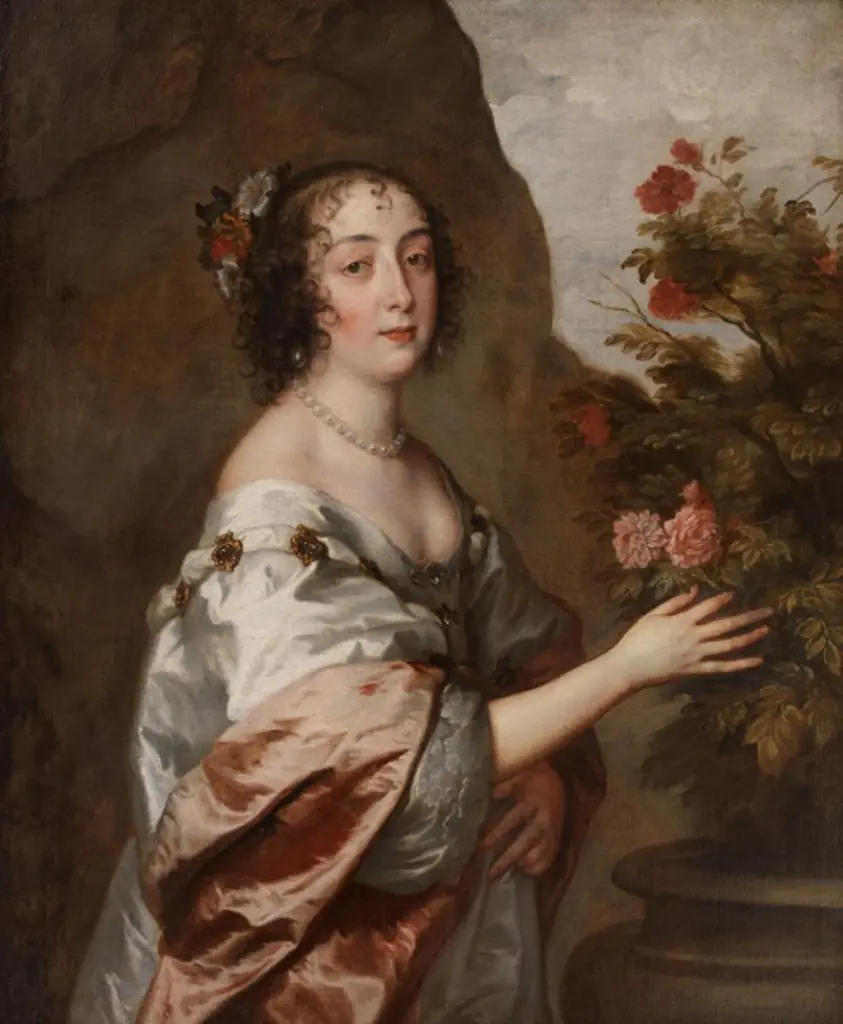 Portræt af en kvinde som Flora
 Portrait of a Lady
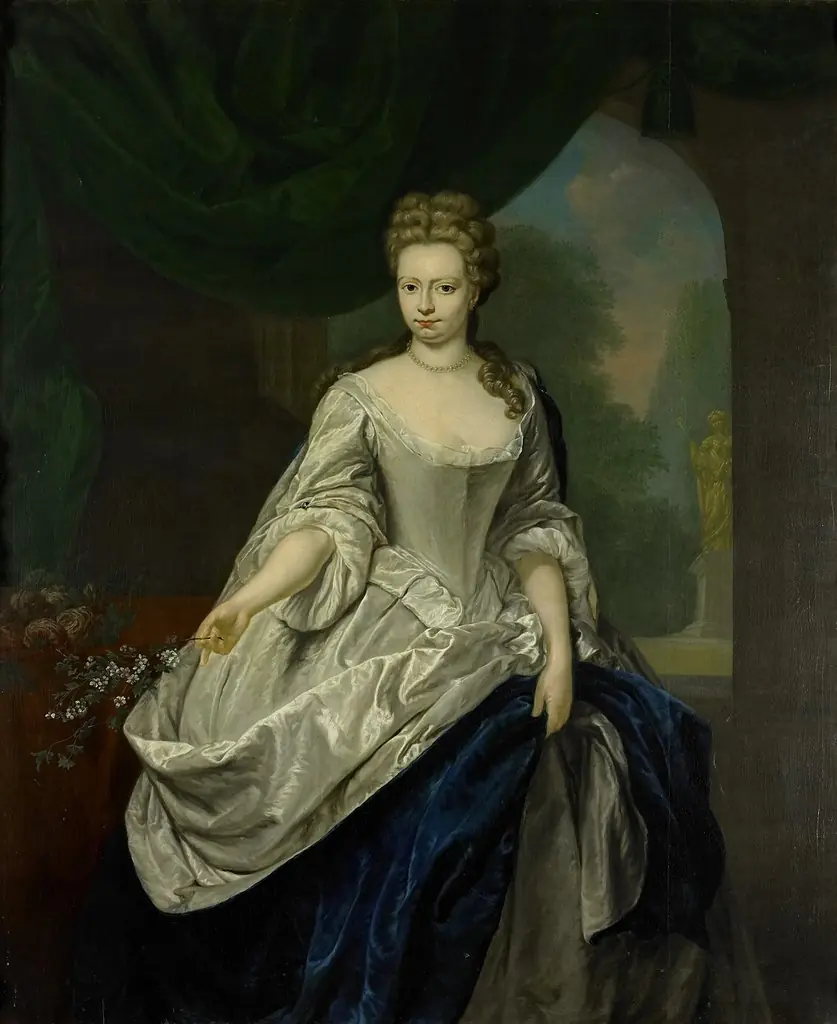 Portrait of Louise Christina Trip (died 1733), Wife of Gerrit Sichterman
 Eleonore Magdalena (1655-1720) von Pfalz - Neuburg, Kaiserin, Kniestück
 Porträt der Maria Josepha of Austria (1699-1757), Electress of Saxony and Queen of Poland
 Kuningatar Ulrika Eleonora vanhempi
 Portrait of Sophie Dorothea of Prussia
 Catherine Opalińska, Queen of Poland
 Elisabeth Christine of Brunswick-Wolfenbüttel (1691–1750), wife of emperor Charles VI, against clouds