Artwork
Battersea Reach
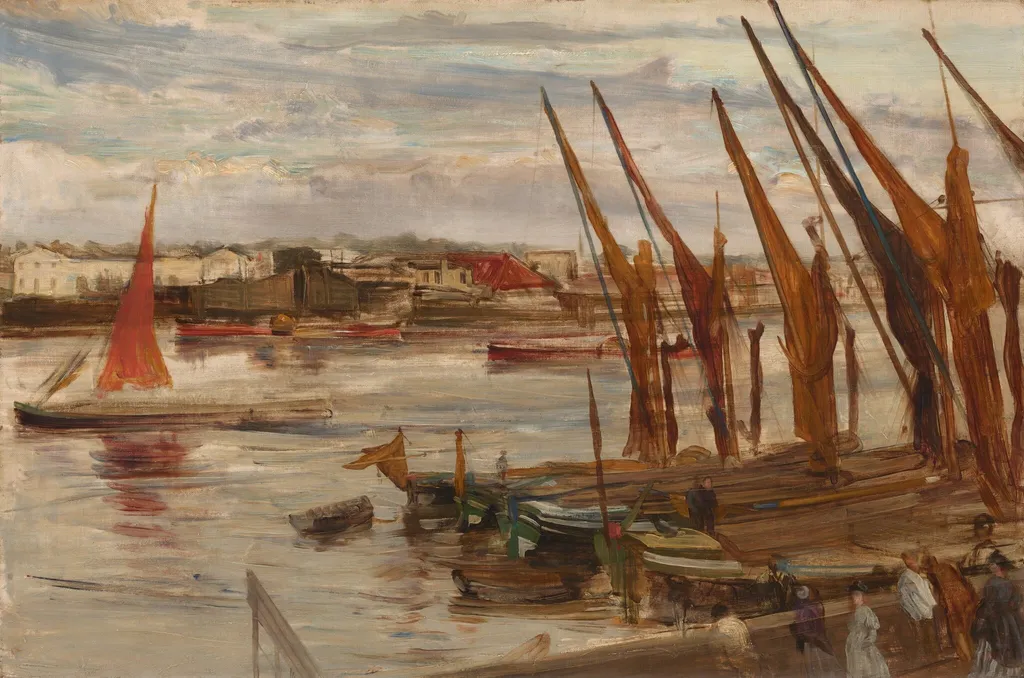
Battersea Reach is an oil painting by the American Impressionist artist James McNeill Whistler. It dates from 1863 and is held in the collection of the National Gallery of Art.
- Inscription
- Inscribed:lower right reverse: [the artist's butterfly monogram]
About this work
Subject & Meaning
The painting presents a solitary boat on the Thames near Battersea, rendered within a broad river landscape.
The painting presents a solitary boat on the Thames near Battersea, rendered within a broad river landscape. Whistler's classification of the work as a landscape underscores his focus on the subtle effects of light and atmosphere upon water, using the boat as a modest focal point amid expansive sky and river. The depiction emphasizes the quiet, observational character of the scene rather than narrative storytelling, allowing viewers to experience the fleeting qualities of the river's surface and surrounding environment.
Technique & Style
Battersea Reach is an oil painting on canvas measuring 50.8 cm in height by 76.36 cm in width, produced in 1863. The work belongs to Whistler's landscape genre and portrays a river scene dominated by a solitary boat. Executed in oil paint, the surface demonstrates the smooth, tonal application characteristic of the artist's early mature style, with a muted palette that emphasizes atmospheric effects over detailed narrative.
The canvas support is stretched and primed, allowing the thin layers of pigment to blend into a cohesive, almost monochromatic surface. The composition balances the horizontal expanse of water with the vertical suggestion of the riverbank, creating a harmonious visual rhythm.
History & Provenance
Battersea Reach was painted by James McNeill Whistler in 1863 in oil on canvas. The provenance begins with George John Cavafy in London around 1863; the work passed by descent in 1891 to his son, John Cavafy, also in London. Edward G. Kennedy of Wunderlich & Co., New York, purchased it in 1892, and the following year it was acquired by Isaac Cook, Jr., of Maine.
The dealer John Levy, New York, held the painting by 1918, after which it entered the collection of James Parmelee in Cleveland and Washington. Following Parmelee's death in 1931, the work passed to his widow, Alice Maury Parmelee, who bequeathed it in 1941 to the Corcoran Gallery of Art, Washington. It remained there until 2014, when it was acquired by the National Gallery of Art, also in Washington, D.C., where it is currently held. The work's exhibition history is not detailed in the available records.
Context
James McNeill Whistler's Battersea Reach (1863) occupies a position in the artist's transition from realist landscapes toward the tonal harmonies of his later aestheticism. The work belongs to Whistler's Thames subjects, where his experimentation with muted palettes and atmospheric effects prefigures the formal innovations of his Nocturnes, emphasizing an evocative rendering of light and water over conventional narrative.
In art-historical terms, Battersea Reach is often discussed in relation to Whistler's role as a bridge between British and continental developments in nineteenth-century painting. Its long tenure in the Corcoran Gallery of Art (1941–2014) and subsequent acquisition by the National Gallery of Art underscore its institutional recognition.
Overview
James McNeill Whistler's Battersea Reach, an oil on canvas from approximately 1863, captures a tranquil scene along the Thames River. This painting exemplifies the artist's engagement with American Impressionism. The composition focuses on a solitary boat, rendered with a soft, atmospheric quality that was characteristic of Whistler's approach to landscape, emphasizing visual harmony over narrative content. It features his distinctive butterfly signature.
Own this work as a print
Artist & collection
Artist
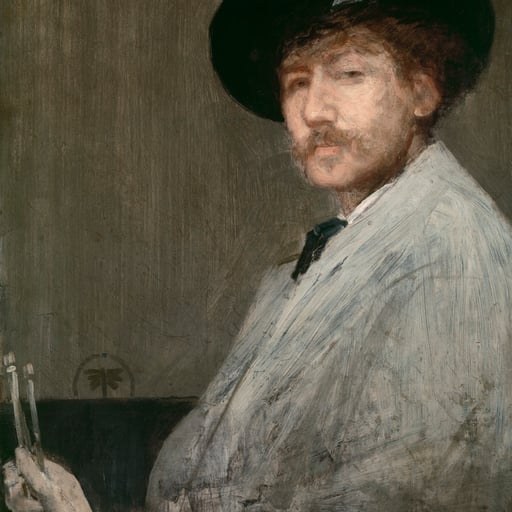
James Abbott McNeill Whistler (; July 10, 1834 – July 17, 1903) was an American painter in oils and watercolor, and printmaker, active during the American Gilded Age and based primarily in the United Kingdom.

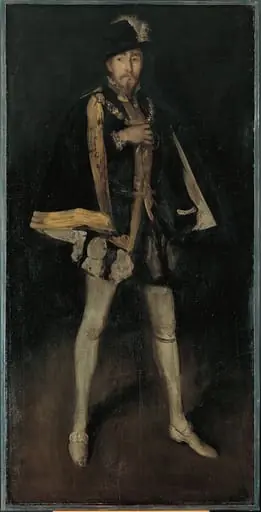 Arrangement in Black, No. 3: Sir Henry Irving as Philip II of Spain
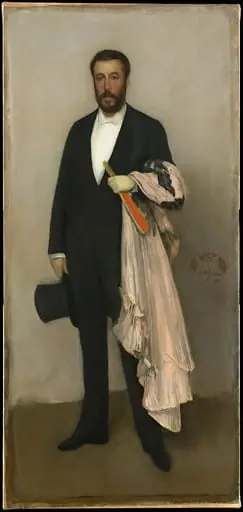 Arrangement in Flesh Colour and Black: Portrait of Theodore Duret
 Gold and Brown: Self-Portrait
 Edward Guthrie Kennedy
 Harmony in Yellow and Gold: The Gold Girl—Connie Gilchrist
 George W. Vanderbilt
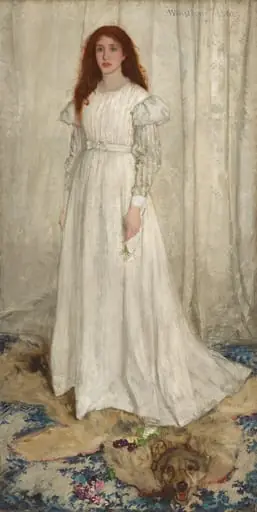 Symphony in White, No. 1: The White Girl
 Henry Irving as Philip II of Spain
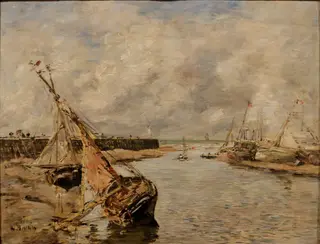 Trouville-Deauville – Low Tide
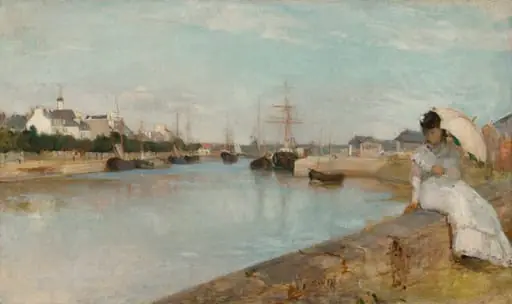 The Harbor at Lorient
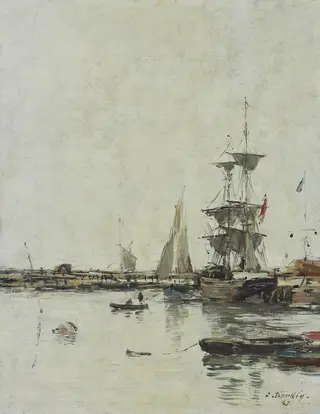 La jetée à Trouville
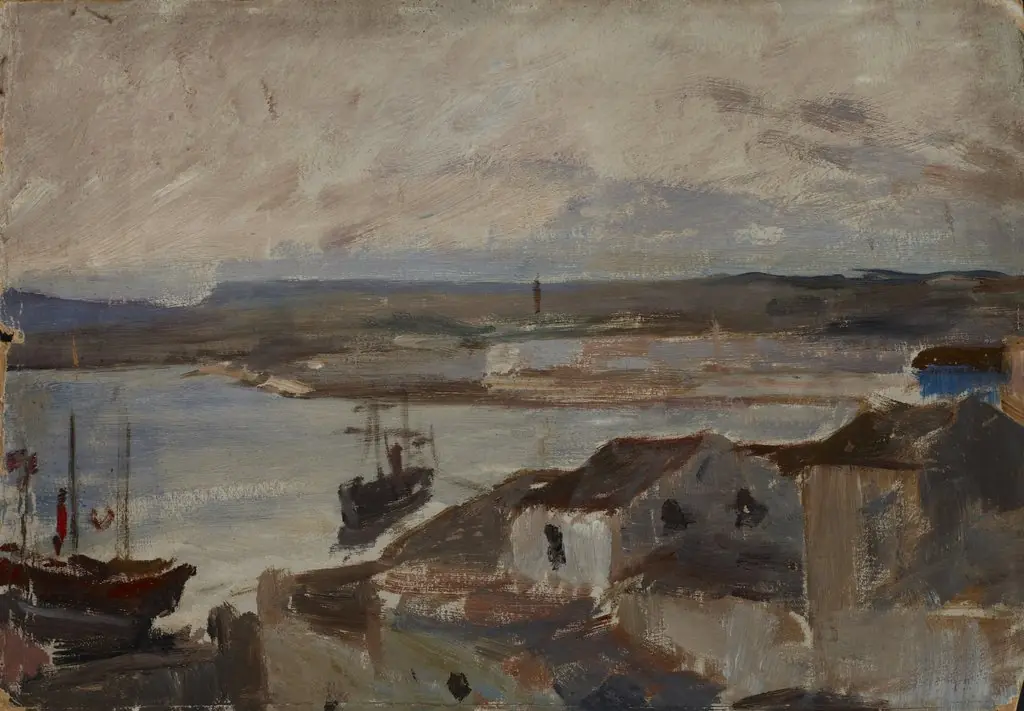 Catania in Sicily; The Cycle: Italy
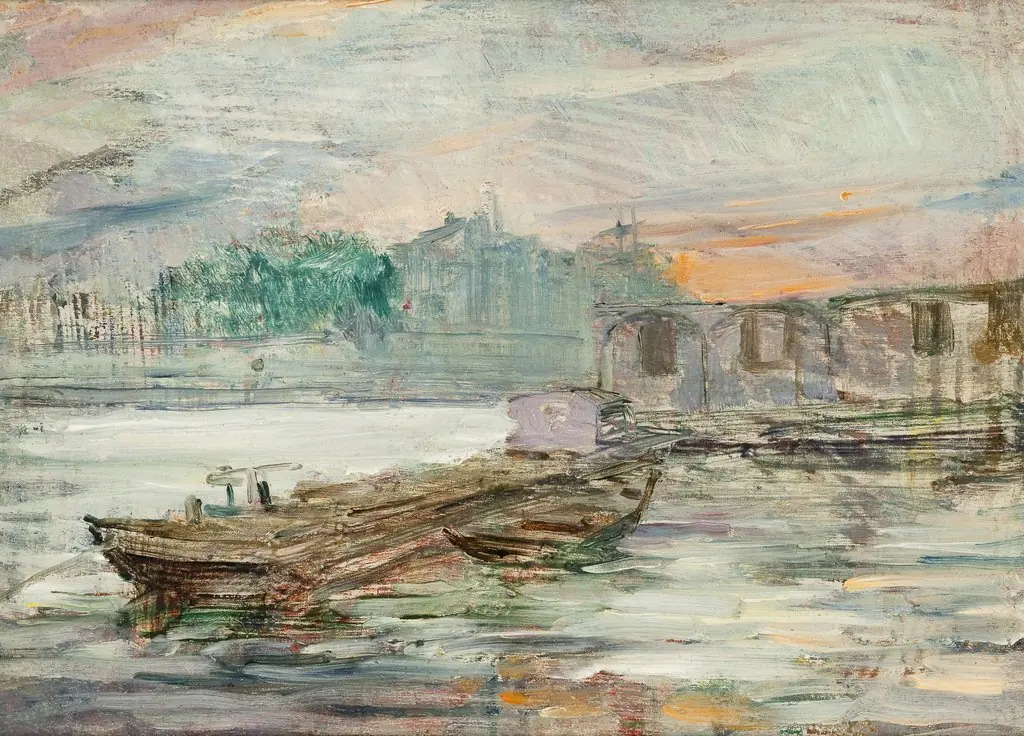 Barges on the Seine
 Low Tide near Trouville
 Steamer, Port of Algiers
 Grey and Silver: Old Battersea Reach
 De brug over de IJssel bij Doesburg
 Trouville Les Jetees a Maree Basse
 Peisaj la Constantinopol
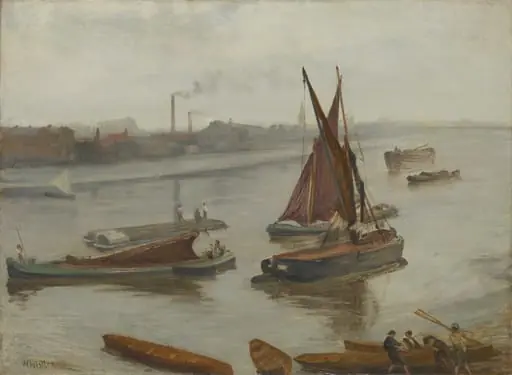
- Grey and Silver: Old Battersea Reach