Artwork
Savoy Scaffolding
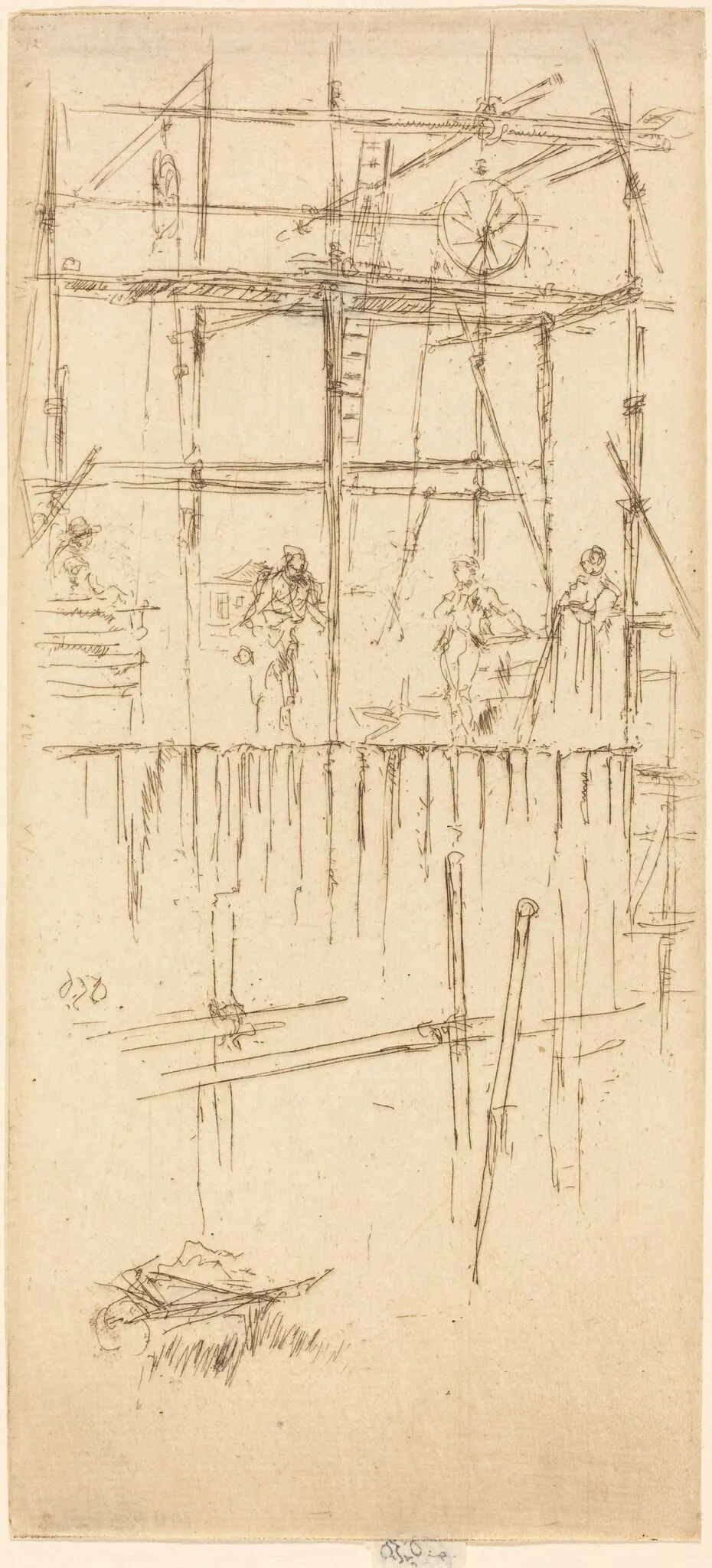
Savoy Scaffolding is an ink print by the Impressionist artist James McNeill Whistler. It dates from 1887 and is held in the collection of the National Gallery of Art.
- Inscription
- Inscribed:on plate: (butterfly); on tab: (butterfly) imp
About this work
Overview
Unlike narrative-driven prints, this piece prioritizes form and atmosphere, capturing a moment of construction with minimal detail and a restrained tonal range.
Created around 1887, Savoy Scaffolding is an etching in dark brown ink on laid paper by James McNeill Whistler. The work belongs to a series of urban studies made during his time in London, reflecting his interest in transient architectural scenes. Unlike narrative-driven prints, this piece prioritizes form and atmosphere, capturing a moment of construction with minimal detail and a restrained tonal range.
Subject & Meaning
The scene depicts scaffolding surrounding a building under renovation, with four laborers on a platform engaged in quiet, unglamorous tasks. One leans on a pole, another holds a tool, and a third gazes upward, while an empty cart rests below. The absence of dramatic action or emotional emphasis underscores Whistler’s commitment to visual rhythm over storytelling, presenting labor as part of the urban fabric rather than its focus.
Technique & Style
Whistler employed loose, rapid etching lines to suggest structure and movement, using dark brown ink on light paper to create subtle contrasts. The sketchy, unfinished quality reflects his preference for immediacy and observation over polished detail. His technique mirrors the spontaneity of on-site drawing, emphasizing the interplay of vertical scaffolding and horizontal ground lines to compose a balanced, atmospheric study.
History & Provenance
The print was made during Whistler’s later years in London, when he increasingly turned to etching as a medium for personal exploration. It likely originated from sketches made near the Savoy Hotel, then under construction. The work remained in private collections after his death and is now held in major institutional print rooms, valued for its quiet documentation of late-Victorian urban change.
Context
In the 1880s, London’s rapid expansion brought frequent construction, which Whistler observed with detached interest. His etchings of scaffolds, bridges, and riverbanks formed part of a broader movement among artists to record modern life without idealization. This work aligns with contemporaneous efforts by French and British printmakers to capture fleeting urban moments through direct, economical mark-making.
Legacy
Whistler’s Savoy Scaffolding exemplifies his influence on modern printmaking through its rejection of sentiment and emphasis on tonal harmony. Its unembellished depiction of labor and infrastructure prefigured later realist and modernist approaches to urban subjects. Though not widely exhibited in his lifetime, it now stands as a quiet testament to his belief in art as an arrangement of form, not a vehicle for moral or narrative content.
Artist & collection
Artist
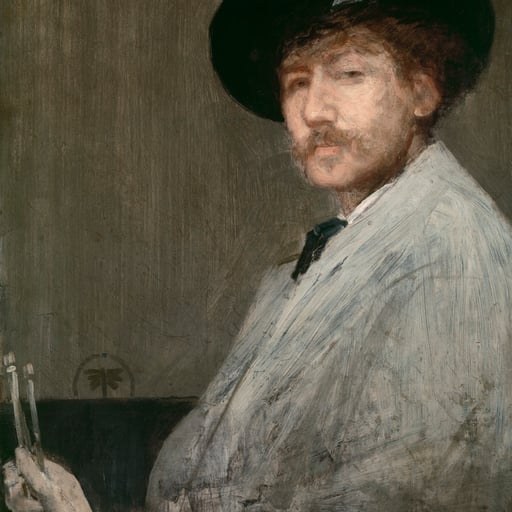
James Abbott McNeill Whistler (; July 10, 1834 – July 17, 1903) was an American painter in oils and watercolor, and printmaker, active during the American Gilded Age and based primarily in the United Kingdom.

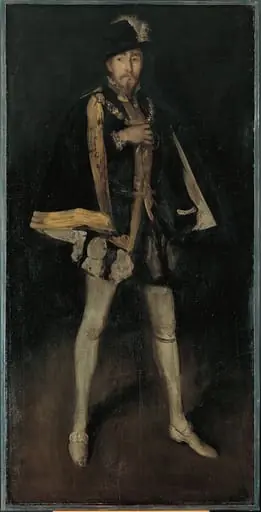 Arrangement in Black, No. 3: Sir Henry Irving as Philip II of Spain
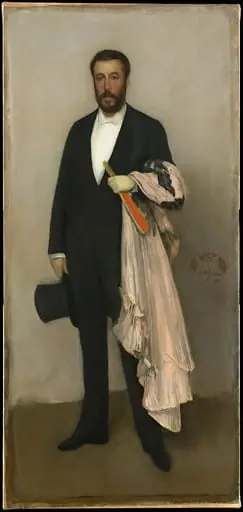 Arrangement in Flesh Colour and Black: Portrait of Theodore Duret
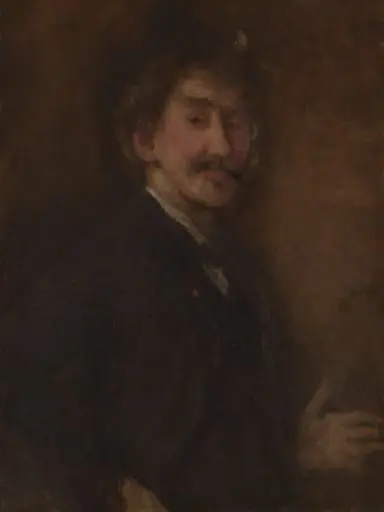 Gold and Brown: Self-Portrait
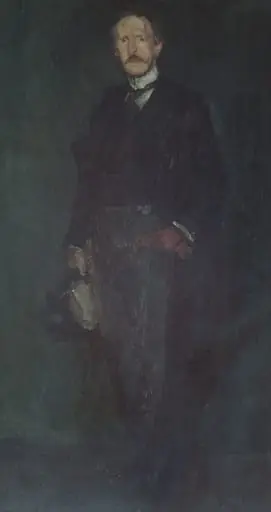 Edward Guthrie Kennedy
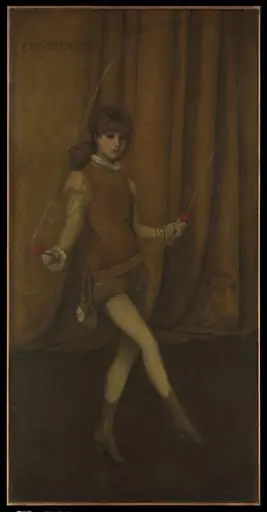 Harmony in Yellow and Gold: The Gold Girl—Connie Gilchrist
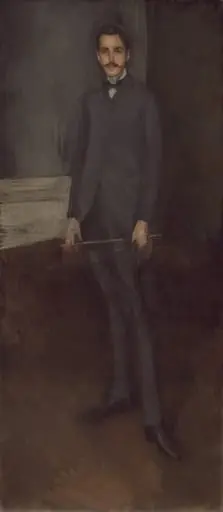 George W. Vanderbilt
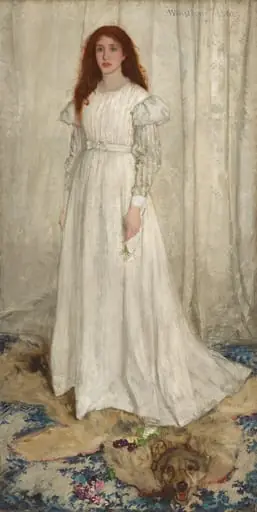 Symphony in White, No. 1: The White Girl
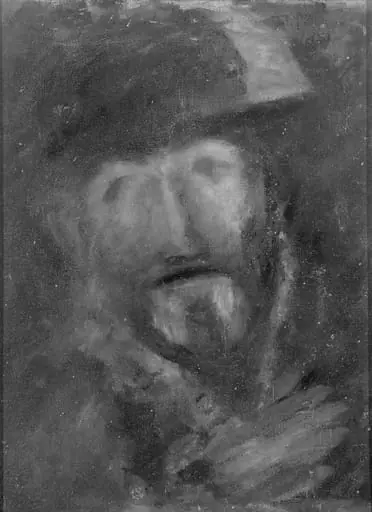 Henry Irving as Philip II of Spain
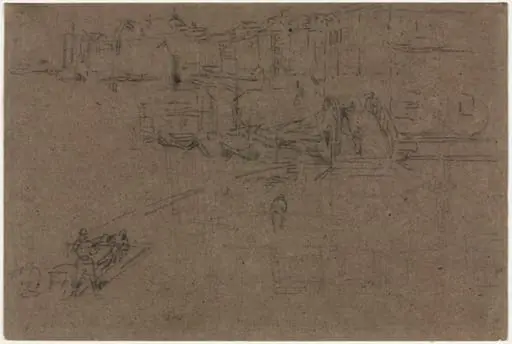
- The Riva, Venice
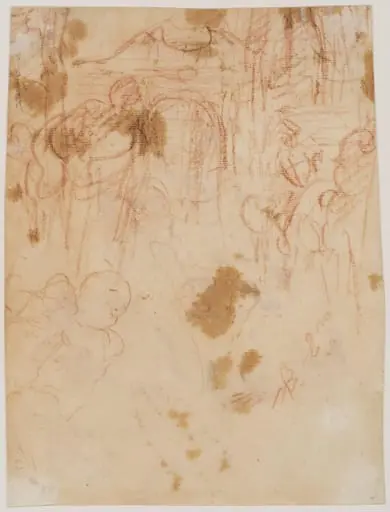 Recto: Rinaldo and Armida; verso: Study for a gateway
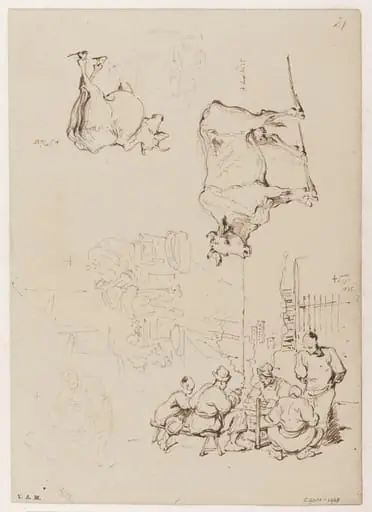 Figures eating at a food stall
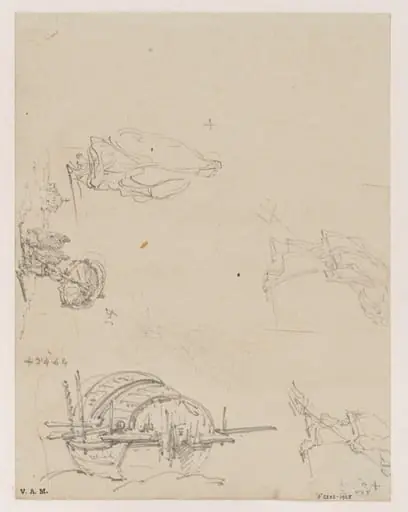 Chinese figures and a Tanka boat
![Palatial Mantelpiece with a Scene of Ancient Sacrifice [recto], by Austrian 16th Century](https://artifactworldgallery.com/img/austrian-16th-century--palatial-mantelpiece-with-a-scene-of-ancient-sacrifice-recto--6818e7e0eb258b13-w320.webp) Palatial Mantelpiece with a Scene of Ancient Sacrifice [recto]
Palatial Mantelpiece with a Scene of Ancient Sacrifice [recto]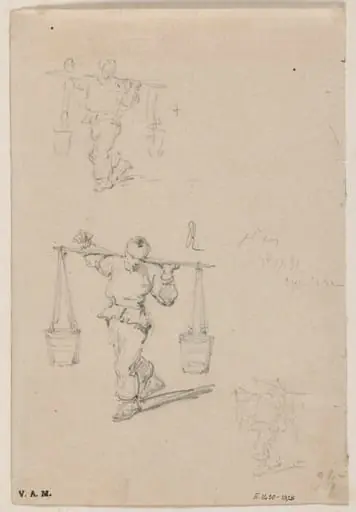 Three drawings of a Chinese porter
 View of Diemen
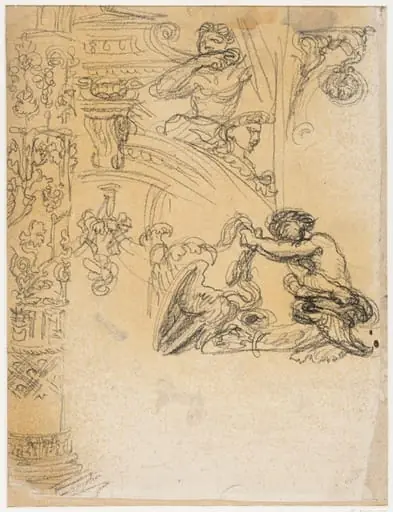 Studies by Alfred Stevens
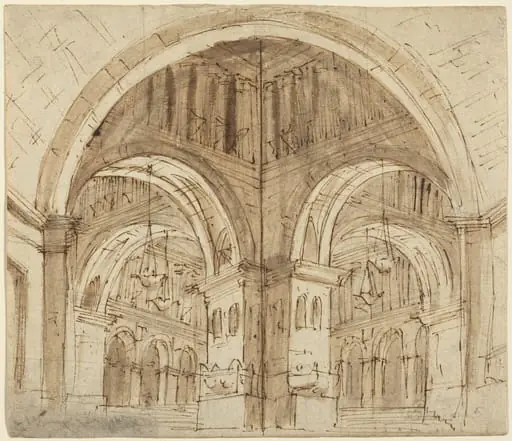 Design for a Vaulted Hall
![Figures on a Monumental Interior Stairway [recto], by Hubert Robert](https://artifactworldgallery.com/img/hubert-robert--figures-on-a-monumental-interior-stairway-recto--6662e6de2172f65b-w320.webp) Figures on a Monumental Interior Stairway [recto]
Figures on a Monumental Interior Stairway [recto]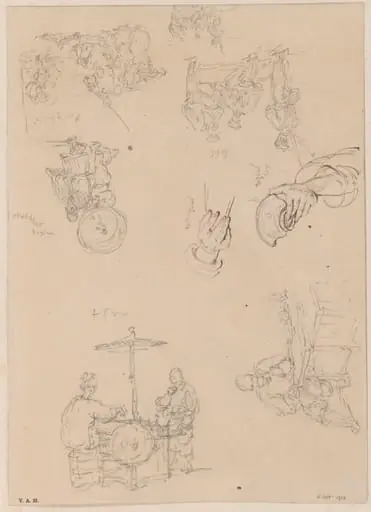 Chinese figures, soldiers, and details of hands
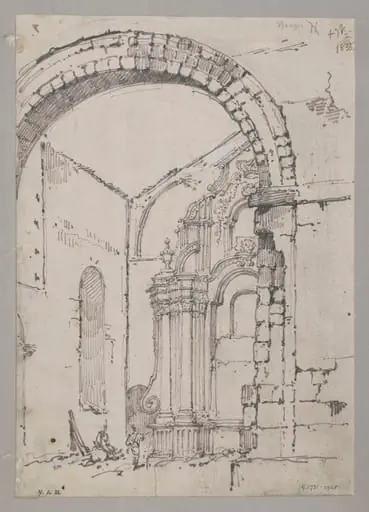 Large archway in the centre nave of St. Paul's Church, Macao, after it was burnt (December 1835)