Artwork
Portrait of a Man (Self-Portrait?)
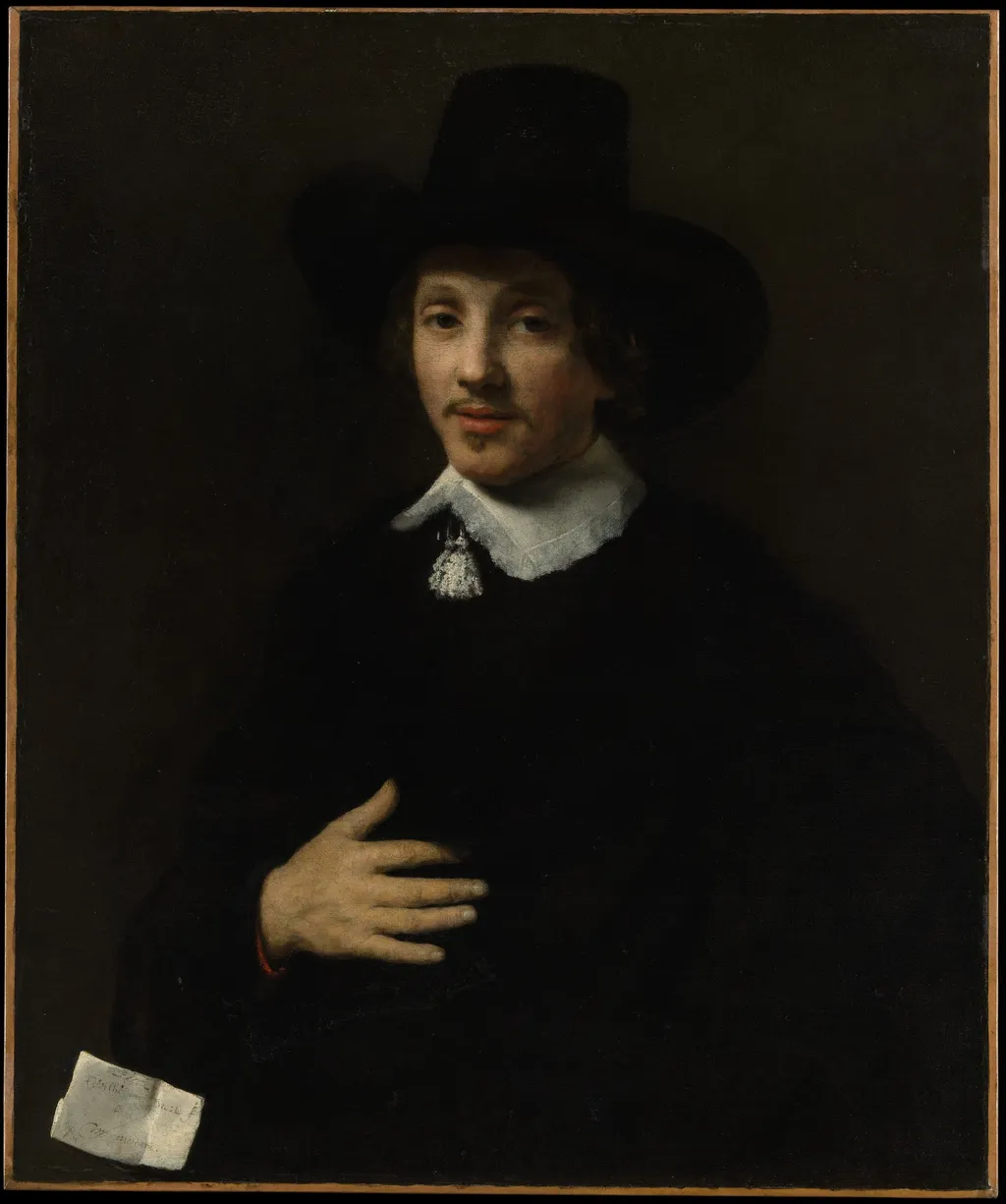
Portrait of a Man (Self-Portrait?) is an oil painting by the Dutch Golden Age artist Willem Drost. It dates from 1654 and is held in the collection of the Metropolitan Museum of Art.
About this work
A man with a serious expression in a dark hat and light collar, his right hand on his chest against a black background. The brushwork on his face and hands is smooth, while the dark areas sit thick. Willem Drost set the face sharply against the darkness in 1654, the fingers slightly spread for a lifelike touch.
Subject & Meaning
The work shows a man rendered in oil on canvas, dated 1654, and is identified as a portrait that may be a self‑portrait of the artist.
The work shows a man rendered in oil on canvas, dated 1654, and is identified as a portrait that may be a self‑portrait of the artist. In the composition the sitter holds a letter, a detail that scholars have interpreted as a symbolic reference to contemporary intellectual exchange or the artist’s engagement with his own likeness. The figure is presented with a direct gaze, emphasizing the sitter’s identity as both subject and creator.
The presence of the letter, together with the formal pose, conveys a sense of contemplation and professional status within the Dutch Golden Age portrait tradition.
Technique & Style
The work is executed in oil paint on canvas, a standard support for mid-seventeenth-century Dutch portraiture. Its dimensions, 86.7 cm in height by 72.4 cm in width, place it at a substantial half-length scale suited to the formal presentation of a sitter. The painting is held in the collection of the Metropolitan Museum of Art.
The medium and dimensions are consistent with Willem Drost's working practices during his documented production of portraits around 1654, when the artist was active in Amsterdam following his training with Rembrandt.
History & Provenance
Portrait of a Man (Self‑Portrait?) is an oil on canvas painted by Dutch artist Willem Drost in 1654, as recorded in contemporary documentation. The 86.7 × 72.4 cm work portrays Drost holding a letter and was created during his mature period. It is classified as a self‑portrait and entered the collection of the Metropolitan Museum of Art, where it remains on display.
The painting’s provenance is confined to its acquisition by the Met, which holds it in its European paintings department. No documentary evidence of a specific commission has been identified.
The work is held by the Metropolitan Museum of Art, New York, where it is inventoried as 1975.1.119. It was painted in 1654 and first recorded in modern collections at the Metropolitan Museum of Art, where it remains on view as part of the European Paintings collection.
Overview
Painted in 1654, Willem Drost's Portrait of a Man (Self-Portrait?) is a half-length oil portrait depicting a young man against a stark, unmodulated black background. The sitter faces slightly left, wearing a dark, wide-brimmed hat and a dark garment accented by a crisp, light-colored collar. His right hand is raised to his chest, a gesture that draws attention to the collar and creates a focal point of light against the shadowed attire.
Drost employs a distinct textural contrast: the flesh tones of the face and hand are rendered with smooth, blended brushwork to achieve a lifelike softness, while the dark clothing and background are applied with thicker, more visible impasto. This technique emphasizes the sitter's features through chiaroscuro, a hallmark of the Amsterdam Rembrandt school. Created during Drost's brief but prolific career as a pupil of Rembrandt van Rijn, the work exemplifies the artist's mastery of light and psychological intensity.
The identification of the sitter as a self-portrait remains a subject of scholarly debate, though the direct gaze and intimate scale suggest a personal exploration of identity within the Dutch Golden Age tradition.
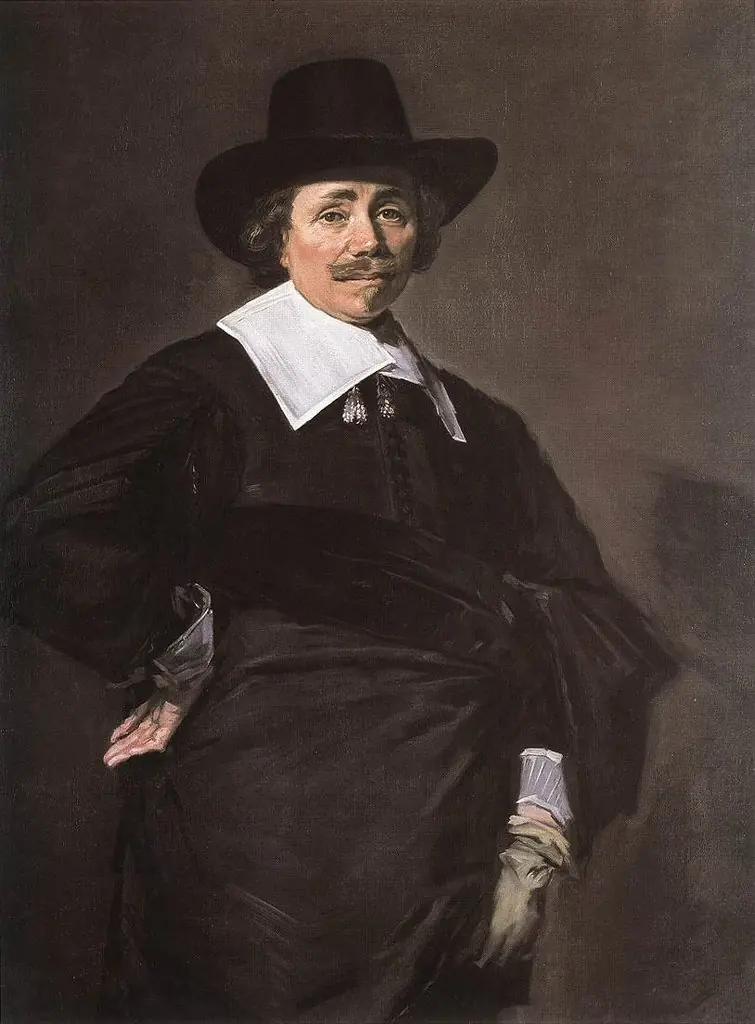
Own this work as a print
Artist & collection
Artist
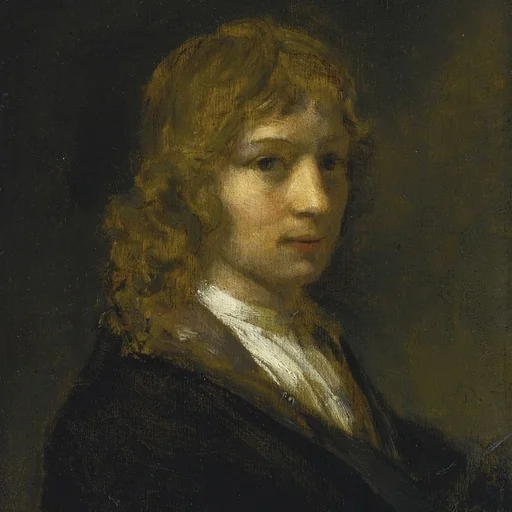
Willem Drost (baptized 19 April 1633 – buried 25 February 1659) was a Dutch Golden Age painter and printmaker of history paintings and portraits.

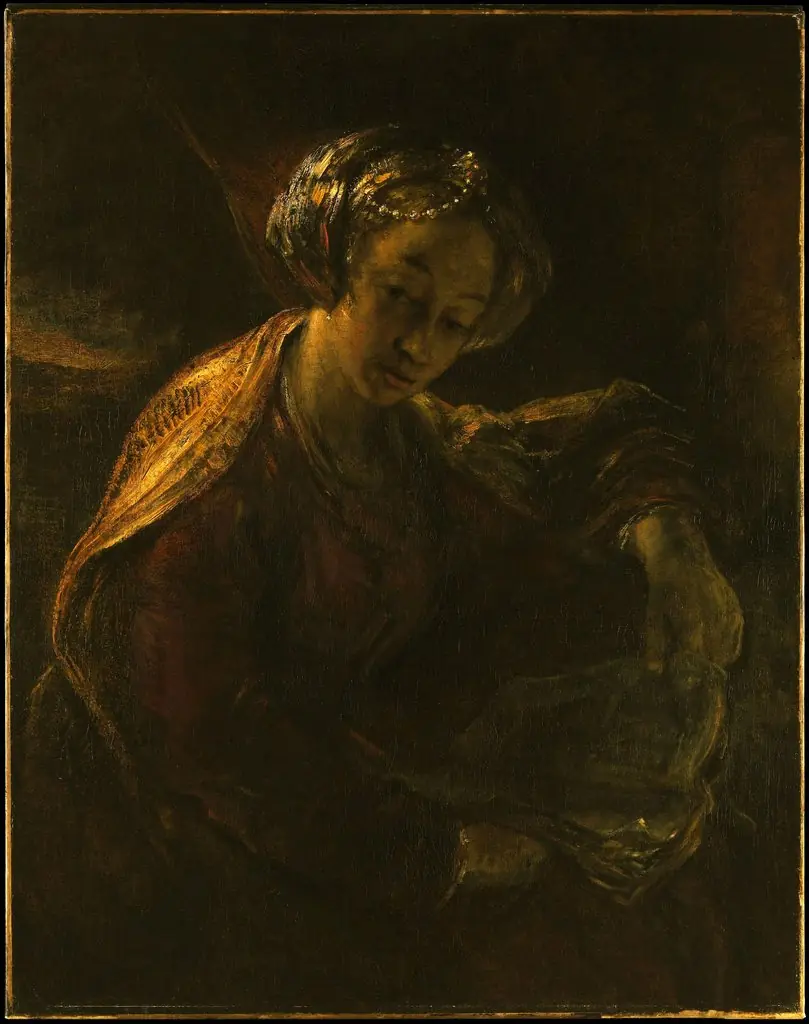
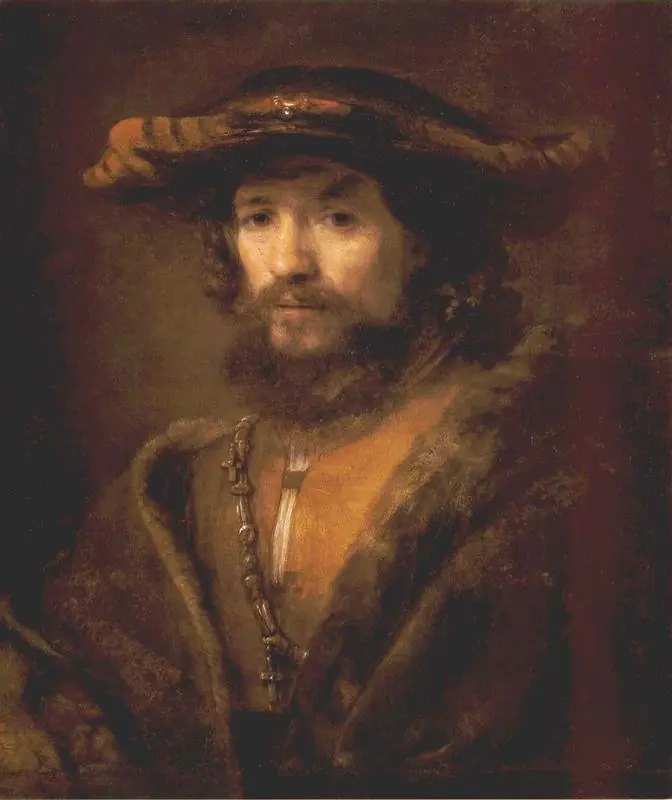
- Portrait of a man
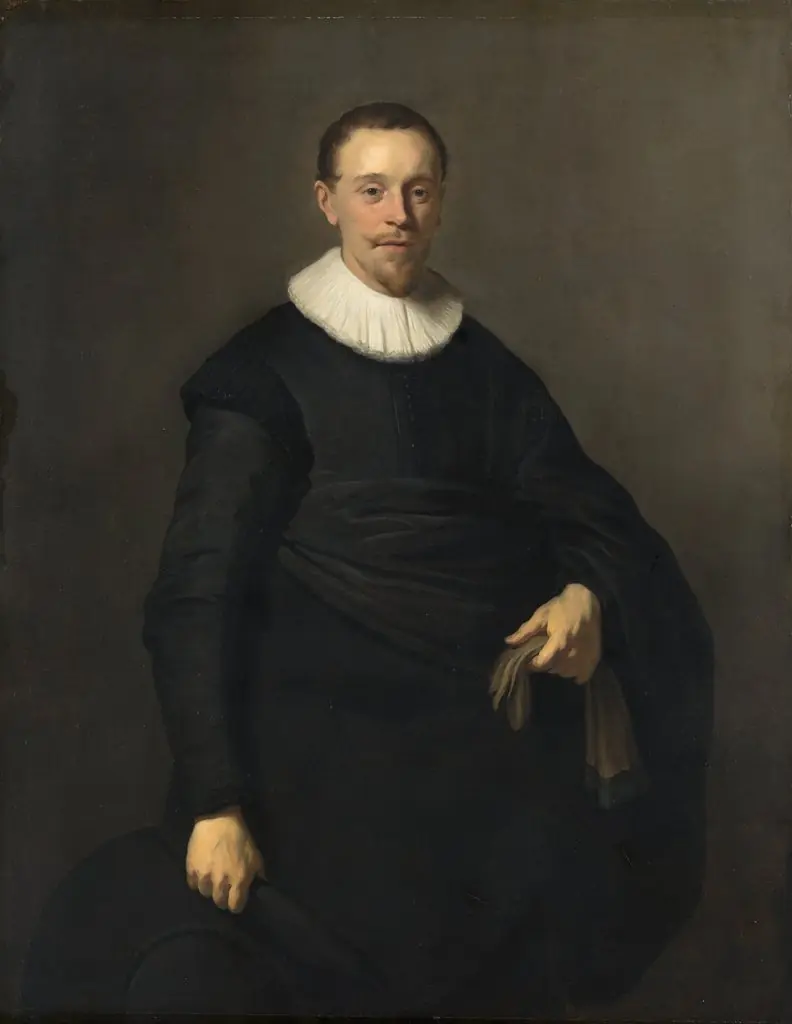 Portrait of a Man
 Portrait of Jeremias de Decker
 Portrait of a Gentleman with a Tall Hat and Gloves
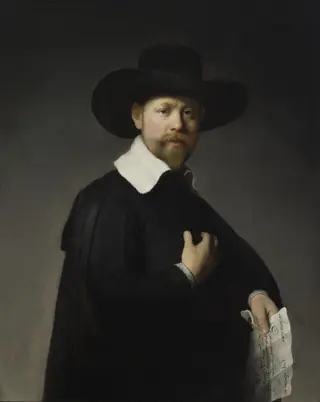 Portrait of Marten Looten
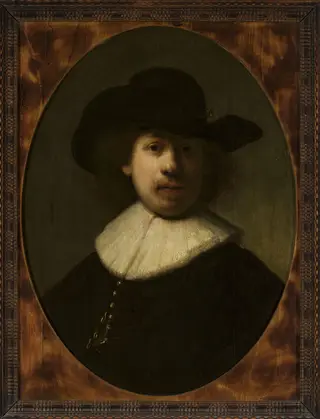 Self-portrait
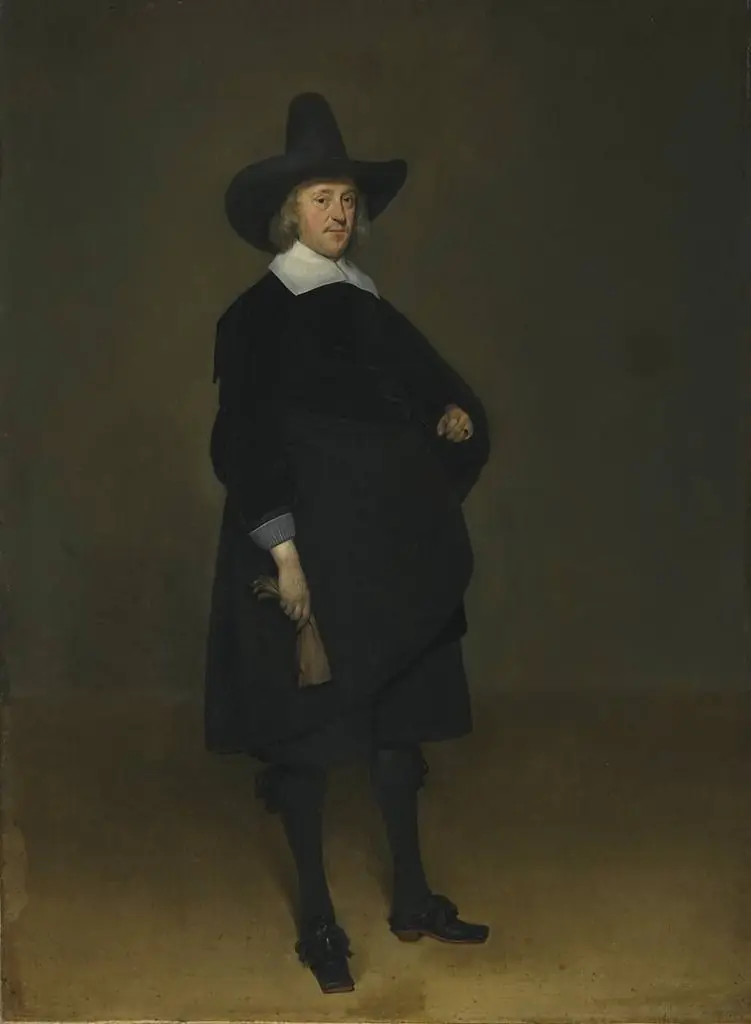 Portrait of a Man
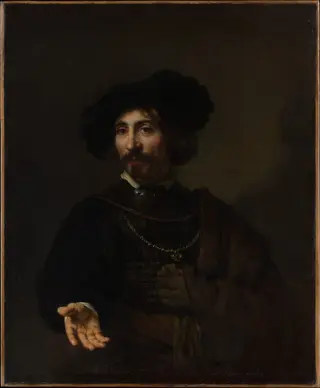 Man with a Steel Gorget
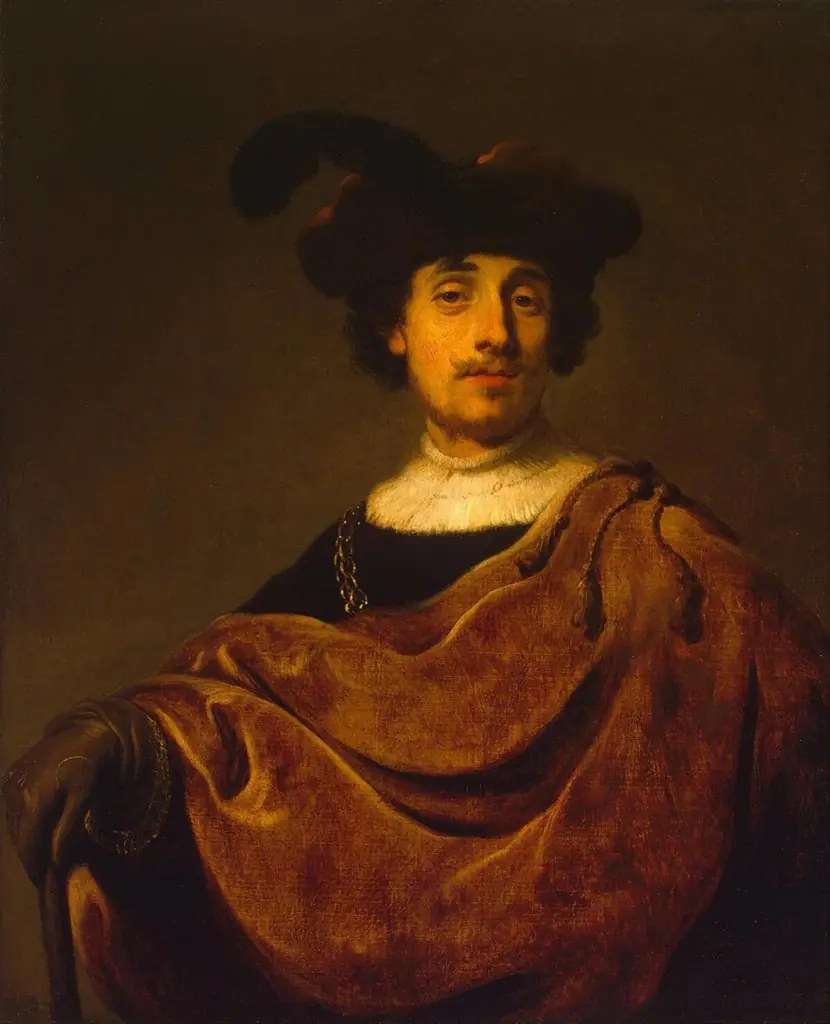 Portrait of a Young Man in a Fancy Dress
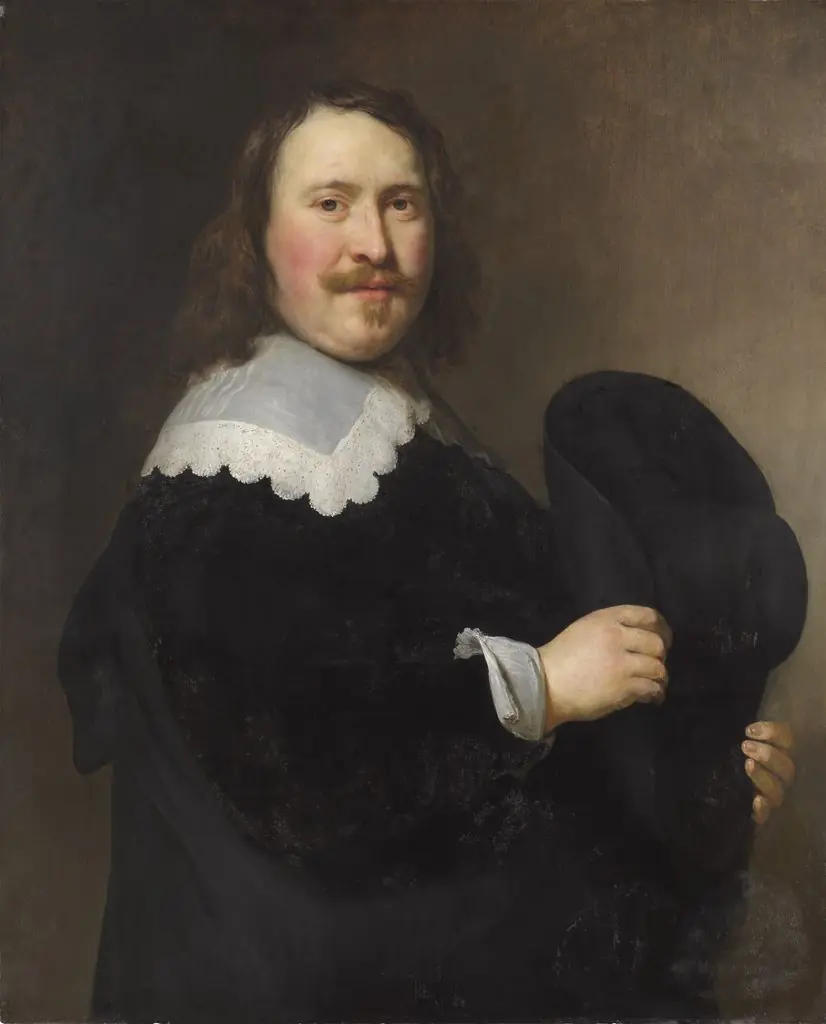 Portrait of a Man with a Hat
 Portrait of Herman Doomer
 Portrait of a man with gloves in hand