Artwork
Portrait of Herman Doomer
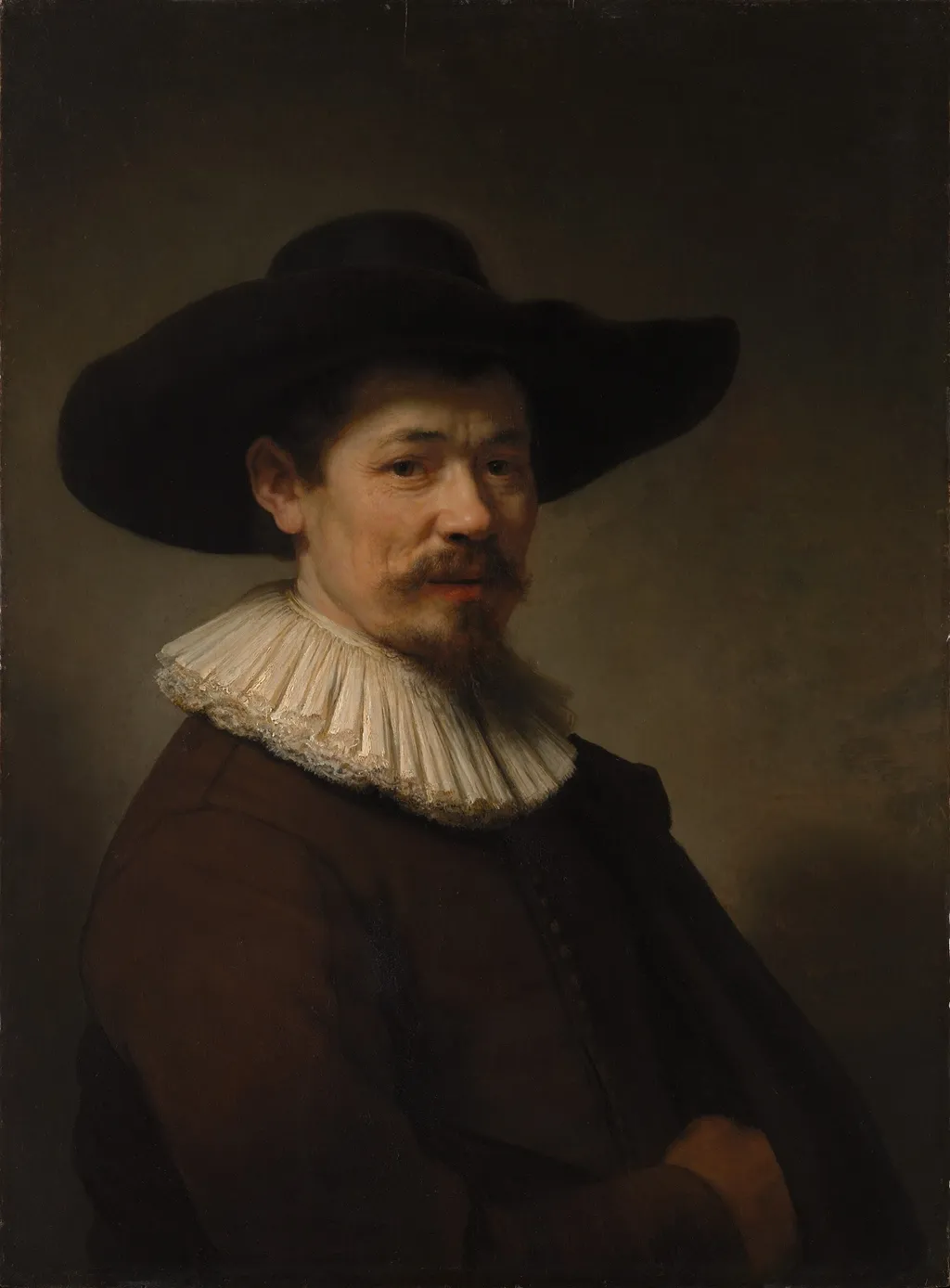
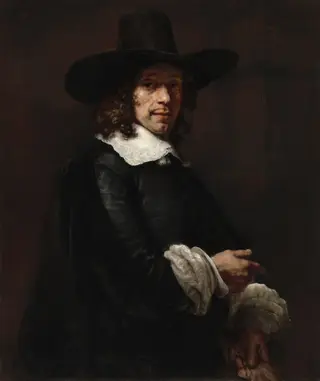
Portrait of Herman Doomer is an oil painting by the Dutch Golden Age artist Rembrandt van Rijn. It dates from 1640 and is held in the collection of the Metropolitan Museum of Art.
About this work
Subject & Meaning
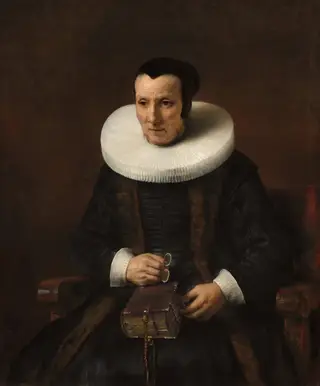
The portrait shows Herman Doomer, a cabinetmaker and ebony-worker active in seventeenth-century Amsterdam, known above all for richly decorated furniture fronts and picture frames. Rembrandt presents him in a pose that recurs in his own self-portraits of 1640 and in works by contemporaries, indicating a deliberate reliance on established portrait conventions. The painting forms part of a pendant pair with a portrait of Doomer's wife, Baertje Martens; according to her will, the two works were bequeathed together to their son Lambert, with copies made for his siblings.
The inscription 'Rembrandt f 1640' confirms the dating and underscores the close connection between craft, family bonds, and the artistic representation of social status.
Technique & Style
While the painting retains a seventeenth-century frame, this accessory is not attributed to the sitter, who was himself a professional frame maker.
Created in 1640, the Portrait of Herman Doomer is an oil painting executed on an oak panel support. The work is signed and dated "Rembrandt / f[ecit] 1640" in the lower right corner. It measures 75.2 cm in height and 55.2 cm in width.
The composition depicts the Amsterdam cabinetmaker in a pose comparable to Rembrandt's own self-portrait from the same year and a 1639 sketch of Raphael's Portrait of Baldassare Castiglione. While the painting retains a seventeenth-century frame, this accessory is not attributed to the sitter, who was himself a professional frame maker. The piece functions as a pendant to the Portrait of Baertje Martens, in the State Hermitage Museum. The work is currently housed in Gallery 964 of the Metropolitan Museum of Art.
History & Provenance
Signed and dated 1640, this oil on oak panel was likely commissioned by the subject, Amsterdam cabinetmaker Herman Doomer. Upon Doomer's death in 1650, his widow Baertje Martens bequeathed the portrait to their son, the artist Lambert Doomer, via wills dated between 1654 and 1668, stipulating that he produce copies for his siblings. Lambert subsequently left the work to his nephew, Herman Voster, who likely sold it before 1725.
The painting entered the collection of Anthony Cousin by 1725 and was auctioned separately from its pendant in London in 1750. Ownership passed through Peregrine Bertie, 3rd Duke of Ancaster (by 1769), and various Parisian collectors including Charles de Morny and Sofia Troubetzkoy. After changing hands via dealer William Schaus in 1884, it was acquired by Henry Osborne Havemeyer in 1889.
Following his death, his widow Louisine Havemeyer bequeathed the work to the Metropolitan Museum of Art in 1929.
The Portrait of Herman Doomer is held by the Metropolitan Museum of Art in New York, where it is on view in Gallery 964. It entered the museum in 1929 as part of the bequest of Louisine Havemeyer, widow of collector Henry Osborne Havemeyer, who had acquired the painting in 1889 from the dealer William Schaus. Documented exhibition history includes the 1883 Paris showing "Hundred Masterpieces in Parisian Collections" (Galerie Georges Petit), followed by a series of New York loans and displays: the 1893 American Fine Arts Society loan; the 1909 Hudson-Fulton loan at the Metropolitan Museum; a 1915 Knoedler & Co. loan; the 1930 temporary exhibition of the H. O. Havemeyer Collection; a 1942 Metropolitan display "The Art of Rembrandt"; a 1950 Wildenstein loan; a 1951 Toronto showing; the 1993 "Splendid Legacy" Havemeyer retrospective; the 1995–96 "Rembrandt/Not Rembrandt"; and the 2006 Rembrandt exhibitions in Amsterdam and Berlin.
Context
Scholarship identifies the portrait as a pendant to the depiction of Doomer's wife, Baertje Martens, now held in the State Hermitage Museum. Art historical analysis notes that Doomer's pose relates to Rembrandt's own 1640 self-portrait in the National Gallery, London, as well as to a self-portrait by Govert Flinck. The composition further aligns with a 1639 sketch Rembrandt made after Raphael's portrait of Baldassare Castiglione.
The work's attribution history includes a mid-nineteenth-century period when the expert Chrétien Nieuwenhuys dismissed it as a forgery, hindering its sale until it was acquired by Charles de Morny. Later, Wilhelm von Bode documented its transaction history in the 1880s. The painting has been featured in significant exhibitions on the Dutch masters and Rembrandt, including shows at the Metropolitan Museum of Art and the Rembrandt House Museum.
Overview
Rembrandt van Rijn painted this oil on oak panel portrait of Herman Doomer in 1640. The artwork captures the likeness of an Amsterdam businessman, known for his craftsmanship. It is currently housed at the Metropolitan Museum of Art, having been bequeathed to the institution in 1929. The painting exemplifies the artist's skill in rendering individual character through subtle lighting and composition.
Own this work as a print
Artist & collection

Artist
Rembrandt Harmenszoon van Rijn, known mononymously as Rembrandt, was a Dutch Golden Age painter, printmaker, and draughtsman.

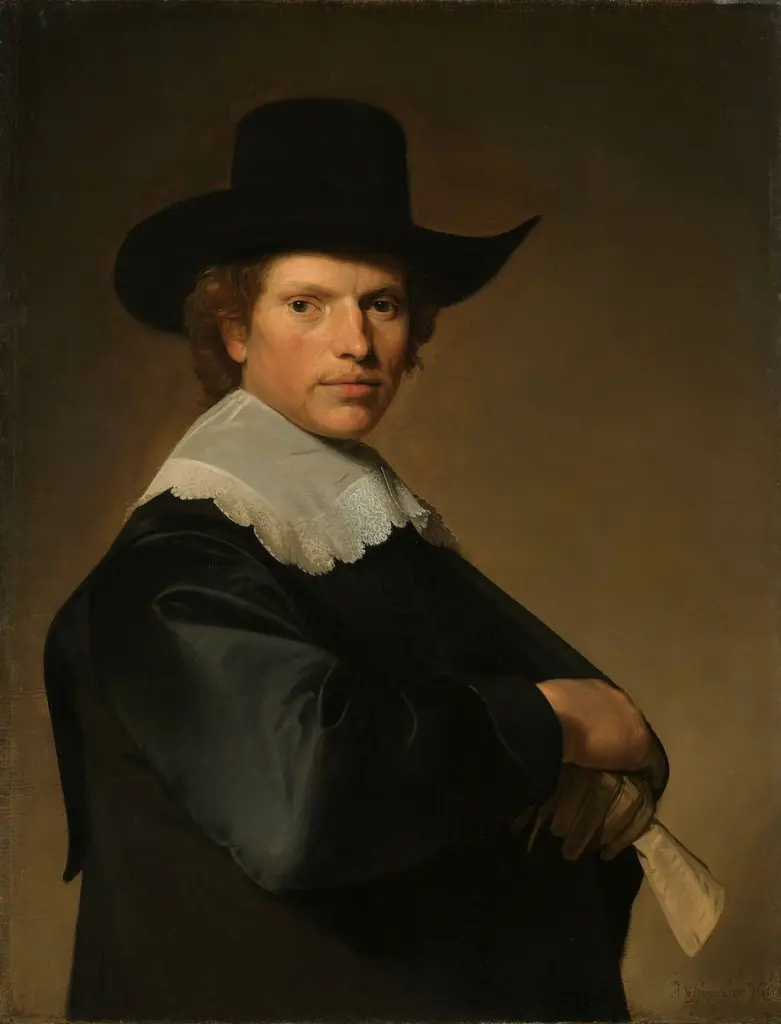 Portrait of a man
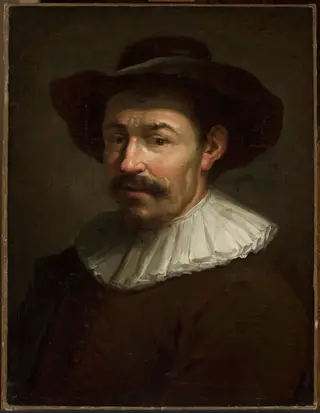 Portrait of a man in a white frill
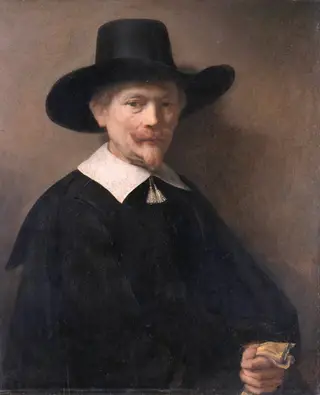 Portrait of a man with gloves in hand
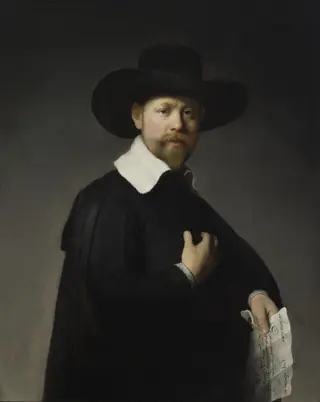 Portrait of Marten Looten
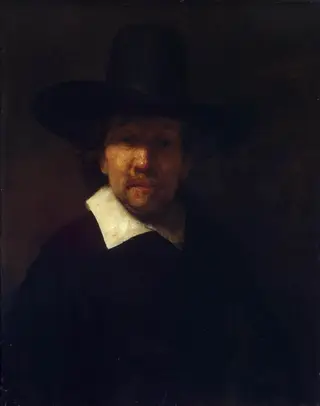 Portrait of Jeremias de Decker
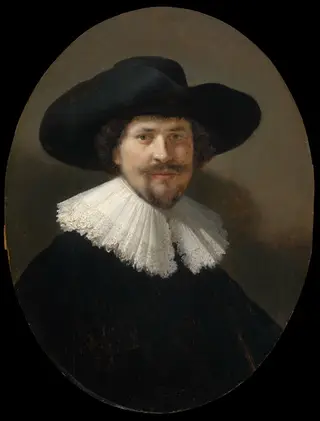 Portrait of a Man Wearing a Black Hat
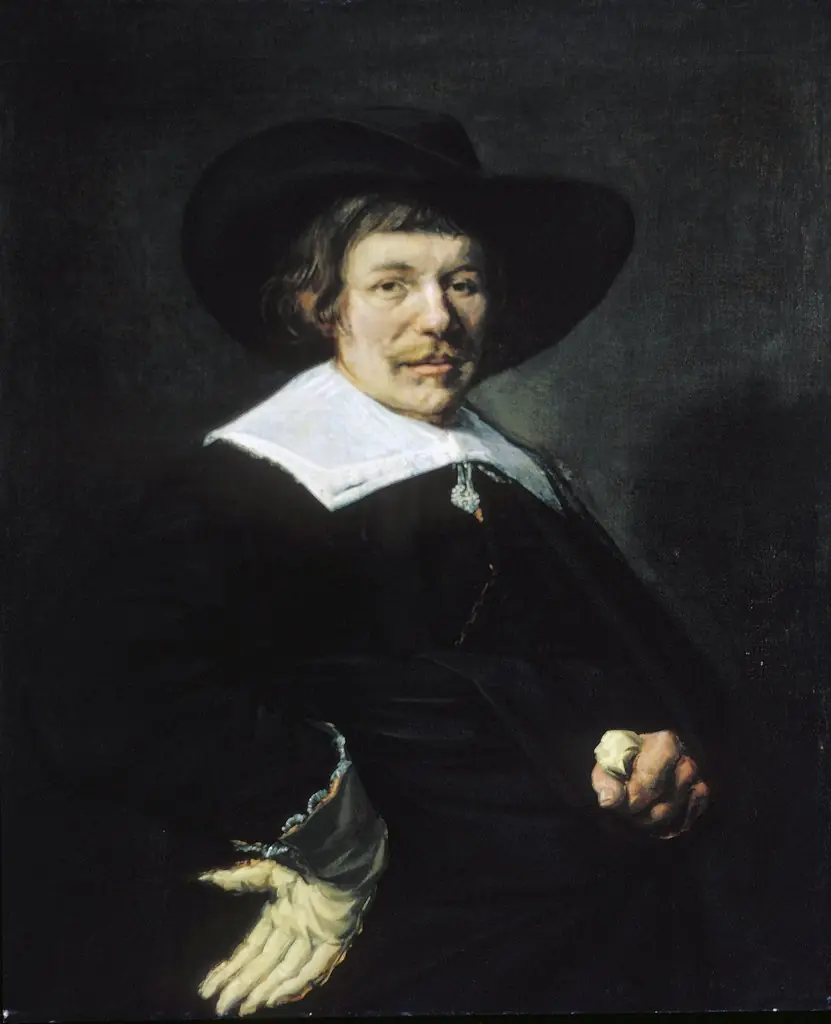 Portrait of a man with tassle collar and floppy hat
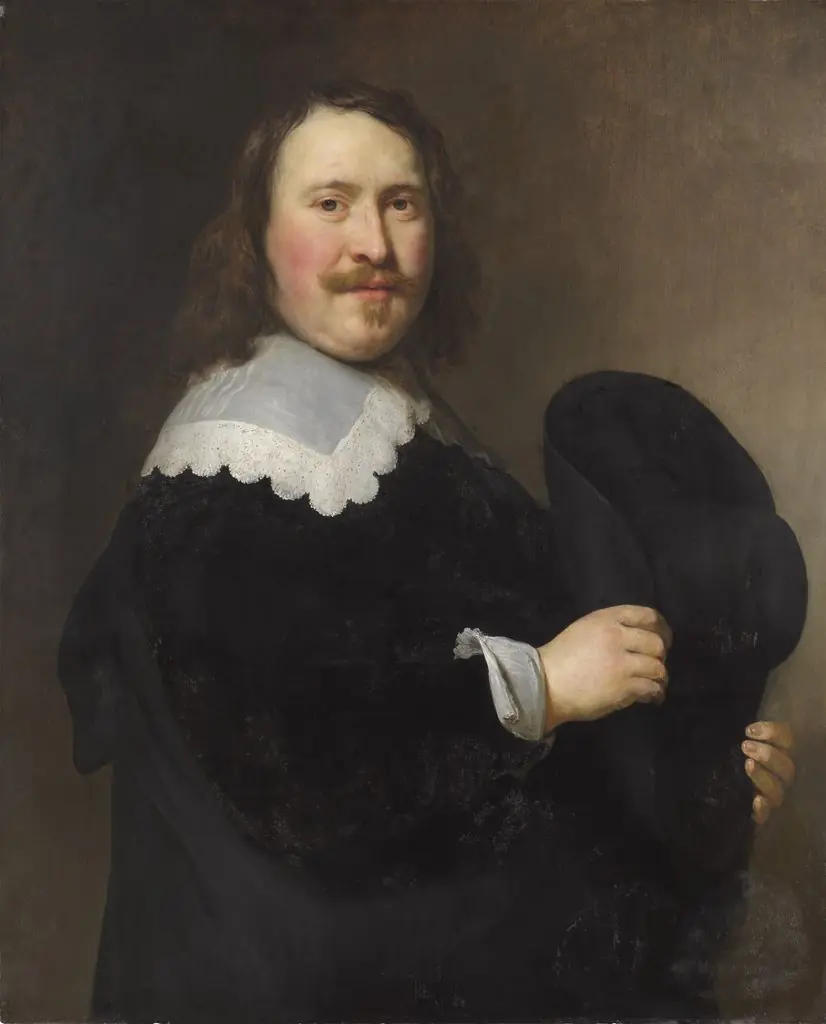 Portrait of a Man with a Hat
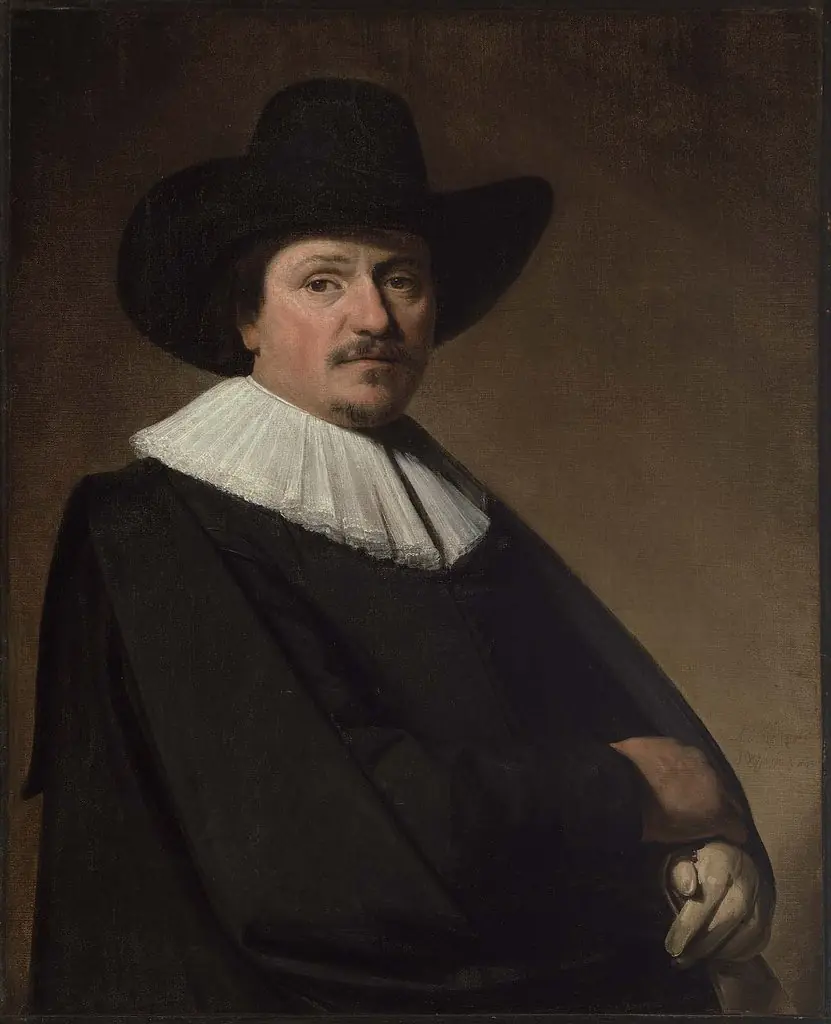 Portrait of a Man in Black
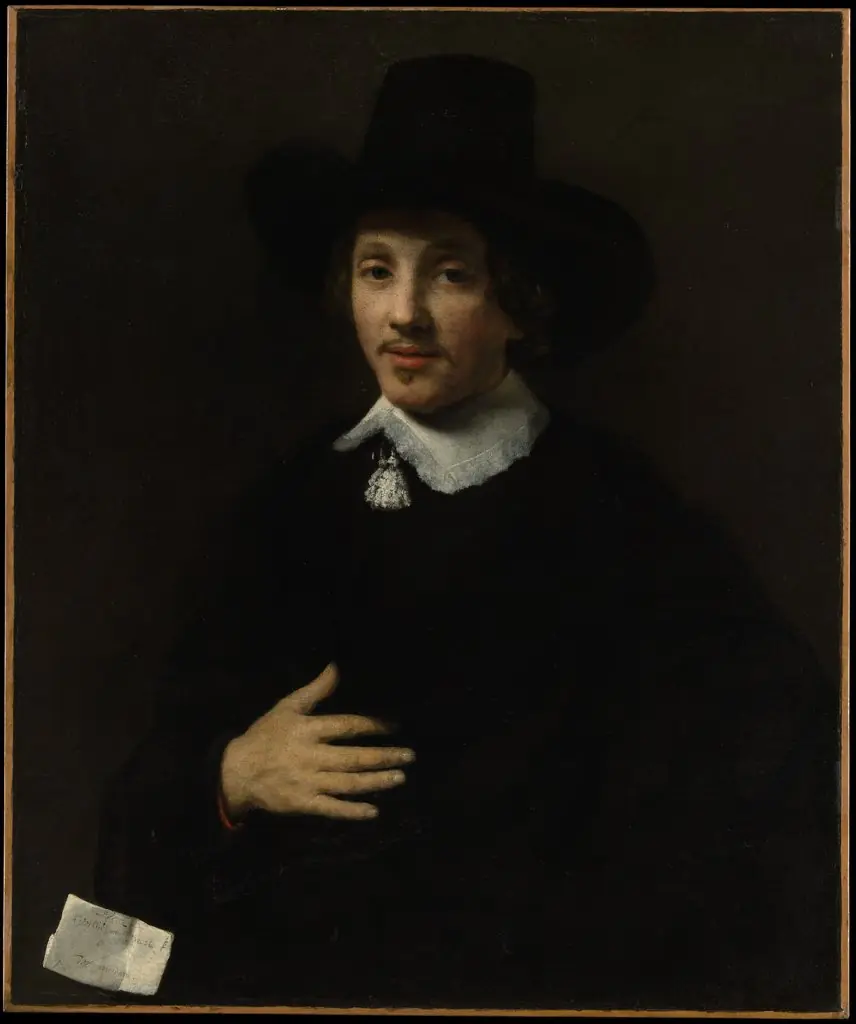 Portrait of a Man (Self-Portrait?)
- Portrait of a man, possibly Palamedes