Artwork
The Gein River, near Abcoude
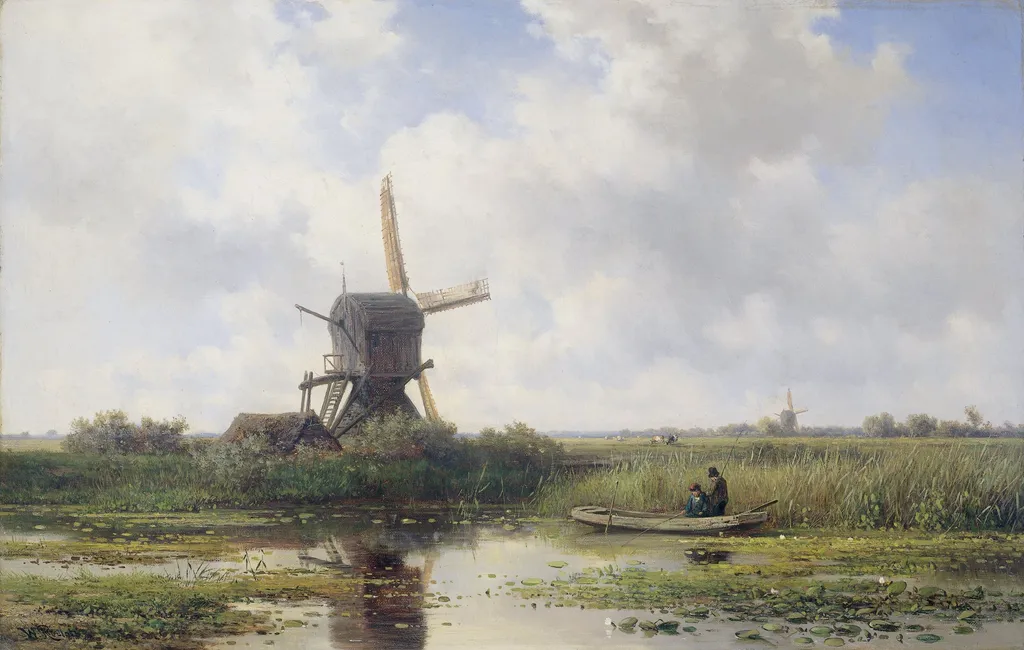
The Gein River, near Abcoude is an oil painting by the Barbizon school artist Willem Roelofs. It dates from 1857 and is held in the collection of the Rijksmuseum.
About this work
Subject & Meaning
A prevailing mood of wistfulness has led to the painting being regarded as one of the first emblematic works of what would later be known as the Hague School.
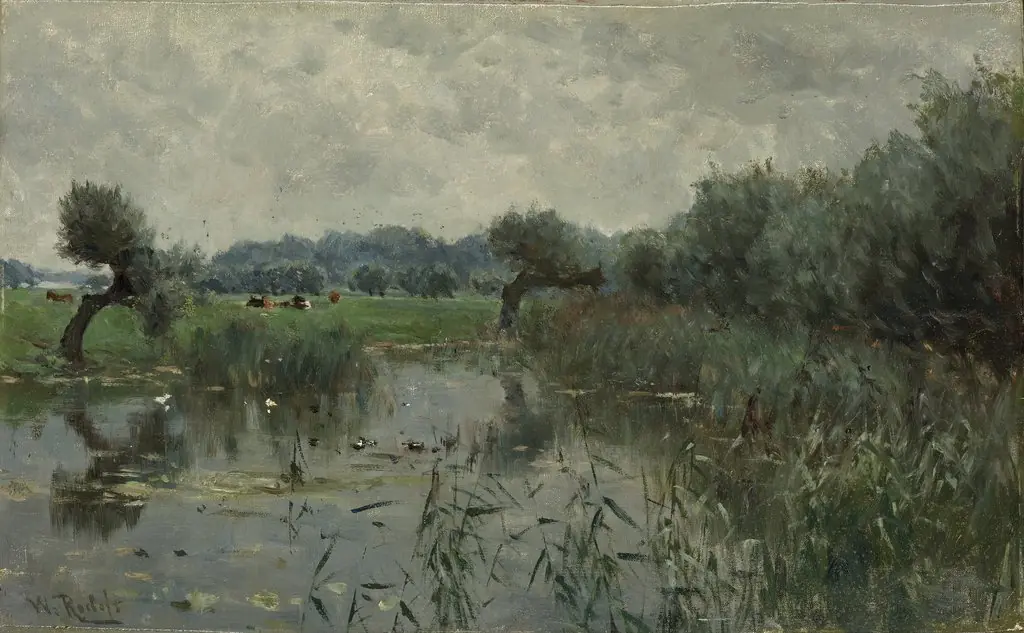
The painting depicts a quintessential Dutch polder landscape centered on the Gein river near Abcoude. Two fishermen sit in a small boat on the water, with a windmill and a house in the background, meadows with cattle, and an expansive, typically Dutch cloudy sky. The Gein, an inland waterway winding through the Vecht region, was among Roelofs's favorite painting locations, and he produced several comparable compositions in the polders near Abcoude in the late 1850s.
The work represents a deliberate departure from the romantic tradition in which Roelofs had been trained. Painted in the open air, it offers a sober, naturalistic rendering of reality, emphasizing simplicity and atmosphere over dramatic grandeur. The water surface and surrounding reeds and vegetation are rendered with precise, analytical detail, reflecting Roelofs's keen observational habits as an amateur entomologist.
The inclusion of the fishermen in the boat signals that Roelofs had not entirely abandoned his romantic roots. A prevailing mood of wistfulness has led to the painting being regarded as one of the first emblematic works of what would later be known as the Hague School.
Technique & Style
The work is executed in oil paint on a canvas support, measuring 45 cm in height and 68 cm in width. It depicts a sober, naturalistic representation of the Dutch polder landscape, featuring two fishermen in a small boat, a windmill, and an expansive cloud-filled sky. The handling reflects a shift from Romanticism to a precise, naturalistic style, likely painted en plein air.
Despite the detailed rendering of the water surface and surrounding vegetation, which demonstrates the artist's analytical observation, the overall atmosphere remains melancholic rather than clinical. The color palette is notably less vibrant and less anecdotal than the artist's earlier works, prioritizing simplicity and mood over dramatic effect.
History & Provenance
Willem Roelofs executed this landscape, depicting the Gein river near Abcoude, in 1857. The work represents an early example of the artist's shift toward naturalism following his exposure to the Barbizon school during trips made between 1851 and 1855. Roelofs frequently painted in the polders around Abcoude during the late 1850s, utilizing an analytical approach influenced by his amateur entomology to render details like water and reeds with precision.
The painting, measuring 45 by 68 centimeters, entered the collection of the Rijksmuseum in Amsterdam in 1907. Earlier ownership records indicate the work was held by Joannes Barnardus Antonius Maria Westerwoudt.
The painting has been in the collection of the Rijksmuseum in Amsterdam since 1907. Earlier provenance traces the work to Joannes Barnardus Antonius Maria Westerwoudt as a former owner.
The painting is held by the Rijksmuseum in Amsterdam, where it has been part of the collection since 1907. Before entering the museum's holdings, it was owned by Joannes Barnardus Antonius Maria Westerwoudt. No specific inventory or accession number is recorded in the available sources, and no exhibition history beyond its long-term presence in the Rijksmuseum collection is documented.
Context
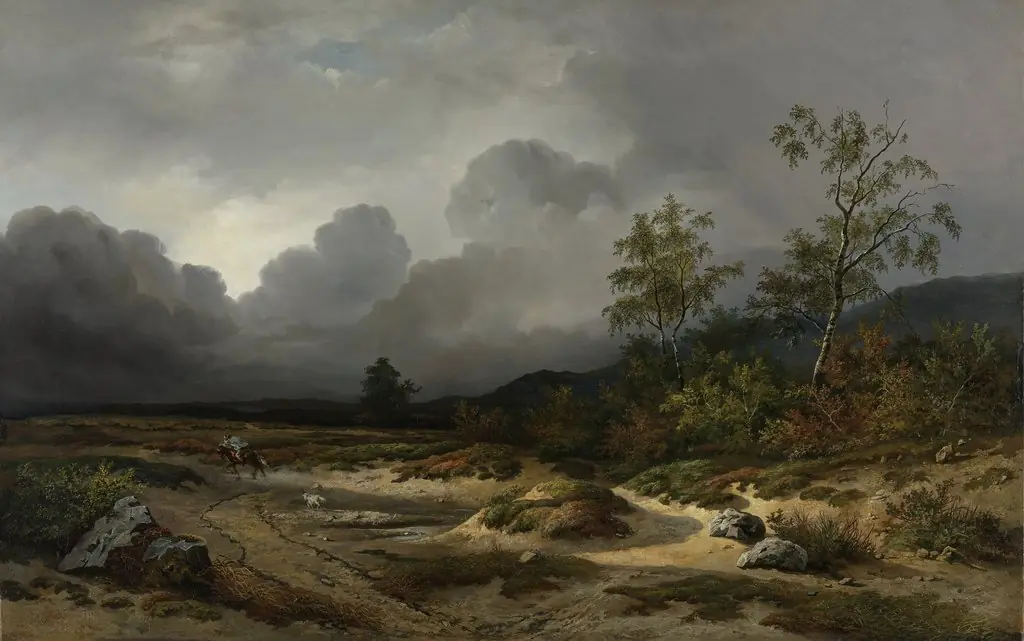
Willem Roelofs’s The Gein River, near Abcoude (1857) marks a decisive turn from Romantic landscape toward a restrained naturalism that would later define the Hague School. Painted after his formative encounters with the Barbizon painters between 1851 and 1855, the work abandons the dramatic effects of his earlier style, evident in the subdued palette and absence of anecdotal incident compared to Landschap bij naderend onweer (1850).
Scholars identify the painting as one of the first Dutch works executed en plein air that privileges atmosphere and simplicity over grandiosity, while retaining a vestige of Romantic subject matter in the two fishermen. The Gein’s polder setting, with its windmill, cattle, and expansive skies, became a favored motif in the late 1850s, reflecting Roelofs’s exacting observational practice influenced by his amateur entomology. Critics and later historians have read the quiet melancholy of the scene as emblematic of the nascent Hague School, valorizing unidealized Dutch landscapes for their poetic mood rather than dramatic effect.
Legacy
The work is recognized as one of the earliest emblematic examples that would later define the Hague School of painting. By depicting a sober, naturalistic scene painted en plein air, it marked a decisive shift away from the romantic traditions in which Willem Roelofs was trained toward a style emphasizing simplicity and atmosphere. The painting's detailed rendering of the landscape, combined with a prevailing mood of melancholy, established a precedent for the movement's characteristic approach to the Dutch countryside.
Since entering the collection of the Rijksmuseum Amsterdam in 1907, the painting has been cited in major exhibitions and literature regarding nineteenth-century Dutch art. It serves as a key reference point for understanding Roelofs' transition to naturalism and his influence on subsequent generations who adopted his open-air techniques and observational precision.
Overview
Willem Roelofs painted The Gein River, near Abcoude in 1857, employing oil on canvas to depict a tranquil Dutch riverscape. The composition centers on an aged windmill overlooking a still waterway, where two figures navigate a small wooden boat among lily pads beneath a bright sky dotted with soft clouds.
Own this work as a print
Artist & collection
Artist
Willem Roelofs (10 March 1822 – 12 May 1897) was a Dutch painter, water-colourist, etcher, lithographer and draughtsman.

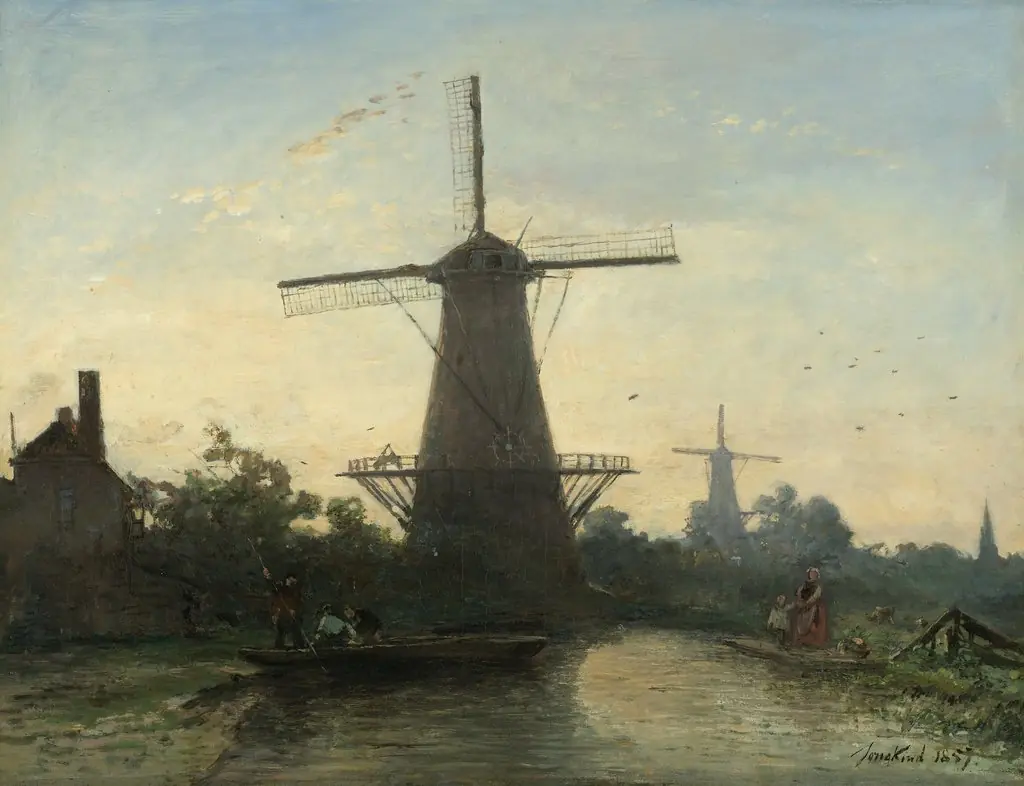 Windmills near Rotterdam
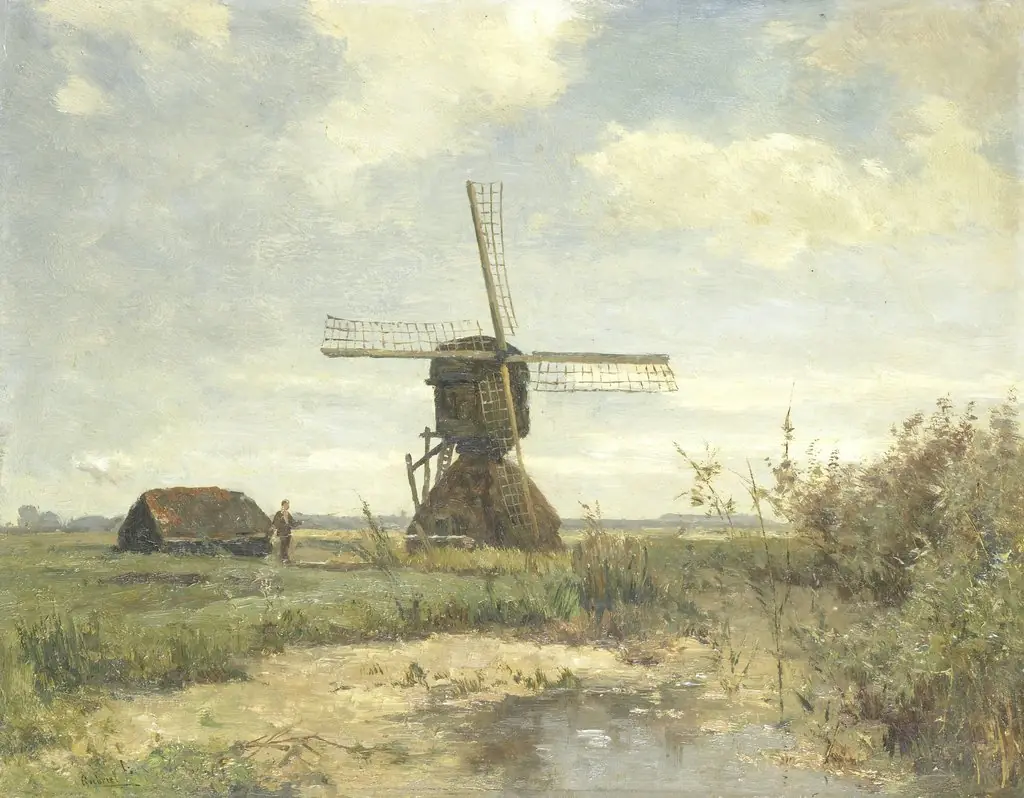 ‘Sunny Day’: a windmill on a watercourse
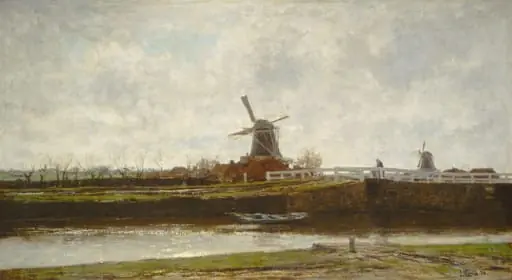 View of the Mill and Bridge on the Noordwest Buitensingel in The Hague
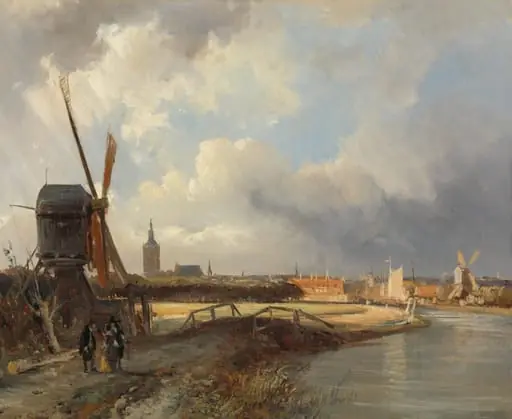 Gezicht op Den Haag
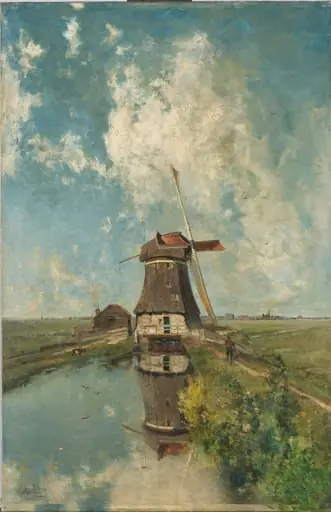 A Windmill on a Polder Waterway, Known as ‘In the Month of July’
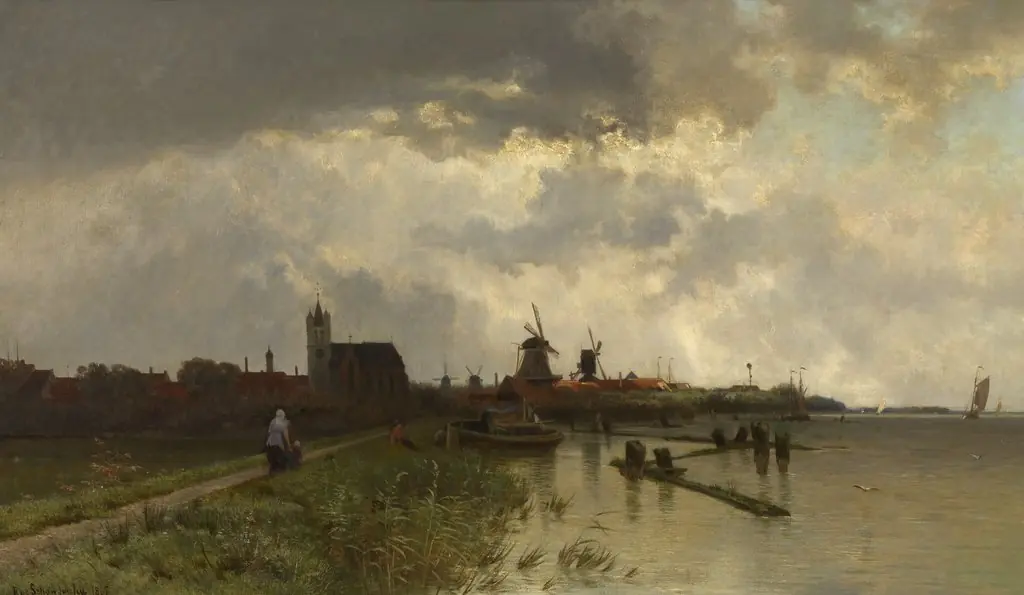 Souvenir of the Zuiderzee
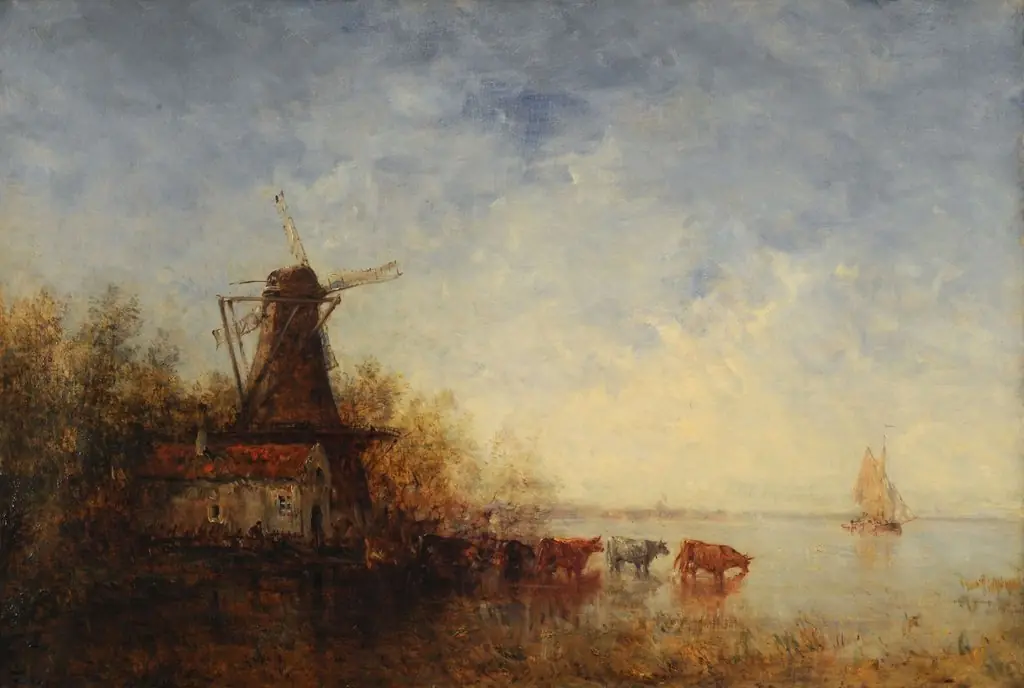 Windmill on riverbank
 Windmill on a pond
 View of The Hague
 A Windmill on a Polder Waterway, Known as ‘In the Month of July’