Artwork
Tea Leaves
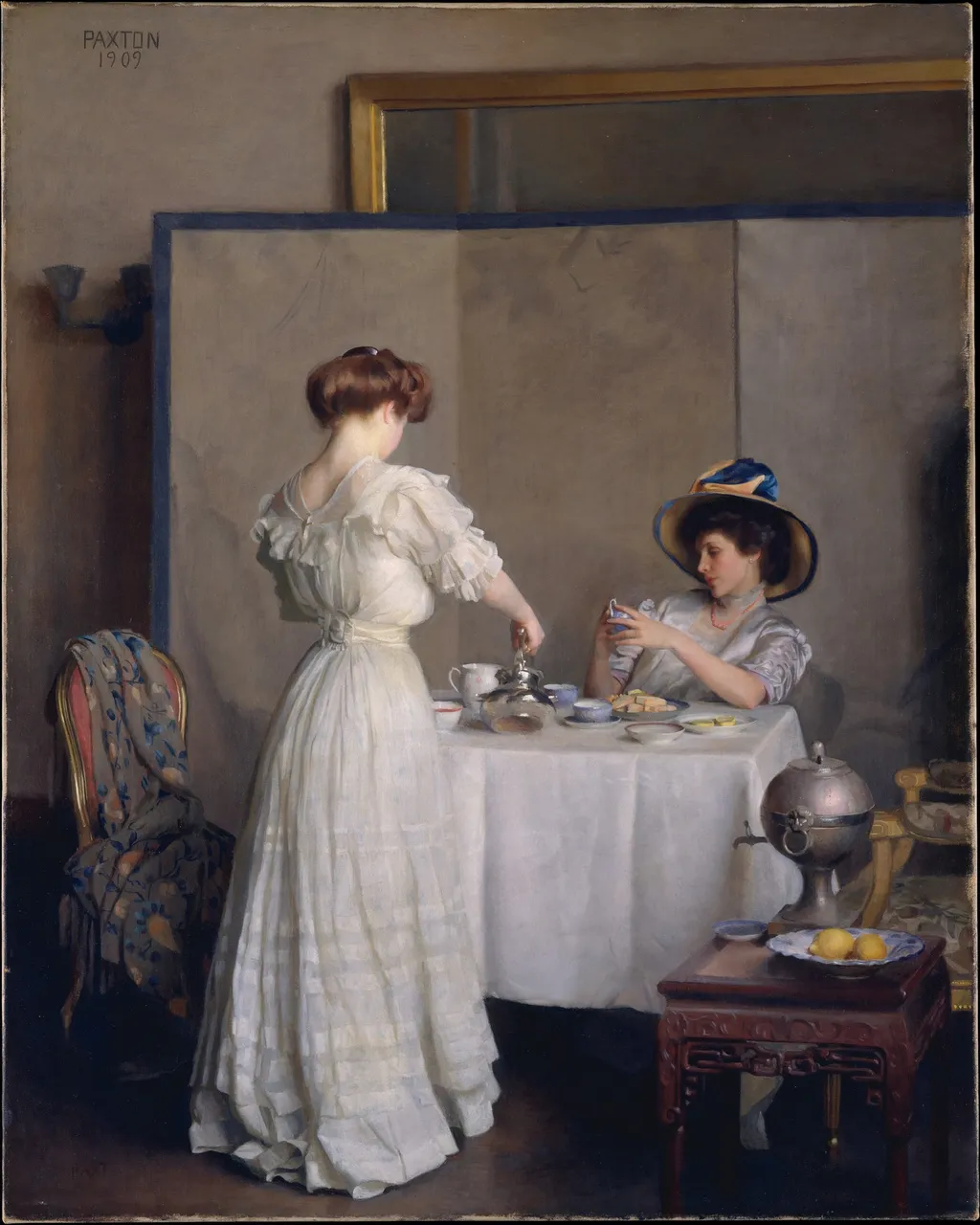
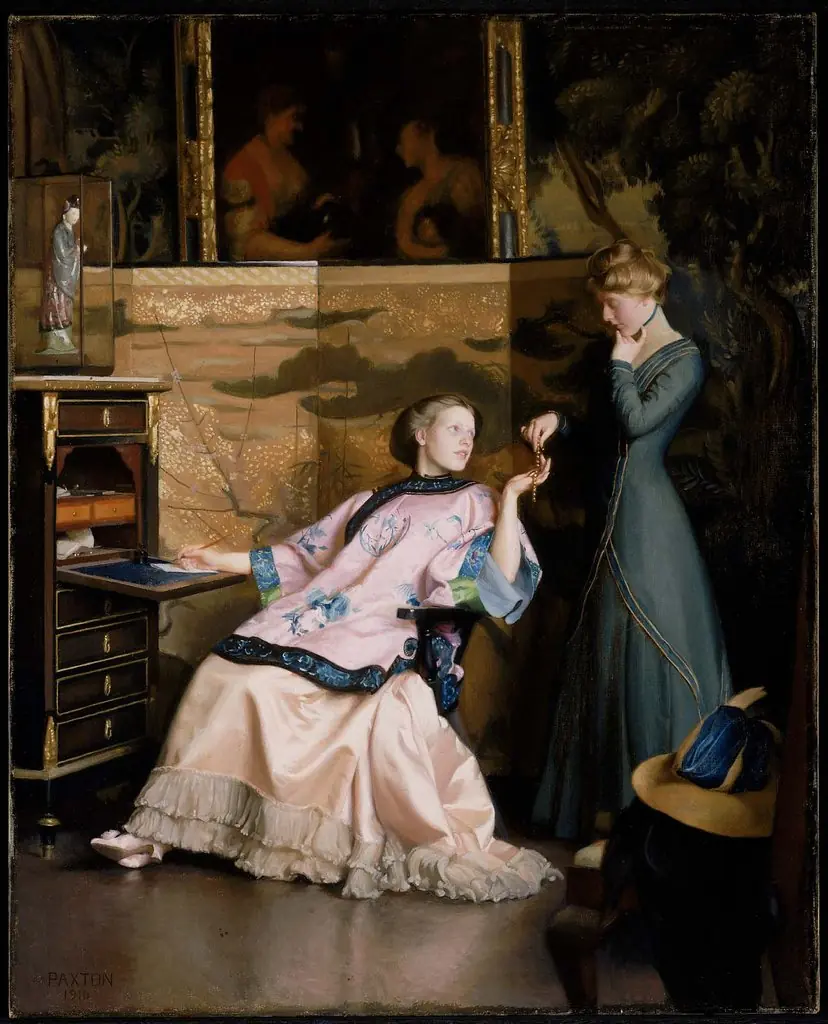
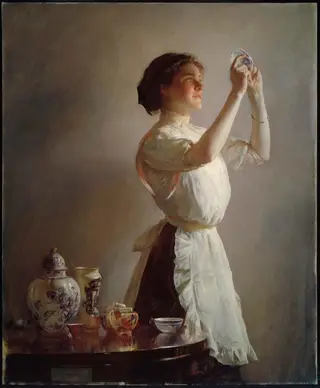
Tea Leaves is an oil painting by the American Impressionist artist William McGregor Paxton. It dates from 1909 and is held in the collection of the Metropolitan Museum of Art.
About this work
Subject & Meaning
The composition depicts a woman seated at a table within an interior space, accompanied by the essential elements of teatime: a teapot, a teacup, and tea.
William McGregor Paxton's 1909 painting Tea Leaves represents a quiet, domestic interior scene centered on the ritual of tea. The composition depicts a woman seated at a table within an interior space, accompanied by the essential elements of teatime: a teapot, a teacup, and tea. The work's focus on a solitary female figure engaged in a mundane, everyday activity aligns with the iconography of refined domesticity and leisure common in early twentieth-century genre painting.
By elevating the simple act of reading tea leaves or drinking tea into a subject of formal portraiture, the painting explores themes of contemplation, intimacy, and the quiet moments of bourgeois life.
Technique & Style
Executed in 1909, William McGregor Paxton's Tea Leaves is an oil painting realized on a canvas support. The work measures approximately 91.6 by 71.9 centimeters. Stylistically, the composition depicts an interior scene featuring a woman seated at a table accompanied by a teapot and teacup.
As a classified painting within the Metropolitan Museum of Art's collection, the piece utilizes traditional oil media to render its domestic subject matter. The specific handling of the medium allows for the detailed representation of the figures and objects within the room, adhering to the formal qualities expected of early twentieth-century American portraiture and genre scenes.
History & Provenance
William McGregor Paxton executed the oil painting Tea Leaves in 1909. Created on canvas, the work measures approximately 91.6 by 71.9 centimeters. The piece entered the collection of the Metropolitan Museum of Art, where it remains housed.
While the specific circumstances of its commission or its ownership history prior to arriving at the museum are not detailed in the available records, the work's inception is firmly established at the beginning of 1909. The painting depicts an interior scene featuring a woman with a teacup and teapot.
Context
William McGregor Paxton completed Tea Leaves in 1909, an oil on canvas interior scene now in the Metropolitan Museum of Art (1,2). The painting portrays a woman seated with a teacup and teapot at a table, emphasizing domestic tranquility typical of the artist’s mature oeuvre (2). Its dimensions of 91.6 × 71.9 cm and oil‑paint medium align with Paxton’s technical approach to realistic interior genre works (1,2).
As part of the Met’s collection, the piece contributes to the historical record of early‑20th‑century American painting, illustrating the continuation of French‑influenced realism within the nation’s artistic narrative (2).
Overview
William McGregor Paxton's oil painting, "Tea Leaves," presents an intimate domestic scene. The artwork captures two women in a quiet, well-furnished interior, engaged in a moment of shared tea. Executed in oil paint, the work showcases the artist's ability to render textures and the play of light, creating a serene and observational genre scene. This painting reflects an interest in the subtle interactions and everyday rituals of life.
Own this work as a print
Artist & collection
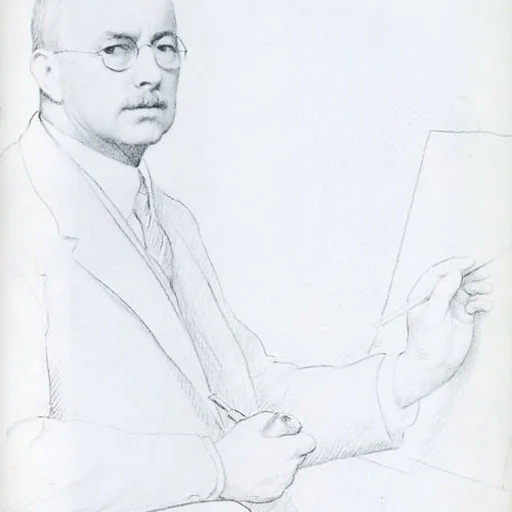
Artist
William McGregor Paxton (June 22, 1869 – 1941) was an American painter and instructor who embraced the Boston School paradigm and was a co-founder of The Guild of Boston Artists.