Artwork
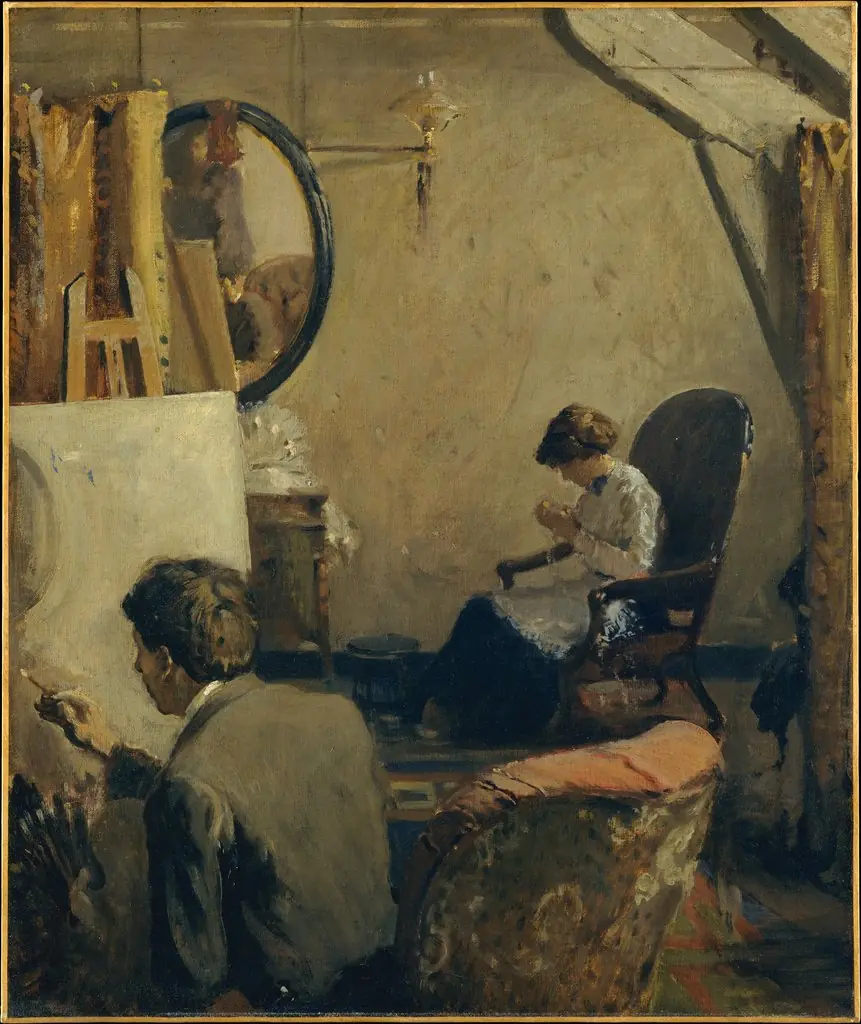
Summer Afternoon (Artist in his Studio with a Model)
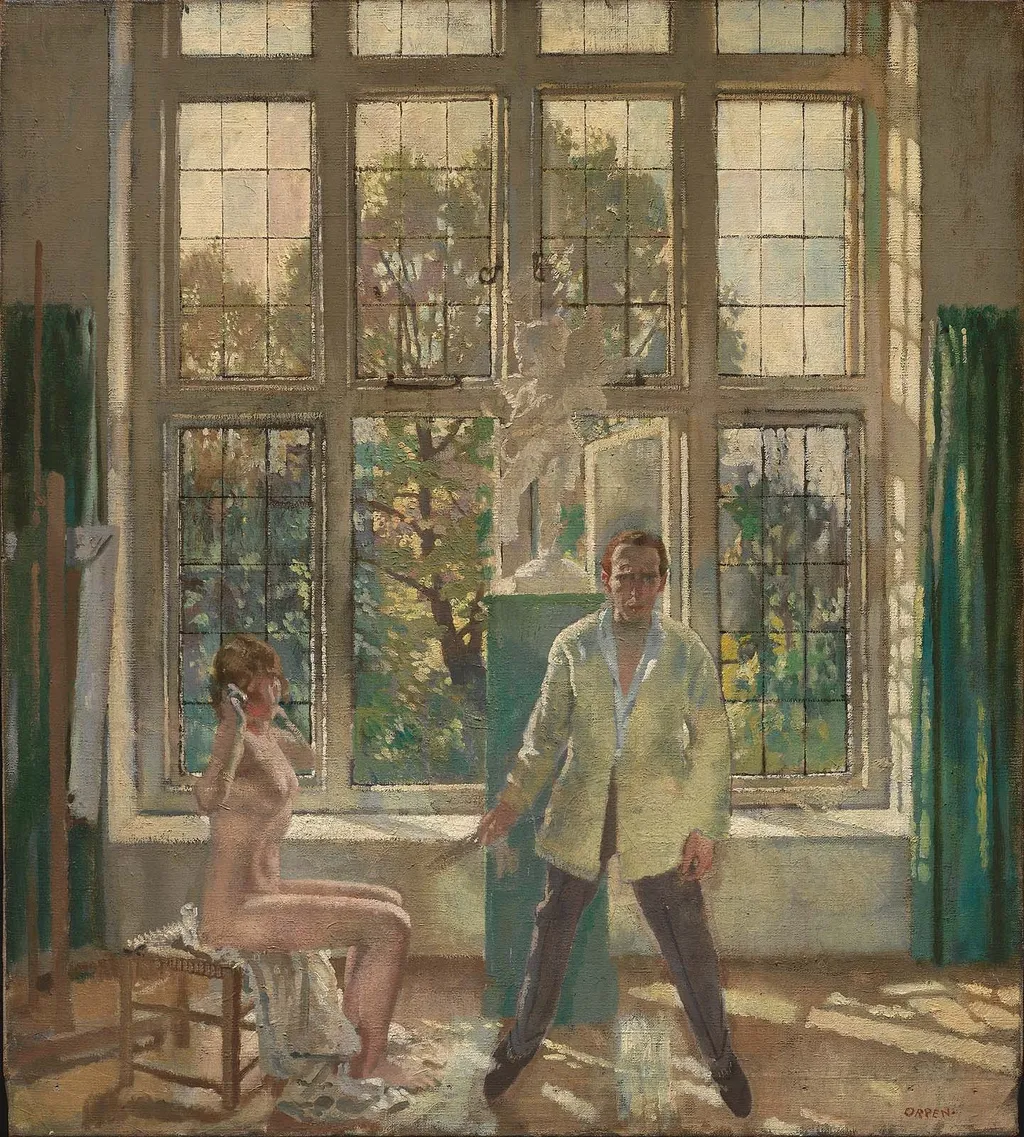
Summer Afternoon (Artist in his Studio with a Model) is an oil painting by William Orpen. It dates from 1913 and is held in the collection of the Museum of Fine Arts Boston.
About this work
Overview
Painted in 1913, Summer Afternoon (Artist in his Studio with a Model) is an oil work by Irish-born artist William Orpen, who lived and worked in London.
Painted in 1913, Summer Afternoon (Artist in his Studio with a Model) is an oil work by Irish-born artist William Orpen, who lived and worked in London. It captures a quiet moment in his studio, showing him beside a seated nude model. The scene reflects Orpen’s frequent engagement with the artist-model dynamic, a subject he returned to across his career. The composition emphasizes stillness and routine, avoiding theatricality in favor of intimate observation.
Subject & Meaning
The painting portrays the artist mid-work, dressed in a light jacket and dark trousers, while the model sits with her back turned, her hair neatly gathered. Her pose suggests a pause in the session, not a staged tableau. The absence of direct eye contact between the two figures underscores a professional, unspoken rapport.
The scene conveys the quiet discipline of artistic labor, presenting the studio as a space of concentration rather than spectacle.
Technique & Style
Orpen employs a restrained palette and soft, diffused light to evoke the warmth of a summer day. Brushwork is precise yet unobtrusive, favoring smooth transitions over visible texture. The natural illumination entering through large windows creates gentle contrasts, highlighting the model’s form and the studio’s interior without harsh shadows.
The green curtains and distant tree outside frame the scene with a sense of contained calm, reinforcing the painting’s meditative tone.
History & Provenance
Created during Orpen’s peak years as a portraitist to London’s elite, this work diverges from his commissioned portraits by focusing on his own creative environment. It was painted in his London studio, likely as a personal exploration rather than a commercial commission. The painting remained in private hands for much of the 20th century before entering a public collection, where it now serves as a record of the artist’s daily practice.
Context
In early 20th-century Britain, studio scenes were a conventional subject among academic painters, often symbolizing artistic integrity. Orpen’s version, however, avoids idealization. His depiction aligns with a broader trend among contemporaries who portrayed the artist’s workspace as a site of quiet routine.
Unlike the dramatic studio scenes of earlier generations, this work presents the act of painting as an unremarkable, yet essential, part of daily life.
Legacy
While Orpen is better known for his portraits and wartime imagery, Summer Afternoon offers insight into his personal artistic rhythm. The painting stands as a quiet testament to the endurance of the studio as a space of reflection and discipline. It influenced later artists interested in the everyday rituals of creation, offering a counterpoint to the more sensationalized narratives of modern art.
Own this work as a print
Artist & collection
Artist
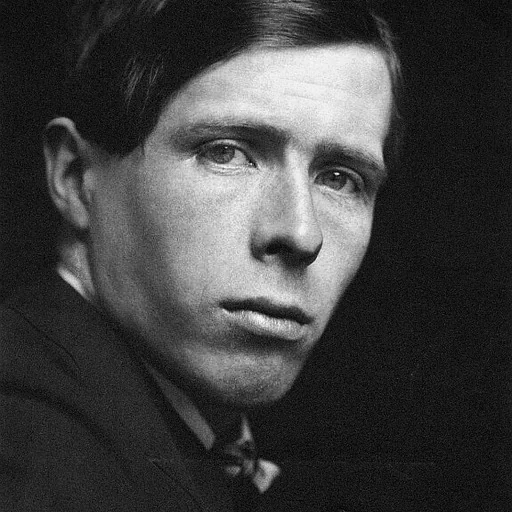
Major Sir William Newenham Montague Orpen (27 November 1878 – 29 September 1931) was an Irish artist who mainly worked in London.

- Maquette pour un portrait de K.X. Roussel
 O fată ștergând de praf statuia lui Venus din Millo
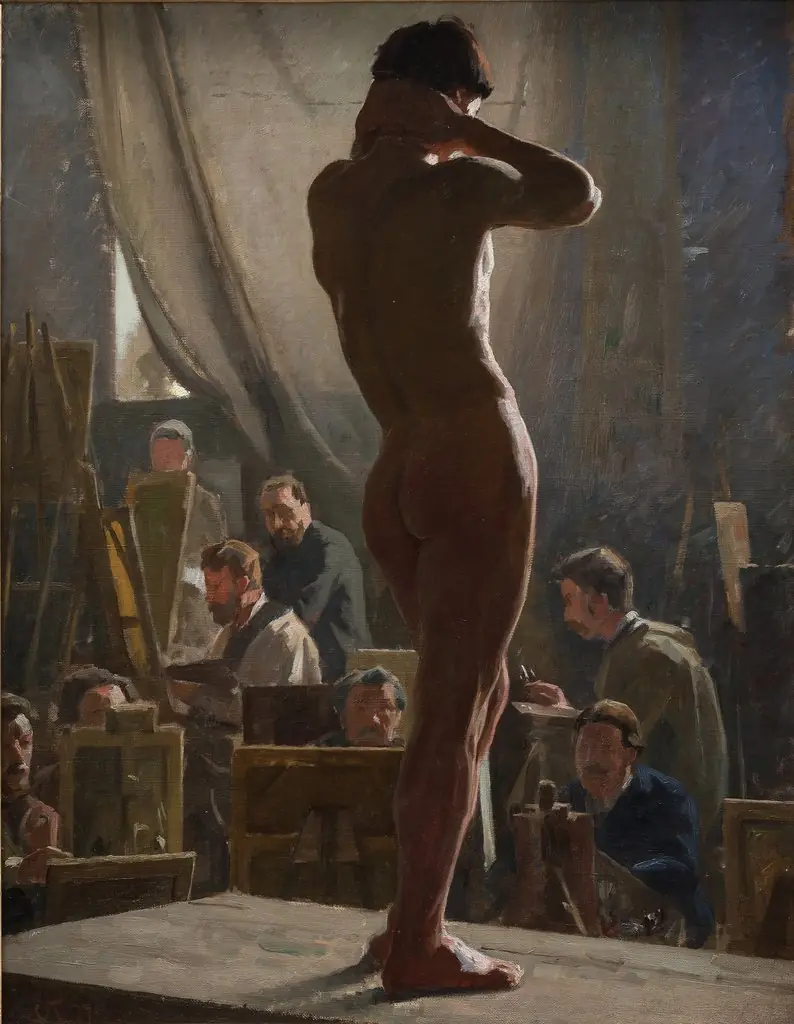 Male Nude in the Studio of Bonnat
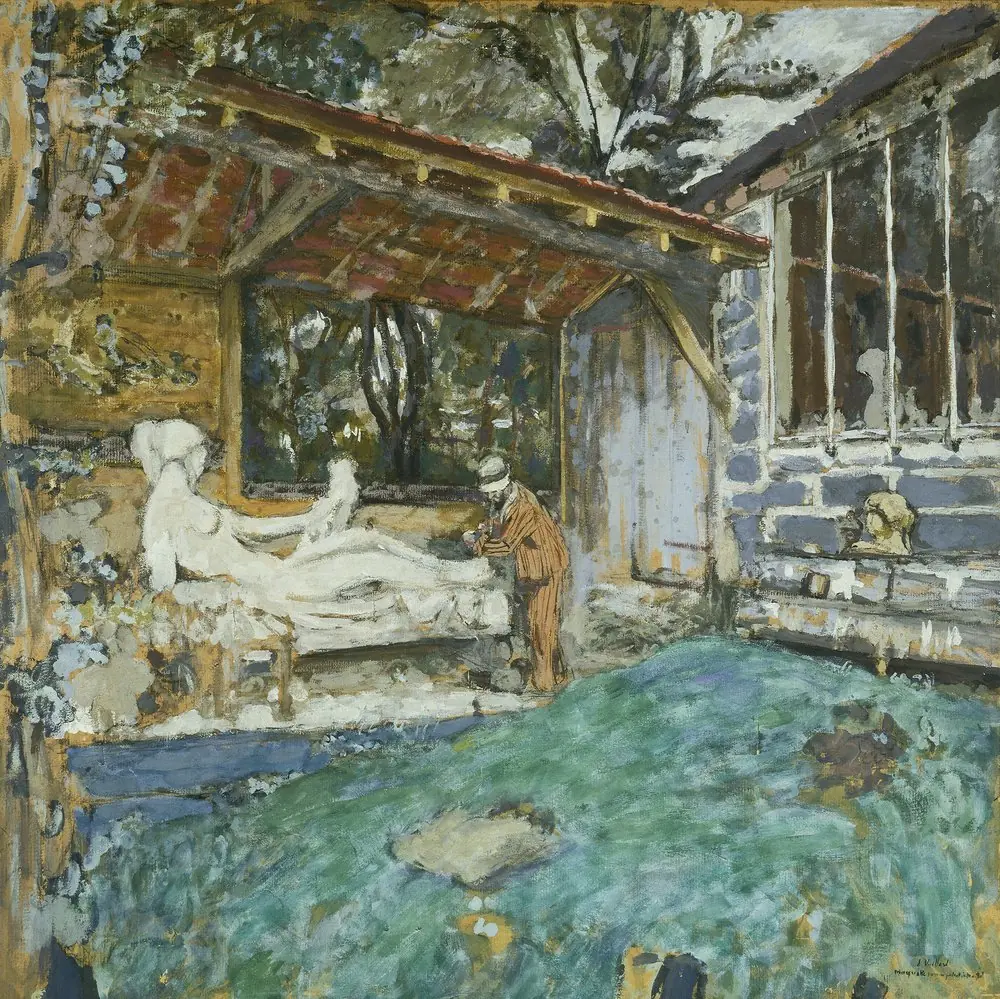 Maquette pour un portrait de Maillol
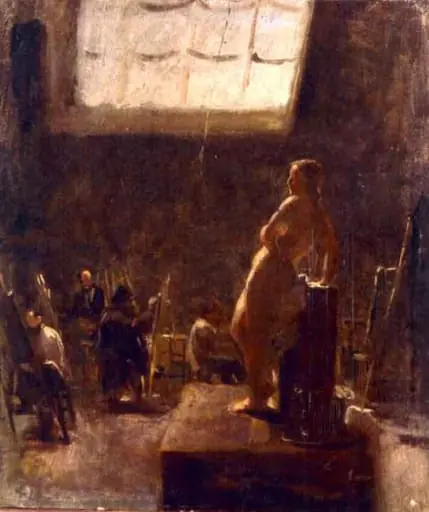 În atelier
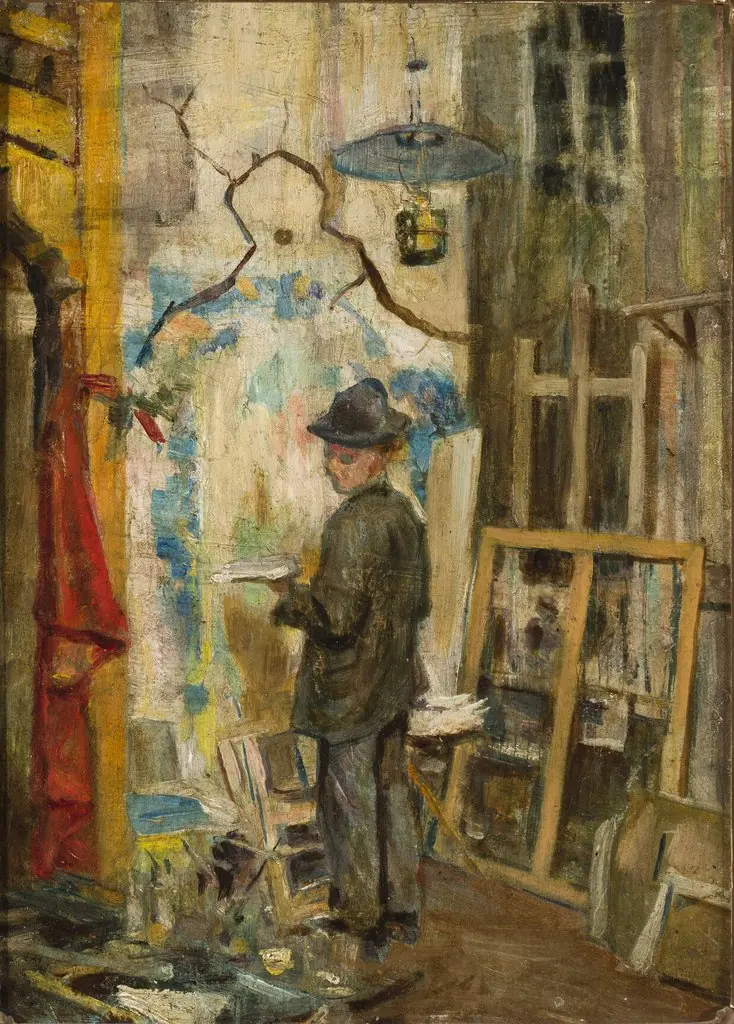 Józef Mehoffer in the studio
 In the Vicar's Garden, Christiansø
 In the workshop
 Concert in the living-room, sketch
 Interior of a Studio in Paris
 Louis Kronberg in His Studio in Copley Hall
 Portrait d'Aristide Maillol