Artwork
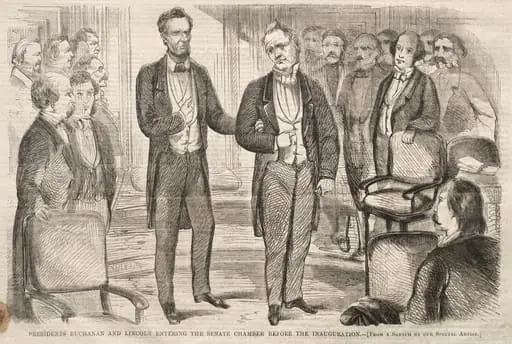
President Lincoln, General Grant, and Tad Lincoln at a Railway Station
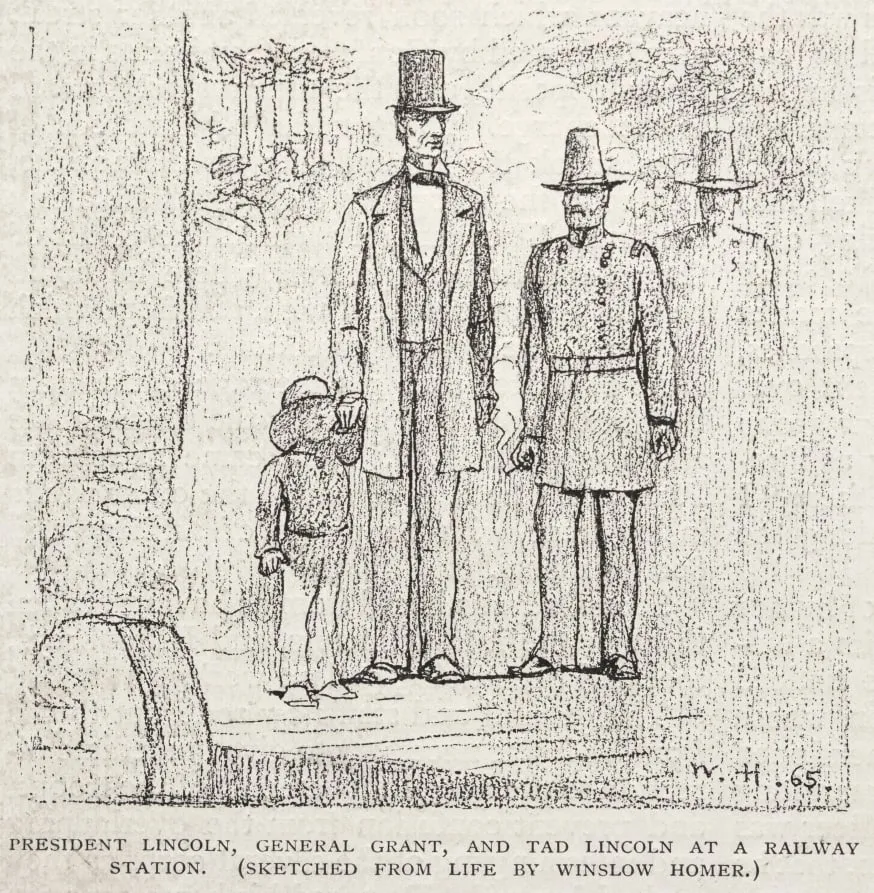
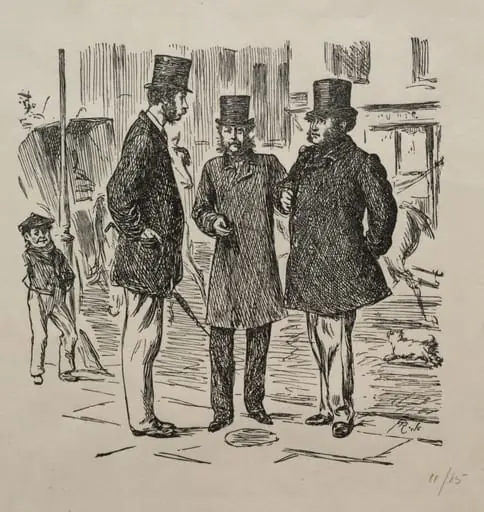
President Lincoln, General Grant, and Tad Lincoln at a Railway Station is a print by the Impressionist artist Winslow Homer. It dates from 1887 and is held in the collection of the Cleveland Museum of Art.
- Accession no.
- 1942.1448
- Credit line
- Purchase from the J. H. Wade Fund
About this work
Overview
Executed in a mixed medium, it blends precise figure rendering with atmospheric background softness, characteristic of his evolving style during the late 1880s.
Created in 1887 by Winslow Homer, this print captures a quiet moment at a railway station involving President Abraham Lincoln, General Ulysses S. Grant, and Lincoln’s youngest son, Tad. Though Homer was best known for marine scenes and rural life, this work reflects his later interest in historical and political figures. Executed in a mixed medium, it blends precise figure rendering with atmospheric background softness, characteristic of his evolving style during the late 1880s.
Subject & Meaning
The composition centers on Lincoln, flanked by Grant and Tad, suggesting a private interlude amid public duty. Lincoln’s formal attire and contemplative posture contrast with Grant’s military bearing, while Tad’s presence introduces a domestic note. The scene implies a moment of transition, perhaps departure or arrival, emphasizing the human dimension of leadership during a turbulent era. No overt symbolism is present; the power lies in the understated intimacy of the trio.
Technique & Style
Homer employed a combination of detailed line work for the figures and looser, tonal washes for the background, creating a visual hierarchy that draws attention to the subjects. The figures are rendered with careful attention to costume and posture, while the station environment dissolves into blurred forms and muted tones. This contrast between clarity and ambiguity reflects an early impressionistic influence, adapting European techniques to American subject matter without abandoning realism.
History & Provenance
The print was produced as part of Homer’s late-career exploration of historical themes, several years after Lincoln’s assassination and Grant’s presidency. It was likely based on contemporary photographs and public memory rather than direct observation. The work entered the collection of The Cleveland Museum of Art in the 20th century, where it remains today as one of few depictions of Lincoln in civilian or familial contexts by a major American artist.
Context
In the 1880s, American artists increasingly turned to recent national history as subject matter, seeking to define a shared identity after the Civil War. Homer’s choice to depict Lincoln with Grant and his son reflects a cultural moment of reflection, not celebration. The railway station, a symbol of modernity and movement, frames the figures as relics of a fading era, subtly acknowledging the passage of time and the weight of memory.
Legacy
Though not widely exhibited during Homer’s lifetime, this print contributes to a broader shift in American art toward psychological depth in historical portraiture. It stands apart from heroic monuments, offering instead a restrained, humanized vision of national figures. Its quiet composition influenced later illustrators and realist painters who sought to convey dignity through subtlety rather than grandeur.
Artist & collection
Artist
Winslow Homer (February 24, 1836 – September 29, 1910) was an American landscape painter and illustrator, best known for his marine subjects.