Artwork
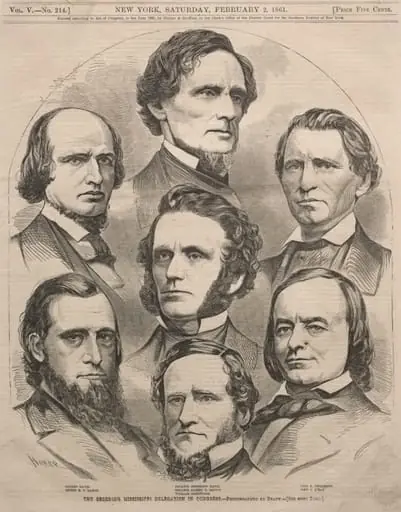
The Georgia Delegation in Congress
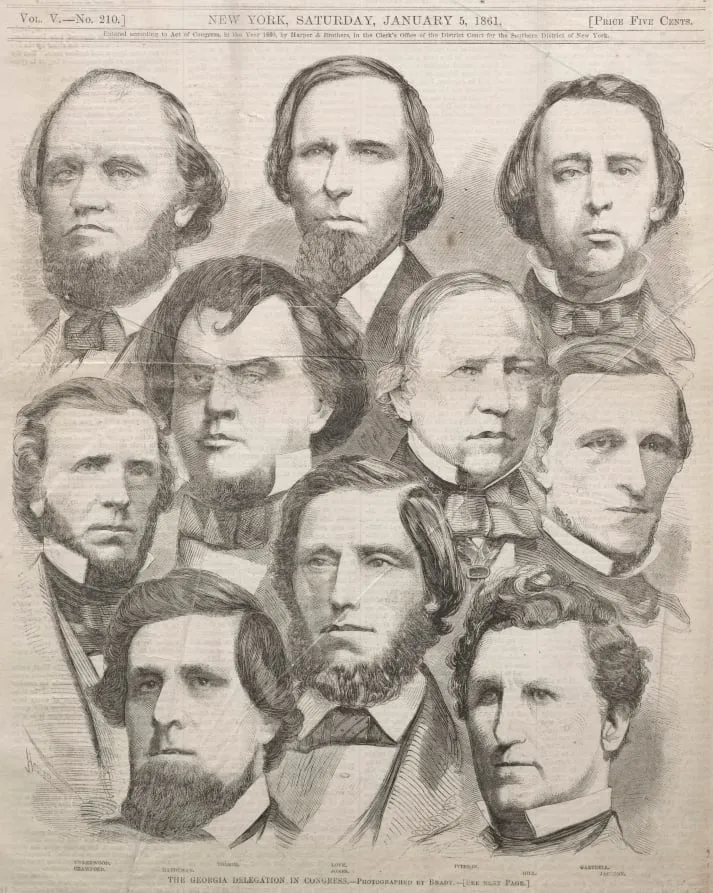
The Georgia Delegation in Congress is a print by the Impressionist artist Winslow Homer. It dates from 1861 and is held in the collection of the Cleveland Museum of Art.
- Accession no.
- 1942.1236
- Credit line
- Purchase from the J. H. Wade Fund
About this work
Overview
The Georgia Delegation in Congress is a black-and-white print created by Winslow Homer in 1861. It is a representative work from his early career as a commercial illustrator.
Subject & Meaning
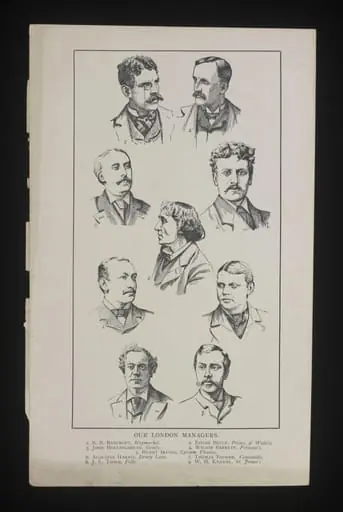
The print depicts nine men in formal attire, identified by name, and arranged in a grid-like formation. The accompanying text indicates they are a delegation from Georgia, likely referencing their presence in Congress.
Technique & Style
Executed in a sketch-like style, the image features simple lines and shading, characteristic of Homer's illustrative work. The print's monochromatic palette and straightforward composition contribute to its documentary feel.
History & Provenance
Produced during Homer's transition from commercial illustration to fine art, The Georgia Delegation in Congress reflects his developing skills and artistic direction.
Artist & collection
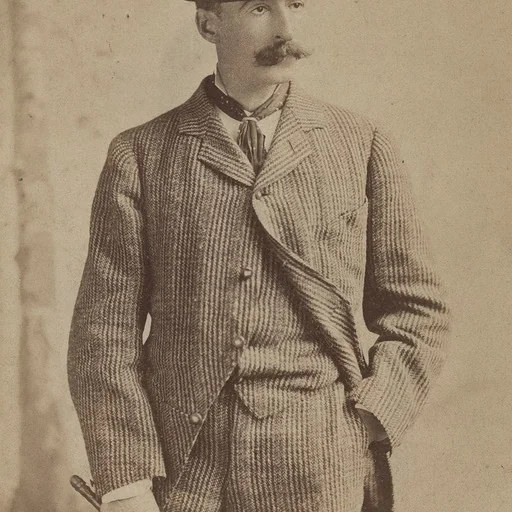
Artist
Winslow Homer (February 24, 1836 – September 29, 1910) was an American landscape painter and illustrator, best known for his marine subjects.