Artwork
Cannon Rock
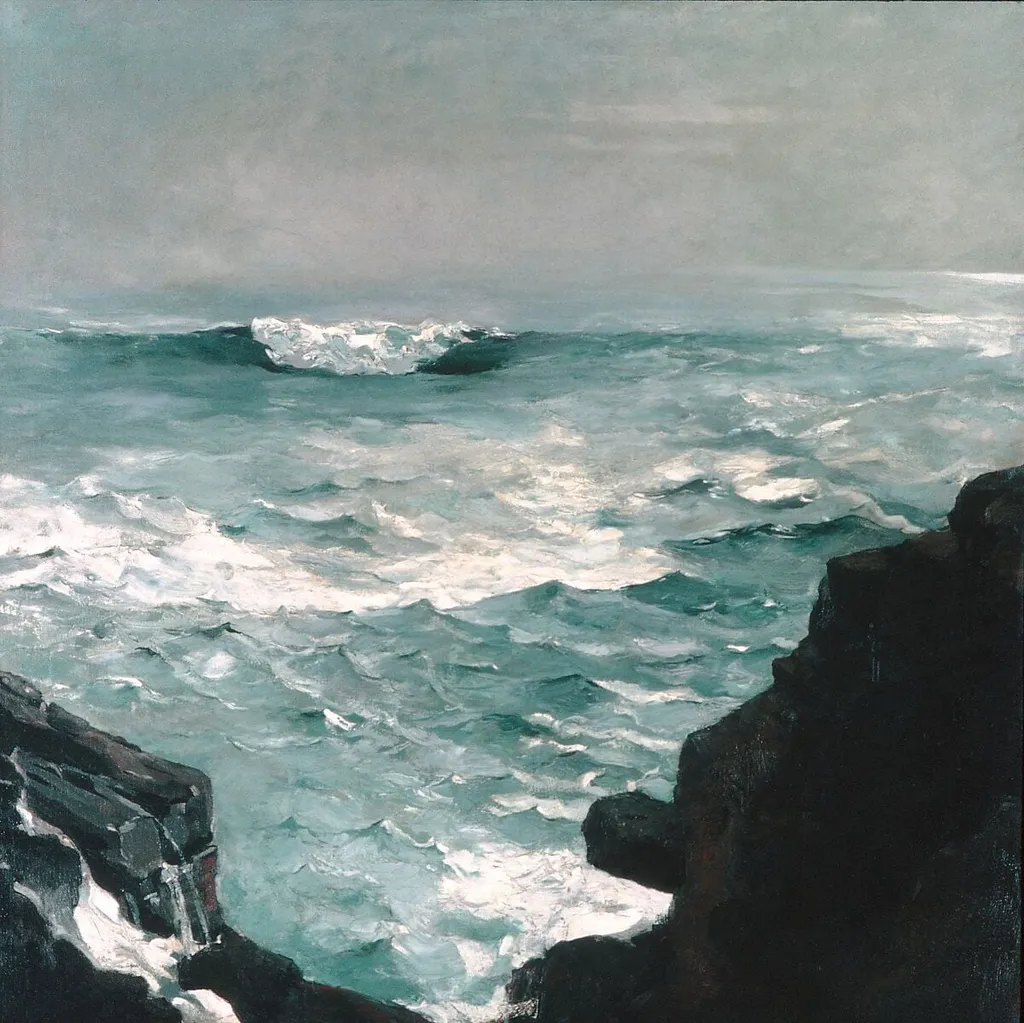
Cannon Rock is an oil painting by the American Impressionist artist Winslow Homer. It dates from 1895 and is held in the collection of the Metropolitan Museum of Art.
About this work
Subject & Meaning
The work exemplifies Winslow Homer's fascination with the sea's strife and dangerous beauty, a theme he explored in several 1890s seascapes.
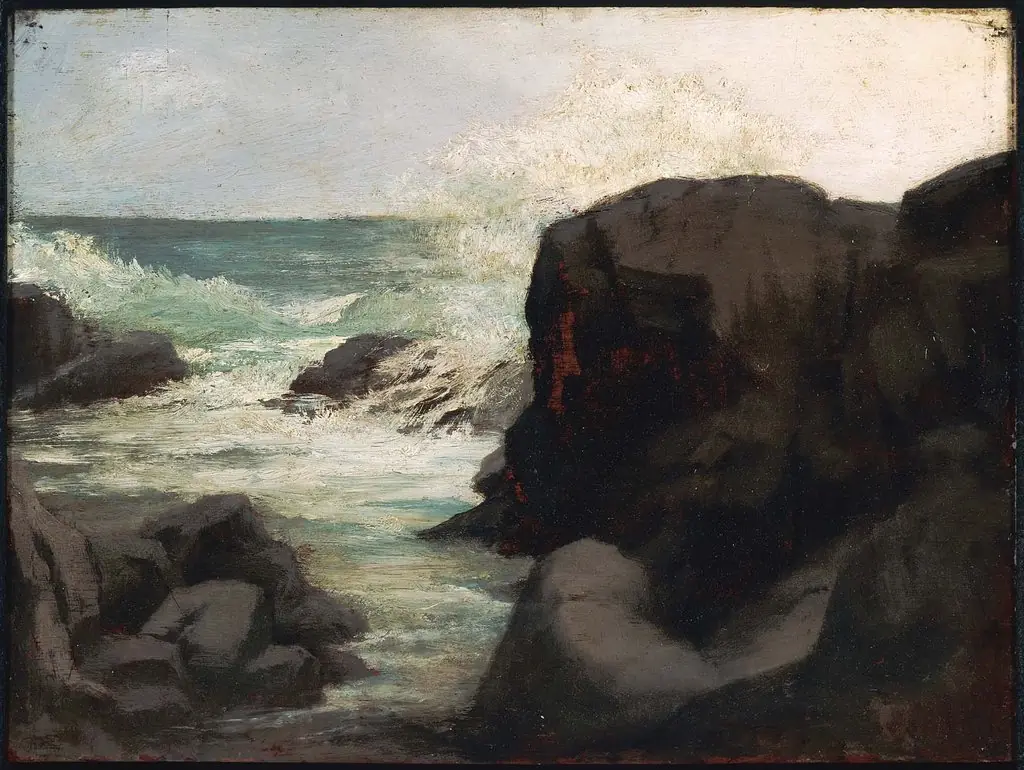
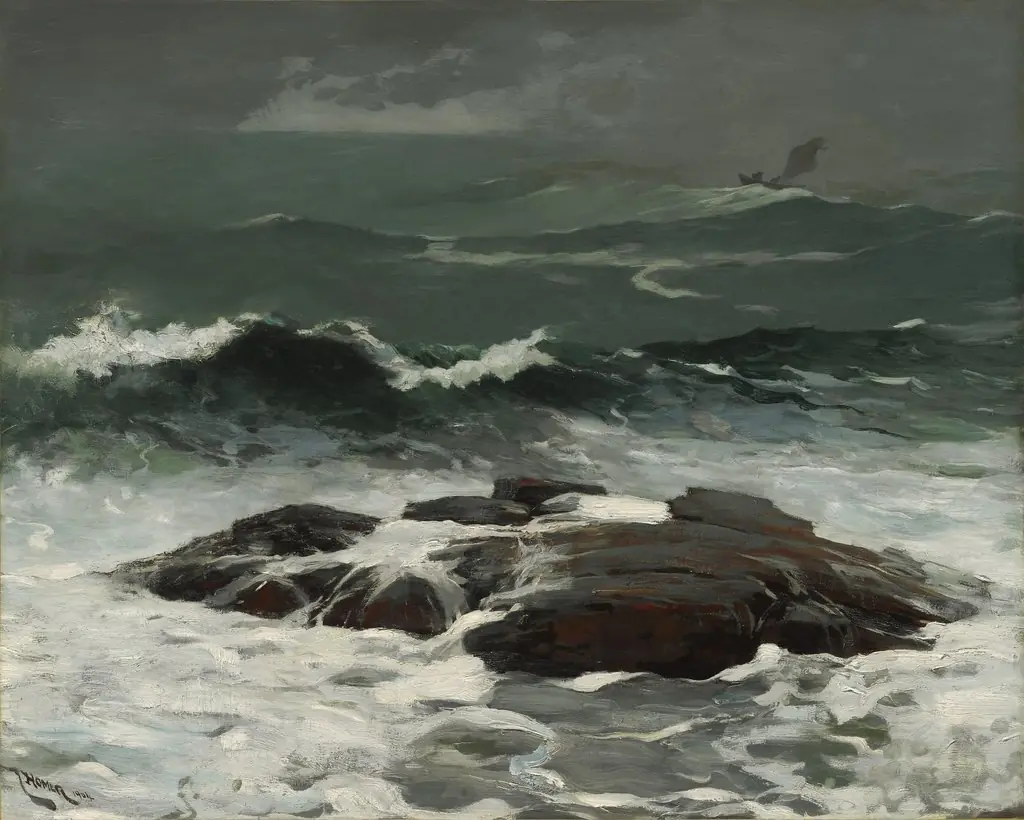
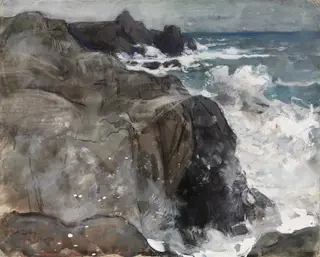
Cannon Rock portrays an offshore wave crashing over a submerged shelf, with water surging into an inlet framed by foreground rocks, a composition typical of marine landscape painting. The work exemplifies Winslow Homer's fascination with the sea's strife and dangerous beauty, a theme he explored in several 1890s seascapes. Art historian Philip Beam notes that Homer reshaped the rock ledges into a triangular form to concentrate visual attention on this motive, while critic Geraldine Fabricant observes that the scene is not a literal depiction of any specific tide but an idealized representation of wave dynamics.
Together, these elements convey the power and symbolic resonance of the ocean as both natural force and artistic subject.
Technique & Style
Created in 1895, Cannon Rock is an oil painting executed on a square canvas support measuring 101.6 cm on each side. The work is classified as a marine landscape that captures the dynamic interaction between wind waves and a rocky shoreline. Stylistically, the composition features an offshore wave breaking over a submerged shelf, with water surging into a foreground inlet formed by rocks.
Homer deliberately altered the natural arrangement of the horizontal rock ledges, reconfiguring them into a triangular formation to focus the viewer's attention on the central motif. Rather than offering a literal topographical record, the painting synthesizes elements of the sea and shore to express the power and dangerous beauty of the ocean, a recurring theme in the artist's late 19th-century seascapes.
History & Provenance
Cannon Rock was created by Winslow Homer in 1895 as an oil painting on canvas. The work measures 101.6 cm in both height and width. While the painting depicts a dramatic seascape, Homer rearranged the natural rock formations into a triangular composition to emphasize the central motif, rather than providing a literal geographic representation.
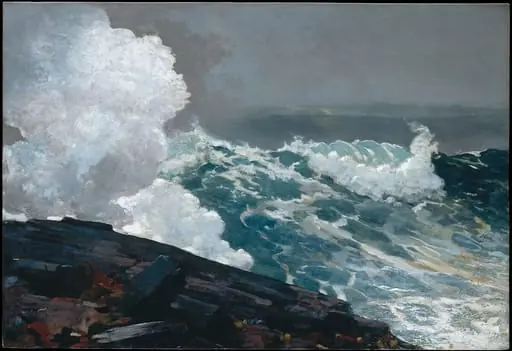
The artwork is currently held in the collection of the Metropolitan Museum of Art in New York, where it is classified within the American Wing. The piece is part of a broader series of seascapes Homer produced in the late 19th century, including works like Northeaster, which explore the power and danger of the ocean. No specific commission details or prior ownership records are provided in the available sources, but the work's creation date and current institutional home are well-documented.
Cannon Rock is held by the Metropolitan Museum of Art as part of the institution's permanent holdings and remains on view within The American Wing, where it is catalogued with the oil-on-canvas medium and dated to 1895. The work has been exhibited at the museum since its acquisition, with no record of loan or temporary relocation in the provided sources.
Context
Cannon Rock occupies a significant position within Winslow Homer's late-career exploration of marine subjects, standing alongside major seascapes like Northeaster and The Gulf Stream. Scholars characterize this body of work as expressing the formidable power and dangerous beauty of the sea. Art historian Philip Beam contextualizes the painting's composition by noting Homer's deliberate rearrangement of horizontal rock ledges into a triangular formation to focus the viewer's attention on the central motif.
Critical reception has further highlighted the work's departure from strict topographical accuracy; Geraldine Fabricant of The New York Times observed that the depicted wave dynamics contradict actual tidal conditions at the site. These observations underscore the painting's status not as a literal record, but as a synthesized artistic statement that prioritizes dramatic impact over geographic fidelity within the American landscape tradition.
Legacy
Later scholarship regards Cannon Rock as a pivotal work in Winslow Homer's marine oeuvre, exemplifying his synthesis of natural observation and compositional drama. Critics have highlighted its non-literal depiction of tidal conditions and its striking triangular rock formation, which focuses visual attention on the surging wave. Its inclusion in the Metropolitan Museum of Art's collection has secured its standing within American art history, and it is frequently cited as a benchmark of nineteenth-century seascape painting.
Overview
Winslow Homer's 1895 oil on canvas, Cannon Rock, captures a dramatic seascape. The painting depicts a powerful wave breaking over a jagged rock formation under a somber sky. This work is part of the Metropolitan Museum of Art's collection, housed within its American Wing.
It exemplifies Homer's fascination with the raw forces of nature and the sea's inherent dangers, a recurring theme in his later career.
Artist & collection

Artist
Winslow Homer (February 24, 1836 – September 29, 1910) was an American landscape painter and illustrator, best known for his marine subjects.