Artwork
Nassau
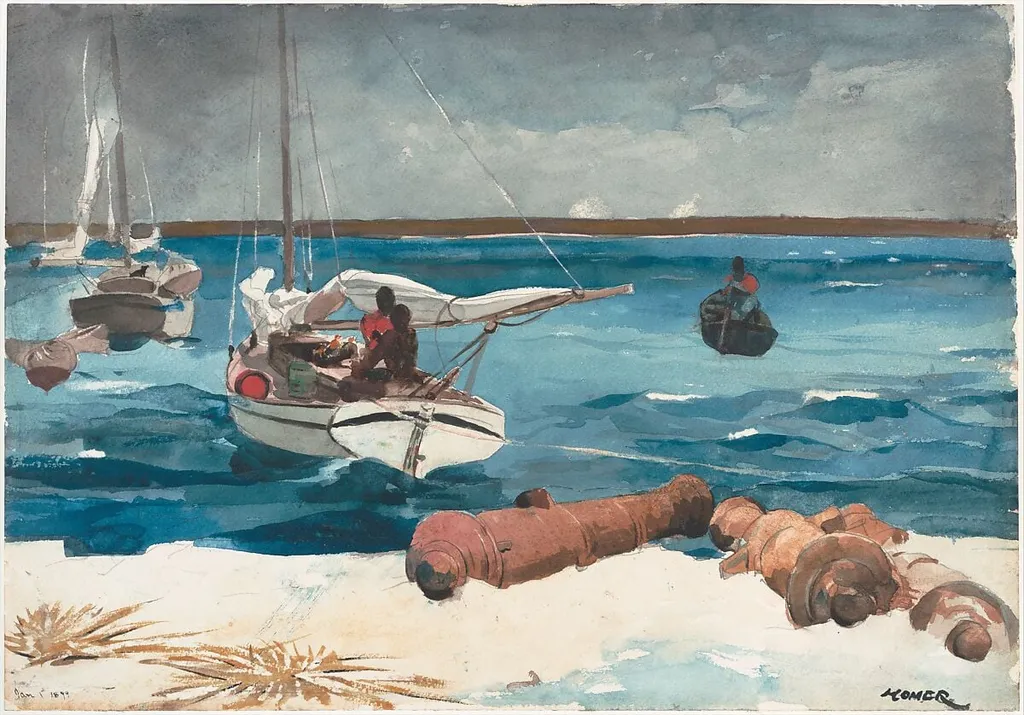
Nassau is a graphite work on paper by the American Impressionist artist Winslow Homer. It dates from 1899 and is held in the collection of the Metropolitan Museum of Art.
- Accession no.
- 10.228.4
- Credit line
- Amelia B. Lazarus Fund, 1910
About this work
Technique & Style
Nassau is executed in watercolor and graphite on off-white wove paper. The work is classified as a marine genre piece in the collection of the Metropolitan Museum of Art. The paper support measures 37.8 cm in height by 54.3 cm in width.
The combination of transparent watercolor washes with graphite drawing on a smooth wove paper support is consistent with Winslow Homer's late watercolor practice.
History & Provenance
The painting is currently held in the collection of the Metropolitan Museum of Art, where it is classified within the American Wing as a marine genre piece.
Winslow Homer created the watercolor Nassau in 1899. The work is executed in watercolor and graphite on off-white wove paper. It measures 37.8 cm in height and 54.3 cm in width.
The painting is currently held in the collection of the Metropolitan Museum of Art, where it is classified within the American Wing as a marine genre piece.
Nassau is held in the Metropolitan Museum of Art's collection within The American Wing gallery, classified under marine art. It is cataloged with the accession number 1979.176.4 and has been exhibited in the museum's American Wing galleries since its acquisition.
The work was created in 1899 using watercolor and graphite on off-white wove paper, measuring 37.8 centimeters in height by 54.3 centimeters in width. Its exhibition history includes display in the museum's American Wing following its donation by an unspecified donor.
Overview
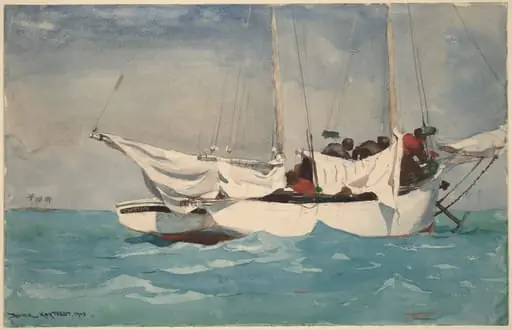
Created in 1899, Nassau is a small watercolor and graphite composition on off‑white wove paper. The work presents a tranquil harbor scene with three modest vessels on gentle blue water, a partially buried cannon on the sand, and a pale sky dotted with light clouds. Its dimensions and modest palette reflect the artist’s focus on atmospheric effects rather than narrative detail.
Subject & Meaning
The picture captures a quiet coastal setting, likely inspired by a visit to the harbor of Nassau. The presence of the rusting cannon suggests a historical or defensive element, while the modest boats and their occupants convey everyday maritime activity. The juxtaposition of the inert artillery with the lively vessels hints at a contrast between past militarism and present civilian life.
Context
At the turn of the twentieth century, American artists increasingly explored watercolor for its capacity to capture spontaneous impressions of landscape and sea. This work reflects that trend, situating the artist among peers who prioritized light, atmosphere, and the immediacy of plein‑air sketching, especially in maritime subjects.
Artist & collection
Artist
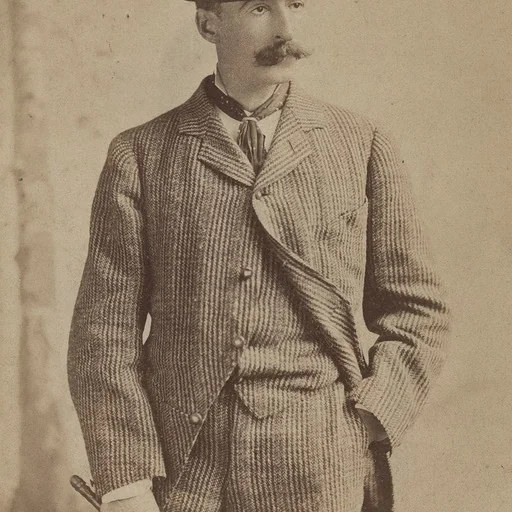
Winslow Homer (February 24, 1836 – September 29, 1910) was an American landscape painter and illustrator, best known for his marine subjects.

 Key West, Hauling Anchor
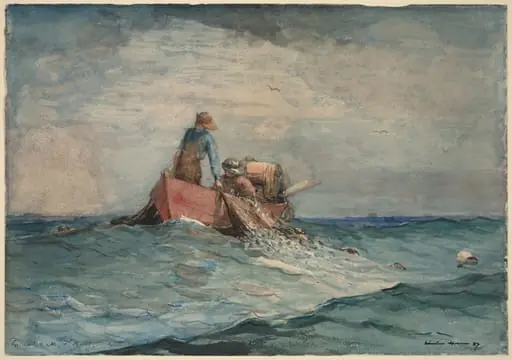 Hauling in the Nets
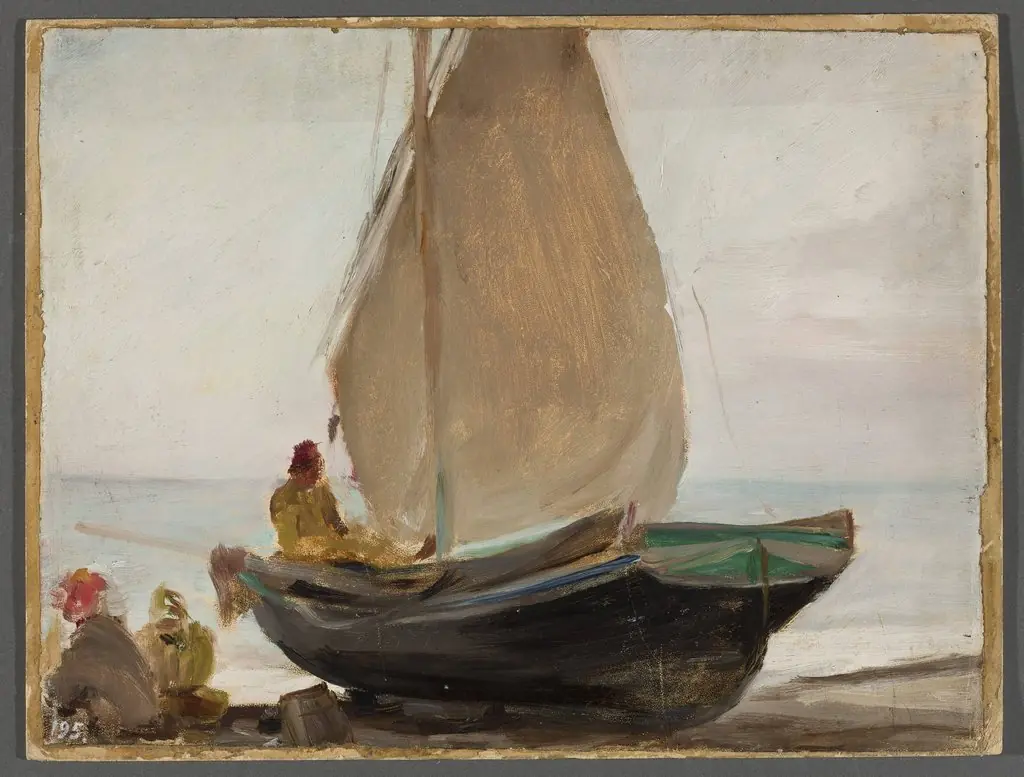 Boat – Alupka. From the journey to Crimea
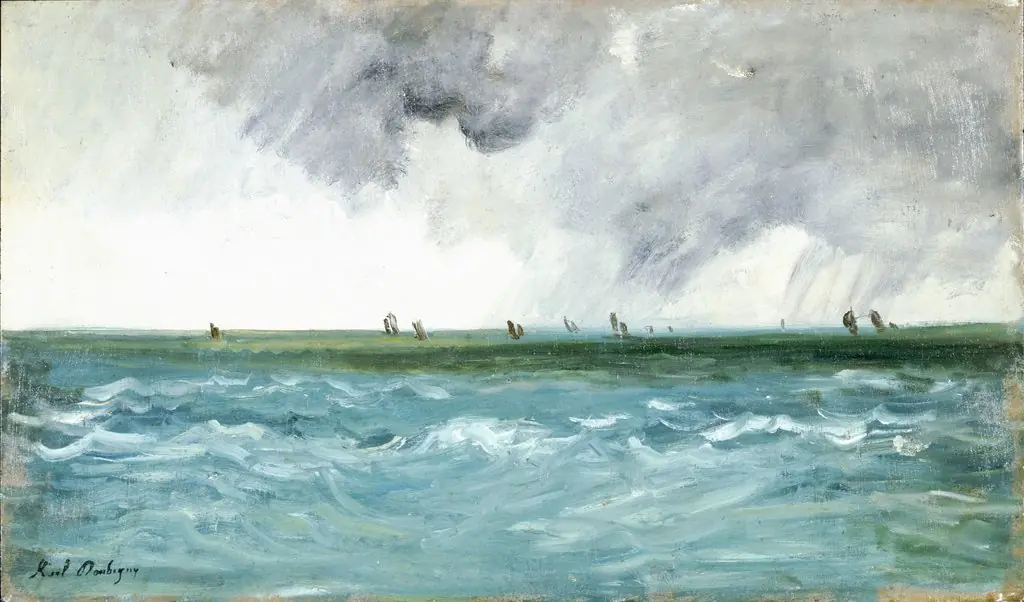 Seascape
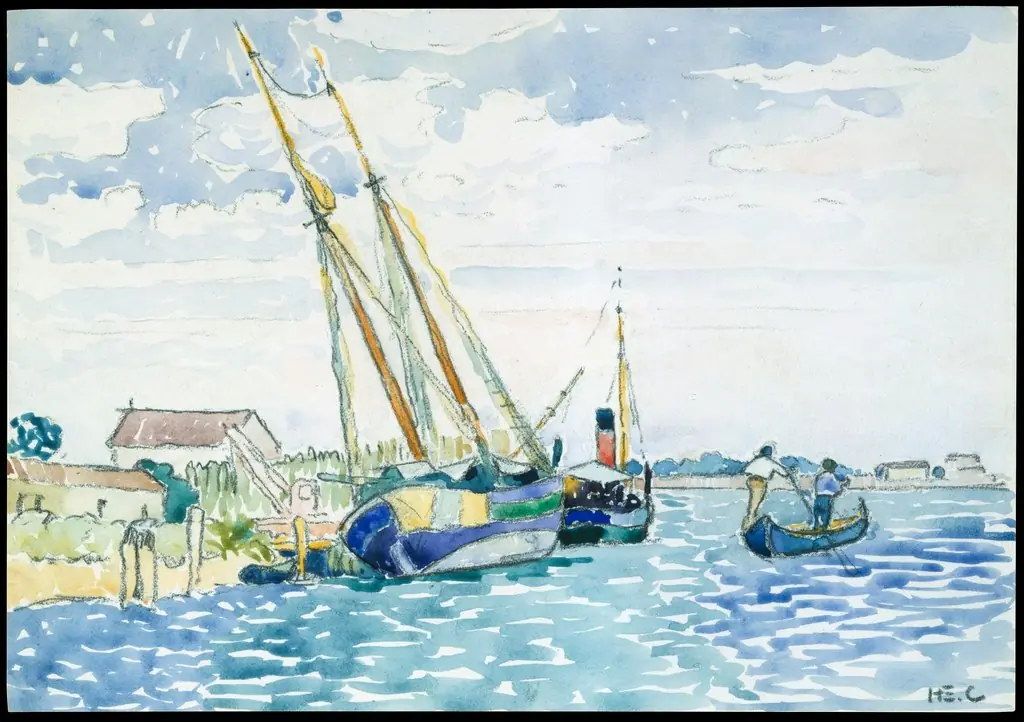 Marine Scene (Boats near Venice)
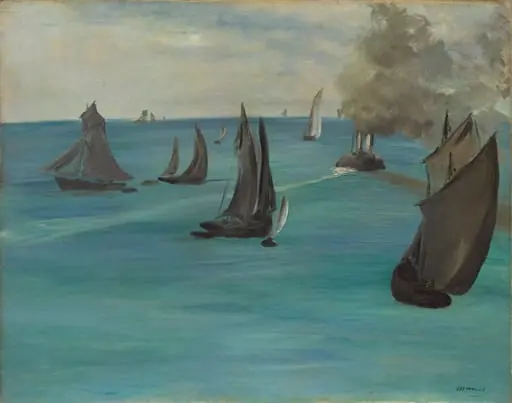 Sea View, Calm Weather (Vue de mer, temps calme)
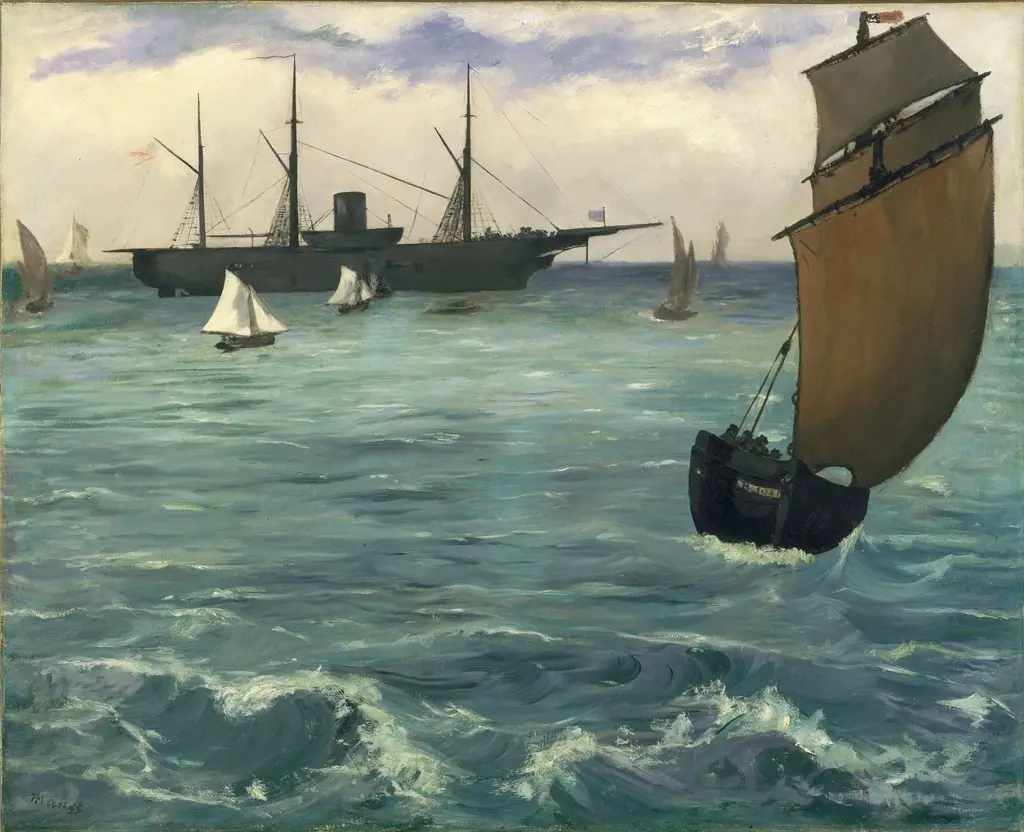 The Kearsarge at Boulogne
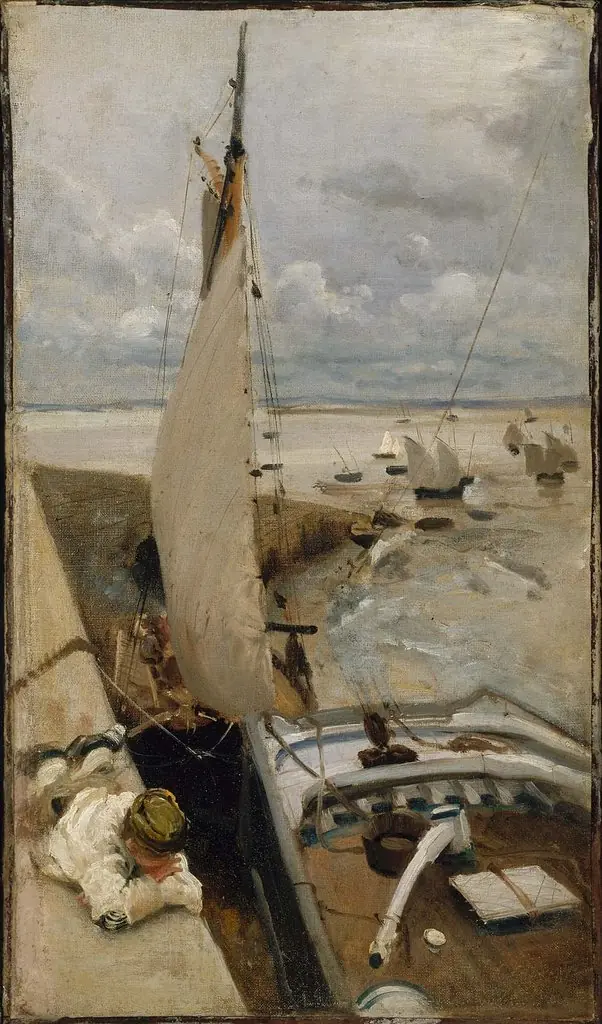 Low Tide at Cancale Harbor
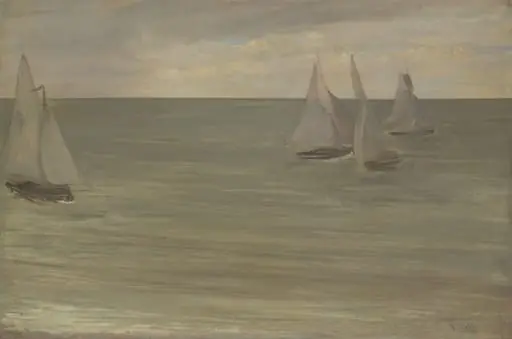 Trouville (Grey and Green, the Silver Sea)
 Seascape at Arcachon
 Trouville (Grey and Green, the Silver Sea)
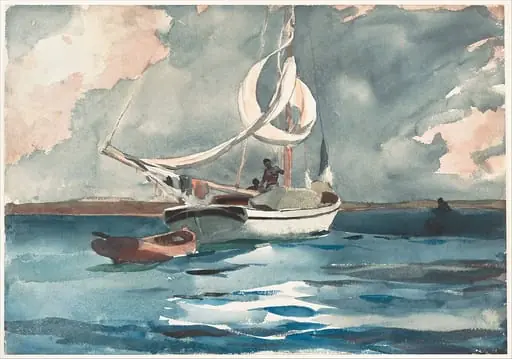
- Sloop, Nassau