Artwork
The Kearsarge at Boulogne
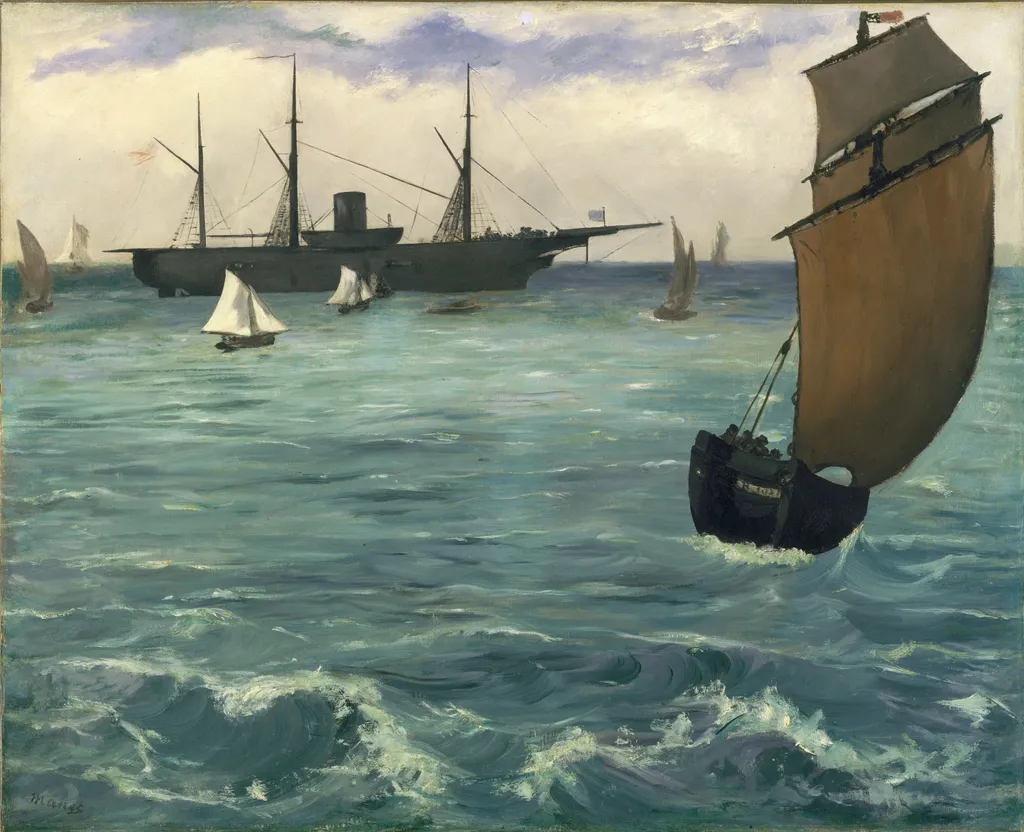
The Kearsarge at Boulogne is an oil painting by Édouard Manet. It dates from 1864 and is held in the collection of the Metropolitan Museum of Art.
About this work
Subject & Meaning
The Kearsarge at Boulogne depicts the Union warship USS Kearsarge anchored off Boulogne-sur-Mer in July 1864, weeks after its celebrated victory over the Confederate raider CSS Alabama at the Battle of Cherbourg. Manet’s composition contrasts the monumental warship, rendered in precise profile with detailed rigging, against the surrounding maritime activity, notably a brown-sailed fishing boat cutting diagonally toward the viewer. The work’s horizontal registers prioritize the sea itself, its green-to-blue gradations and swirling foam occupying more visual space than the ship, subtly shifting focus from military triumph to quotidian port life.
The simplified, silhouetted rigging of the Kearsarge has been linked to Manet’s engagement with Japanese prints, while the high horizon and flattened composition reflect his evolving stylistic dialogue with contemporary graphic traditions.
Technique & Style
The artist employs rich, unmuted colors applied in broad swaths rather than subtle half-tones, creating sharp contrasts of light and shade typical of his style.
Created in 1864, The Kearsarge at Boulogne is an oil painting on canvas measuring 81.6 by 100 centimeters. Manet organizes the composition into four horizontal registers, utilizing broad, energetic brushstrokes to render the sea in layers of deep green, blue, and gray mixed with white foam. The artist employs rich, unmuted colors applied in broad swaths rather than subtle half-tones, creating sharp contrasts of light and shade typical of his style.
The foreground sea dominates the canvas, while the warship is pushed to a higher band, presenting a detailed profile with simplified, silhouetted rigging that reflects Japanese print influences. A fishing boat with brown sails provides a vertical counterbalance to the dark mass of the Kearsarge. The sky features bright white clouds that transition to gray near the horizon, contributing to the work's tranquil yet stylized marine atmosphere.
History & Provenance
The Kearsarge at Boulogne, an oil on canvas painted by Édouard Manet in 1864, records the USS Kearsarge anchored off Boulogne‑sur‑Mer after its 1864 victory over the CSS Alabama. Manet visited the ship in July 1864, possibly boarding it, and used that observation to produce a watercolor that informed the final composition. Its early ownership passed from collector Gatti to Boussod and Valadon, then to Theo van Gogh, to Gustave Goupy, and finally to Paul Durand‑Ruel, who sold it to Henry Osborne Havemeyer in 1898.
The work remained in the Havemeyer family until it was partially gifted and sold to the Metropolitan Museum of Art in 1999.
Since 1999, Édouard Manet's 1864 painting The Kearsarge at Boulogne has been held by the Metropolitan Museum of Art in New York. The work was acquired that year through a combination of partial donation and purchase from the estate of Peter H. B. Frelinghuysen, following a lineage that included his mother Adaline Havemeyer Frelinghuysen and her parents, Henry O. and Louisine Havemeyer. The painting's exhibition history includes early showings at Martinet in Paris (1865) and the Avenue de l'Alma (1867), followed by major retrospectives such as the 1983 Manet exhibition at the Galeries nationales du Grand Palais and the 2003 show Manet and the American Civil War at the Met. Recent presentations include the 2023 Manet/Degas exhibition, which traveled from the Musée d'Orsay to the Met.
Context
Scholars characterize The Kearsarge at Boulogne as representative of Manet's style through its sharp light-and-shade contrasts and broad application of unmuted color. Unlike his dramatic depiction of the naval battle itself, this work presents a tranquil scene that shifts focus from military victory to everyday port life by foregrounding a fishing vessel. Art historians note the composition's high horizon and simplified, silhouetted rigging as evidence of Manet's engagement with Japanese prints.
Contemporary reception included praise from critic Philippe Burty regarding Manet's earlier battle painting, prompting the artist to visit the anchored ship in July 1864. The work has been featured in significant surveys of Impressionism and Manet's oeuvre, including exhibitions in Paris (1983), New York (1994), and Philadelphia (2004), cementing its status within the canon of marine art and the origins of Impressionism.
Legacy
The Kearsarge at Boulogne has secured a significant place in Manet's oeuvre as a key marine work that complements his more dramatic Battle of the Kearsarge and the Alabama. Scholars frequently analyze its composition, noting the high horizon and simplified rigging as indicative of Manet's engagement with Japanese prints. The painting's reputation evolved from its initial 1865 exhibition at Martinet in Paris to its inclusion in major twentieth-century surveys, such as the 1983 Manet retrospective at the Galeries nationales du Grand Palais and the 2003 exhibition on Manet and the American Civil War.
Its enduring legacy is underscored by its stable presence in the Metropolitan Museum of Art since 1999, where it serves as a primary example of Manet's maritime subjects. Recent exhibitions, including the 2023 Manet/Degas show, continue to highlight its importance in understanding the artist's treatment of light, color, and contemporary naval history.
Overview
Édouard Manet's 1864 oil painting, The Kearsarge at Boulogne, captures a maritime scene near Boulogne-sur-Mer. It prominently features the American warship USS Kearsarge, depicted weeks after its decisive victory over the Confederate vessel CSS Alabama. The composition contrasts the modern steam-powered Kearsarge with traditional sailing vessels, set against a dynamic seascape. This work reflects a moment of historical naval triumph and technological transition.
Own this work as a print
Artist & collection
Artist
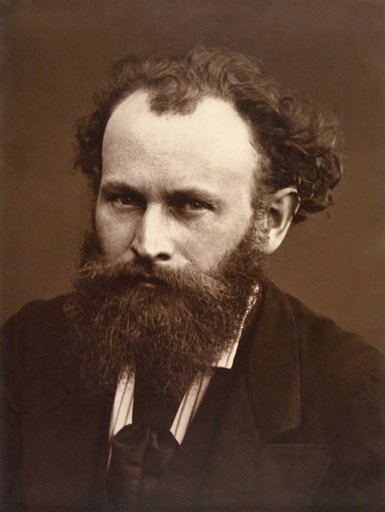
Édouard Manet was a French modernist painter. He was one of the first 19th-century artists to paint modern life, as well as a pivotal figure in the transition from Realism to Impressionism.

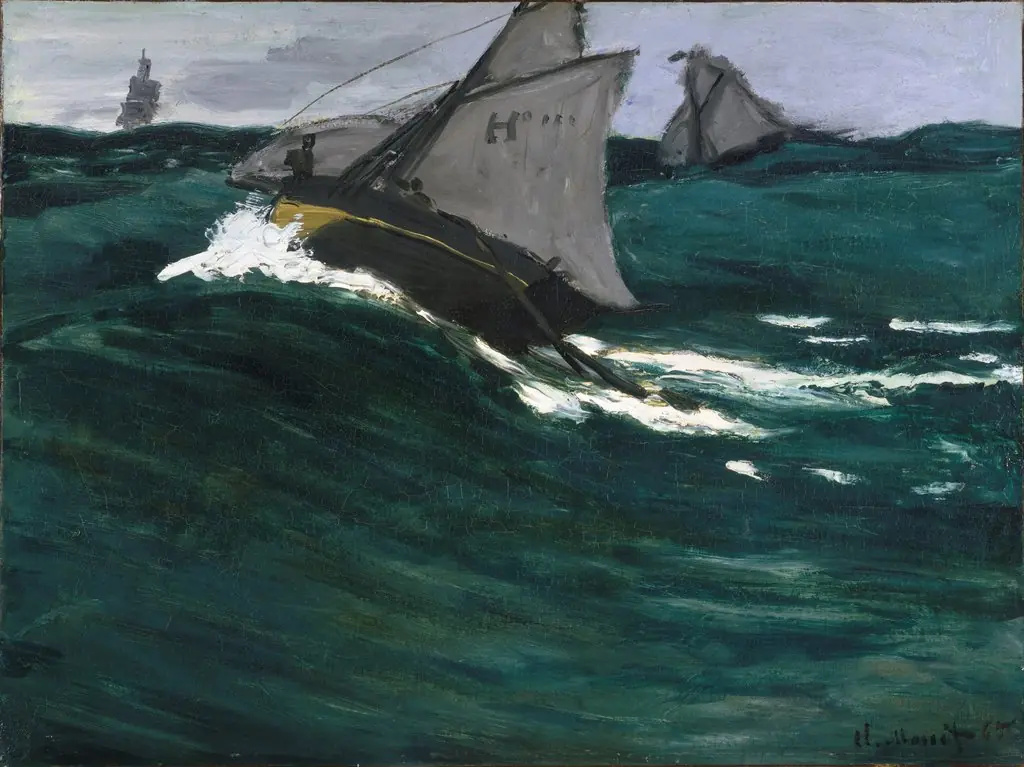
- The Green Wave
 Ships and Sailing Boats Leaving Le Havre
 Ships in a Harbor
 Port of Le Havre
 Sea View, Calm Weather (Vue de mer, temps calme)
 Seascape
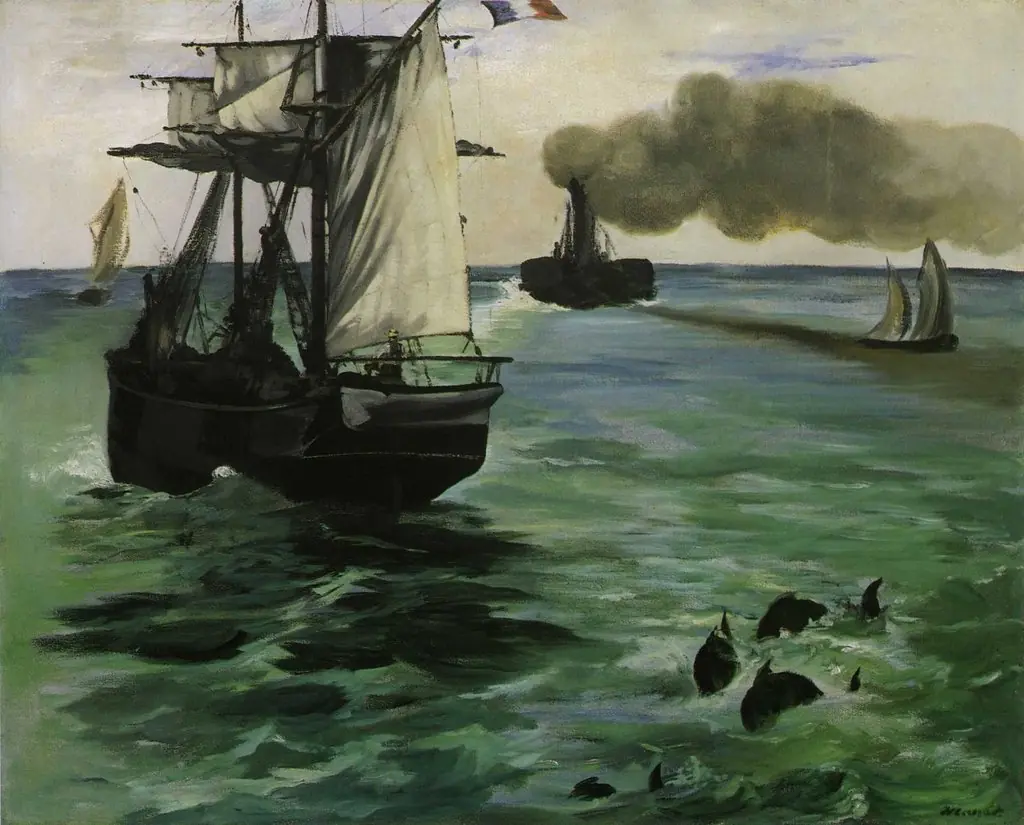 The Steamboat, Seascape with Porpoises
 Trouville (Grey and Green, the Silver Sea)
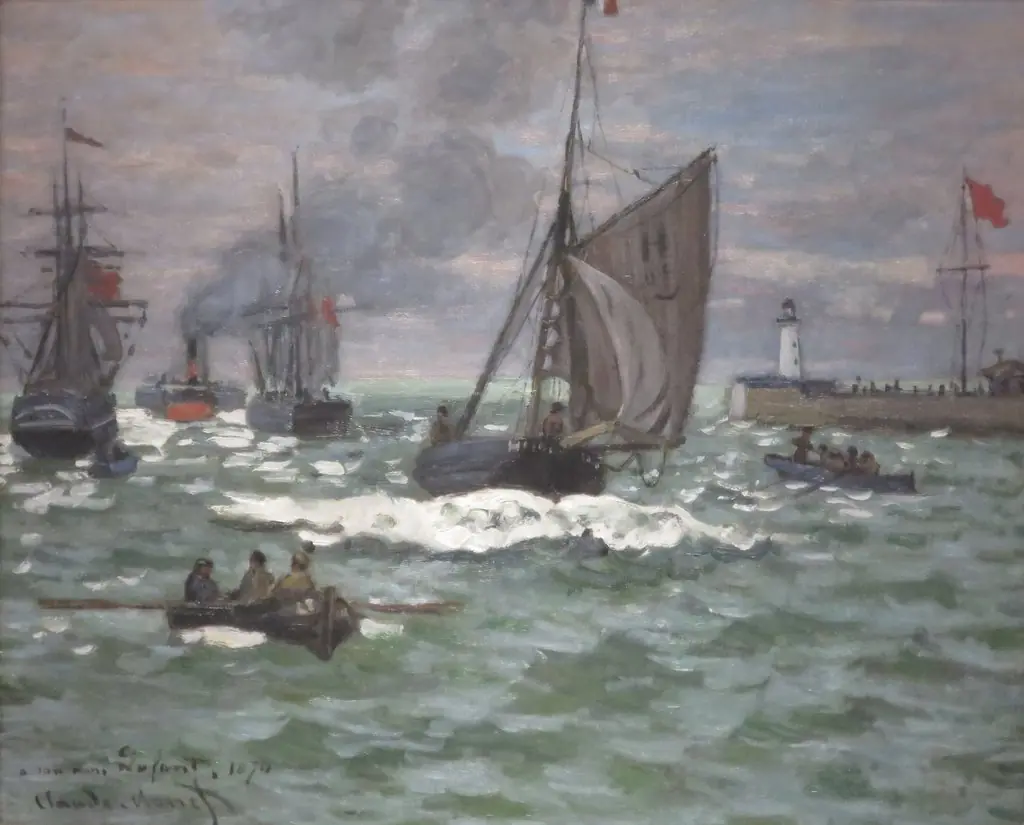 The Entrance to the Port of Le Havre
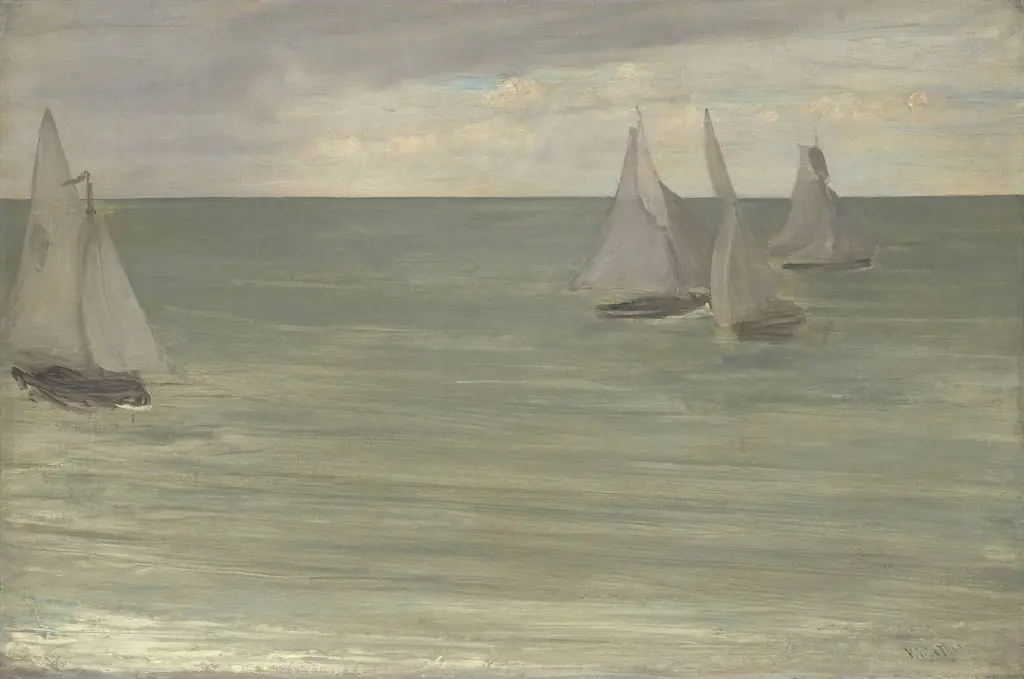 Trouville (Grey and Green, the Silver Sea)
 The Sailboat (Seascape)
 Harbor Scene