Artwork
Rainy Day in Camp
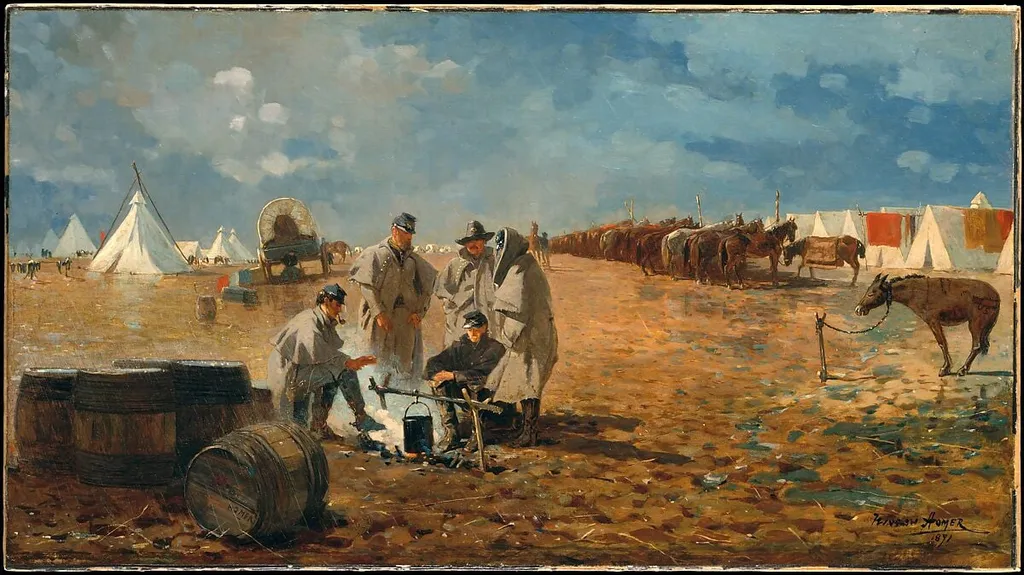
Rainy Day in Camp is an oil painting by the American Impressionist artist Winslow Homer. It dates from 1871 and is held in the collection of the Metropolitan Museum of Art.
About this work
Technique & Style
The composition focuses on the figures and animals within the encampment setting, utilizing the properties of oil paint to render the scene.
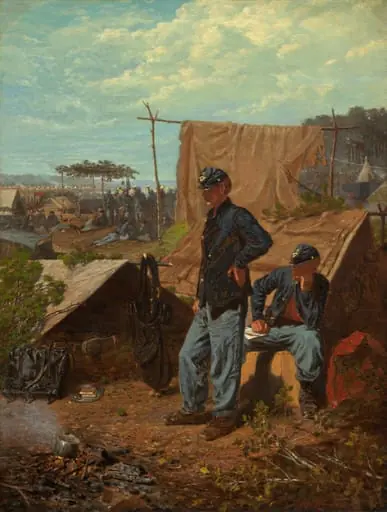
Winslow Homer executed Rainy Day in Camp in 1871 using oil paint applied to a canvas support. The work measures 50.8 cm in height and 91.4 cm in width, providing a substantial surface for this genre scene. Stylistically, the painting depicts a quiet moment from the American Civil War, featuring soldiers, a horse, and a tent.
As an oil-on-canvas piece housed in the American Wing of the Metropolitan Museum of Art, the medium allows for the characteristic texture and depth associated with Homer's mid-career approach to military subjects. The composition focuses on the figures and animals within the encampment setting, utilizing the properties of oil paint to render the scene.
History & Provenance
Winslow Homer executed Rainy Day in Camp in 1871 as an oil painting on canvas. The work depicts a scene from the American Civil War, featuring soldiers, a horse, and tents within a camp setting. While the specific circumstances of its commission or its ownership history prior to entering its current institution are not detailed in the available records, the painting is presently held in the collection of the Metropolitan Museum of Art.
There, it is classified under the American Wing. The physical dimensions of the canvas are recorded as 50.8 centimeters in height and 91.4 centimeters in width.
Context
Rainy Day in Camp (1871) is an oil on canvas genre scene by Winslow Homer in the collection of the Metropolitan Museum of Art, where it is displayed in The American Wing. The work portrays a horse, a soldier and a tent within a Civil War setting, reflecting the artist’s focus on American military life during the conflict. As a genre painting, it situates Homer within the tradition of 19th‑century American narrative art and within his broader series of Civil War–related subjects, combining realistic detail with a dramatic, anecdotal composition.
Overview
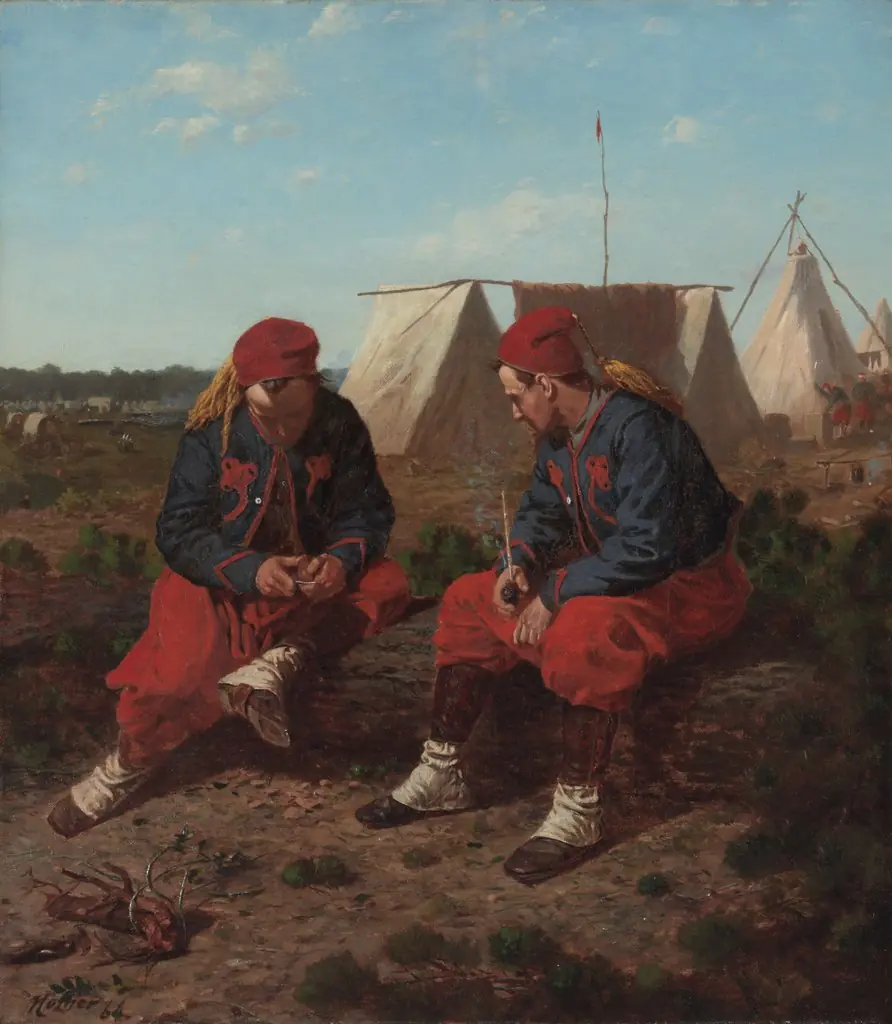
Rainy Day in Camp is an oil on canvas painting that captures a subdued moment from the American Civil War. The artwork depicts a group of Union soldiers gathered near their tents, enduring a period of inclement weather. This piece, part of The American Wing collection, offers a quiet reflection on military life, moving beyond the conventional portrayals of combat and conflict to highlight the more mundane, yet significant, aspects of wartime existence.
Subject & Meaning
The painting presents a scene of stillness amidst the turmoil of war, focusing on soldiers patiently waiting out a rain shower. Instead of depicting battle or heroic action, the artist chose to illustrate the often-overlooked periods of inactivity and endurance that characterized much of military life. This emphasis on quiet contemplation and the daily realities of camp existence provides a nuanced perspective on the Civil War, challenging typical narratives centered solely on combat.
Artist & collection
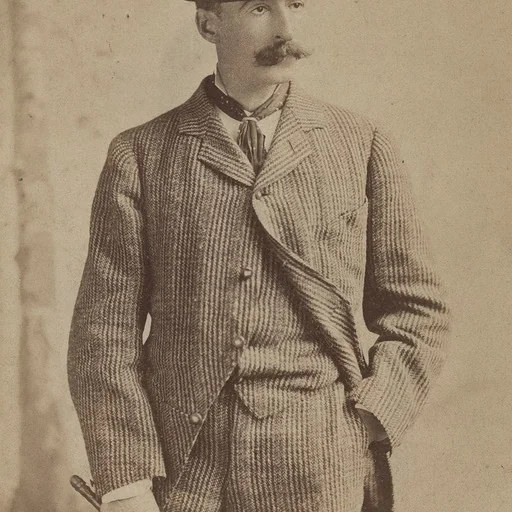
Artist
Winslow Homer (February 24, 1836 – September 29, 1910) was an American landscape painter and illustrator, best known for his marine subjects.