Artwork
The Herring Net
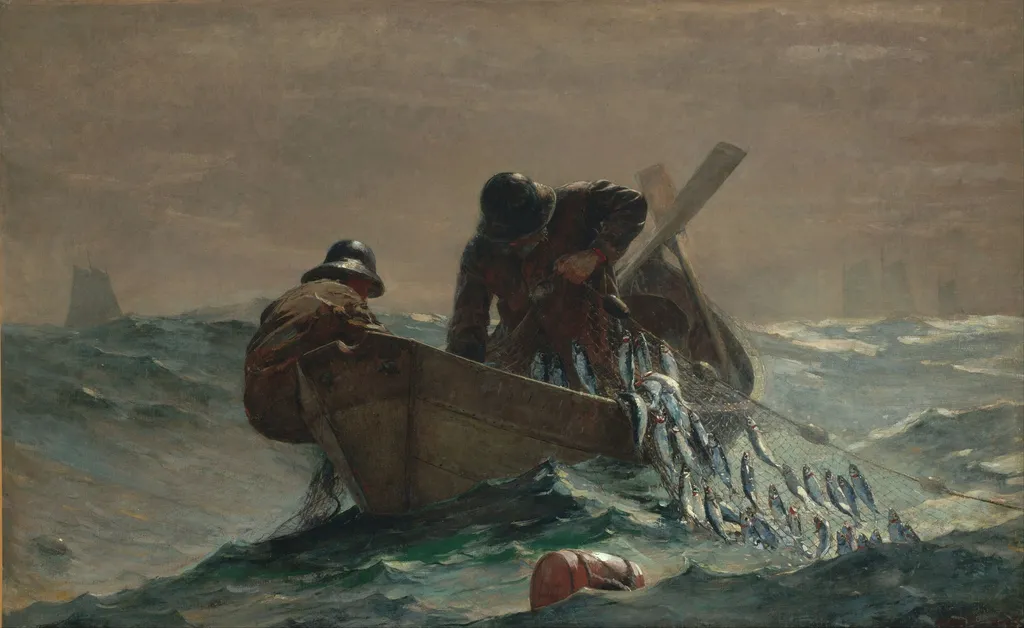
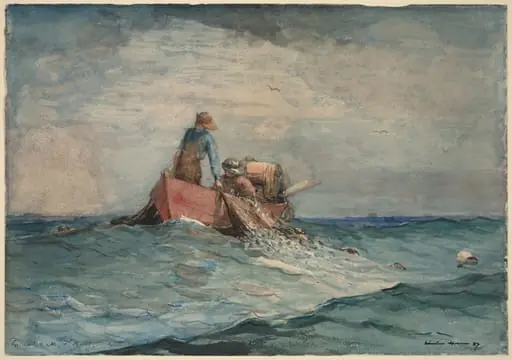
The Herring Net is an oil painting by the American Impressionist artist Winslow Homer. It dates from 1893 and is held in the collection of the Art Institute of Chicago.
About this work
Subject & Meaning
The churning water and overcast sky frame the scene as a study of endurance, where human exertion meets the indifferent power of the sea.
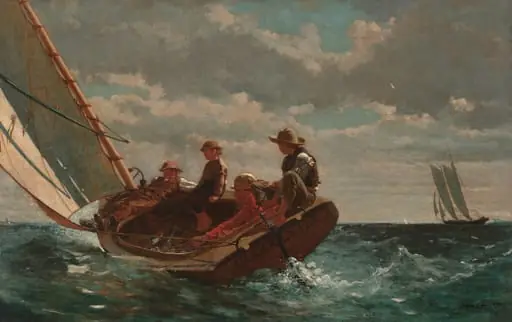
The Herring Net depicts two fishermen in a small boat hauling a heavy net laden with herring against a swelling sea, their labor set within a broader maritime context. One man, bent forward, pulls the net while the other steadies the vessel from the opposite side, emphasizing balance and collective effort against the forces of wind and wave. In the distance, a schooner appears, suggesting the next stage of the catch’s journey ashore.
The churning water and overcast sky frame the scene as a study of endurance, where human exertion meets the indifferent power of the sea. The composition’s horizontal format and low horizon heighten the immediacy of the task, while the barely visible fleet on the horizon situates the moment within a wider industry of fishing.
Technique & Style
The painting is executed in oil on canvas, depicting a marine scene of two fishermen hauling a heavy herring net from a small boat on choppy water. One figure leans over the net, while another sits to counterbalance, both rendered with loose brushwork that emphasizes the texture of the water and the strain of the labor. The composition uses a low horizon and diagonal lines of the net and oars to create dynamic movement, and the muted palette of grays and blues conveys a brooding atmosphere.
The work measures 76.5 cm by 122.9 cm and is housed in the collection of the Art Institute of Chicago.
History & Provenance
The Herring Net was painted by Winslow Homer in 1885. It is held by the Art Institute of Chicago, where it entered the collection in 1937 as a bequest from the widow of Martin Ryerson.
The sources do not document an earlier provenance, commission, or chain of ownership prior to the Ryerson bequest, nor do they record the circumstances of the painting's creation beyond its 1885 date.
The Herring Net is held in the collection of the Art Institute of Chicago. The painting entered the museum's holdings in 1937 as a bequest from the widow of Martin Ryerson. While the work was created in 1885, its specific accession number and detailed exhibition history are not provided in the available records.
Context
The Herring Net (1885) has been discussed as a summation of Homer’s mid‑1880s shift from illustration to oil painting and from anecdotal genre to elemental marine labor. Early reception emphasized the painting’s unidealized realism and dynamic structure, aligning it with contemporaneous realist trends in American art that prized direct observation over narrative clarity. Later scholarship situated the work within Homer’s sustained engagement with North Sea fisheries during his 1881–1882 residence in England, where he studied the physical demands and environmental hazards of maritime work.
In broader art-historical terms, the composition is often read as a pivot between Homer’s earlier anecdotal scenes and his later, more austere depictions of man versus nature. Its horizontal format, tilted boat, and compressed space became touchstones for later American realists exploring the relationship between figure and environment.
Overview
Created in 1893, The Herring Net is an oil painting by American artist Winslow Homer. It portrays a small, weather‑worn boat battling choppy seas as three laboring fishermen haul a net brimming with herring. The scene captures a moment of strenuous work on the water, rendered with a palette of muted blues and grays that convey the cool, overcast atmosphere.
Own this work as a print
Artist & collection
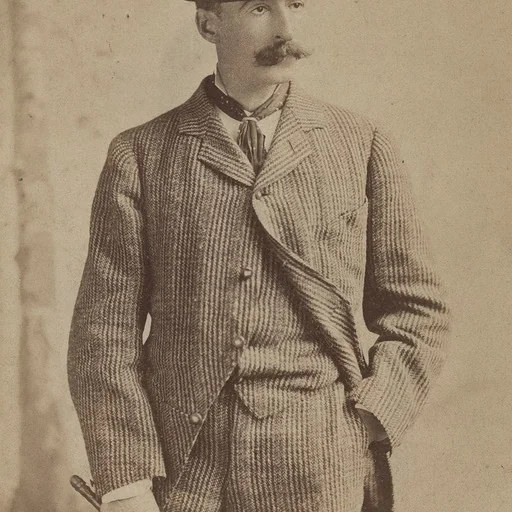
Artist
Winslow Homer (February 24, 1836 – September 29, 1910) was an American landscape painter and illustrator, best known for his marine subjects.