Artwork
The Flirt
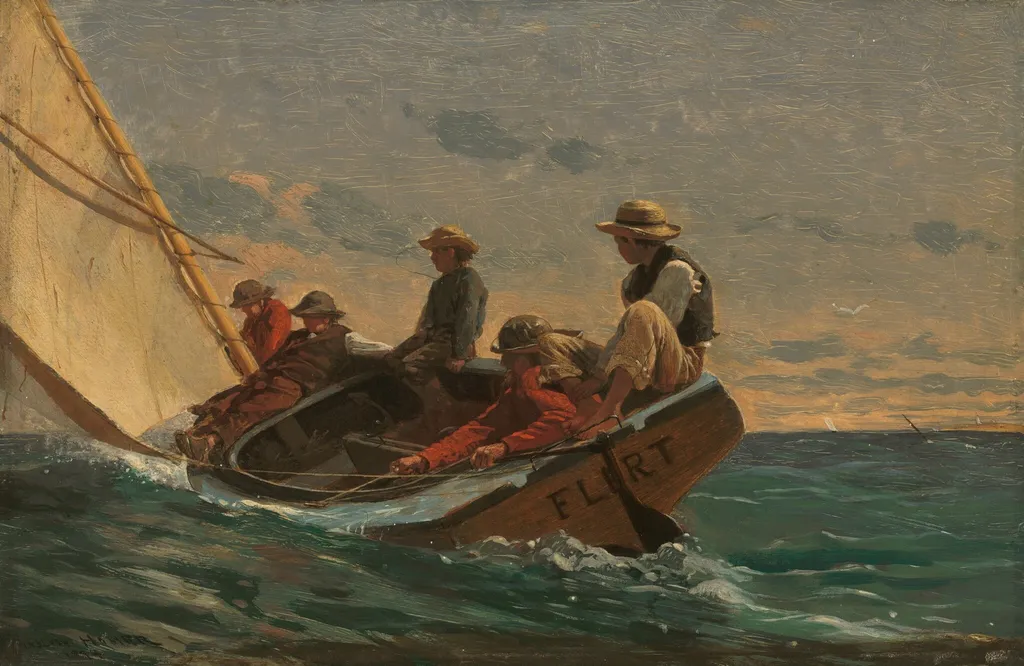
The Flirt is an oil painting by the American Impressionist artist Winslow Homer. It dates from 1874 and is held in the collection of the National Gallery of Art.
- Inscription
- Inscribed:lower left: HOMER / 1874; on transom of boat: FLIRT
About this work
Subject & Meaning
The wind, rendered as a dynamic force, underscores the transient nature of the encounter, reinforcing themes of fleeting connection and evanescence.
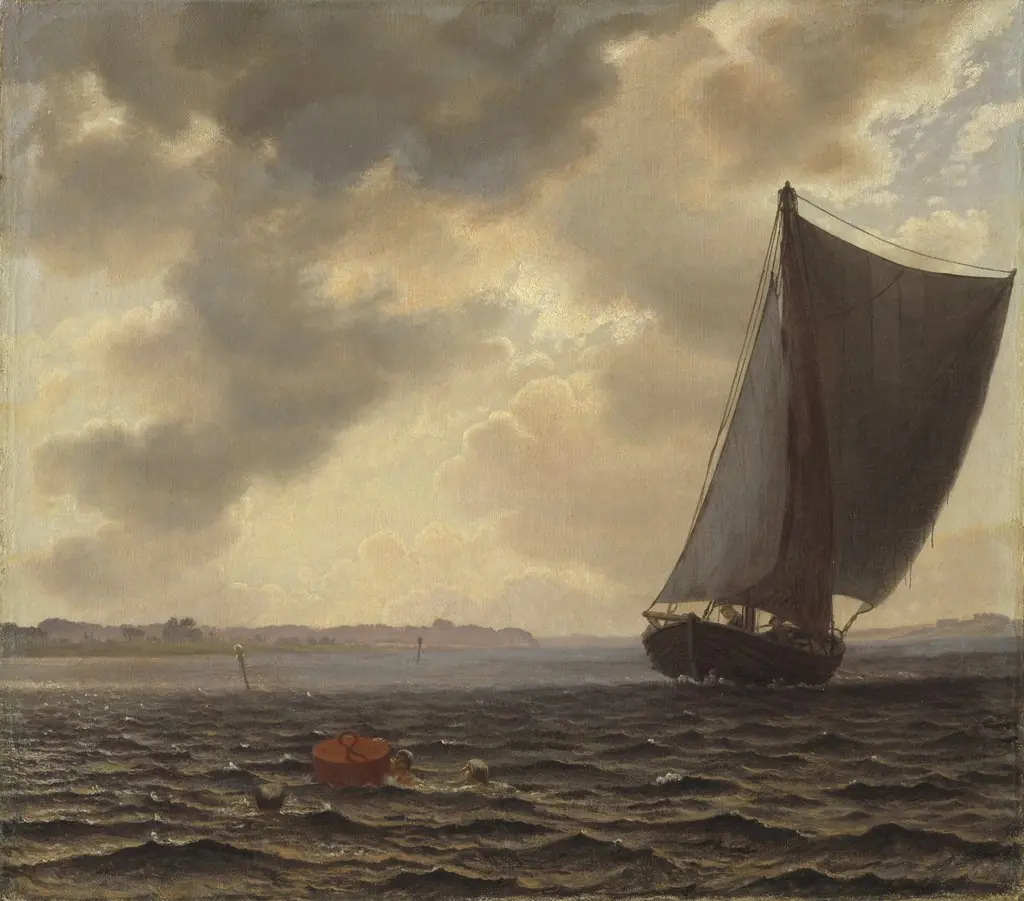
The Flirt depicts a solitary figure in a small boat, emphasizing the interplay of wind and sail rather than the individual's identity. The boat's forward motion, suggested by the taut sail and angled prow, evokes a sense of flirtation through implied movement and directionality. The wind, rendered as a dynamic force, underscores the transient nature of the encounter, reinforcing themes of fleeting connection and evanescence.
The sparse composition and muted palette heighten the work's focus on atmosphere and suggestion, aligning with Homer's broader interest in capturing transient moments of human interaction with the natural world.
Technique & Style
The Flirt is executed in oil on wood, a support choice consistent with Winslow Homer's practice of working on panel for smaller-scale compositions. The painting measures 21.59 cm in height by 30.48 cm in width, giving it a horizontal format suited to its marine subject. The medium of oil paint allowed for the rendering of atmospheric effects, with the depicted wind and boat requiring fluid handling to convey movement and changing light.
The work is held in the National Gallery of Art in Washington, D.C., where its condition is maintained within the collection's conservation standards.
History & Provenance
The Flirt, an 1874 oil on wood panel by Winslow Homer, entered the Valentine family in the late 19th century. It remained in the possession of Lawson Valentine (1827-1891) and his wife Lucy Houghton Valentine (1830-1911), passing by inheritance to their daughter Almira Houghton Valentine Pulsifer (1854-1919). The work subsequently descended to Almira's son Harold Trowbridge Pulsifer (1886-1948), then to his wife Susan Farley Nichols Pulsifer (1892-1987), and finally to their niece Alice Pulsifer Doyle (1916-1996).
After Alice's death the piece was held by her charitable remainder annuity trust, which sold it to Paul Mellon in March 1989; Mellon bequeathed it to the National Gallery of Art in 1999.
Context
The Flirt (1874), an oil on wood panel by Winslow Homer, belongs to the artist's early marine subjects. Its provenance, traced from the Valentine family through several generations of the Pulsifer family to the National Gallery of Art, underscores its place within Homer's oeuvre. The work has been noted for its technical handling and its treatment of 19th-century American maritime themes, depicting a small boat under a wind-driven sail.
Its inclusion in the Gallery's collection reflects recognition of the painting's merit and its role in the narrative of American realist painting.
Legacy
The Flirt (1874), an oil on wood painting by Winslow Homer depicting a boat against a wind-driven scene, entered the National Gallery of Art, Washington, D.C., through the 1999 bequest of Paul Mellon, who had acquired it in 1989 from the Alice P. Doyle Charitable Remainder Annuity Trust; the trust had inherited the work from the Pulsifer family, whose lineage traced back to the artist's early collectors. Its placement in a premier public collection underscores scholarly and curatorial recognition of the painting as a representative example of Homer's late 19th-century oeuvre.
Overview
Winslow Homer's The Flirt (1874) is an oil-on-wood painting that captures a fleeting, narrative moment of leisure on the water. The composition centers on a young woman seated in a small rowboat, her figure turned slightly as she looks back over her shoulder with a knowing smile. Her white dress billows dramatically in the breeze, creating dynamic diagonal lines that contrast with the calm, horizontal expanse of the water.
The work exemplifies Homer's mature style during the 1870s, a period when he increasingly focused on scenes of American life and the relationship between figures and nature. Rather than a formal portrait, the piece functions as a genre scene, relying on the ambiguity of the woman's expression and the implied presence of an unseen observer to suggest a playful interaction. The artist employs loose, energetic brushwork to render the movement of the fabric and the texture of the water, prioritizing atmospheric effect over rigid detail.
This painting reflects Homer's shift toward capturing the immediacy of modern experience and his mastery in conveying psychological nuance through gesture and setting, solidifying his reputation as a chronicler of American identity.
Own this work as a print
Artist & collection
Artist
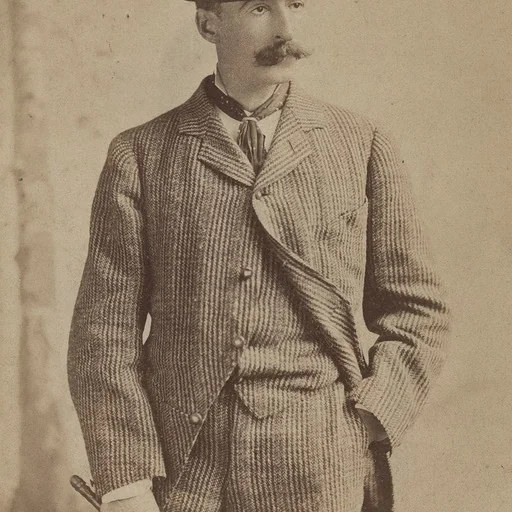
Winslow Homer (February 24, 1836 – September 29, 1910) was an American landscape painter and illustrator, best known for his marine subjects.