Artwork
The Pioneer
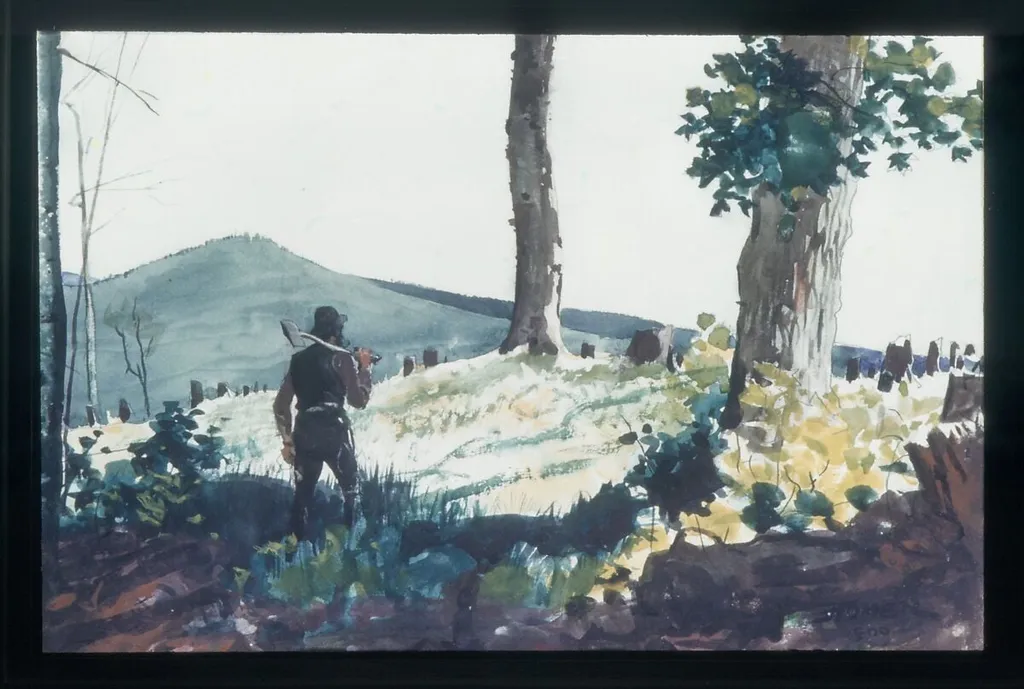
The Pioneer is a watercolor work on paper by the American Impressionist artist Winslow Homer. It dates from 1900 and is held in the collection of the Metropolitan Museum of Art.
About this work
The painting shows a man walking away from the viewer, carrying a shovel over his shoulder, in a landscape with trees, hills, and a fence.
The painting shows a man walking away from the viewer, carrying a shovel over his shoulder, in a landscape with trees, hills, and a fence. He is wearing dark clothing and a hat.
The man seems to be clearing land or tending to the area. The scene looks peaceful, with the man focused on his task.
If you like this painting, you might also want to check out the work of artist Winslow Homer (American, 1836–1910).
Technique & Style
The Pioneer is a watercolor executed with graphite on white wove paper, a combination of fluid washes and dry drawing media characteristic of Winslow Homer's late transparent-watercolor practice. The sheet measures 35.2 by 53.3 centimeters in a horizontal landscape format, providing a broad field for layered washes and reserved whites. The use of white wove paper supports the luminous, atmospheric handling typical of the medium, allowing pigment to be applied in thin, transparent layers over the bright ground.
Classified within the Metropolitan Museum of Art's American Wing, the work belongs to the landscape genre and reflects the restrained, observational style Homer favored in his mature watercolors.
History & Provenance
The Pioneer was created by Winslow Homer in 1900. Executed in watercolor and graphite on white wove paper, the work measures 35.2 cm in height and 53.3 cm in width. The piece is currently held in the collection of the Metropolitan Museum of Art, where it is classified within the American Wing as a landscape.
No further details regarding the specific commission, original ownership, or the precise circumstances of its creation are provided in the available records.
Winslow Homer's watercolor The Pioneer, created in 1900, is held in the collection of the Metropolitan Museum of Art. The work is classified within the museum's American Wing and is executed in watercolor and graphite on white wove paper. While the specific inventory or accession number is not provided in the available records, the artwork is documented as part of the museum's permanent holdings with dimensions of 35.2 cm in height and 53.3 cm in width. The provided sources do not contain information regarding a specific exhibition history for this piece.
Context
Winslow Homer's 1900 watercolor The Pioneer, depicting a lone fisherman in a stormy sea, was created during his mature period focused on the American coastline. The work is part of The American Wing collection at the Metropolitan Museum of Art, reflecting Homer's significance in 19th-century American art and his transition from illustration to fine art. Scholarship emphasizes its dramatic use of light and composition as emblematic of his later style, situating it within the broader context of American realism and seascapes.
Overview
Created in 1900, The Pioneer is a modestly sized work on white wove paper that combines watercolor washes with graphite drawing. The composition presents a solitary figure moving away from the viewer, shovel slung across his shoulder, set against a gently rolling countryside of trees, hills and a low fence. The piece belongs to the American Wing collection.
Subject & Meaning
The lone wanderer, dressed in dark attire and a hat, appears engaged in clearing or tending the land, suggesting themes of settlement and the quiet labor of frontier life. The tranquil atmosphere and the figure’s forward motion convey a sense of purposeful solitude within an expansive rural setting.
Artist & collection
Artist
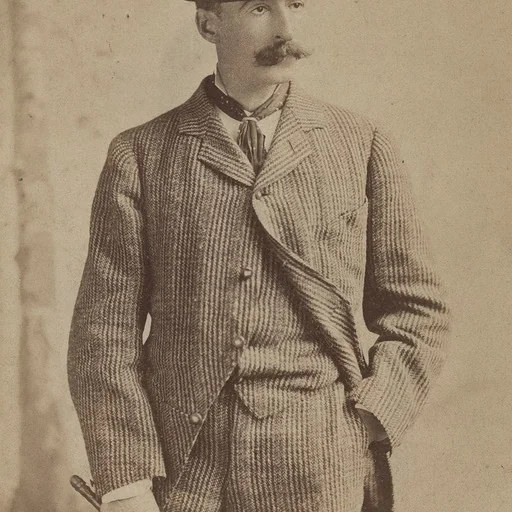
Winslow Homer (February 24, 1836 – September 29, 1910) was an American landscape painter and illustrator, best known for his marine subjects.

- Western Landscape with Tepees
 Blick auf die Bucht von Sanary
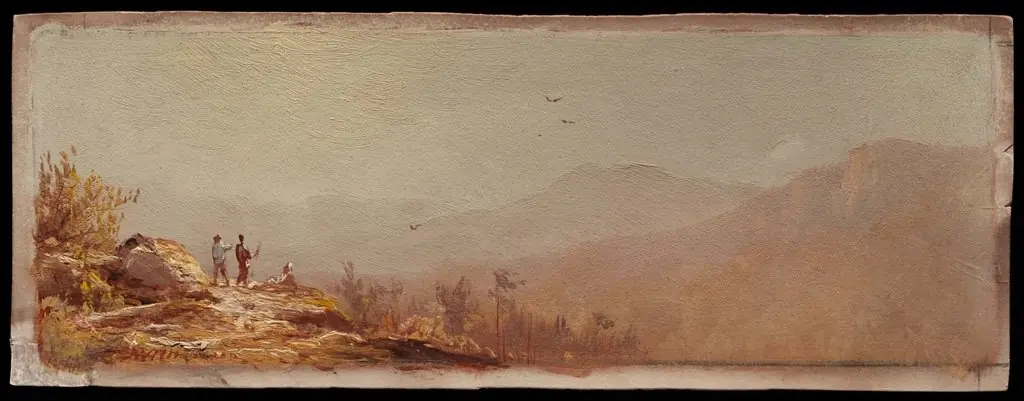 Mountainous Landscape
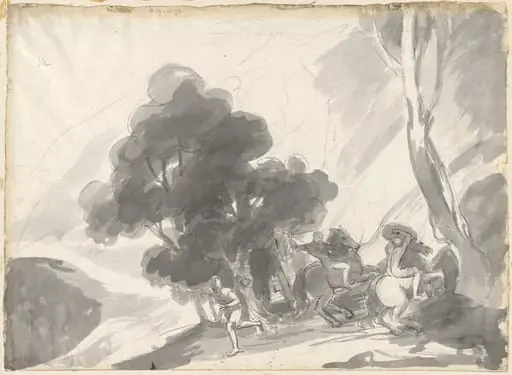 Troilus and Cressida, Act IV, Scene V: The Fight Between Hector and Ajax II
 Défense d'un village après Charleroi
 Infanterie russe
 In the Highlands
 Bringing the Hay Home
 Study of a landscape with clouds
 Group of Trees
 Les Morts après le combat
 Mountains and Cattle