Artwork
The Bird's Nest Patriarch
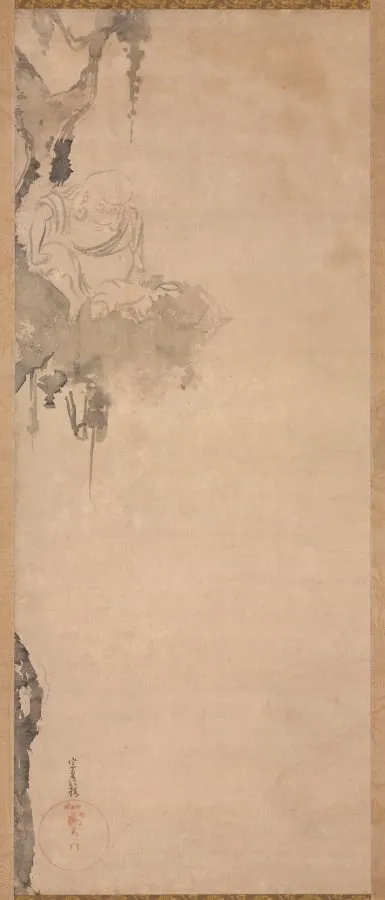
The Bird's Nest Patriarch is an unspecified painting by the Baroque artist Tawaraya Sōtatsu. It dates from 1604 and is held in the collection of the Cleveland Museum of Art.
- Accession no.
- 1958.289
About this work
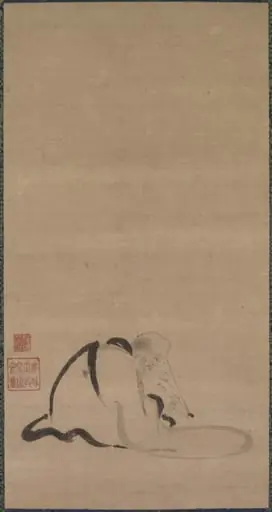
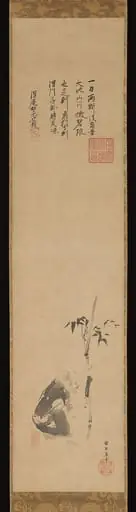
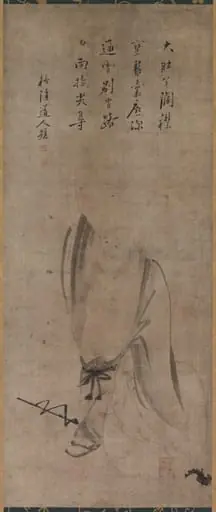
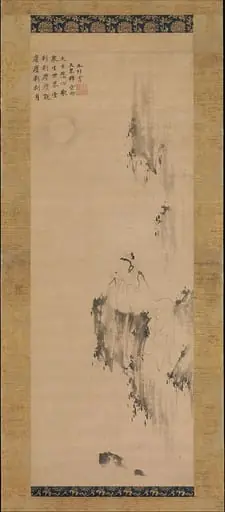
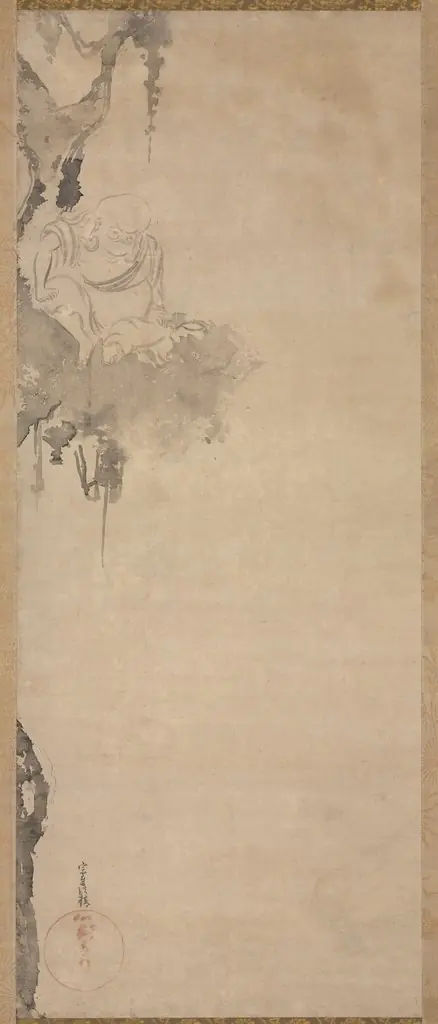
A wrinkled old man with a long white beard sits high in a tree, one hand resting on his knee, the other raised as if speaking.
A wrinkled old man with a long white beard sits high in a tree, one hand resting on his knee, the other raised as if speaking. He wears loose robes and looks down, suggesting someone is below. A small nest rests in the branches near him.
The man is Niaoge, a Zen monk whose name means “Bird’s Nest.” He lived in trees to stay close to nature and offered wisdom to visitors. The artist used the “boneless” (mokkotsu) style, painting shapes without outlines, giving the figure a soft, flowing look.
To see more ink paintings made this way, look up the artist: Tawaraya Sōtatsu (Japanese, c. 1570–c. 1640).
(Word count: 106)
Overview
Tawaraya Sōtatsu created this ink painting in early 17th-century Japan, drawing from a Chinese illustrated text of spiritual figures. It depicts Niaoge, a legendary Zen ascetic known for dwelling in tree canopies. The composition isolates the figure against a blank ground, emphasizing his solitude and elevated perspective. Sōtatsu’s approach avoids outlines, using graded ink washes to suggest form and texture.
Subject & Meaning
Niaoge, whose name translates to 'Bird’s Nest,' was a Daoist-Buddhist hermit who lived among treetops to embody harmony with nature. His raised hand and downward gaze imply an ongoing exchange with unseen seekers below. The small nest nestled in the branches reinforces his integration with the natural world. The image reflects ideals of quiet wisdom, detachment, and the pursuit of enlightenment through isolation.
Technique & Style
Sōtatsu employed the mokkotsu technique, eschewing outlines in favor of layered ink washes to model form. The monk’s robes and beard emerge through subtle tonal shifts, creating a soft, atmospheric presence. The tree limbs are suggested with minimal strokes, allowing the ink’s fluidity to convey movement and depth. This method prioritizes mood over detail, aligning with Zen aesthetics of restraint and spontaneity.
History & Provenance
The painting originates from Sōtatsu’s workshop in Kyoto, likely produced between 1610 and 1630. It was inspired by a 1602 Chinese publication illustrating Daoist and Buddhist sages, which circulated among Japanese literati. While its early ownership is undocumented, it entered the tradition of Japanese ink painting associated with the Rinpa school, later preserved in private and institutional collections.
Context
During the early Edo period, Japanese artists increasingly engaged with Chinese cultural models, adapting them to local sensibilities. Sōtatsu’s work reflects this synthesis: the subject is Chinese, the technique is rooted in Chinese ink traditions, but the composition’s elegance and abstraction reflect Japanese aesthetic values. Such paintings were appreciated by elite patrons for their spiritual resonance and refined artistry.
Legacy
Sōtatsu’s use of mokkotsu influenced later Rinpa artists, who expanded his emphasis on fluid form and poetic economy. This painting exemplifies how Zen and Daoist themes were visually translated in Japan, bridging religious contemplation and artistic innovation. Though not widely reproduced, it remains a key reference for understanding the evolution of ink painting beyond Chinese precedent.
Artist & collection

Artist
Tawaraya Sōtatsu (俵屋 宗達; c. 1570 – c. 1640) was a Japanese furniture designer and painter of the Rinpa school. Sōtatsu is best known for his decorations of calligraphic works by his partner Hon'ami Kōetsu (1558–1637),…

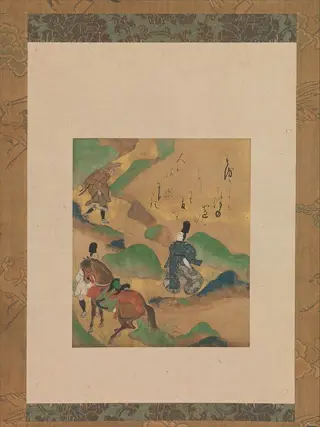
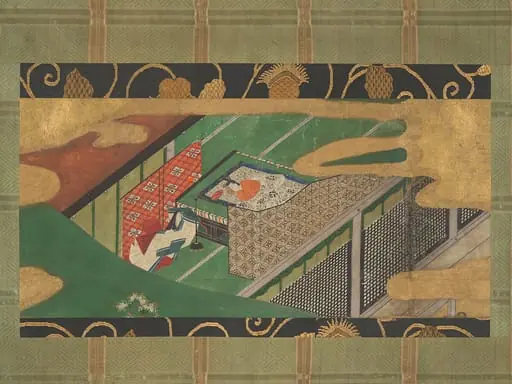 伝俵屋宗達筆 源氏物語図「宿木」 |“Trees Encoiled in Vines of Ivy” (Yadorigi)
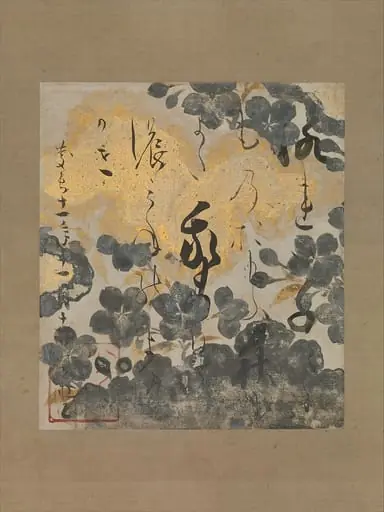 本阿見光悦書・俵屋宗達下絵 桜下絵和歌色紙 鴨長明|Poem by Kamo no Chōmei with Underpainting of Cherry Blossoms
 本阿弥光悦書・俵屋宗達下絵 小倉百人一首和歌巻断簡|Two Poems from One Hundred Poems by One Hundred Poets
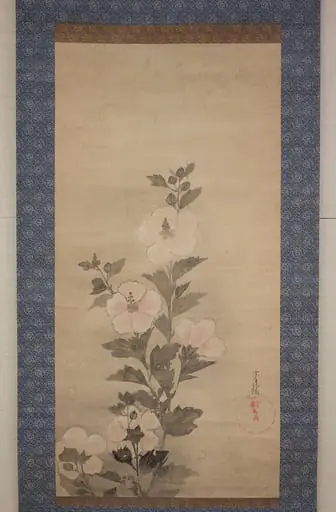 Untitled
 Untitled
 Untitled
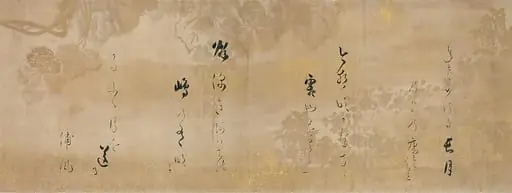 本阿弥光悦書 木版下絵和歌巻断簡|Twelve Poems from the New Collection of Poems Ancient and Modern
 Selections from the New Collection of Japanese Poems from Ancient and Modern Times (Shinkokin wakashū) with Printed Designs of Chinese Lions and Crab Finger Grass