Artwork
Bodhidharma Crossing the Yangzi on a Reed
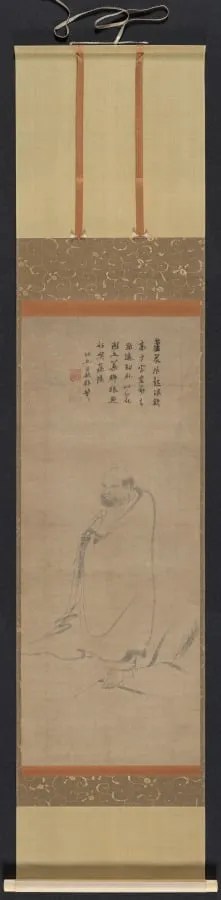
Bodhidharma Crossing the Yangzi on a Reed is an unspecified painting by Unknown. It dates from 1304 and is held in the collection of the Cleveland Museum of Art.
- Accession no.
- 1964.44
- Credit line
- John L. Severance Fund
About this work
Overview
This ink painting depicts Bodhidharma, the Indian monk credited with introducing Chan Buddhism to China, crossing the Yangzi River on a single reed.
This ink painting depicts Bodhidharma, the Indian monk credited with introducing Chan Buddhism to China, crossing the Yangzi River on a single reed. Rendered with minimal brushwork on an expansive blank surface, the image captures a pivotal moment in his journey, departing the Liang court after failing to convey his teachings to Emperor Wu. The sparse composition reflects Chan principles of simplicity and impermanence, inviting contemplation rather than narrative detail.
Subject & Meaning
Bodhidharma’s crossing symbolizes his detachment from worldly authority and his commitment to spiritual transmission beyond imperial recognition. The reed, a humble and transient object, becomes a vehicle of transcendence. The accompanying poem alludes to the arduous path ahead, the unfolding of enlightenment, and the adequacy of barefoot simplicity in the face of life’s turbulence, reinforcing Chan’s emphasis on direct experience over ritual or doctrine.
Technique & Style
The artist employs diluted ink and rapid, fluid strokes to suggest the monk’s form and the reed’s motion, leaving most of the paper untouched. The lack of detail and the emphasis on negative space mirror Chan’s teaching that reality is beyond fixed forms. The brushwork’s economy conveys movement and weightlessness, with each stroke implying rather than defining, aligning with the aesthetic of suggestive minimalism central to Chan-inspired art.
History & Provenance
Though the painting’s exact origin is unrecorded, its style and inscription align with Southern Song dynasty (12th–13th century) Chan monastic traditions. Such images were likely produced in or for monasteries as aids to meditation, not as decorative objects. The poem’s calligraphy and ink quality suggest it was created by a monk-artist familiar with both literary and spiritual traditions, possibly within the Shaolin or nearby communities.
Context
During the Southern Song, Chan Buddhism flourished alongside a growing preference for austere, contemplative art. Paintings like this one responded to a shift away from elaborate courtly imagery toward works that evoked inner realization. The reed crossing motif became a popular theme among Chan artists, embodying the ideal of the enlightened wanderer who transcends material constraints through spiritual insight.
Legacy
This painting exemplifies how Chan Buddhism reshaped East Asian visual culture by privileging suggestion over representation. Its influence extended into later Japanese ink painting and Zen aesthetics, where emptiness and spontaneity became core values. The work’s enduring power lies not in its detail, but in its ability to evoke stillness and presence through absence, a quiet testament to the philosophy it represents.
Artist & collection









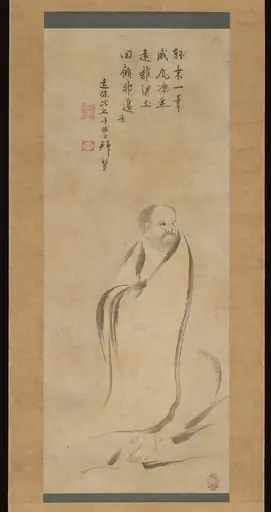
- 芦葉達磨図 (Royō Daruma zu)|Bodhidharma Crossing the Yangzi River on a Reed
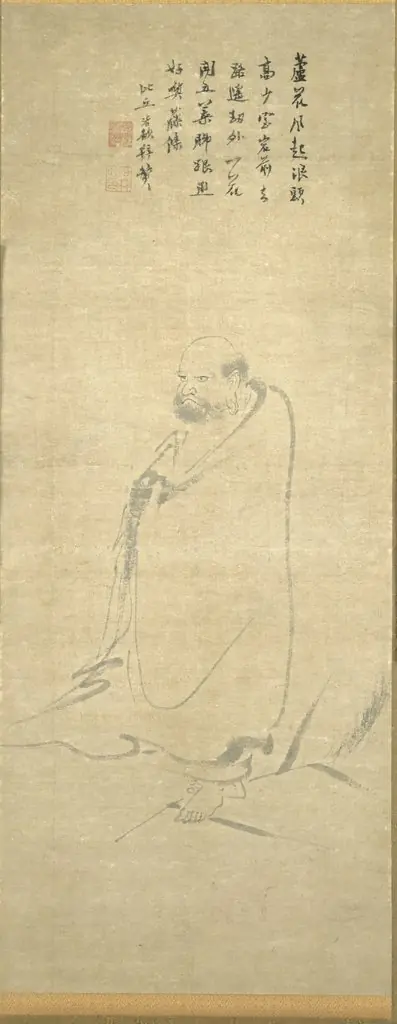 Bodhidharma Crossing the Yangzi on a Reed
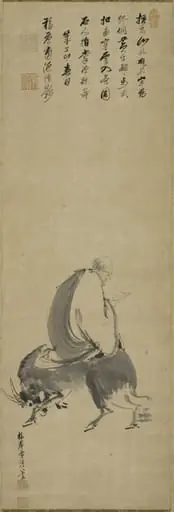 Weizheng Riding on an Ox
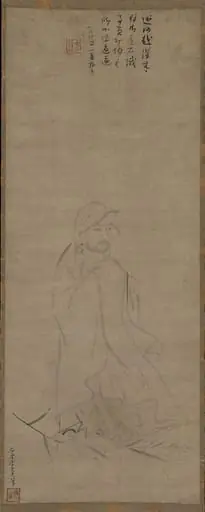 元 李堯夫,一山一寧題贊 達摩渡江圖 軸|Bodhidharma crossing the Yangzi River on a reed
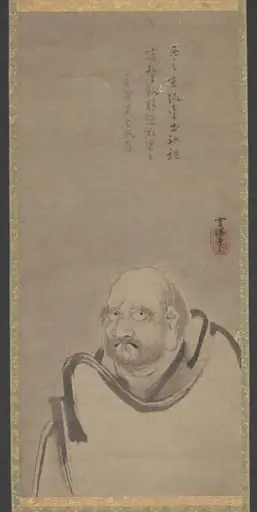 Bodhidharma
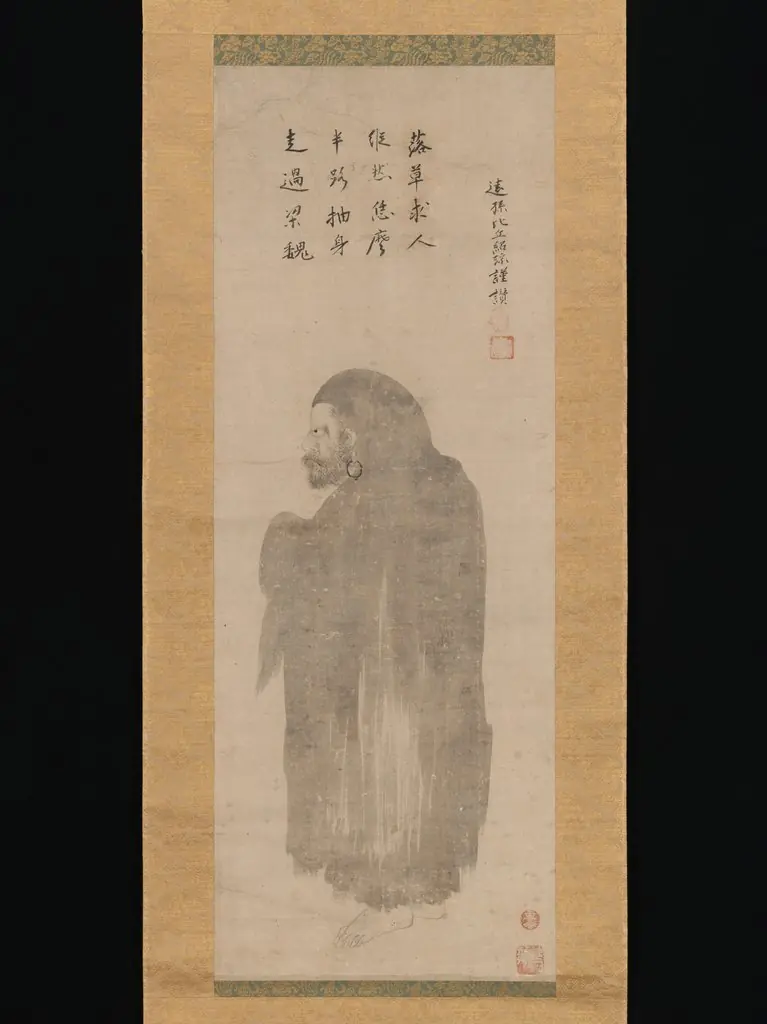 Bodhidharma
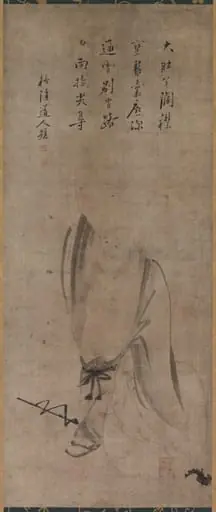 Hotei
Hotei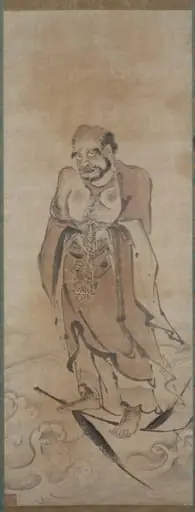 Bodhidharma on a Reed
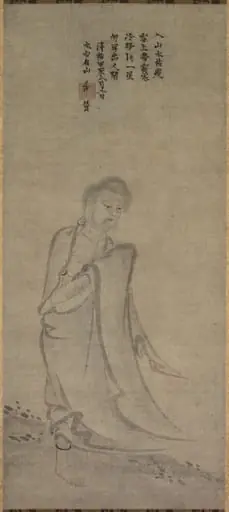 Shakyamuni Emerging from the Mountains
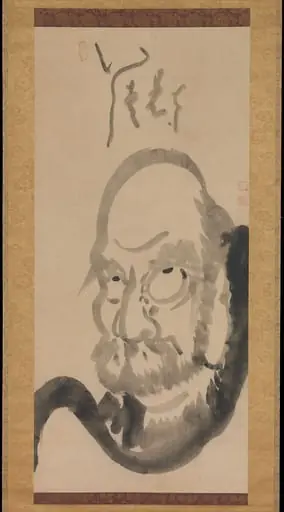 白隠慧鶴筆 達磨像|Portrait of Bodhidharma
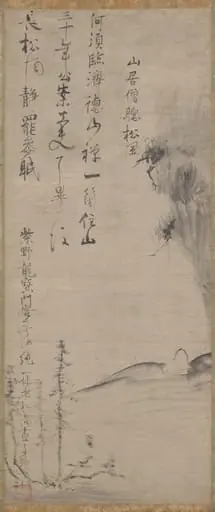 Listening to the Wind in the Pines