Artwork
月見布袋図 (Tsukimi Hotei zu)|Hotei Admiring the Moon
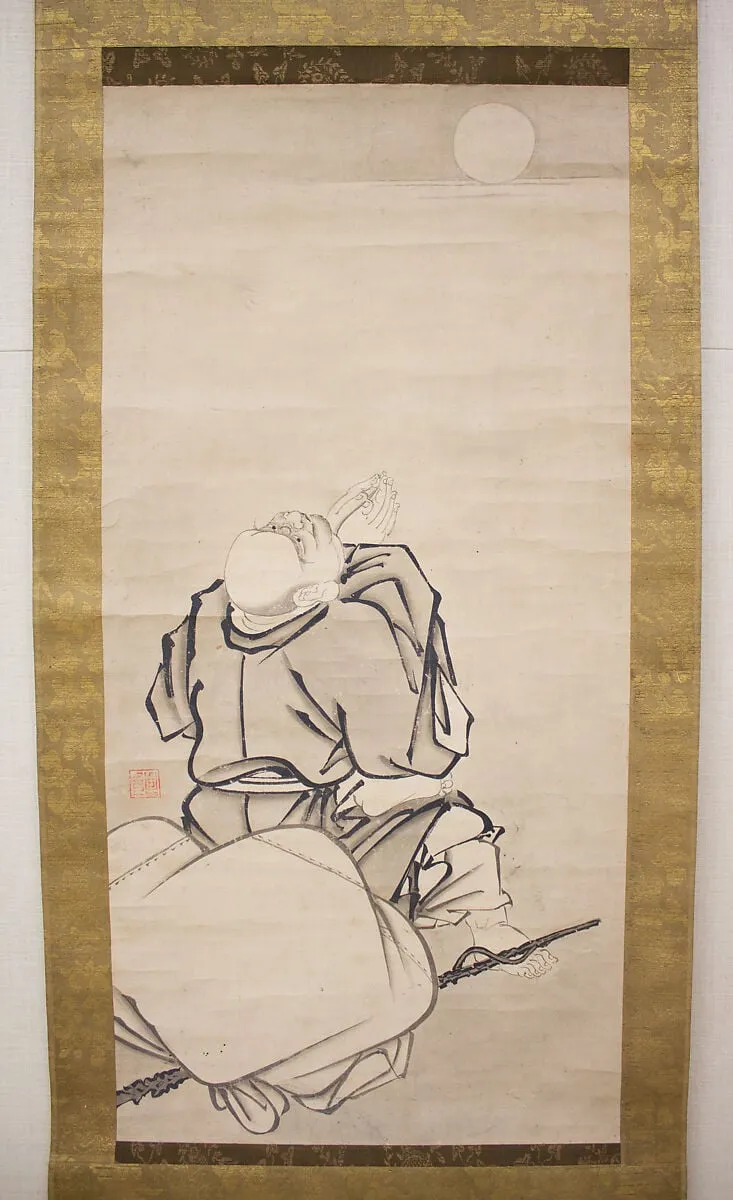
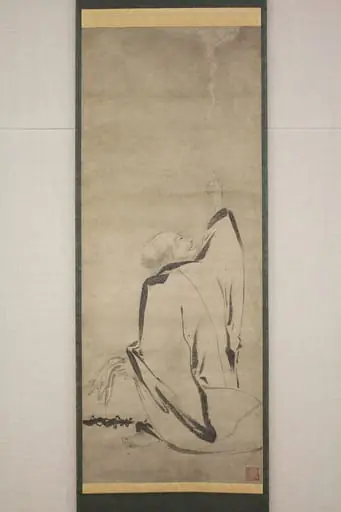
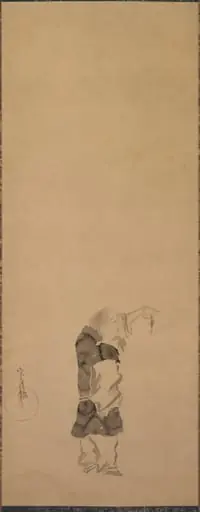
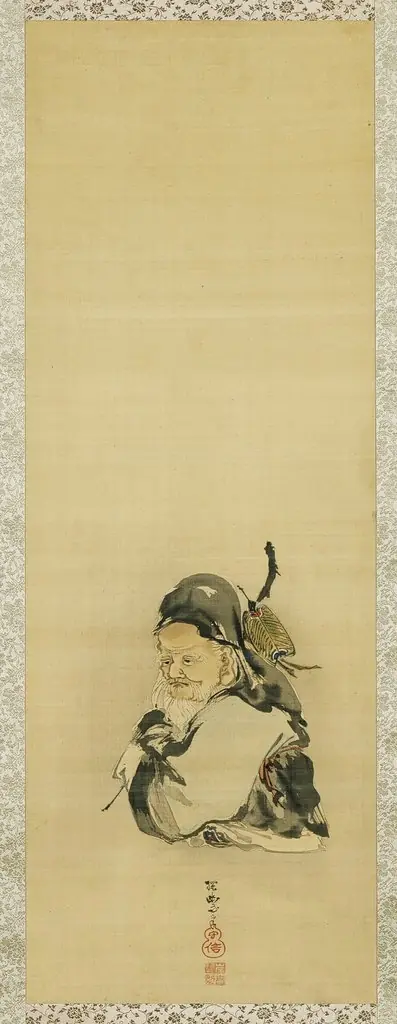
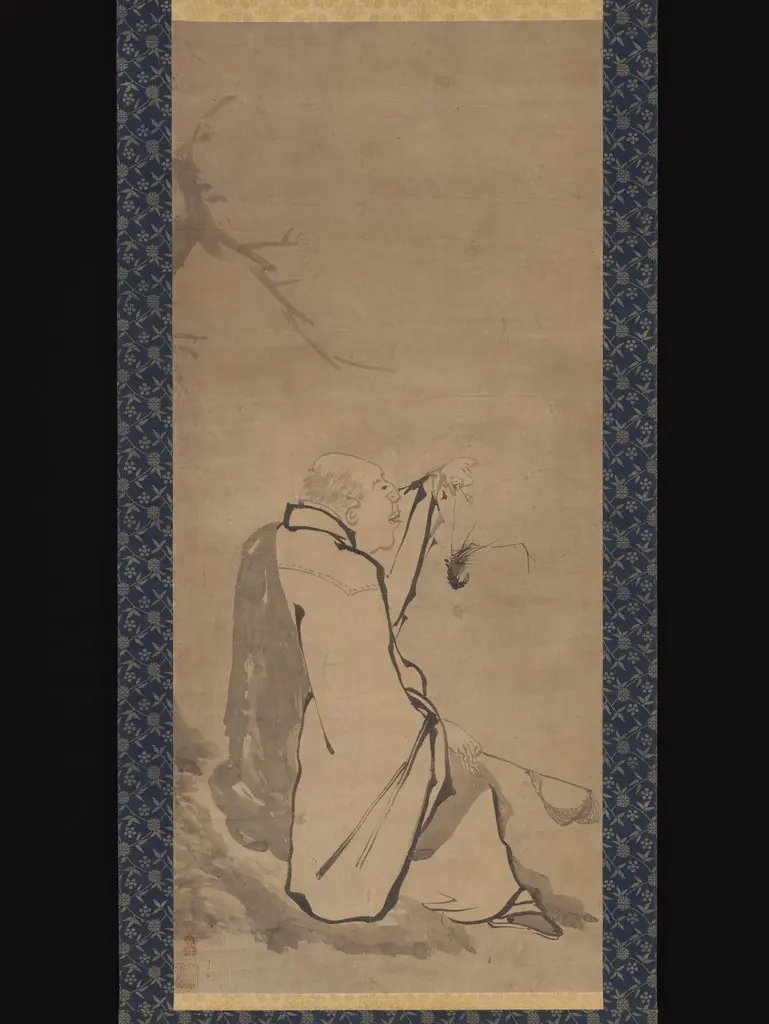
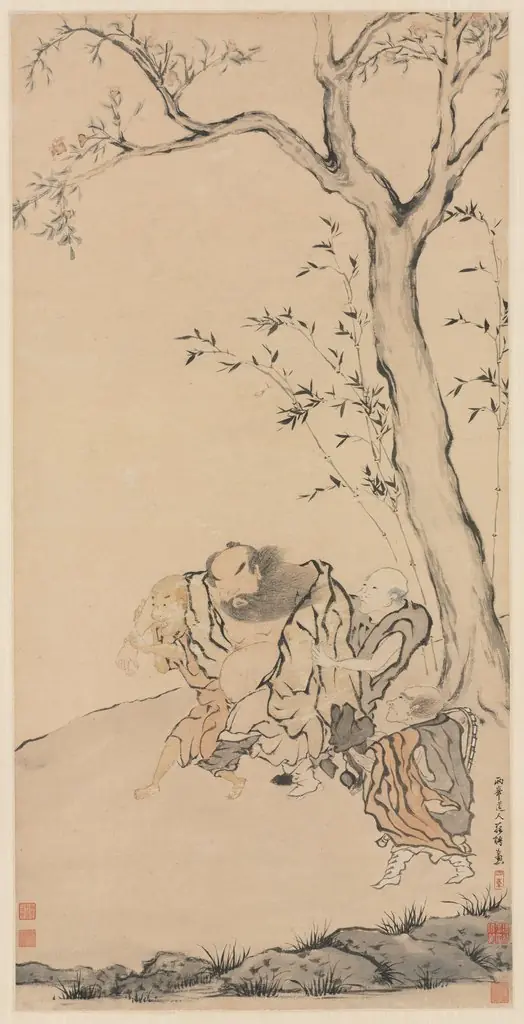
月見布袋図 (Tsukimi Hotei zu)|Hotei Admiring the Moon is an ink painting by the Romanticist artist Ikei Shūtoku 惟馨周徳. It dates from 1834 and is held in the collection of the Metropolitan Museum of Art. Hotei Admiring the Moon (Tsukimi Hotei zu) is an ink on paper hanging scroll created by Ikei Shūtoku in 1834.
- Accession no.
- 14.76.12
- Credit line
- Charles Stewart Smith Collection, Gift of Mrs. Charles Stewart Smith, Charles Stewart Smith Jr., and Howard Caswell Smith, in memory of Charles Stewart Smith, 1914
About this work
Subject & Meaning
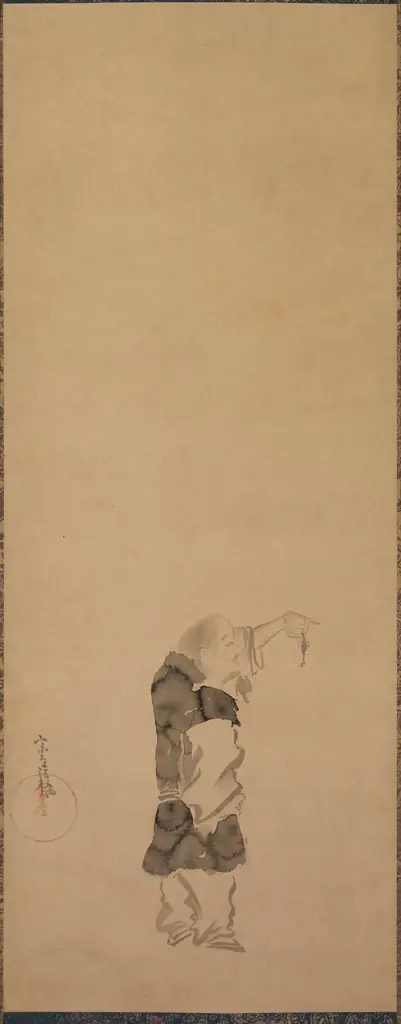
The composition brings together a human figure and the lunar symbol, forming the titular scene of Hotei's contemplation of the Moon.
The painting depicts a man identified as Hotei admiring the Moon, presented as a hanging scroll in ink on paper. Created in 1834 by Ikei Shūtoku, the work is classified as a religious painting within the broader category of Paintings. Its dimensions are 92.7 cm by 45 cm and it is part of the collection of the Metropolitan Museum of Art in New York.
The composition brings together a human figure and the lunar symbol, forming the titular scene of Hotei's contemplation of the Moon.
Technique & Style
Ikei Shūtoku's Hotei Admiring the Moon is a hanging scroll painting executed in ink on paper. Created in 1834, the work measures 92.7 cm in height and 45 cm in width. Stylistically, the composition captures the religious subject of the Zen monk Hotei observing the moon, utilizing the traditional monochrome ink medium to render both the human figure and the lunar motif.
The piece reflects a formal handling characteristic of Japanese ink painting, focusing on the essential elements of man and moon within a spare, contemplative composition.
History & Provenance
The hanging scroll painting titled Tsukimi Hotei zu (Hotei Admiring the Moon) was created in 1834 by the Japanese artist Ikei Shūtoku. Executed in ink on paper, the work depicts a man gazing at the moon and measures 92.7 cm in height by 45 cm in width. It is classified as a religious painting originating from Japan.
While the original commission or early ownership chain is not detailed in available records, the work is currently held within the collection of the Metropolitan Museum of Art in New York. No specific accession number or exhibition history is recorded in the sources consulted.
Overview
Hotei Admiring the Moon (Tsukimi Hotei zu) is an ink on paper hanging scroll created by Ikei Shūtoku in 1834. This religious painting captures the popular folk figure Hotei in a moment of quiet contemplation, gazing upwards at the celestial body. The work exemplifies a common theme in East Asian art, blending spiritual reverence with a depiction of an auspicious figure.
Artist & collection
Artist
A 19th-century painter working in ink on paper, Ikei Shūtoku made hanging scrolls that depict scenes from daily life and folklore.